
Playa de la Malvarrosa
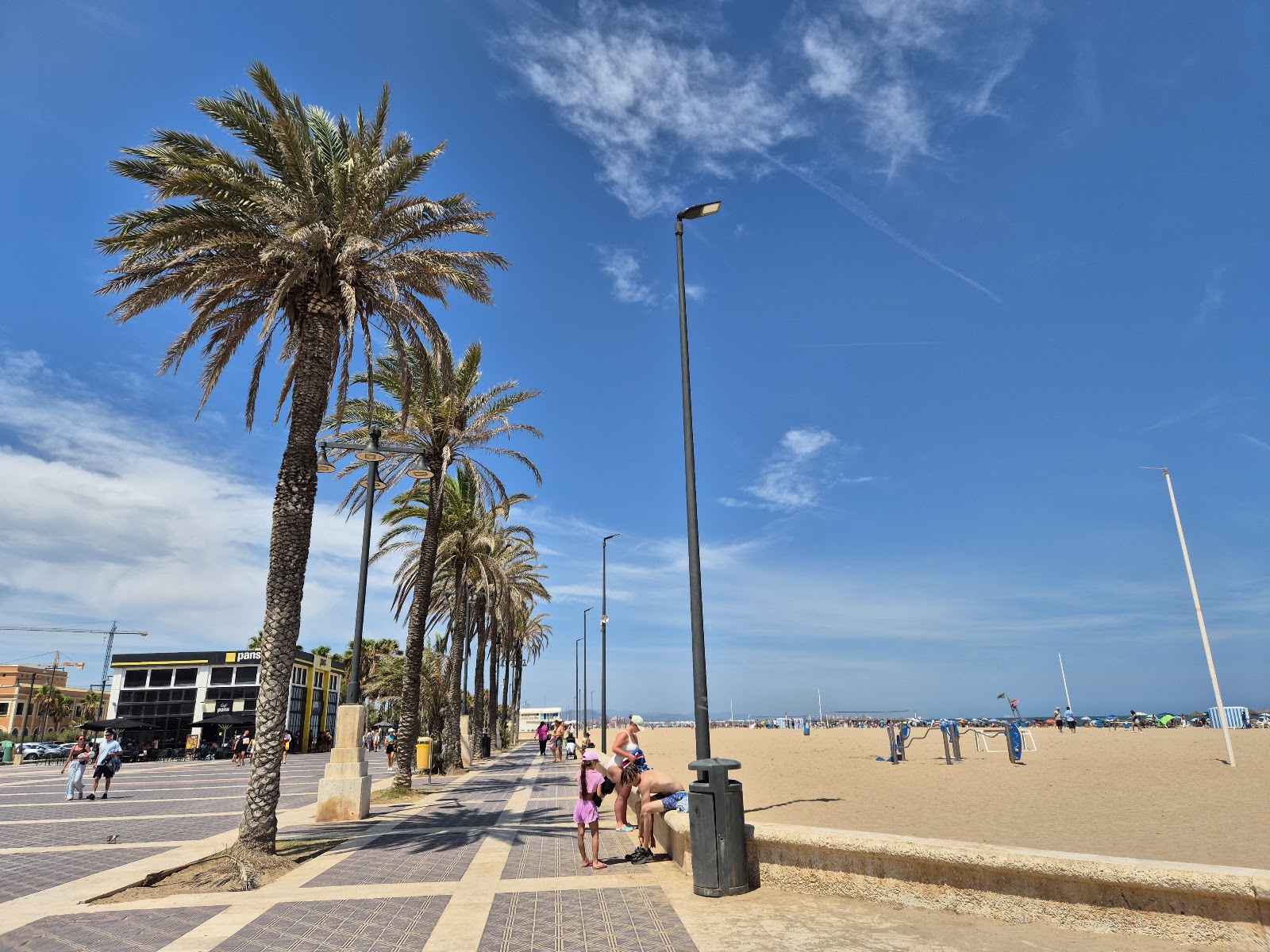
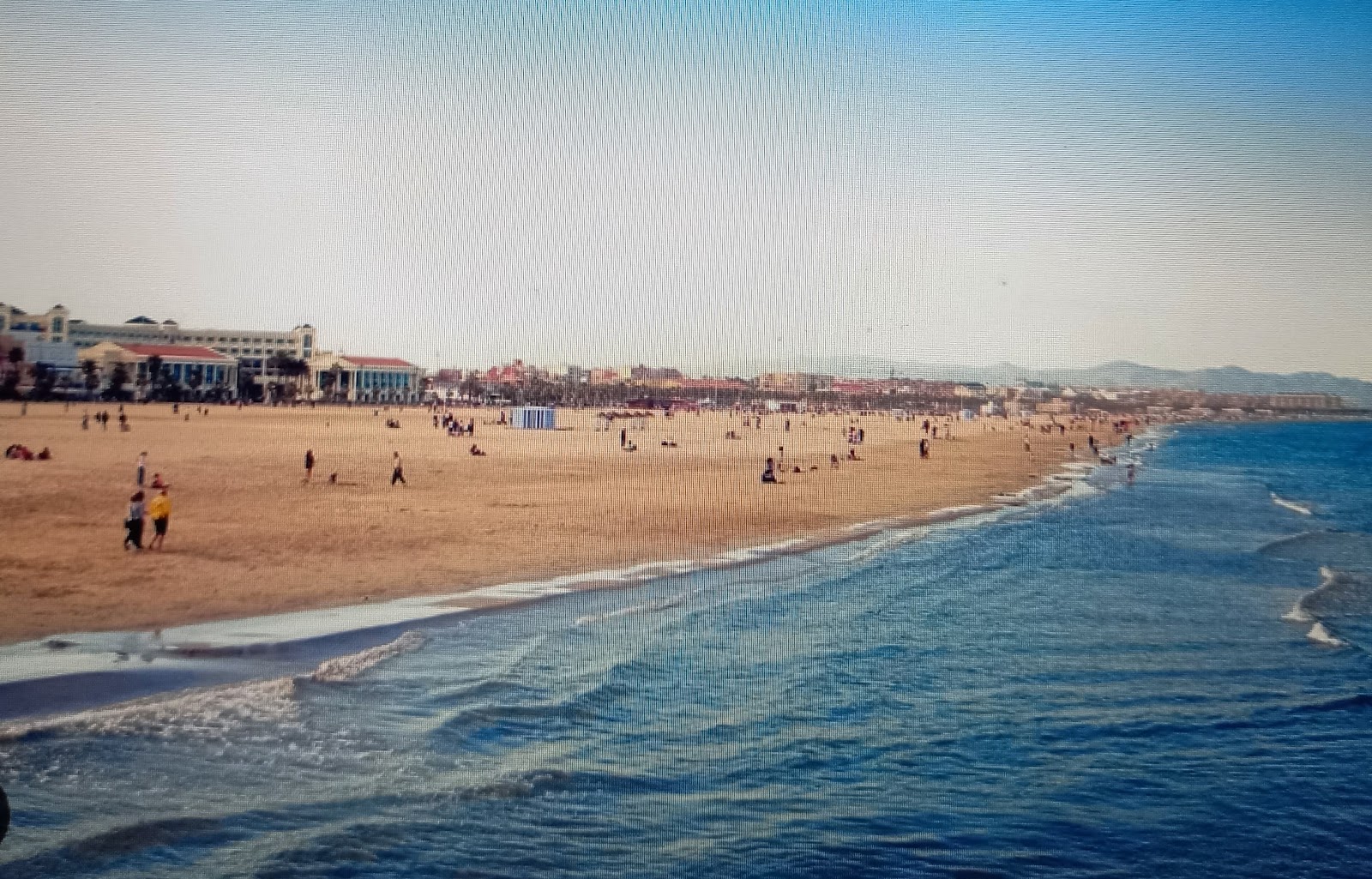
The sand at Malvarrosa is fine and pale gold, and at sixty metres wide the beach gives you room to breathe even when Valencia is at its most summery. The promenade runs for 1.2 kilometres behind it, lined with palms and open-air seafood restaurants — La Pepica among them — where the tables fill early and the paella arrives in the pan it was cooked in.
This is a city beach in the truest sense: locals arrive by tram in six minutes, swimmers are still in the water come October, and the port cranes visible to the south remind you that this is a working coastline, not a resort set-piece.
💛 What travellers fall for
People who come back tend to arrive early — before the afternoon crowds settle in — and walk the promenade north toward the Casa-Museo Blasco Ibáñez, whose original seafront façade still faces the water. The marked water-sports channel is worth noting if you're bringing a board; the artificial reef offshore draws divers who prefer something more structured than open sand.
The story behind Playa de la Malvarrosa
The name goes back to 1848, when French botanist Félix Robillard — head gardener of Valencia's Botanical Garden — bought the marshy land here, drained it, and planted it with various species including the malva rosa, the rose geranium that gave the place its name. A railway line reached the shore in 1852, its station roughly where the Neptú tram stop stands today.
Through the second half of the nineteenth century the neighbourhood drew both working-class families and wealthier summer residents. Painter Joaquín Sorolla produced some of his most celebrated work on this stretch of coast, and novelist Vicente Blasco Ibáñez built a house at the northern end of what is now the promenade — it still stands, now a museum. The paseo marítimo itself was completed in the 1990s, stitching beach and city together in its current form.
Good to know
Line 4 tram from the city centre drops you at Neptú in six minutes for around €1–2. Summer afternoons pack out; spring, autumn and early mornings are noticeably quieter. The beach is free and open around the clock; ramps from the promenade make it accessible for reduced-mobility visitors.
Summers are hot and dry, with July and August hitting around 32°C and water temperatures reaching the high twenties — comfortable for swimming through to early October. Spring and autumn bring warm, breezy days and thinner crowds; October is the rainiest month on the calendar, though sun still dominates.
Where is Playa de la Malvarrosa?
More tickets & tours for Playa de la Malvarrosa
Book directly at the provider
What travellers say about Playa de la Malvarrosa
A great urban beach. If you’re looking for peace and quiet or a more private spot, this probably isn’t the best option, because it’s a very social and crowded beach. Even from around 8 in the morning, there are already quite a lot of people. That said, the beach itself is huge and has many nice areas for working out, sunbathing, or swimming. There are wooden walkways leading down to the sand, plus showers and foot-washing taps everywhere, which is very convenient. The beach is also regularly patrolled by police. For a city beach, it’s pretty good.
Good beach overall. It’s long, wide, and easy to get to from the city. The sand is fine and there’s plenty of space even when it’s a bit busy. Water is usually clean, but can depend on the day. There are lots of restaurants and places to grab drinks nearby, which is convenient. It can get crowded, especially on weekends, and sometimes a bit noisy. Also not the most “natural” looking beach since it’s very built up. Still, it’s a solid option if you’re in Valencia and want a straightforward beach day.
The reception is very nice and the breakfast is also very delicious. They are a nice team... We were here for 7 days at the hotel, they cleaned the room every day and I really recommend them, it is worth booking your accommodation here.. Everything is close to the metro and the bus. Lidl, Burgers Kings etc. are just a few minutes walk away.. Everything is easily accessible.
Calm, natural, soothing. Sea, sunshine and sand. Good job to the city in keeping the beach clean every morning. Thanks to the metal detector volunteers as well. Nature is beautiful. ENJOY
A wonderful beach located half an hour from Valencia is a great spot for families and beach lovers. It’s amazing that Malvarrosa has such a clean and large beach. Most beaches have hotels and restaurants built right to the water which give so little beach and lots of problems with erosion. Platja de la Malvarrosa is pristine and the water temperature as you wade in for meters goes from Luke warm to perfect. The weekends can be a little busy but still not overly crowded with people because of the large amount of beach front. The beach has many amenities such as showers for your feet or body and places to eat and drink near the area of Cabanyal which offer’s numerous tapas bars and restaurants.
More of Valencia
Discover where to stay, what to do and the best deals for your trip.
Explore Valencia →More attractions in Valencia
All of Valencia →
Background adapted from Wikipedia (CC BY-SA) · map data © OpenStreetMap contributors · ratings & place photos via Google · other photos with per-image credit. Ticket links may earn us a commission at no extra cost to you.