
Plage de la Croisette
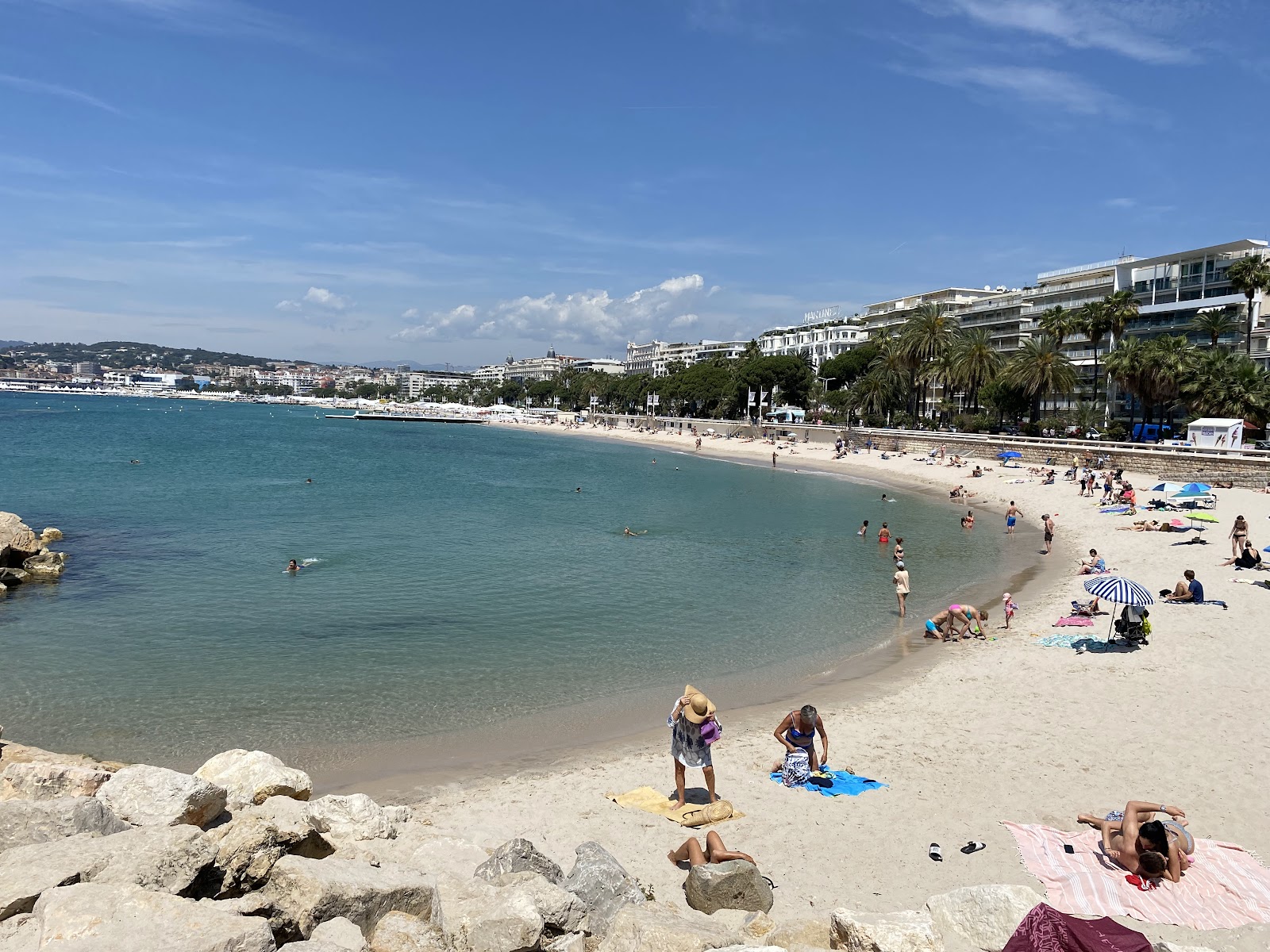
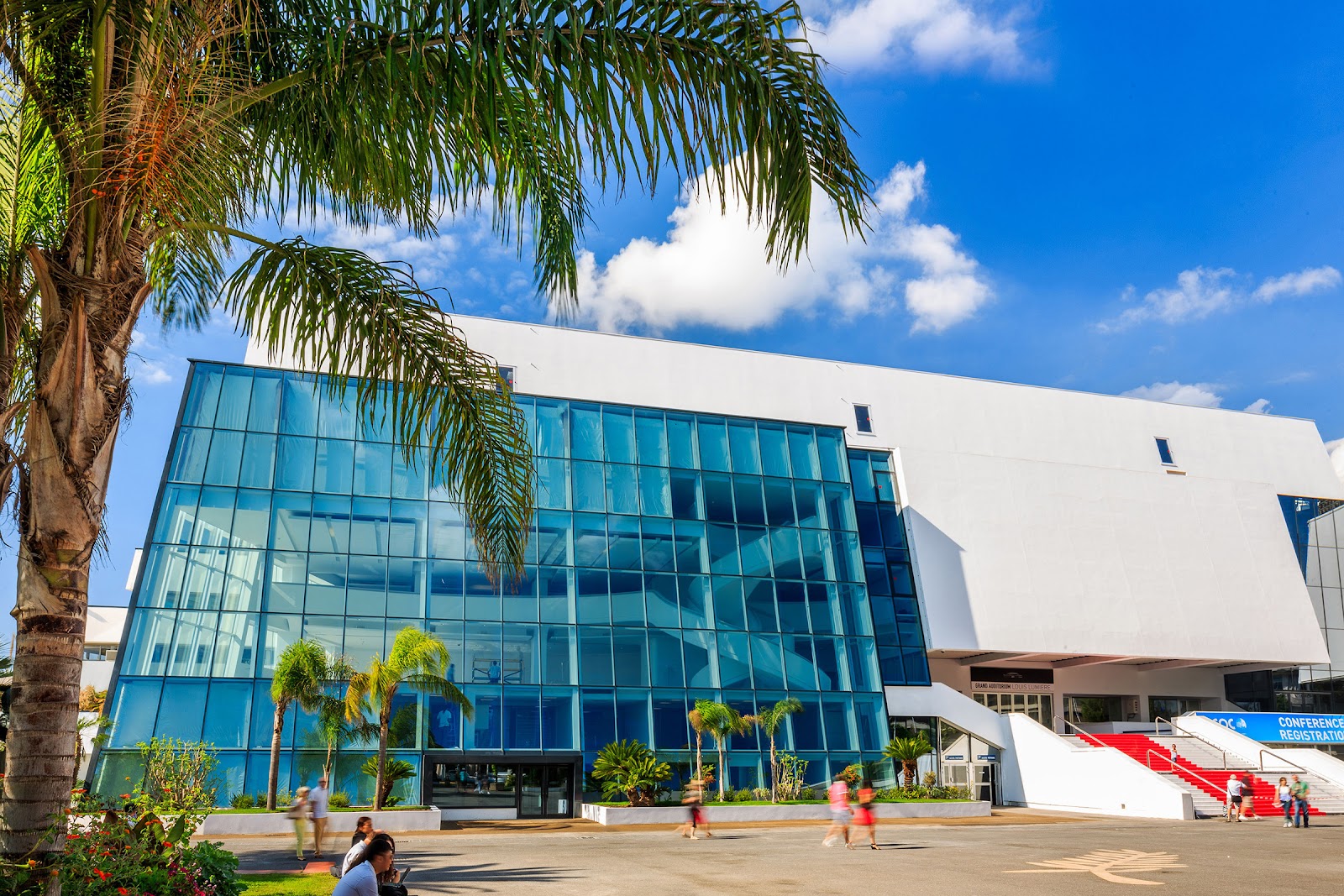
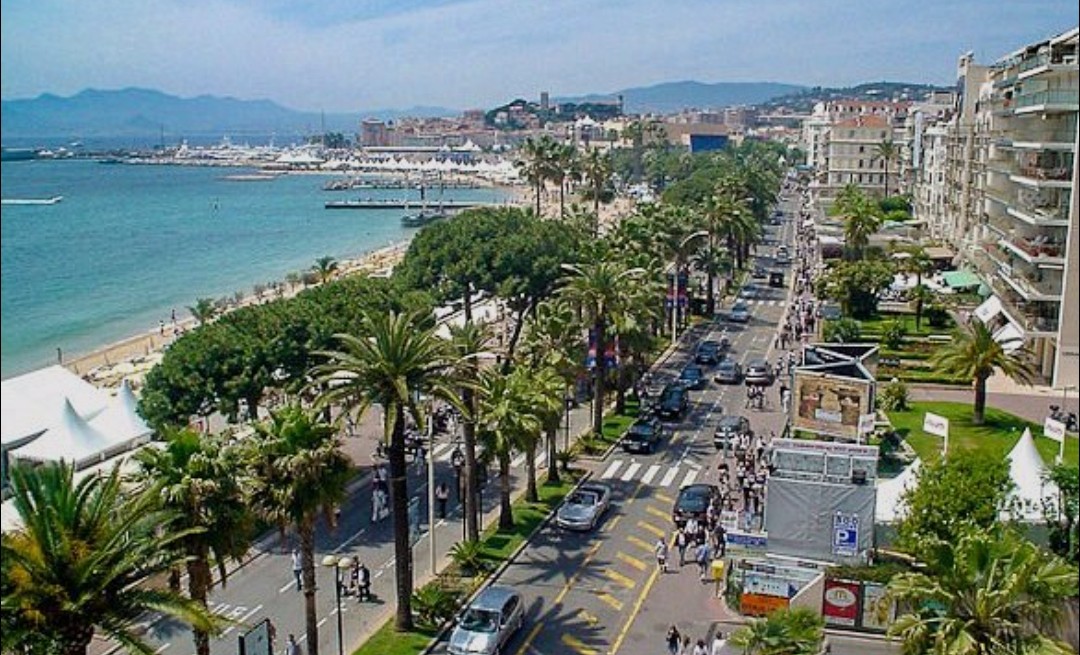
The beach that lines the Croisette is less a single place than a sequence of decisions: which stretch of sand, which hour, which version of Cannes you're after. The promenade runs three kilometres from the Palais des Festivals to Port Canto, with the Carlton's twin white domes and the Majestic's Art Deco facade marking the skyline behind you and the Lérins islands sitting low on the horizon ahead.
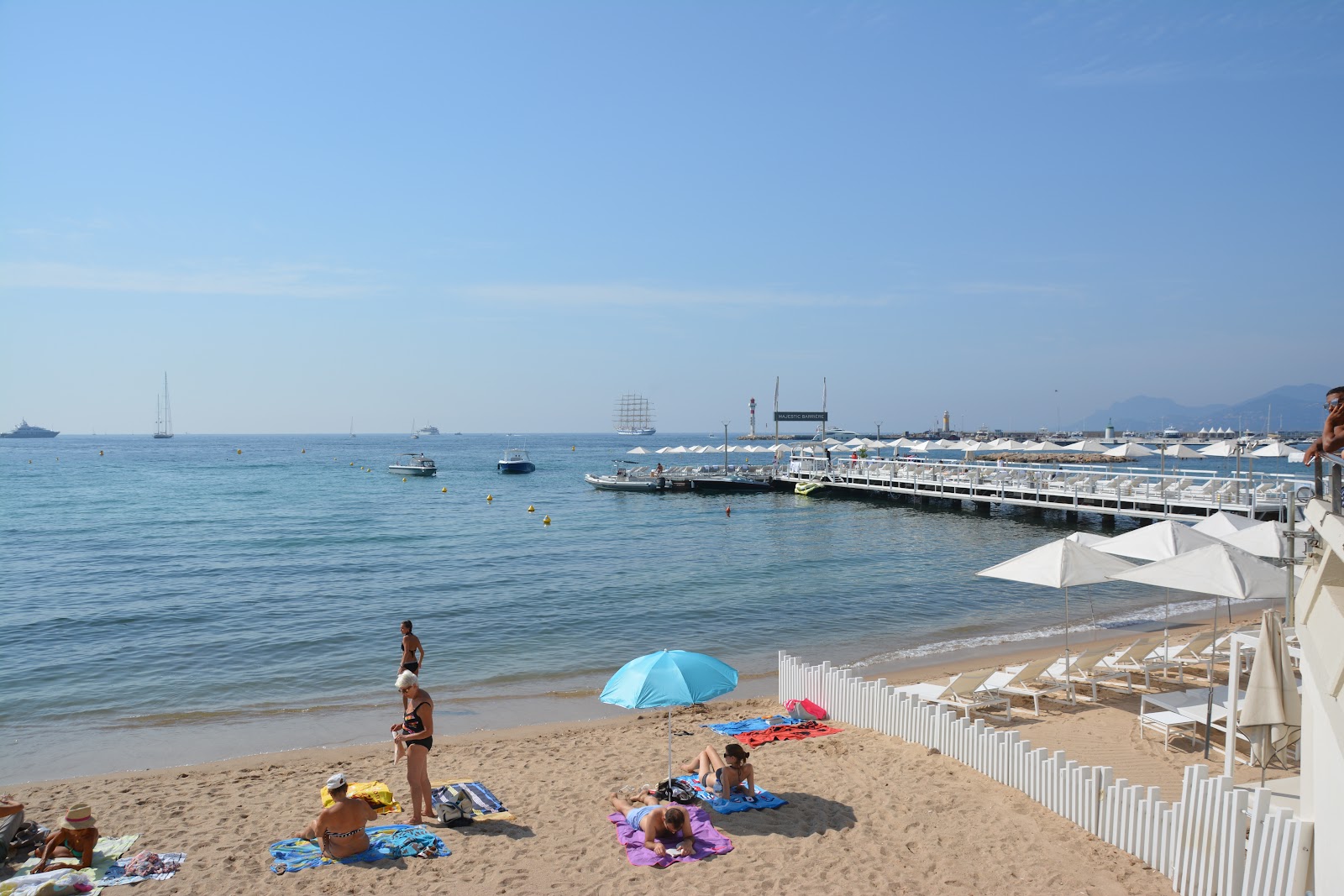
Most of the sand here is privately managed — hotel and restaurant concessions with ranked rows of sunbeds — but two free public sections, Plage Macé and Plage de Casino, sit near the western end and ask nothing of you. The water reaches around 24°C in August, and the bay is wide enough that even in high season there's room to look at something other than the person next to you.
💛 What travellers fall for
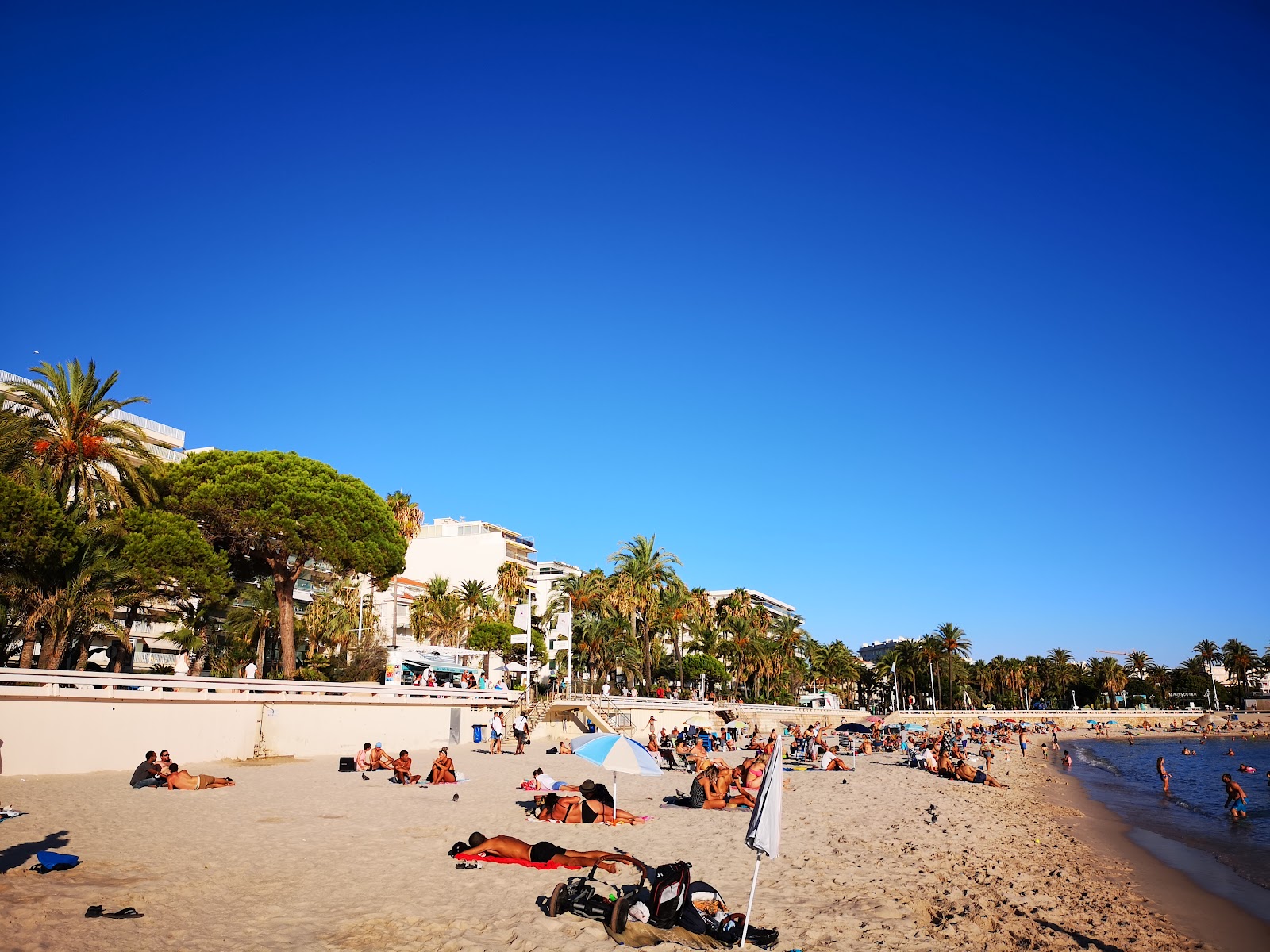
People who come back tend to time the walk for early morning, before the concessions set out their furniture, when the light off the water hits the Carlton facade at an angle that photographs don't quite catch. The Palm Imperial bus at €1.80 gets you back to the station if the return walk feels like one kilometre too many.
The story behind Plage de la Croisette
The ground beneath the promenade was once a pilgrims' dirt track — the 'chemin de la petite croix' — used by those crossing to the abbey on Saint-Honorat Island. In 1853, Mayor Marius Barbe secured permission to formalize it, and by 1863 a 16-foot coastal road was complete, timed almost exactly with the arrival of the Paris-Lyon-Mediterranean railway. Three years later it was widened to 65 feet, lined with palms and gas lighting, and renamed Boulevard de l'Impératrice. The Third Republic arrived in 1871 and the imperial name went with it.
The early twentieth century brought the Carlton (1911) and the Majestic (1926), both developed in part by Henri Ruhl. The inaugural Cannes Film Festival opened on the Croisette on 20 September 1946, a plan delayed seven years by the war. A small monument erected in 2010 marks the site of the original stone cross — the 'Crouseto' in Provençal — that gave the whole boulevard its name.
Good to know
A 10–15 minute walk from the central railway station. The Palm Imperial convertible bus runs every 15 minutes from 6am to 9pm for €1.80. Underground parking sits at the Palais des Festivals end. Skip the private beach loungers unless you want to spend a proper half-day; the public sections at Plage Macé are genuinely usable.
Summer runs hot and mostly dry, with July and August averaging close to 28°C and sea temperatures around 24°C — a breeze off the bay keeps it from feeling oppressive. Spring and autumn are mild and far less crowded; winters are gentle but can bring rain, and the beach concessions largely close down.
Where is Plage de la Croisette?
More tickets & tours for Plage de la Croisette
Book directly at the provider
What travellers say about Plage de la Croisette
Very nice walking area along the beach. Inspiring views. Not as crowded as expected, which added to the charm.Perfect weather in November 20°
The DNA of Cannes: the sun and the beach. Cannes is appreciated for its benevolent and generous sunshine all year round. Between public and private beaches, let yourself be tempted by the mythical sandy beaches of the Croisette, which will offer you a sweet enchanted interlude. Public beaches, private beaches, let yourself be tempted by the mythical beaches of the Croisette.
One of the best beaches I visited in the region, with excellent infrastructure and soft, clean sand. 🏖 The beach feels safe, especially for families, thanks to the shallow water and gentle, gradual slope that extends far out. It can get very crowded, but it’s still a great spot overall. The main downside is the layout - the central section is taken up by private areas, leaving only the sides for public use. Also, the sunbed vendors are quite pushy and persistent - it feels like a scene from a movie! 🎬📽
Great beach, highly recommended. One of the few that have sand instead of pebbles. Also feels very safe with police presence.
Wow what an amazing beach. Miami vibes. Super clean. Big. Showers. Washrooms are very clean. The ladies sitting there and managing the Washroom are doing an amazing job. Cannes was my favorite city between Nice and Monte Carlo. Will stay here a week next time.
More of Cannes
Discover where to stay, what to do and the best deals for your trip.
Explore Cannes →More attractions in Cannes
All of Cannes →
Background adapted from Wikipedia (CC BY-SA) · map data © OpenStreetMap contributors · ratings & place photos via Google · other photos with per-image credit. Ticket links may earn us a commission at no extra cost to you.