
Place Kléber
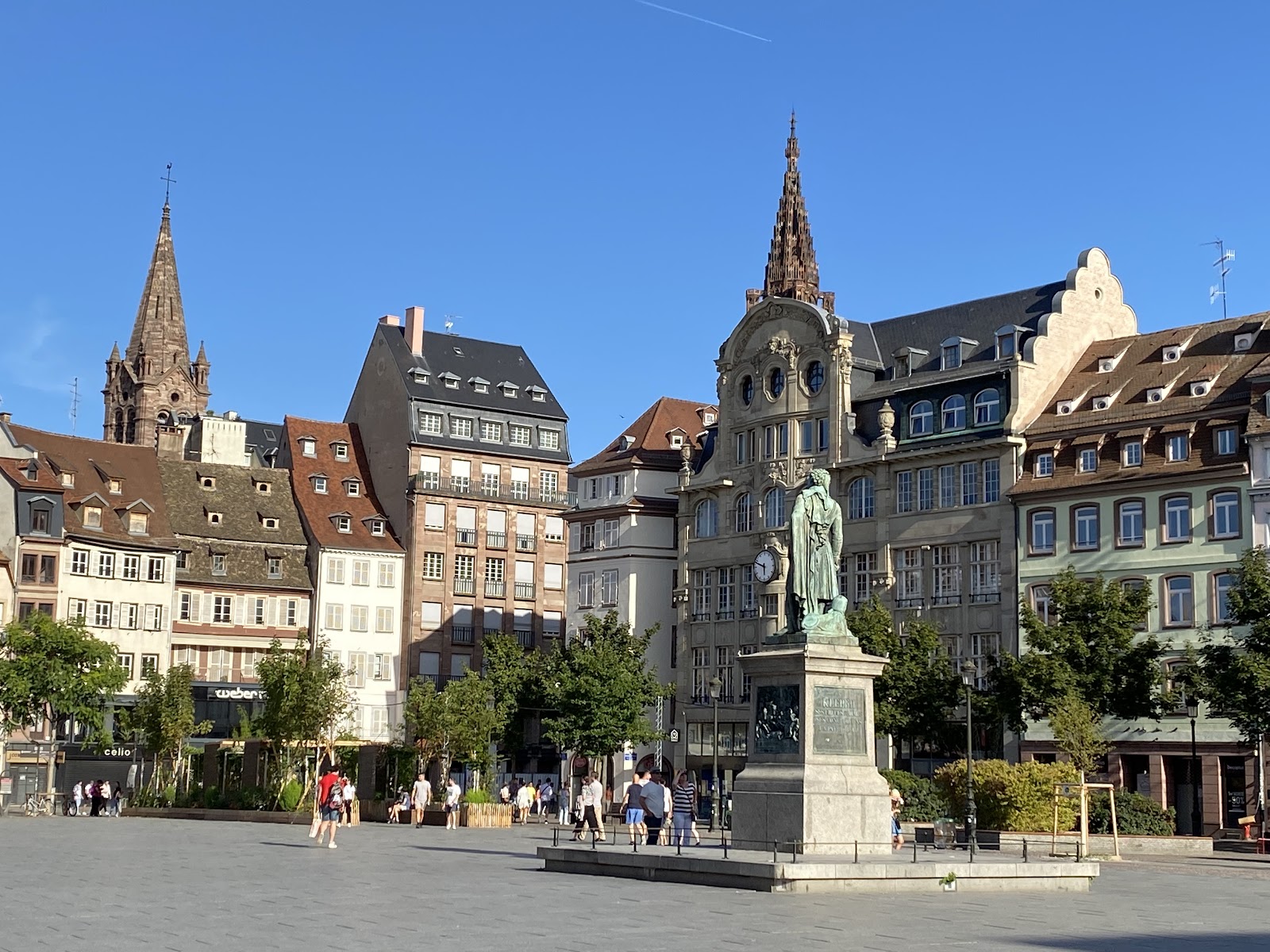
At the centre of Place Kléber stands a 21-metre bronze and stone monument to a man whose ashes are buried in its base and whose heart is in Paris. General Jean-Baptiste Kléber, born in Strasbourg in 1753, died by assassination in Cairo in 1800, and spent nearly two decades in a Marseille fortress before being brought home. Sculptor Philippe Grass finished the statue in 1838; the square took his name two years later.
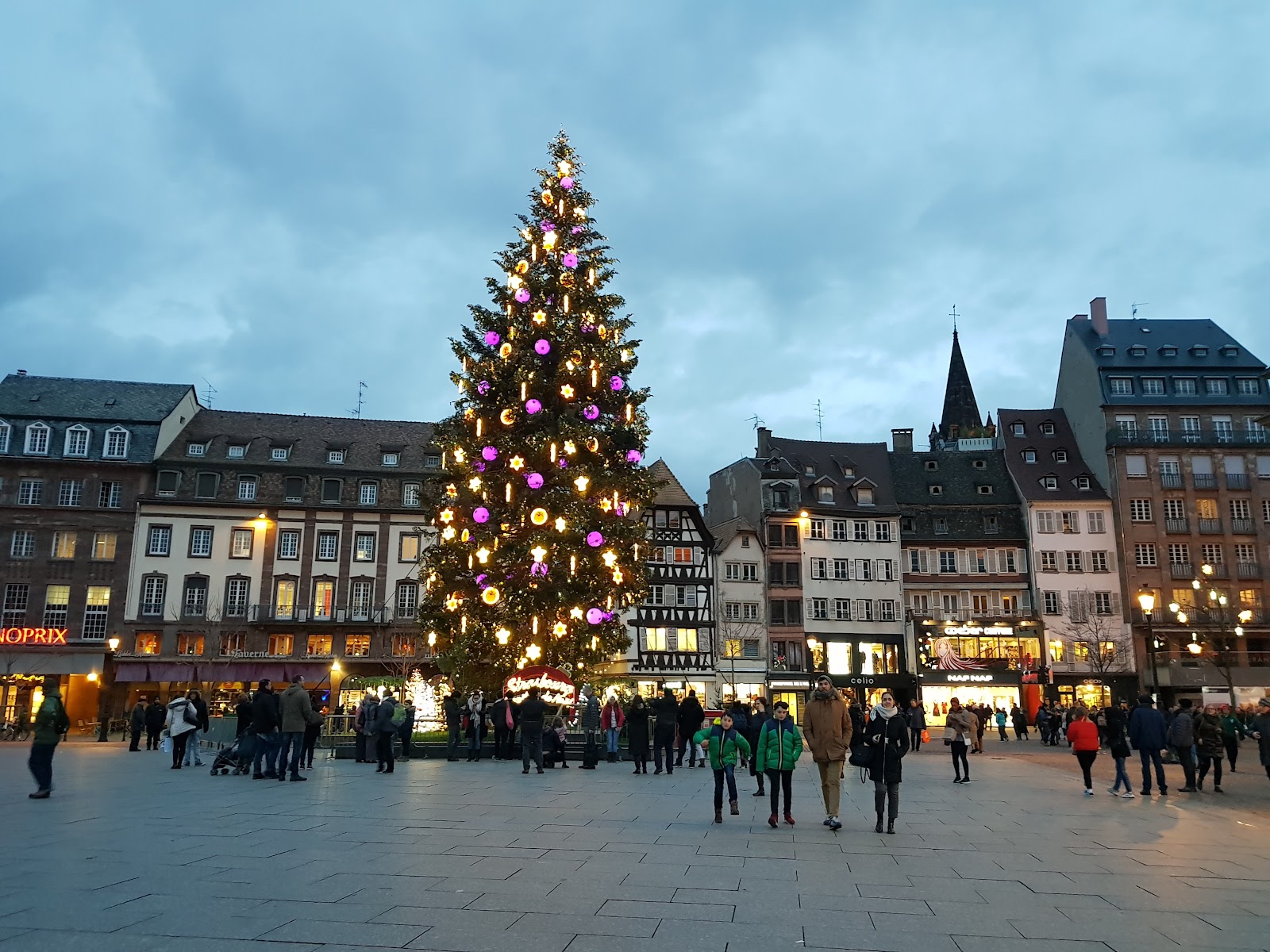
Today the square is the hinge of central Strasbourg — trams pass its western edge, children splash in the fountains in summer, and in December a 30-metre Christmas tree rises above everything, its lights syncing to music on the hour.
💛 What travellers fall for
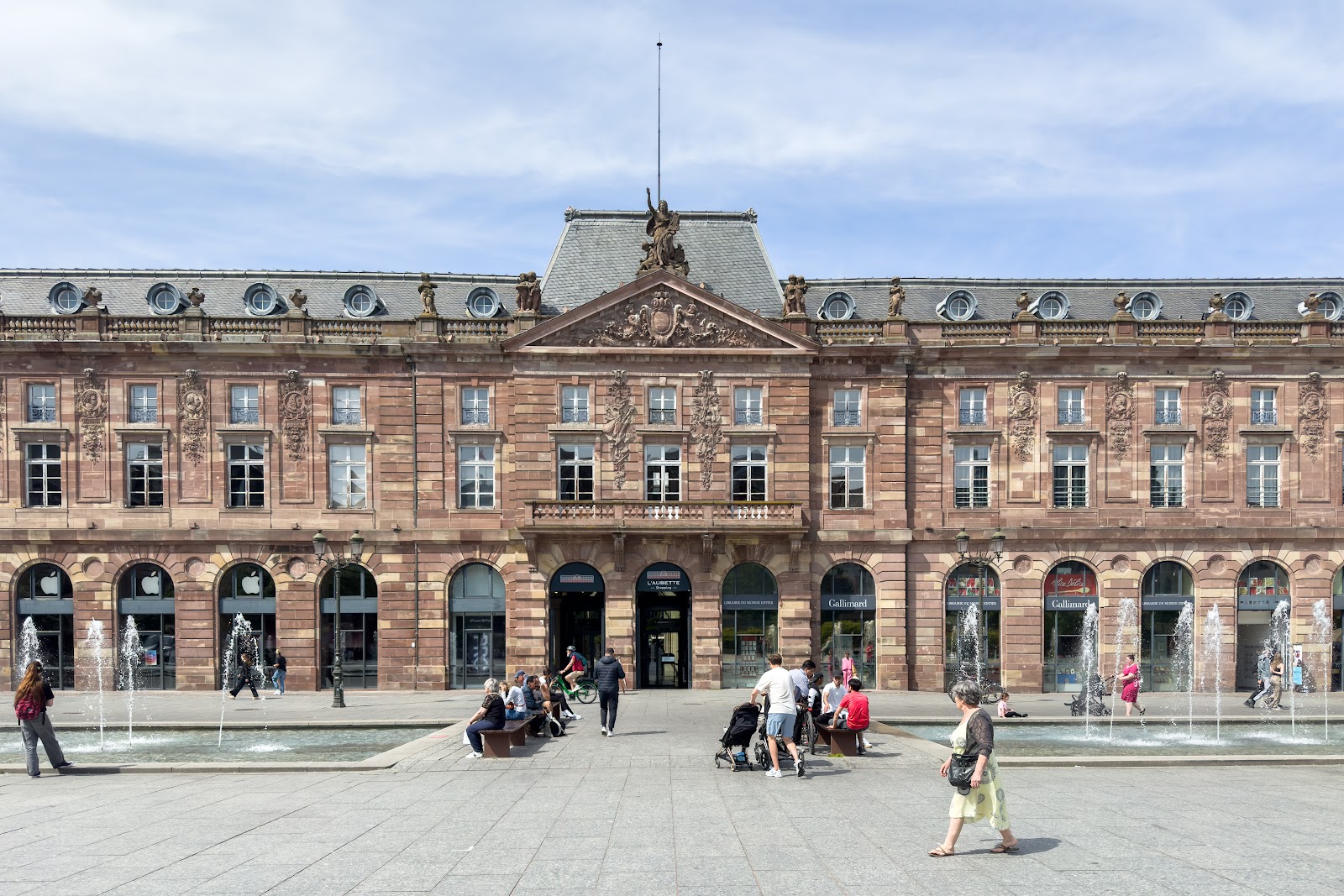
People who know the square well tend to pause at the Aubette's pink sandstone facade before going in — the building looks formal from outside, but the second floor holds a free museum around the 1920s interior that Theo van Doesburg, Hans Arp and Sophie Taeuber-Arp created together. Guides call it the Sistine Chapel of abstract art. Most visitors walk straight past it.
The story behind Place Kléber
The square began as Barfüsserplatz — barefoot square — named for the Franciscan monastery that stood here from the early 13th century. The monastery's cloister fell in 1532, its church a year later, and the space was eventually repurposed as a military parade ground, renamed Waffenplatz in the 17th century.
In 1768, Louis XV's architect Jacques-François Blondel drew plans for a grand ceremonial square. Only one piece was built: the Aubette, completed between 1765 and 1772 as a guardhouse for the Royal Garrison. The Revolution arrived before the rest could be funded. In the 1920s the Aubette's interior was transformed by Arp, Taeuber-Arp and Van Doesburg into something radical; it was stripped out in the 1930s and only restored in 2006. The square's current layout dates to landscape designer Gilles Clément's 2007 restructuring.
Good to know
Tram lines A, B, C, D and F stop at Homme de Fer, two minutes on foot. The Aubette 1928 museum is free. Budget 15 minutes for the square itself, 45 if you go upstairs. Underground parking sits directly beneath the square at roughly €2.50 per hour.
September and October are the easiest months to spend time here — mild, drier, and the square has room to breathe. December brings the Christkindelsmärik and the great tree, but also genuine cold near freezing and occasional snow. Summer afternoons can turn stormy quickly.
Where is Place Kléber?
More tickets & tours for Place Kléber
Book directly at the provider
What travellers say about Place Kléber
Beautiful square in Strasbourg, right next to the Cathedral and an abundance of shops, cozy cafes and restaurants. In the winter it turns into a magical Christmas wonderland. The storefronts are decorated to the nines with elaborate decorations, branches, bows, wreaths and other beautiful adornments. Excellent gathering and meeting spot when shopping, as it is centrally located in the middle of several different directions of shops. I highly recommend a visit during the Christmas season and in random Saturday's, as they always have a fresh market going on. You can buy tons of fresh produce, fresh creams and yogurts, meat pies and all sorts of yummy treats.
It's a nice area. During Christmas time is a lot better because of the Christmas market. The area looks safe too, there are plenty pf cafe, restaurants and stores in the area.
It's a very nice place to visit, only 15min walk from the Strasbourg Central Station. From here, only about 5 minutes walk to the Cathedral of Notre Dame Strasbourg. There are many gift shops, restaurants, and stores in this area. Definitely will be back to explore more.
We came here with our guide during Rhine River cruise. This beautiful historical square is located in the heart of Strasbourg. Some of the famous buildings are in this square like Opera House, City Hall and Governor's Palace. The French national anthem "La Marseillaise" was first sung here. There are many cafes and shops over here. This square is also very popular for weekly and Christmas market. Worth visiting...
It could one of the top Christmas market in the world. The whole old town of Strassbourg is closed off and dedicated as pedestrian zone and Christmas market. The decorations are quite extensive and unique. Some restaurants go all put and created beautiful designs.
More of Strasbourg
Discover where to stay, what to do and the best deals for your trip.
Explore Strasbourg →More attractions in Strasbourg
All of Strasbourg →

Background adapted from Wikipedia (CC BY-SA) · map data © OpenStreetMap contributors · ratings & place photos via Google · other photos with per-image credit. Ticket links may earn us a commission at no extra cost to you.