
Place de la Bourse
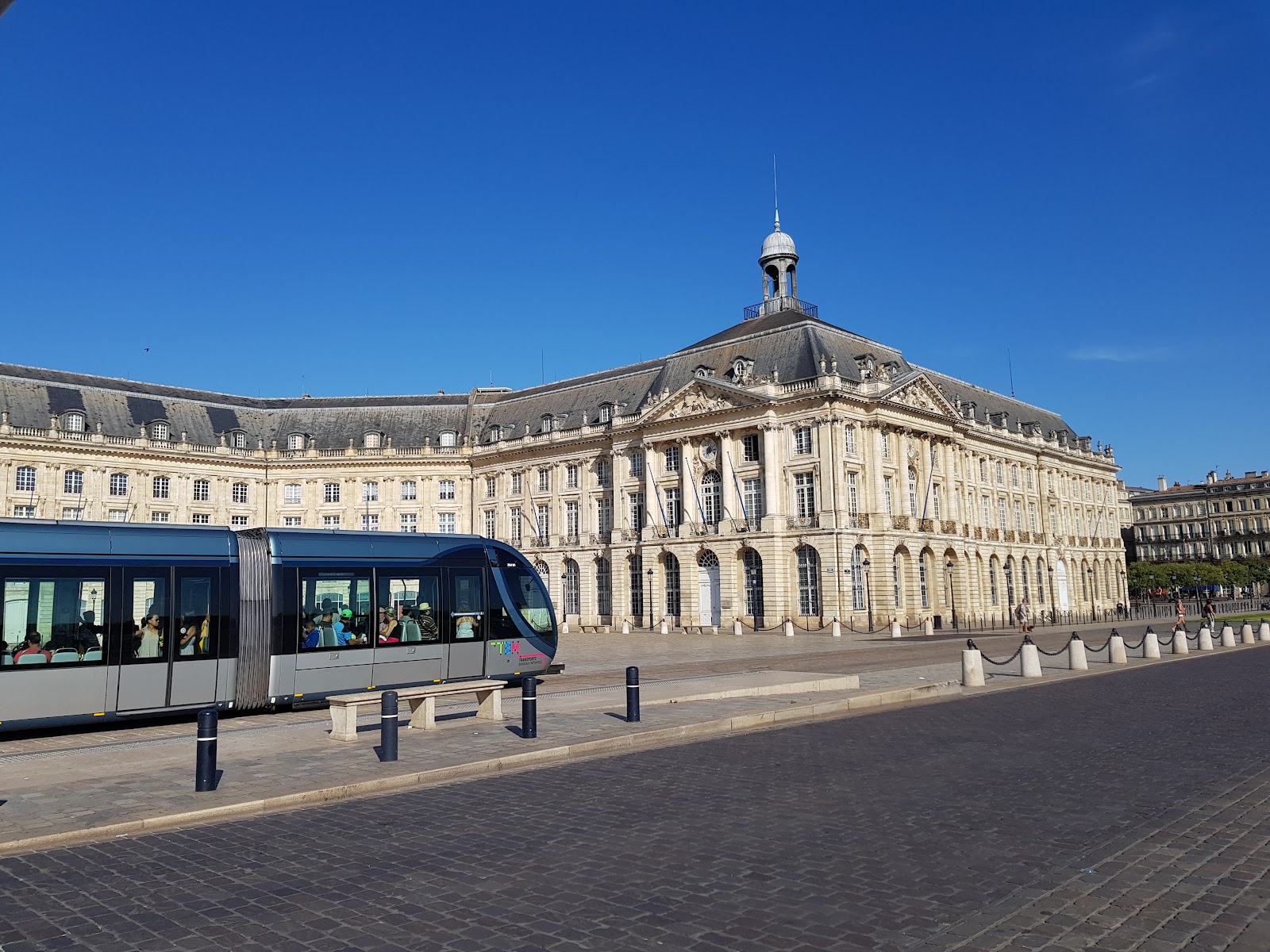
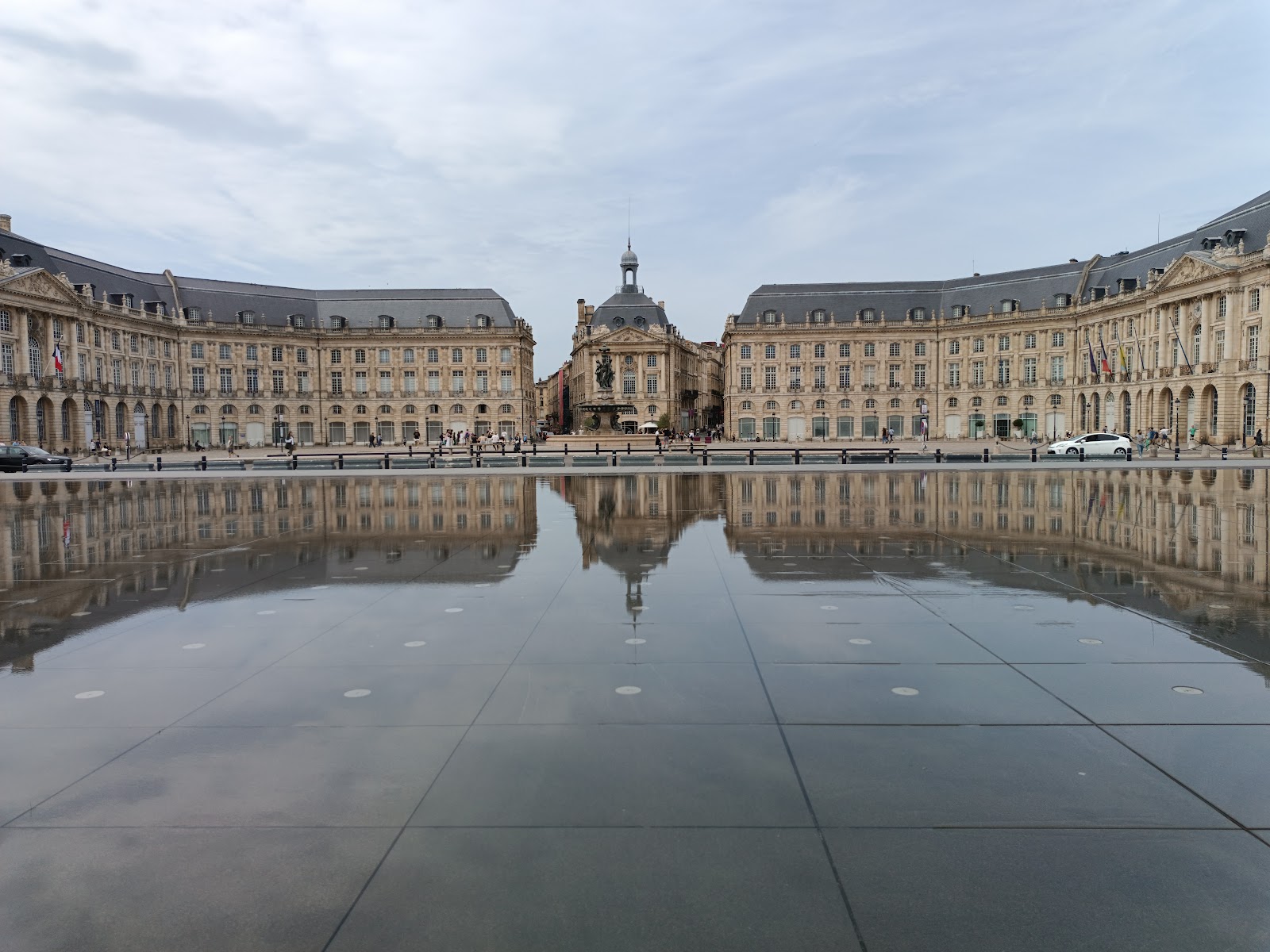
Stand at the edge of Place de la Bourse and count the faces. More than a hundred mascarons — sculpted stone visages — gaze down from the two flanking facades, each one slightly different, carved from the same warm Bordeaux limestone that turns the colour of honey at dusk. The square runs along the Garonne, open to the river on one side, and the effect is of a stage set that has been performing since 1749.
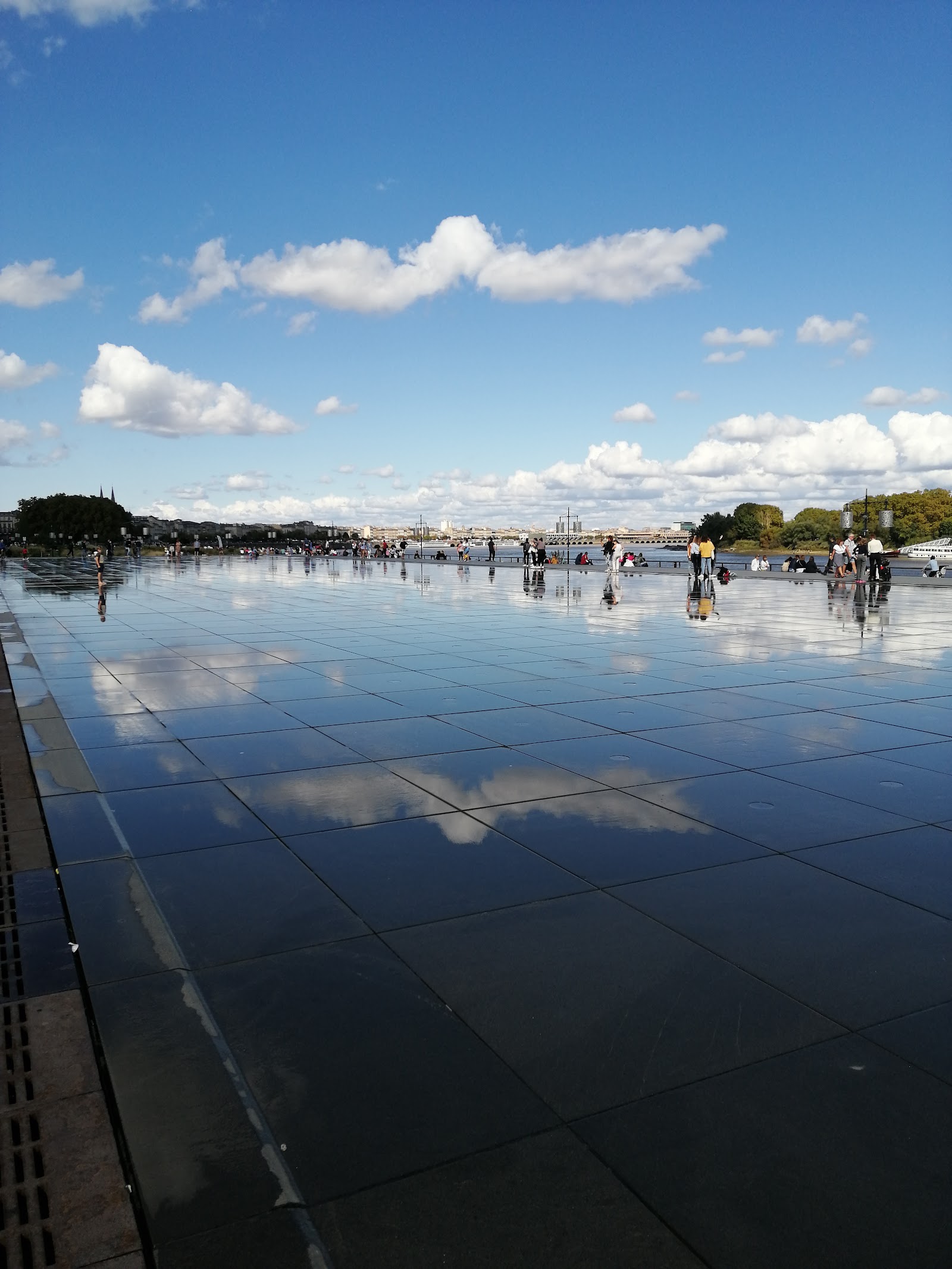
At your feet, the Miroir d'Eau spreads across 3,450 square metres, a sheet of water just two centimetres deep that doubles the classical architecture above it. Every twenty minutes or so the cycle resets: the mirror drains, a low fog rolls in, and the whole scene briefly disappears.
💛 What travellers fall for
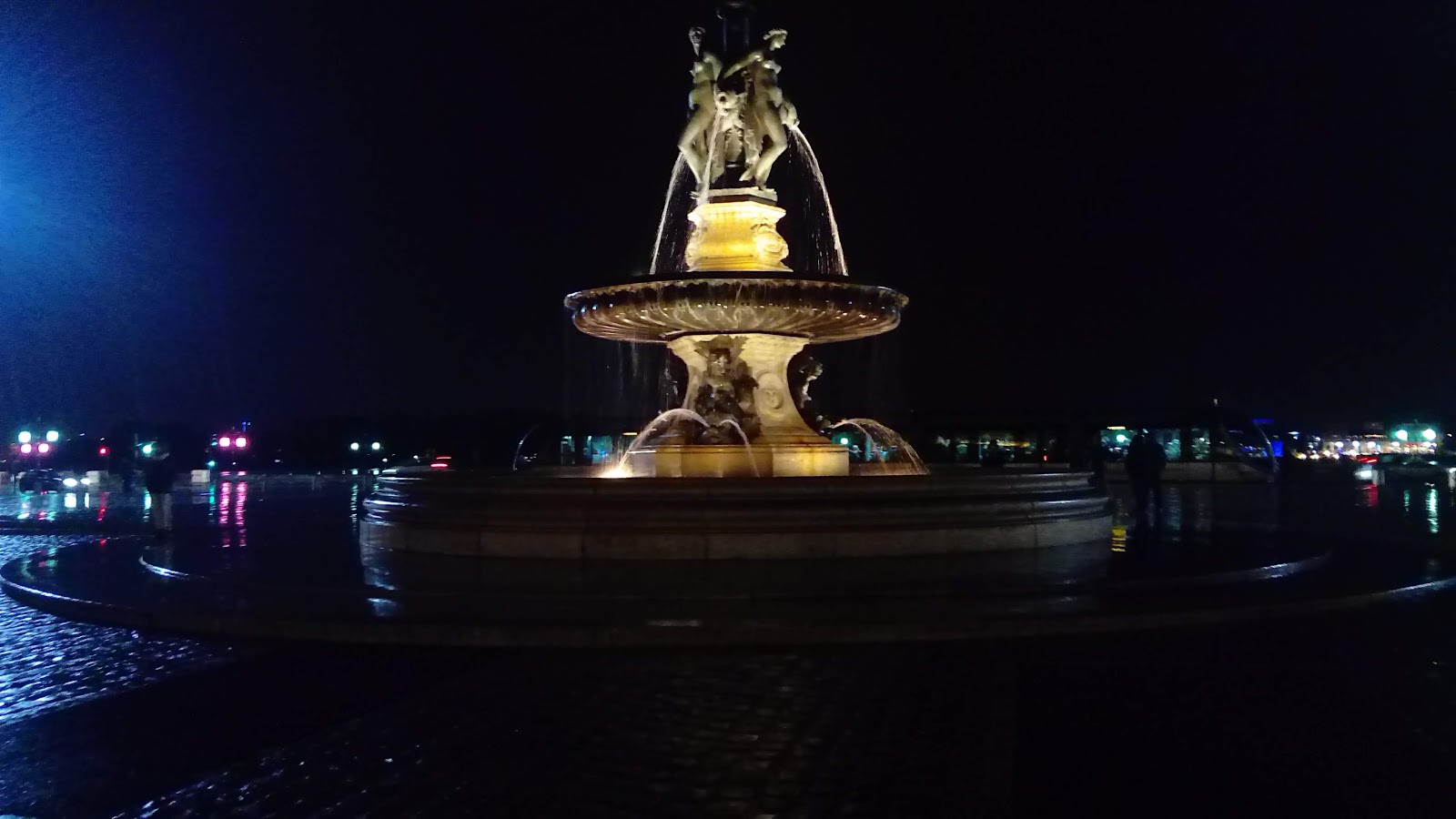
People who come back tend to time their visits deliberately. The fog phase of the Miroir d'Eau draws photographers around the hour before sunset, when the light on the limestone goes warmest. The Fontaine des Trois Grâces — Aglaia, Euphrosyne and Thalia in stone — reads differently once you know which Grace is which.
The story behind Place de la Bourse
The square took shape slowly. Intendant Claude Boucher had been lobbying the town aldermen and parliament since 1720 to open the city walls and create a riverside ensemble worthy of the Crown. The design came from Jacques Gabriel, and his son Ange-Jacques Gabriel — principal architect to Louis XV — oversaw its construction between 1730 and 1775. When the square was inaugurated in 1749, its stated purpose was to frame an equestrian statue of the king.
That statue did not survive the Revolution. The square moved through three names — Place Royale, Place de la Liberté, Place Impériale — before settling on its current one. In 1869 the Fontaine des Trois Grâces, designed by Louis Visconti with sculpture by Charles Gumery, took the statue's place at the centre. The 2006 addition of Michel Corajoud's Miroir d'Eau brought the ensemble into the present tense. UNESCO recognised the whole as an outstanding 18th-century urban composition in 2007.
Good to know
Tram Line C stops directly at Place de la Bourse. The square is free and open around the clock; the Miroir d'Eau runs 10am–10pm but shuts in winter due to frost risk. The Musée National des Douanes inside the Hôtel des Fermes has its own hours and entry fee — worth checking separately.
Spring and autumn keep the crowds manageable and the light flattering on the limestone. Summer evenings are long and lively along the Garonne. Come winter, the Miroir d'Eau shuts down to avoid frost damage, which changes the character of the square considerably.
Where is Place de la Bourse?
Location
- In Bordeaux
- 44.8412, -0.5697
- Open in Google Maps
More tickets & tours for Place de la Bourse
Book directly at the provider
More of Bordeaux
Discover where to stay, what to do and the best deals for your trip.
Explore Bordeaux →More attractions in Bordeaux
All of Bordeaux →
Background adapted from Wikipedia (CC BY-SA) · map data © OpenStreetMap contributors · ratings & place photos via Google · other photos with per-image credit. Ticket links may earn us a commission at no extra cost to you.