
Place Bellecour
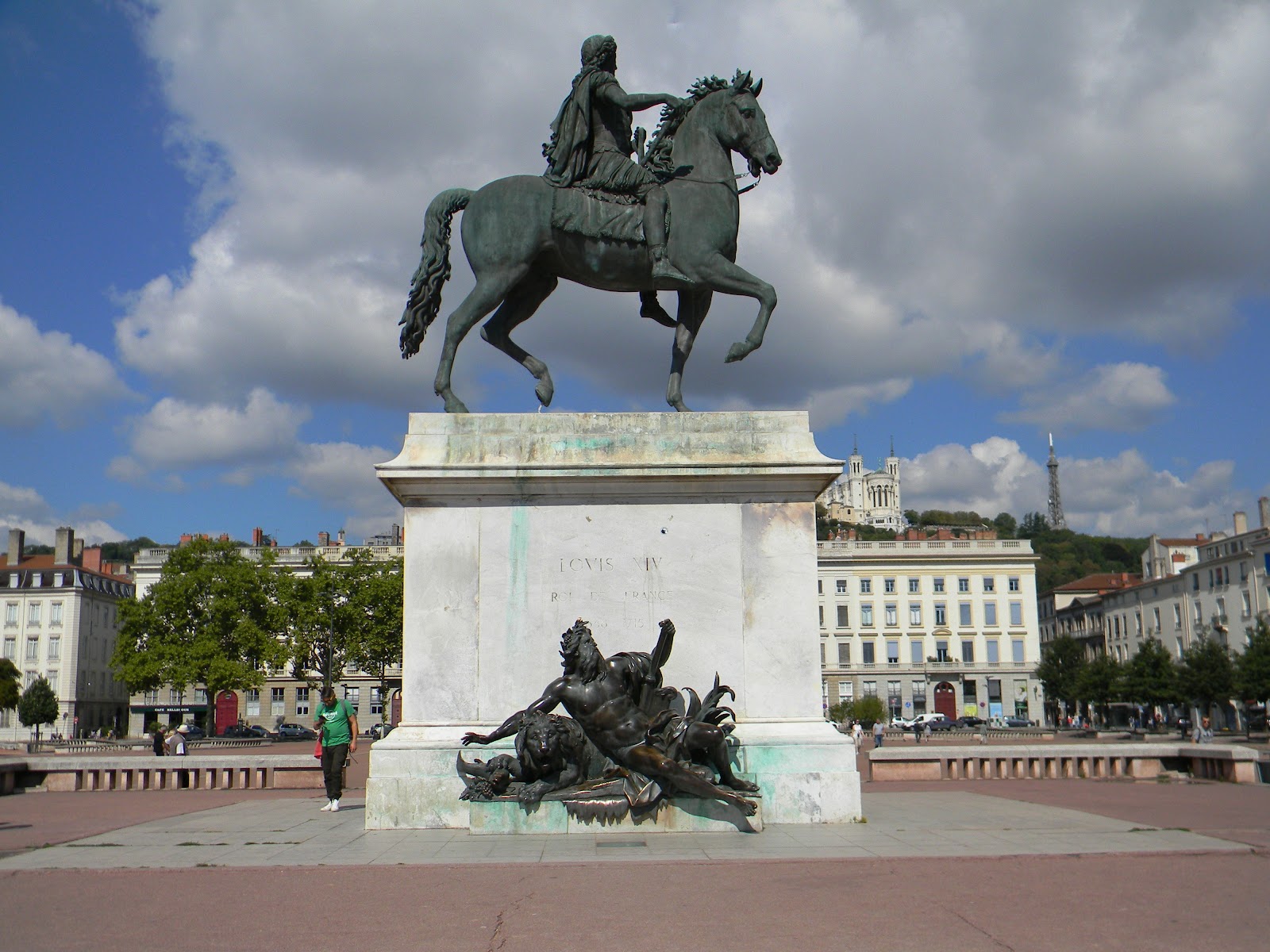
At 312 metres long and 200 wide, Place Bellecour is simply enormous — one of the largest pedestrian squares in Europe, and the point from which every distance in Lyon is measured. Stand anywhere near the centre and the city opens around you: the red-brick facades to the east and west, the equestrian Louis XIV up on his plinth, and somewhere near the southern end, a small copper boy in a scarf sitting beside an aviator.
That figure is Antoine de Saint-Exupéry, born in Lyon in 1900, rendered here alongside the Little Prince he invented. It is easy to walk past the statue in a square this size. Worth not doing so.
💛 What travellers fall for
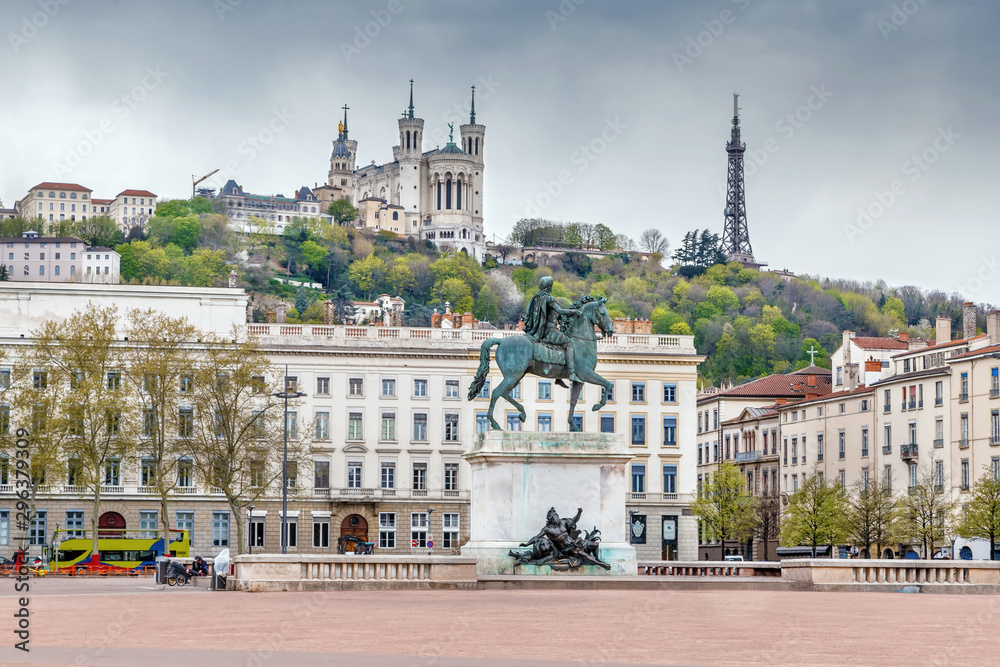
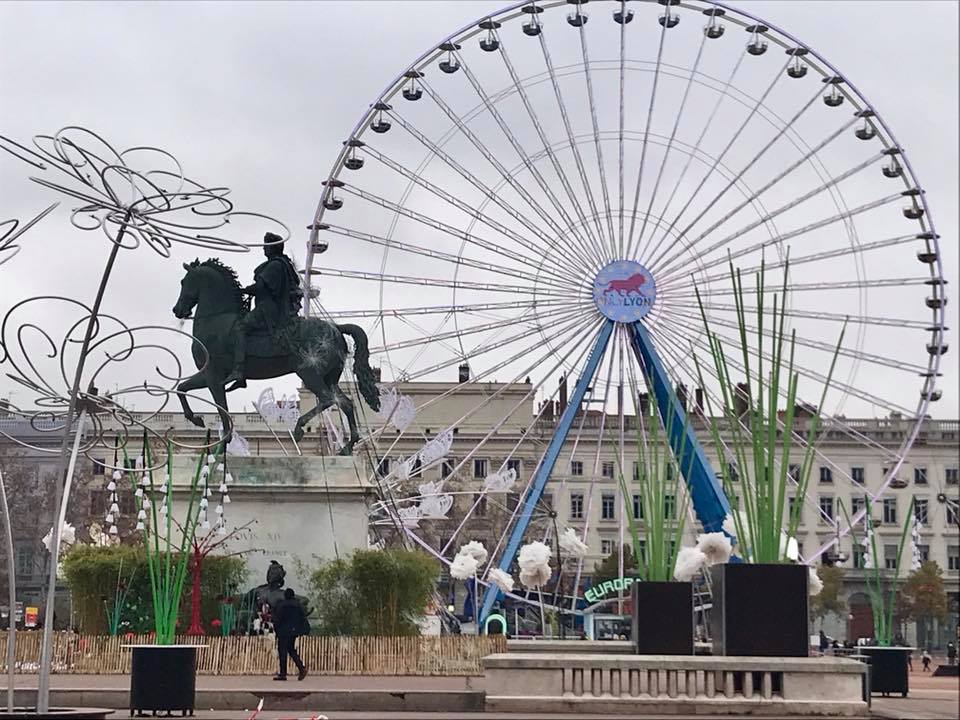
People who know the square well tend to use it as Lyonnais do: as a meeting point, specifically 'sous la queue du cheval' — under the horse's tail, meaning the Louis XIV statue. The Friday-night roller ride departs from here. In winter, a Ferris wheel goes up near the southern end and an ice rink takes over a section of the terracotta paving.
The story behind Place Bellecour
The name comes from 'Bella curtis' — a vineyard belonging to the Archbishop of Lyon in the late twelfth century, meaning roughly 'beautiful garden'. For centuries the land was contested, swampy, and largely ignored. In 1604, Henry IV compelled the city council to acquire the pasture and make it a proper public square, though the Archbishop's heirs fought the decision in court for years.
Louis XIV eventually secured ownership in 1708, and the royal architect Robert de Cotte designed the matching facades along the eastern and western edges. A bronze equestrian statue of Louis XIV, cast by Martin Desjardins, stood at the centre from 1713 until the Revolution destroyed it in 1793. The current statue, by sculptor François-Frédéric Lemot, was installed in 1825 and completed a full restoration in 2024. The allegorical figures of the Saône and Rhône rivers, made by the Costou brothers in 1720, stood beside it for three centuries before moving to the Musée des Beaux-Arts in 2021.
Good to know
Metro lines A and D both stop at Bellecour — the easiest approach from anywhere in the city. The square is open and free around the clock. The tourist office sits on the Rhône side if you need it. Give yourself time to cross the full length on foot; it is further than it looks.
Lyon summers are warm and largely dry, which makes the open square comfortable from May through September, though the lack of shade means midday in July can feel relentless. Winter brings cold, occasionally foggy days — bearable, and worth it if you want the Ferris wheel and the ice rink.
Where is Place Bellecour?
More tickets & tours for Place Bellecour
Book directly at the provider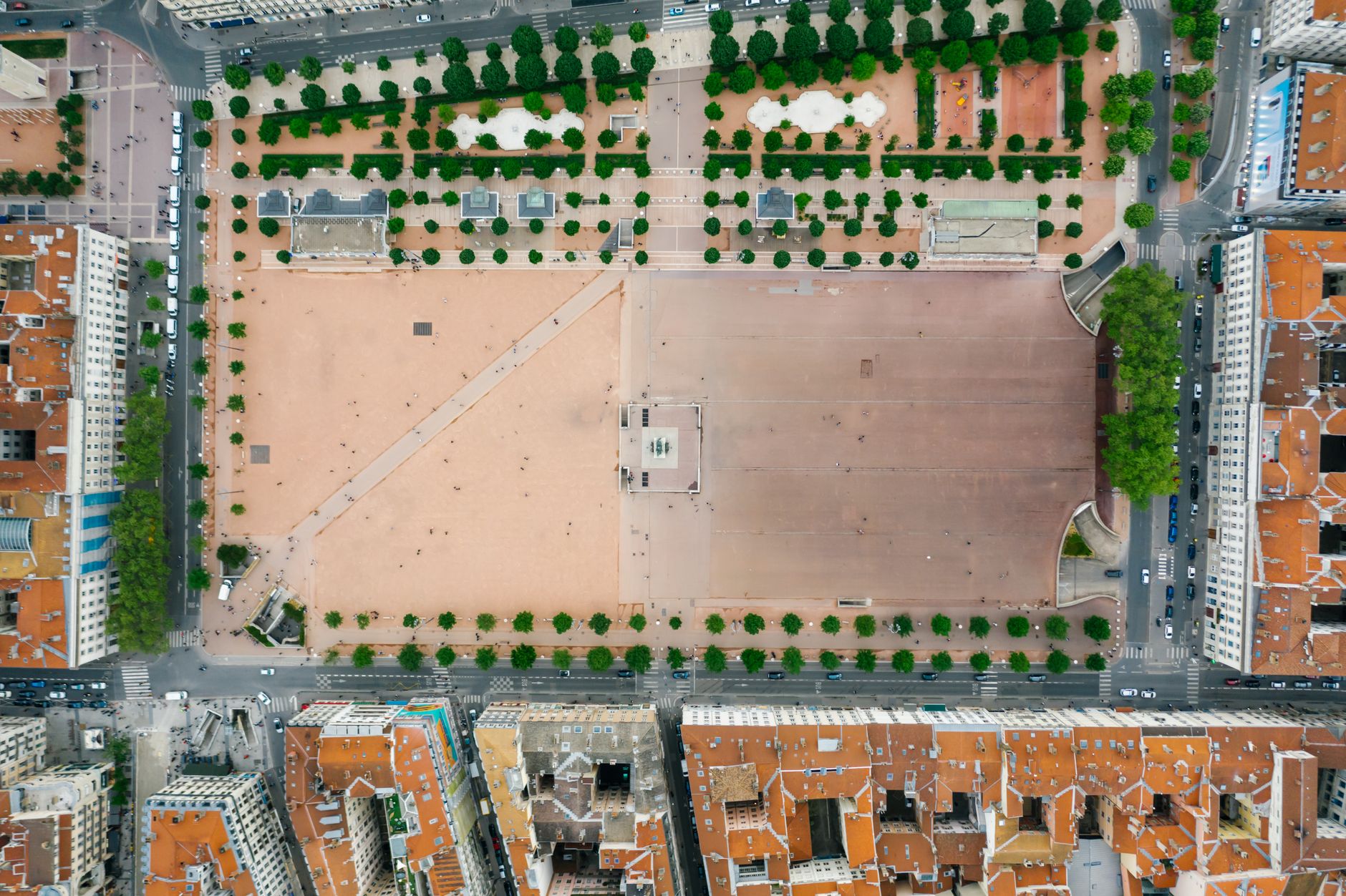
What travellers say about Place Bellecour
Large city square that could really benefit from more trees, but there are practical obstacles for city implement it: just below the surface there is a massive underground garage and 2 lines of Metro, so no space for tree roots… Another reason is that historically the square was an open parade grounds. The attempt to solve the problem by installing colorful masts and arches looks somewhat weird on historic square.
Place Bellecour is one of the largest open squares in Europe and a central landmark in Lyon. Its expansive layout offers unobstructed views and serves as a key urban hub connecting major shopping streets, cultural sites, and public transport lines. The square is well-maintained, with wide pedestrian areas that make it ideal for walking, meeting, or simply passing through the city center. A notable feature is the statue of Louis XIV, which adds historical significance to the space. Accessibility is excellent, with direct connections to metro and bus networks, making it a convenient starting point for exploring Lyon. While the square itself is relatively minimal in terms of shade and seating, its central location compensates with easy access to nearby cafes, shops, and attractions. Overall, Place Bellecour functions more as a strategic urban space than a leisure park, offering strong connectivity and a sense of scale that reflects the city’s structure.
Place Bellecour was never only a promenade for the addresses around it. The façades and open sweep suited display, and the good society used it that way, but the square also lay across the city’s daily routes. To live south and go north for trade, administration, school, worship, or sociability meant crossing the same exposed ground, so prestige and passage were bound together from early on. Later access widened that mix further, bringing in people who did not live on its edges but used it as Lyon’s common threshold. That is why Bellecour still feels unsettled in a productive way. It has to carry ceremony, shortcuts, waiting, events, and rest on the same hard, heat-prone surface, and every attempt to cool or soften it also asks how a shared square should be lived.
Potentially very nice large park in the center of the city. But at the moment needs some extensive cleaning and maintenance. I'm sure that will likely happen once it finally stops raining....
It used to be one of Europe most beautiful square. Now it is horrible with a permanent modern fixture which has destroyed the view and perspective
More of Lyon
Discover where to stay, what to do and the best deals for your trip.
Explore Lyon →More attractions in Lyon
All of Lyon →
Background adapted from Wikipedia (CC BY-SA) · map data © OpenStreetMap contributors · ratings & place photos via Google · other photos with per-image credit. Ticket links may earn us a commission at no extra cost to you.