
Pisa Cathedral (Duomo di Pisa)
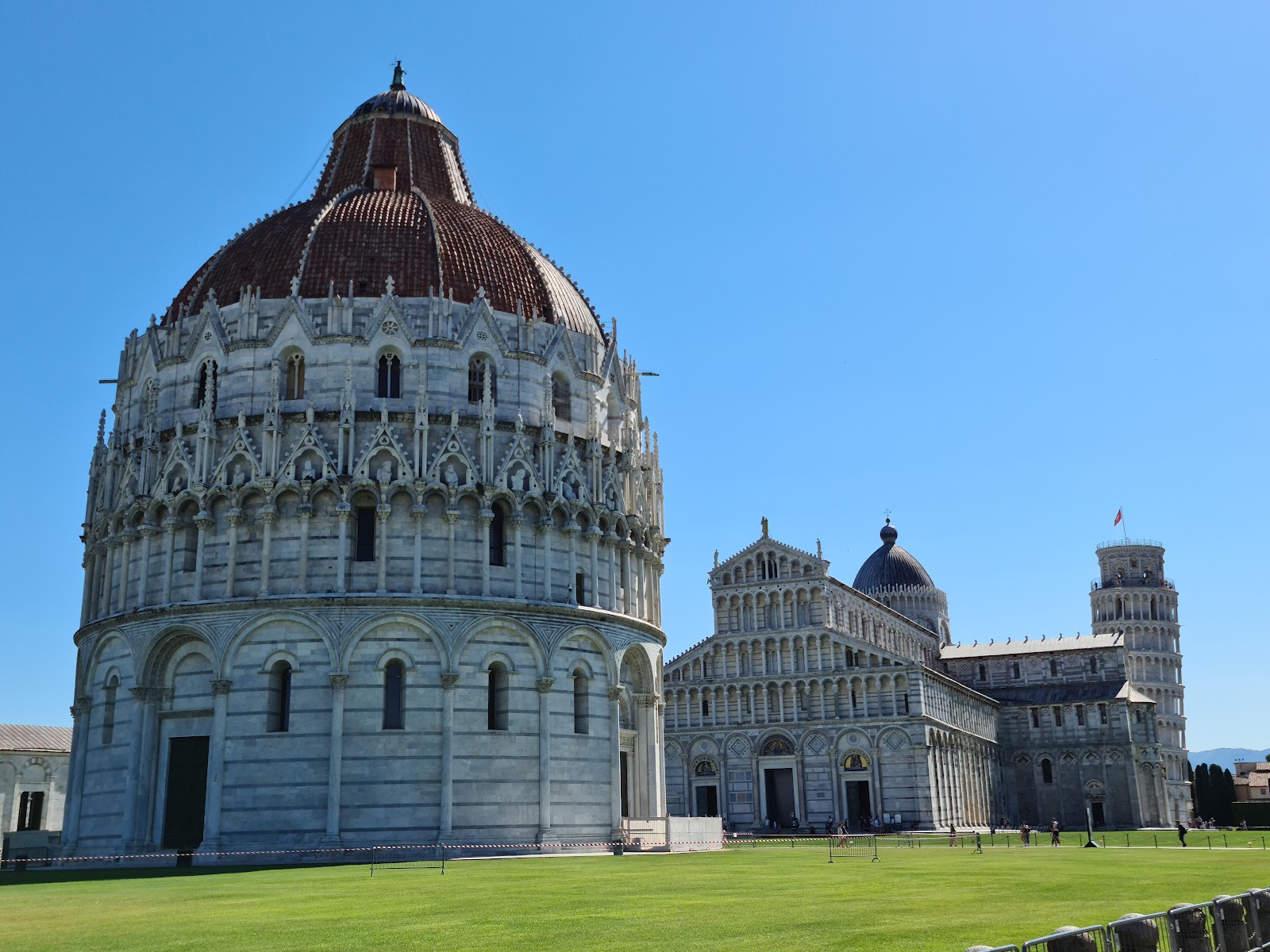
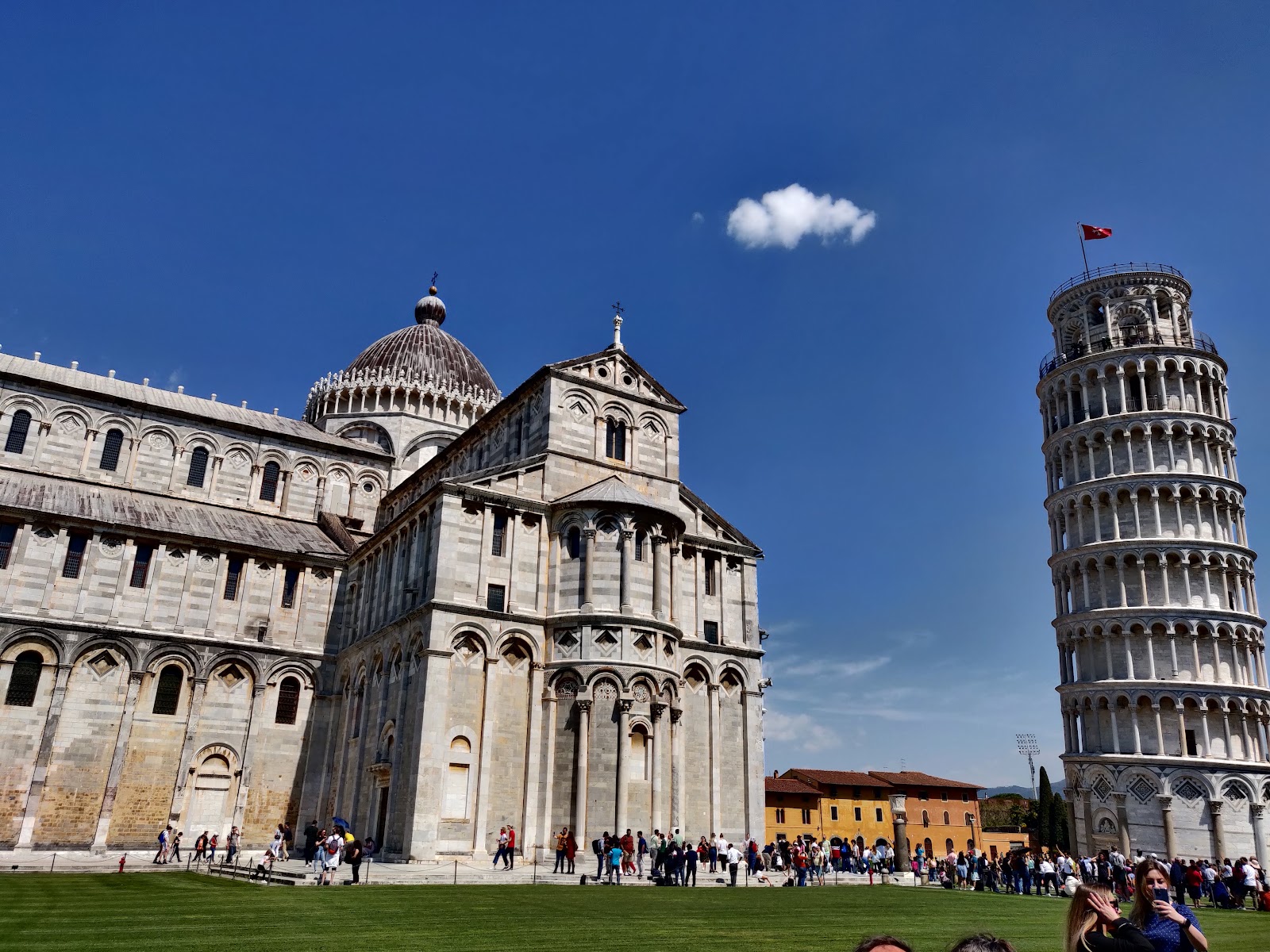
Buscheto's tomb is set into the left side of the façade, which is a quiet fact that reorients everything: the man who broke ground here in 1064 never left. The cathedral he began — dedicated to the Assumption of the Virgin Mary and built in the style now called Pisan Romanesque — took more than a century to complete, survived a catastrophic fire in 1595, and still draws you in through bronze doors cast in 1602 by sculptors working in Giambologna's circle.
Inside, the scale is the first thing you register. Then the pulpit by Giovanni Pisano, carved between 1302 and 1310, dismantled after the fire and not reassembled until 1926 — intricate, narrative, impossible to take in all at once. In the apse, a mosaic figure of Saint John the Evangelist carries an attribution to Cimabue, dated to around 1302.
💛 What travellers fall for
People who return tend to arrive early, when the free timed tickets are still available at the on-site office and the interior is quieter. The Pisano pulpit rewards a slow circuit — each carved panel tells a different story, and the light from the nave shifts enough over an hour to change what you notice.
The story behind Pisa Cathedral (Duomo di Pisa)
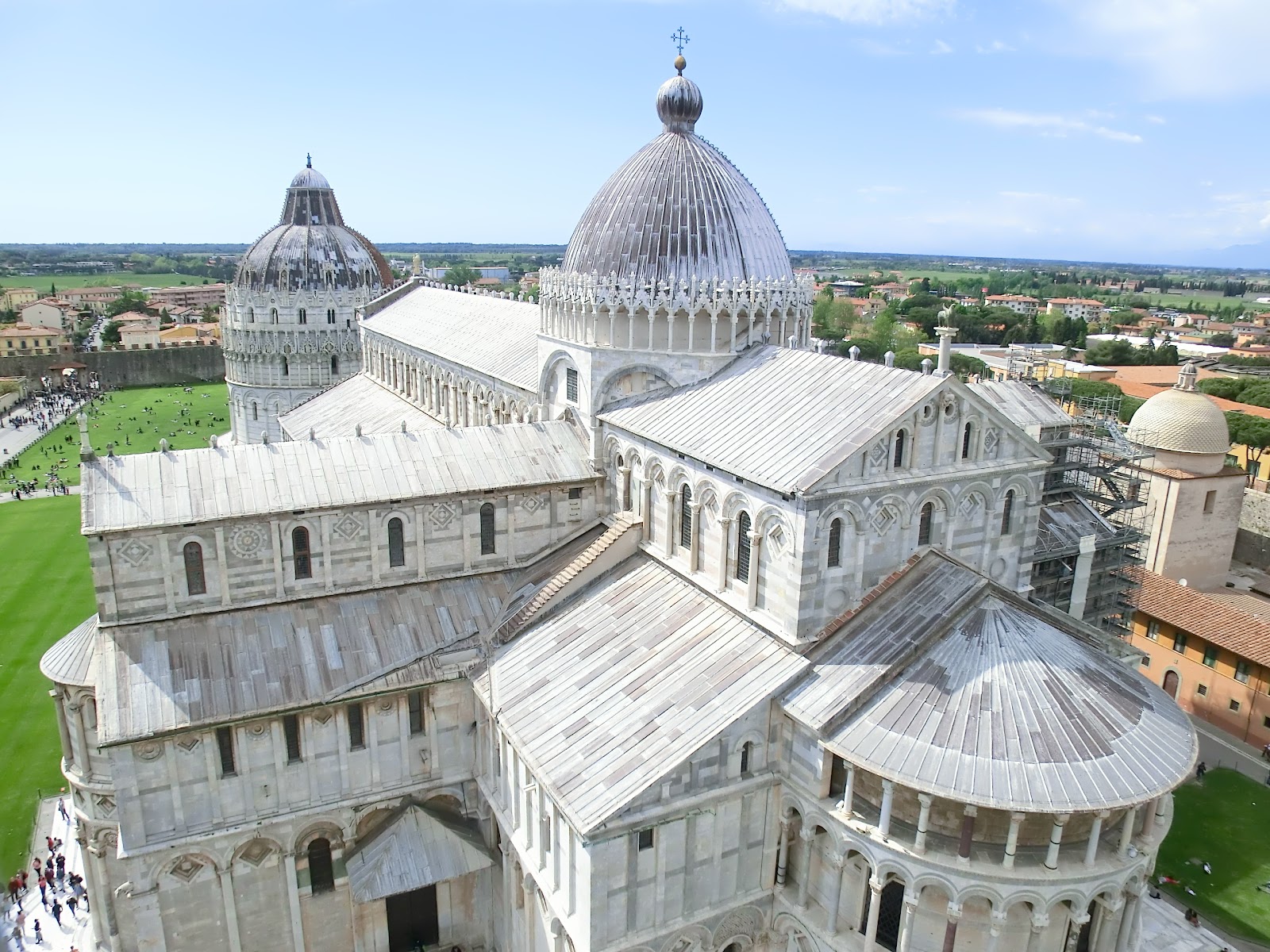
Construction began in 1064 under the architect Buscheto, and the cathedral was consecrated on 26 September 1118 by Pope Gelasius II. Early in the 12th century, the architect Rainaldo extended the nave by three bays, enlarged the transept, and designed a new façade — work completed by 1180, the date recorded on the bronze knockers made by Bonanno Pisano for the main door, the only door to survive what came next.
In 1595 a fire gutted much of the interior. Ferdinando I de' Medici, Grand Duke of Tuscany, funded the new bronze façade doors, completed in 1602. Giovanni Pisano's pulpit — finished in 1310, dismantled in the post-fire restoration — wasn't put back together until 1926, more than three centuries later.
Good to know
Entry is free but requires a ticket from the on-site office; timed slots go quickly in summer. Bus lines 1, 3, or 11 run from Pisa Centrale, or it's a straightforward 20-minute walk along Via Roma. Hours extend to 8pm April through September — late afternoon is a good window. Shoulders and knees should be covered.
Where is Pisa Cathedral (Duomo di Pisa)?
More tickets & tours for Pisa Cathedral (Duomo di Pisa)
Book directly at the provider
What travellers say about Pisa Cathedral (Duomo di Pisa)
Beautiful cathedral. Would have been nice if an audio-guide was provided. The entrance is free, but timed, so you need to get the free ticket at the office near the Cathedral. Otherwise, you can buy a combined ticket online with an entrance to another venue, and get into the Cathedral at any time.
Another remarkable historic building within Piazza del Duomo, Pisa Cathedral is well worth pausing to admire. Although we didn’t go inside, the striking white marble façade, elegant arches, and intricate detailing showcase why it is considered one of the finest examples of Pisan Romanesque architecture. Built in the 11th century, the cathedral reflects Pisa’s wealth and influence as a powerful maritime republic. Standing alongside the Leaning Tower and Baptistery, it forms part of one of Italy’s most iconic historic squares. Even from the outside, its beauty and significance are unmistakable. Don’t let the Leaning Tower steal all your attention—the cathedral is a masterpiece in its own right.
The Pisa Cathedral is absolutely stunning, both inside and out. The architecture is incredibly beautiful and full of detail. I highly recommend buying the combined ticket for all the buildings because it is definitely worth the price. You can also purchase tickets as a walk-in, which is very convenient. Visitors should dress modestly, covering shoulders and knees is recommended when entering the cathedral.
Pisa is so much more than just the Leaning Tower — and that's exactly what surprised us most. Yes, the tower is iconic and absolutely worth climbing — easier than expected, with a stunning view over the city from the top. But the real gem is the Piazza dei Miracoli as a whole. The Cathedral, the Baptistery, the green lawn surrounding everything — the scale and beauty of it all is hard to put into words. You could spend hours just wandering around and taking it all in. Don't make the mistake of just snapping a photo of the tower and leaving. Give Pisa the time it deserves — you won't regret it.
The Cattedrale di Pisa is an impressive example of Romanesque architecture that immediately captures attention in the Piazza dei Miracoli. Its grand façade, layered with white and grey marble, is beautifully detailed with arches and columns that give it a sense of both elegance and strength. Stepping inside, the atmosphere shifts to something more calm and awe-inspiring, with high ceilings, intricate mosaics, and richly decorated interiors. One of the highlights is the stunning ceiling, covered in gold detailing that reflects light throughout the space, creating a warm and almost regal feel. The artwork and sculptures add depth to the experience, each telling a part of the cathedral’s long history. Despite the number of visitors, it still manages to feel peaceful. Overall, the Cattedrale di Pisa offers a perfect balance of beauty, history, and atmosphere, making it a must-see when visiting the city.
More of Pisa
Discover where to stay, what to do and the best deals for your trip.
Explore Pisa →More attractions in Pisa
All of Pisa →

Background adapted from Wikipedia (CC BY-SA) · map data © OpenStreetMap contributors · ratings & place photos via Google · other photos with per-image credit. Ticket links may earn us a commission at no extra cost to you.