
Piazza dei Miracoli (Piazza del Duomo)
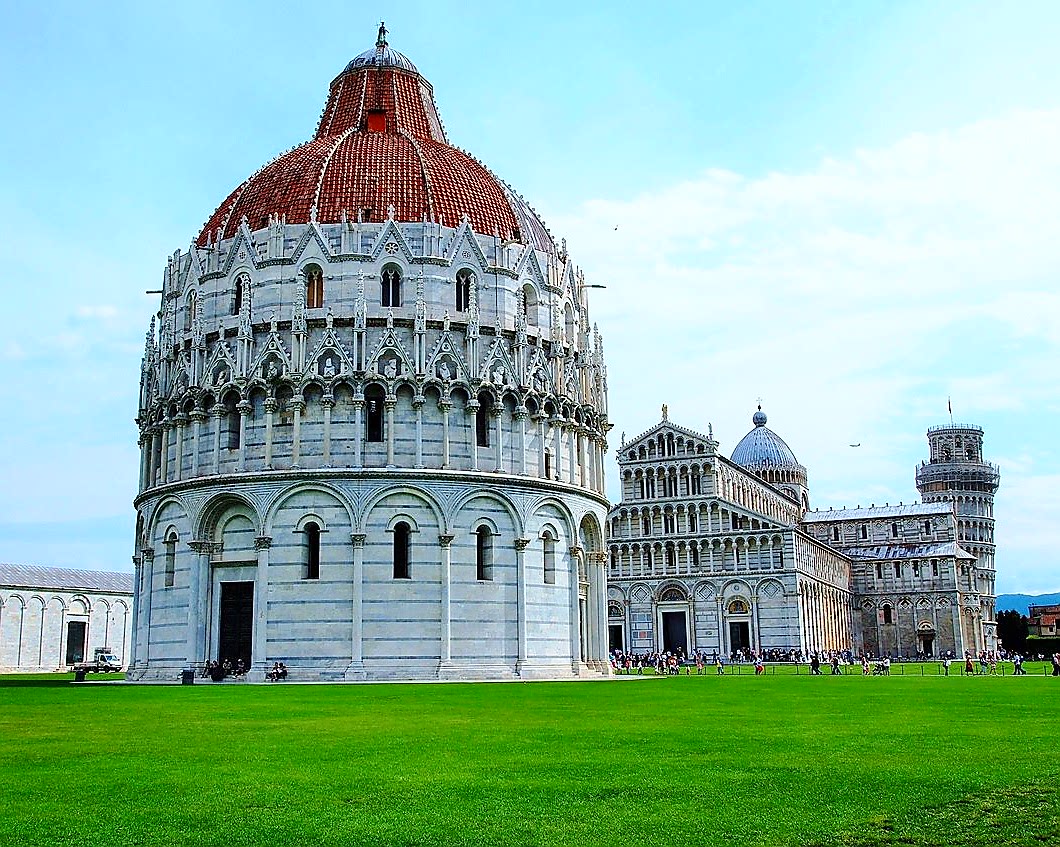
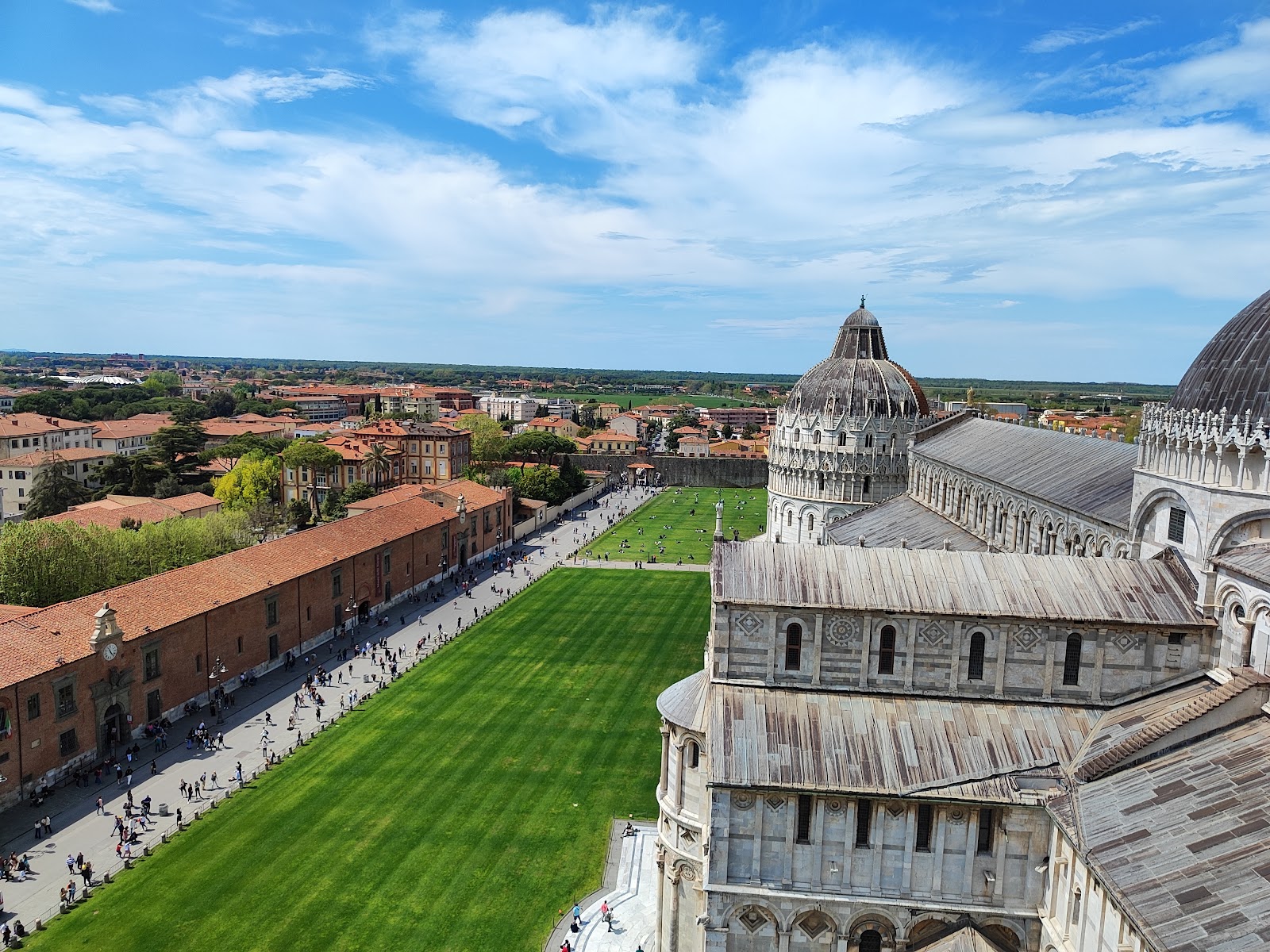
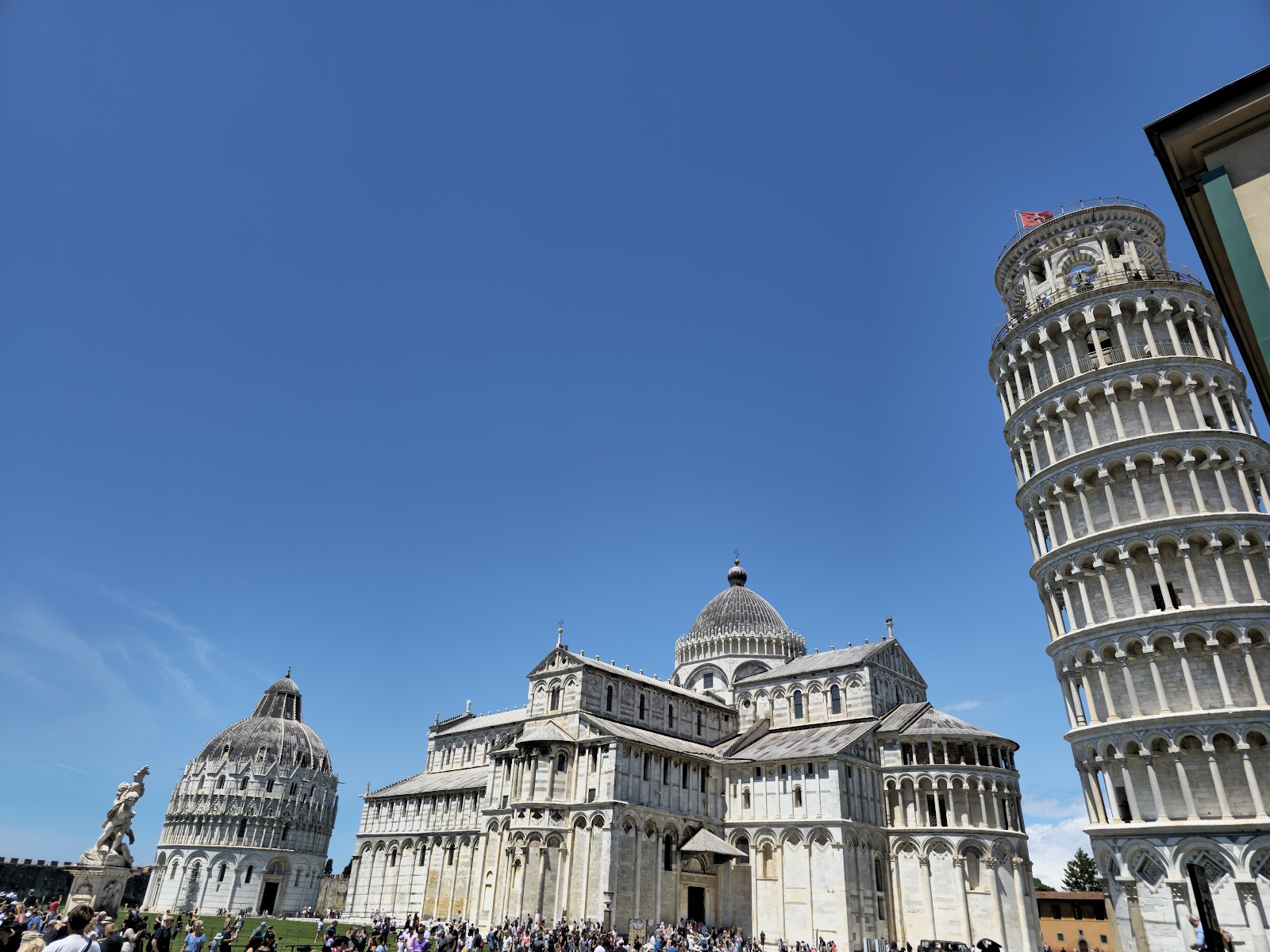
The four monuments of the Piazza dei Miracoli stand on a lawn of startling green, their white marble catching light in a way that makes the whole compound look slightly unreal — a stage set, except that the oldest of them has been here since 1064. What strikes you first, walking through the gate in the medieval wall, is how close together they are: cathedral, baptistery, tower and cemetery arranged within a walled 8.87-hectare rectangle, each one enormous, each one nearly touching the next.
The square is not a city piazza in any ordinary sense. There are no cafés along its edges, no market stalls. It exists for these four buildings alone, and the grass between them is where you slow down.

💛 What travellers fall for
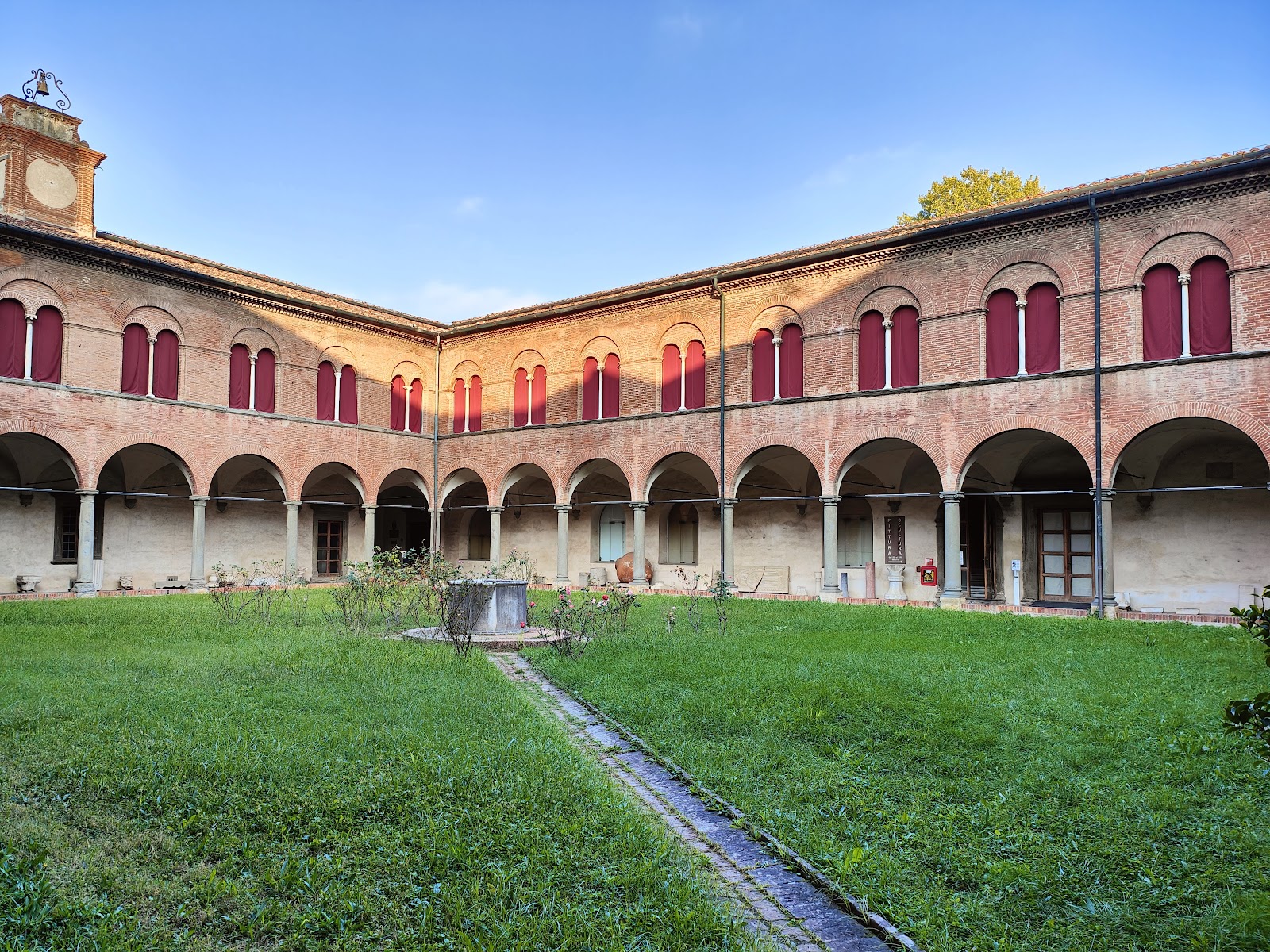
People who come back tend to arrive early — the tower's pre-10am slots are genuinely quieter — and save the Camposanto for last. Its Gothic cloister, built around soil reputedly brought from Calvary during the Third Crusade, is the one building on the square where you can sit with the silence for a while.
The story behind Piazza dei Miracoli (Piazza del Duomo)
The cathedral came first. Architect Buscheto broke ground in 1064; it was consecrated on 26 September 1118, its façade of grey marble, white stone and coloured discs later completed by Rainaldo. The Baptistery followed in August 1153, designed by Diotisalvi in Romanesque style — Nicola and Giovanni Pisano eventually carried it to completion in 1363. The tower began in 1173 and almost immediately began to sink on its south side, halting construction for nearly a century before work resumed under Giovanni di Simone in 1272, the upper floors built deliberately taller on one side to compensate for the lean.
The Camposanto — a Gothic cloister enclosing soil an archbishop reportedly brought back from Calvary during the Third Crusade — was begun in 1278 by Giovanni di Simone and finished in 1464. The square reached its current form in the 19th century when Alessandro Gherardesca cleared away the smaller buildings that had accumulated around the four monuments, and in 1987 UNESCO recognised the compound as a World Heritage Site.
Good to know
Opening hours shift significantly by season: April through August the square stays open until 22:00, which makes an evening visit worth planning. The Leaning Tower requires a timed ticket (€20, no under-18 discount; children under 8 not admitted). A combined ticket covers the Duomo, Baptistery and Camposanto. From Pisa Centrale the square is walkable in about 20 minutes.
Summer (June–August) brings full sun and little shade on the open lawn; mornings and evenings are noticeably more comfortable. Winter visits are quieter and the marble takes on a cooler, starker quality, though the shorter opening hours (until 18:00) limit your time.
Where is Piazza dei Miracoli (Piazza del Duomo)?
More tickets & tours for Piazza dei Miracoli (Piazza del Duomo)
Book directly at the provider
What travellers say about Piazza dei Miracoli (Piazza del Duomo)
Amazing !! The Pisa Cathedral, also called the Duomo di Pisa or Cathedral of Santa Maria Assunta, is the main cathedral in Pisa’s famous Piazza dei Miracoli. Construction began in 1064 and it was consecrated in 1118, making it one of the finest examples of Pisan Romanesque architecture. The cathedral was designed by architect Buscheto and later expanded by Rainaldo, whose work is visible in the grand marble façade. Its design blends Romanesque, Byzantine, Islamic, and classical influences, reflecting Pisa’s importance as a maritime republic. Inside, the cathedral features black-and-white marble arches, a richly gilded ceiling, a stunning dome, and the famous pulpit sculpted by Giovanni Pisano. The cathedral sits beside the iconic Leaning Tower of Pisa, which actually serves as its bell tower. The entire Piazza del Duomo complex became a UNESCO World Heritage Site in 1987.
The Leaning Tower of Pisa is one of the most famous architectural marvels in the world. Located in Pisa's Piazza del Duomo (also known as the Square of Miracles), this 12th-century structure serves as the freestanding bell tower for the adjacent Pisa Cathedral. Quick Facts Height: 55.86 meters (~183 feet) on the low side; 56.67 meters (~186 feet) on the high side. The Lean: It features a tilt of roughly 3.99 degrees. This was caused by unstable, soft subsoil that could not support the tower's 14,500-ton weight. The Climb: Visitors can climb 294 steps up a spiral staircase to reach the open belfry at the top. Visitor Information If you are planning to visit the tower, keep these logistical details in mind: Opening Hours: The tower is open daily from 9:00 AM to 8:00 PM. Last entry is permitted up to 30 minutes before closing. Ticket Prices: General admission tickets start at €20, which includes access to the tower and the Cathedral. A complete Monumental Complex Combination Ticket is available for €27 and includes the Baptistery, Camposanto, Opera del Duomo Museum, and Sinopie Museum. Age Restrictions: For safety reasons, children under 8 years old are strictly prohibited from climbing the tower. Minors between 8 and 18 must be accompanied by an adult. Bag Policy: Big bags, luggage, and large containers are not allowed inside the tower. You must check them into the complimentary cloakroom at the Piazza before your scheduled entry time.
Piazza del Duomo, also known as the Square of Miracles, is absolutely breathtaking! It’s one of the most beautiful and iconic places I’ve ever visited. The entire square is surrounded by stunning white marble monuments — the magnificent Cathedral, the elegant Baptistery, the famous Leaning Tower, and the historic Camposanto. Every building is a masterpiece of medieval architecture, full of intricate details and history. Walking through this open, green space feels magical, and the scale and beauty of everything here is truly unforgettable. It’s peaceful, grand, and full of wonder. A UNESCO World Heritage site that completely lives up to its name — an absolute must-visit!
Our cruise tour was at 9am so very little people about. Easy walk and no bother by any street sellers. Managed to get a few photos with little people in the way. Plenty of cafes and restaurants around the amazing buildings. A lot of stalls for trinkets also.
Incredibly beautiful area. Grass areas where kids can play. Tickets available to visit the interior. While we were there the lines were short and moved quickly. Go in the morning when it is cooler as there's no air conditioning in most buildings.
More of Pisa
Discover where to stay, what to do and the best deals for your trip.
Explore Pisa →More attractions in Pisa
All of Pisa →
Background adapted from Wikipedia (CC BY-SA) · map data © OpenStreetMap contributors · ratings & place photos via Google · other photos with per-image credit. Ticket links may earn us a commission at no extra cost to you.