
Penn Quarter
Penn Quarter is the neighborhood where Washington's civic ambition and its commercial past occupy the same block. Ford's Theatre, where Lincoln was shot in 1865, sits a short walk from Capital One Arena, which opened in 1997 and rewired the area's fortunes almost overnight. In between: a neoclassical building that houses both the National Portrait Gallery and the Smithsonian American Art Museum, a Temperance Fountain donated by a San Francisco dentist in 1882, and a Chinese Hackberry tree that has been growing on the old Patent Office grounds since around 1905.
The neighborhood runs roughly along Pennsylvania Avenue NW from 5th to 10th Street, pressing north to H Street where it meets Chinatown. It is compact enough to cover on foot and dense enough that you'll keep doubling back.
💛 What travellers fall for
People who return tend to time a Thursday visit to catch the farmers' market on the F Street sidewalk outside the Portrait Gallery — a good place to eat something before a long loop through the American Art Museum, which most visitors underestimate. The Lansburgh building, once a department store, now houses the Shakespeare Theatre Company and is worth checking for same-week tickets.
Deals in Penn Quarter
Book directly at the provider

How Penn Quarter came to be
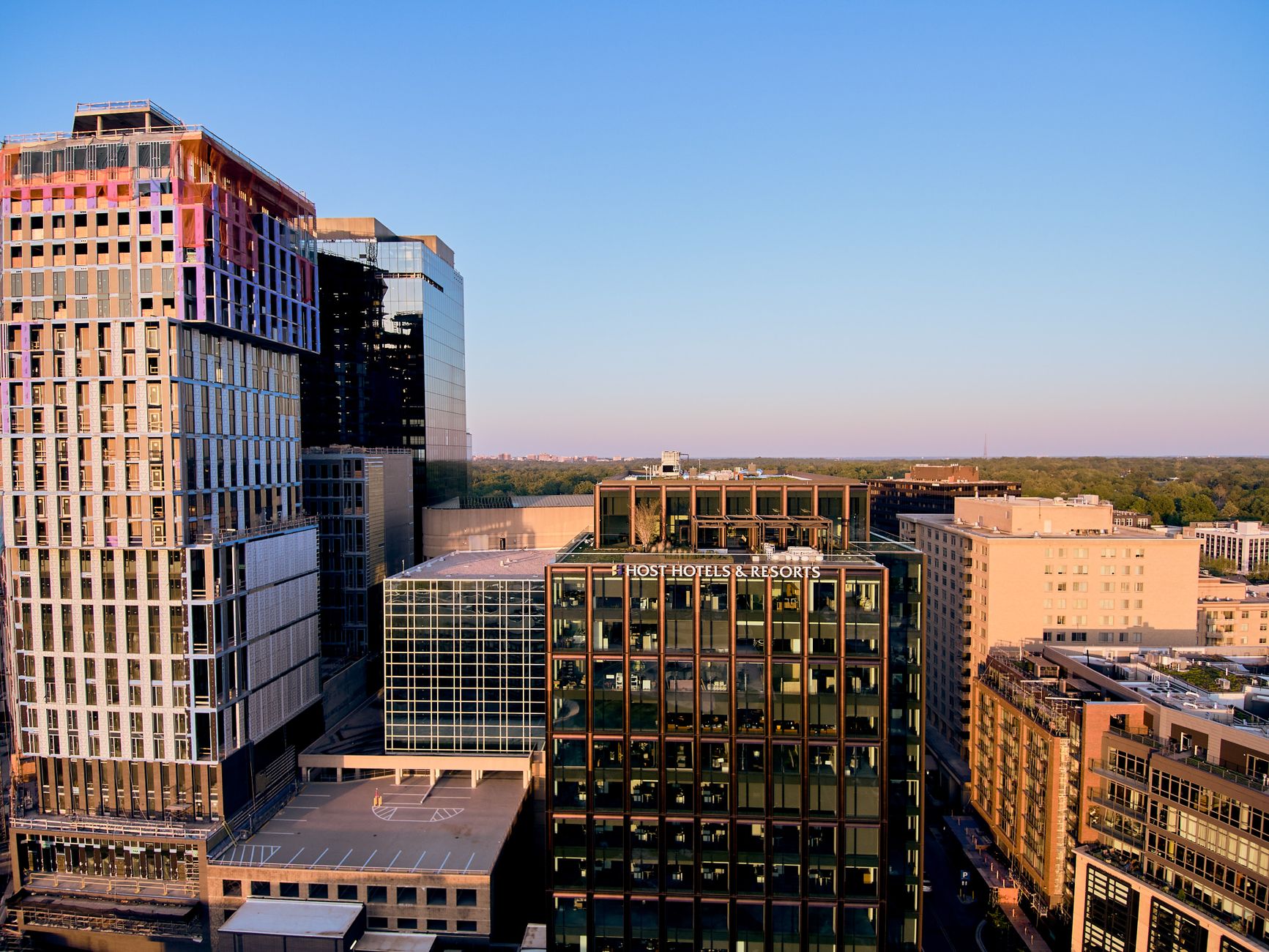
In the 19th century this was the commercial spine of Washington — Center Market, department stores like Lansburgh's and Woodies, theaters and streetcar lines. When residents moved to the suburbs in the 1950s and '60s, the stores closed, the theaters went dark, and the streets hollowed out. The Pennsylvania Avenue Development Corporation was created in 1972 to reverse that decline, and the neighborhood was rebranded Penn Quarter in the 1990s as part of that effort.
The turning point came in 1997 with the opening of what is now Capital One Arena. The arena drew foot traffic that the institutions alone had not, and the blocks around it slowly filled in. The Lansburgh's building was renovated into apartments, shops, and a theater. The former U.S. Patent Office — where Emile Berliner filed applications for the first microphone and disk record — became one of the city's great museum complexes.
Who and what shaped it
People who shaped it
Landmark buildings
See Penn Quarter in motion
Plan your visit
On the map
When to go
April and September are the most comfortable months to walk the neighborhood: temperatures in the 60s and 70s, lower humidity, and fewer crowds than summer. July and August bring genuine heat — highs around 32°C (90°F) with humidity that makes it feel heavier — so plan museum time in the middle of the day. Winter is mild by northern standards but can dip into the 20s overnight, with occasional snow.
Right now
Background & history adapted from Wikipedia (CC BY-SA) · specs from Wikidata (CC0) · weather from Open-Meteo · map data © OpenStreetMap contributors · photos from Wikimedia Commons / Unsplash with per-image credit. No third-party reviews or social posts reproduced.