
Peine del Viento (Comb of the Wind)

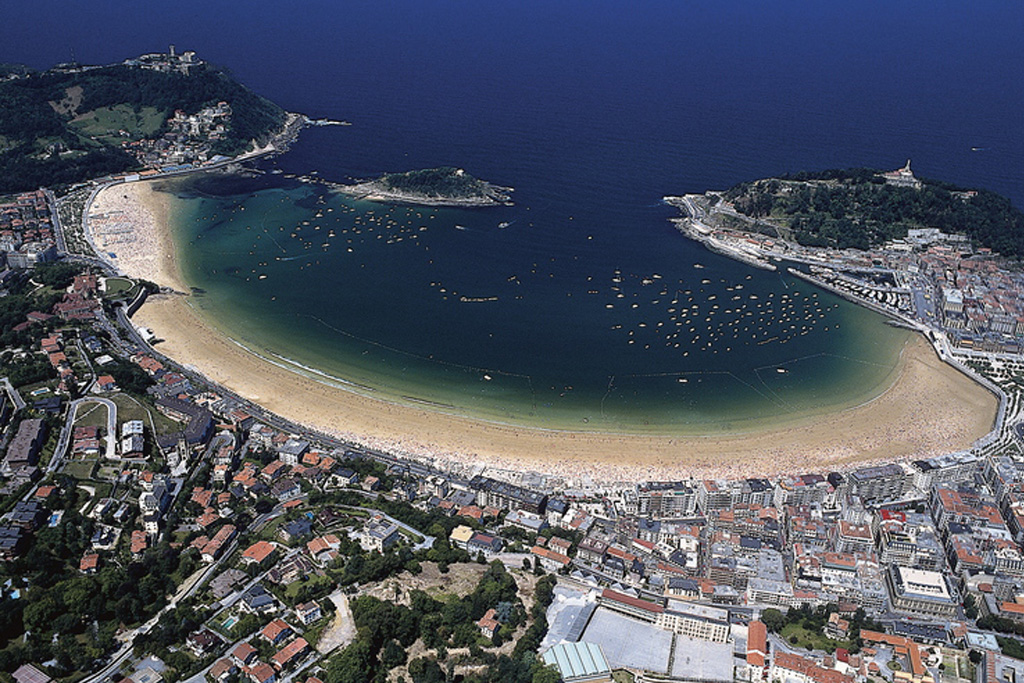
At the western tip of La Concha Bay, where the rock shelf drops into the Cantabrian Sea, three massive Corten steel sculptures grip the cliff face like rusted claws reaching toward the horizon. Each weighs ten tons. Each was bolted into the natural rock. Together they are Eduardo Chillida's Peine del Viento XV — the fifteenth work in a series he began in 1952 and spent his lifetime refining.
What makes the site more than a sculpture installation is what happens underfoot. A network of channels cuts beneath the granite terraces, and when the sea is running, water surges through underground tunnels and erupts from holes in the walkway in jets of white spray. On stormy days, waves can reach seven metres against the cliff. The wind that named this place — the Comb of the Wind — earns its title.

💛 What travellers fall for
People who come back tend to come back in bad weather. The blow-holes do almost nothing on a calm August afternoon, but return after a November storm and the whole platform becomes a percussion instrument — water shooting skyward, the steel sculptures dripping, the granite slick and dark. Sturdy shoes and a wind layer are not suggestions.
The story behind Peine del Viento (Comb of the Wind)
The story nearly went a different way. The city had earmarked the site for a car park before Mayor Fernando Otazu rejected that plan and backed Chillida's proposal instead. Chillida had known this particular outcrop since childhood — he used to skip school to sit here and watch the waves. The sculptures were forged in Corten steel at the Patricio Echeverría foundry in Gipuzkoa, and installing them required an improvised offshore bridge engineered by José María Elósegui after the American Embassy declined to lend helicopters. The work was complete in 1976.
Chillida gifted the sculptures to the city in 1977. A small ceremony on 3 September that year drew nine people, including the mayor. The pink granite terraces and amphitheater were the work of Basque architect Luis Peña Ganchegui. The street leading to the site was renamed Eduardo Chillida Pasealekua after the sculptor's death in 2002.

Good to know
The site is free, open around the clock, and sits at the far end of Ondarreta Beach — a flat, walkable extension of the La Concha seafront. No ticket, no queue. Keep children well back from the ground holes and the cliff edge; the rocks are genuinely slippery when wet.
San Sebastián's Atlantic weather means the site reads differently season to season. Summer visits are calmer and more crowded; the sculptures sit quietly in the light. Autumn and winter bring the conditions the installation seems designed for — heavy swells, spray, and the blow-holes working at full force. Dress for wind regardless of the month.
Where is Peine del Viento (Comb of the Wind)?
More tickets & tours for Peine del Viento (Comb of the Wind)
Book directly at the provider
What travellers say about Peine del Viento (Comb of the Wind)
Did you hear the waves roaring? That was at the Comb of the Wind in San Sebastián on March 27 this year. It is a famous and unique place featuring the iron sculptures of Eduardo Chillida. Once you arrive, you can see the iron signs and feel the incredible charm and power of the waves crashing against the rocks. A truly atmospheric spot that you must experience in person!
Loved the morning walk along the coast to get here! The Atlantic views are breathtaking, and watching the waves interact with the artwork is mesmerizing. A peaceful and must-visit spot in San Sebastián.
“Peine del Viento XV” in San Sebastián is one of those places where art, nature, and the sea blend perfectly together. The massive steel sculptures by Eduardo Chillida facing the crashing Atlantic waves create a dramatic and unforgettable atmosphere. On windy days, the sound of the ocean and the spray through the rocks make the experience even more powerful. It’s a peaceful yet intense spot, ideal for walking, reflecting, and watching the sunset over the Basque coast.
Lovely metal sculpture series (3) with a nice stone platform for viewing and photos. Go during high tide to watch the waves jump over the wall and feel the wind as it whistles through pipes in the platform and emerges through circular holes, launching skyward.
Don’t miss this one! The waves give you a nice show, plus the amazing views, makes this place a perfect gem waiting for you at the end of your walk around the coast
More of San Sebastián
Discover where to stay, what to do and the best deals for your trip.
Explore San Sebastián →More attractions in San Sebastián
All of San Sebastián →
Background adapted from Wikipedia (CC BY-SA) · map data © OpenStreetMap contributors · ratings & place photos via Google · other photos with per-image credit. Ticket links may earn us a commission at no extra cost to you.