
Parque del Retiro
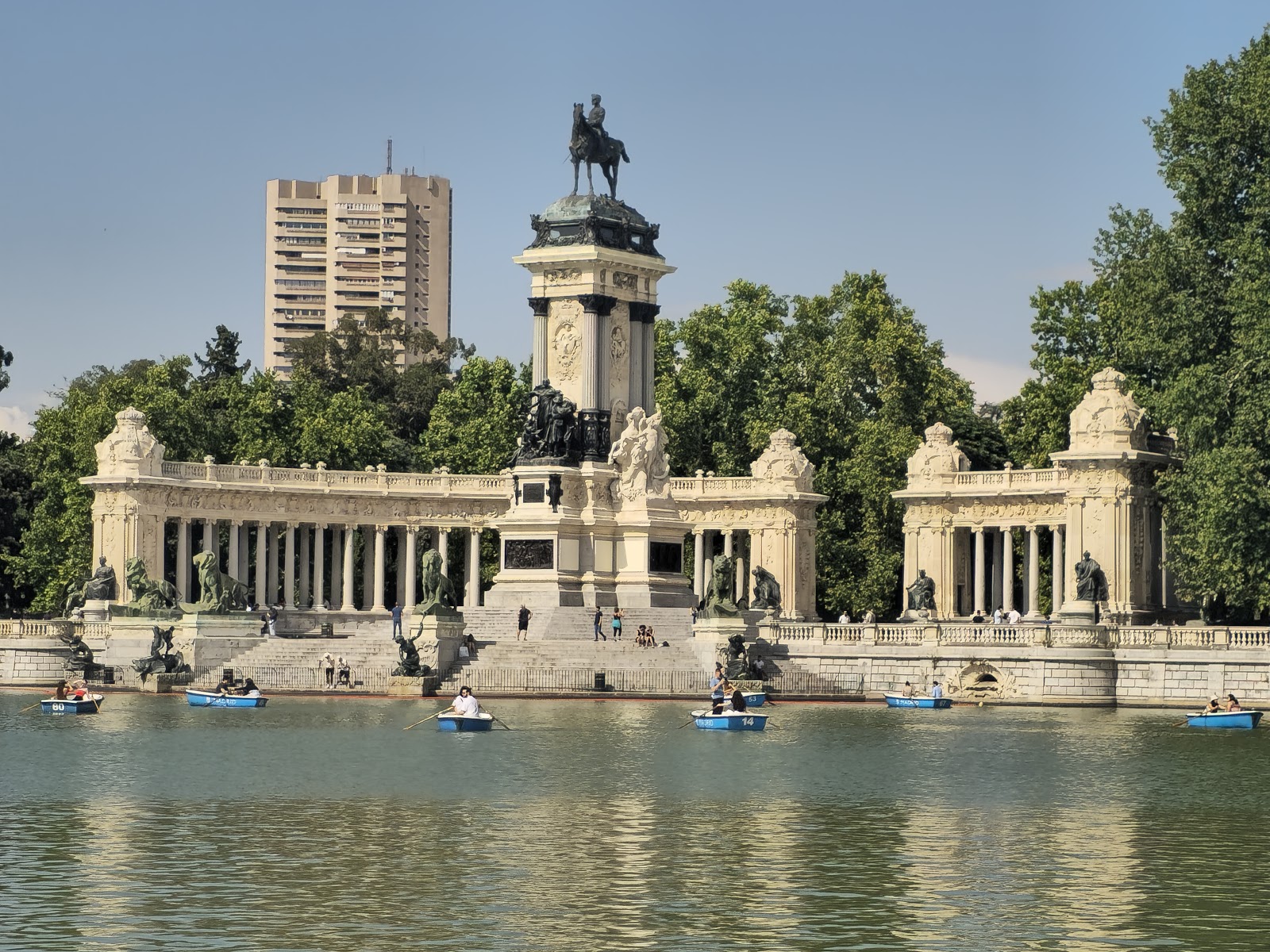
On a weekday morning, you can watch row boats drift across the Estanque del Retiro — a 37,000-square-metre artificial lake dug in the seventeenth century for royal water pageants — while a man reads a newspaper on a bench ten metres away, entirely unbothered. That is the particular quality of this park: 125 hectares of tree-lined avenues, rose gardens, glasshouses and quiet corners that somehow absorb the whole city.
Since 1868, when the Glorious Revolution ended the monarchy's exclusive hold on it, the Retiro has belonged to Madrid's residents. In 2021, UNESCO recognised it alongside the Paseo del Prado as a World Heritage Site — a formal acknowledgement of something Madrileños already knew.
💛 What travellers fall for
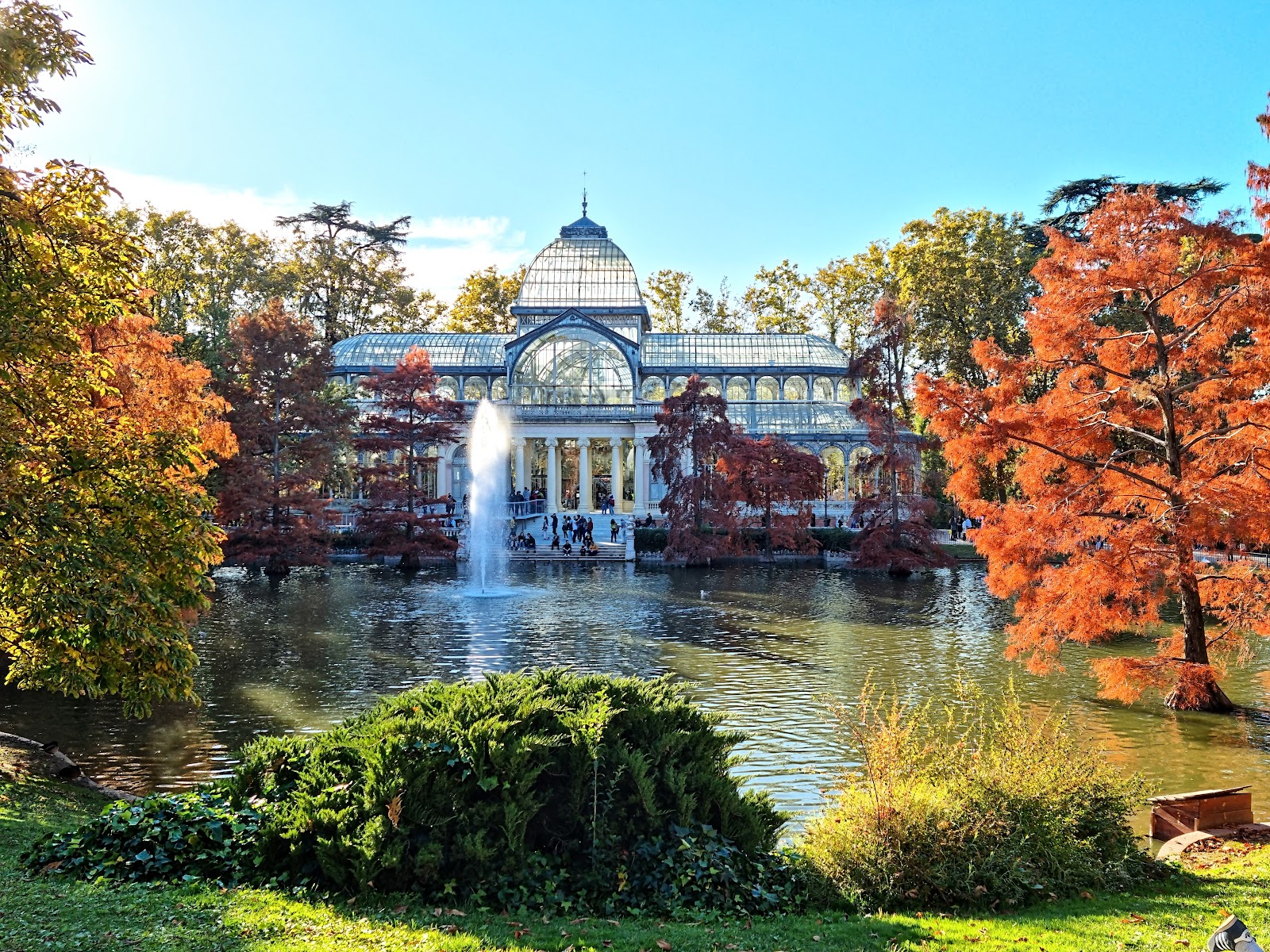
People who return tend to time the Palacio de Cristal — Ricardo Velázquez Bosco's 1887 glass pavilion — for a grey afternoon, when the diffused light inside is at its best. The Rosaleda is worth the detour in late May, when all 5,000-odd rose bushes are open. The Puppet Theater runs free weekend shows; arrive early if children are involved.
The story behind Parque del Retiro
The site traces back to 1505, when Jeronymite monks established a monastery here and the royal family built a private retreat alongside it. Philip II, who moved the Spanish court to Madrid in 1561, had the grounds enlarged under architect Juan Bautista de Toledo, who laid out the first formal avenues. The real expansion came in the 1620s, when the powerful Count-Duke of Olivares gifted adjacent land to the crown; by 1640 the park had taken roughly its current shape, with palace buildings designed by Giovanni Battista Crescenzi and Alonso Carbonell.
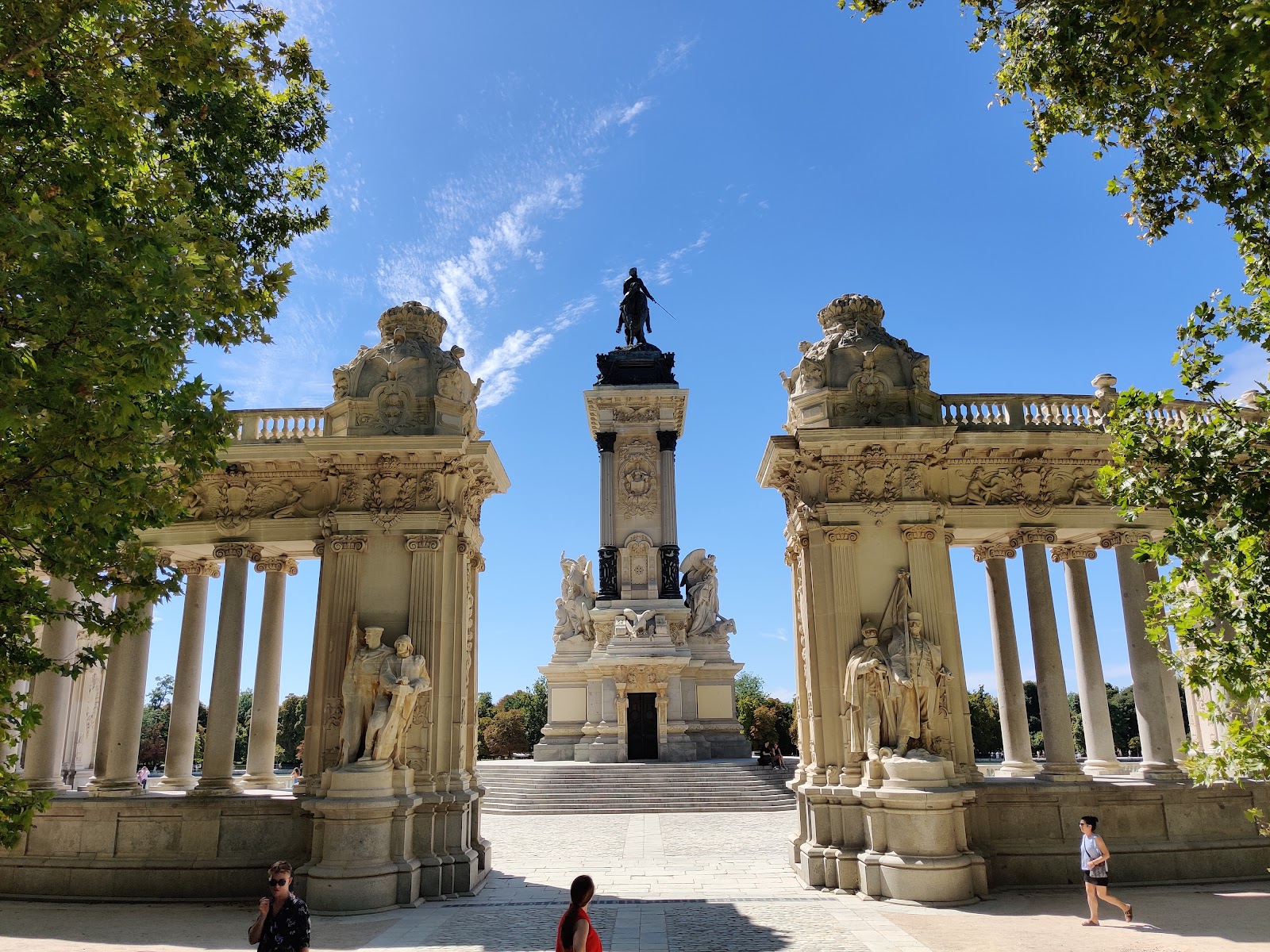
Two of those palace structures — the Casón del Buen Retiro and the Salón de Reinos — still stand. The Retiro remained a royal preserve for over two centuries until 1868, when it opened to the public. Later additions include Ricardo Bellver's Fuente del Ángel Caído (1922), inspired by Milton's Paradise Lost, and the Bosque del Recuerdo, planted in memory of the 191 people killed in the 11 March 2004 Madrid train bombings.
Good to know
Metro line 2 stops at Retiro, right at the park's edge. Entry is free. The park opens at 6 am year-round, closing at midnight in summer and 10 pm in winter. For fewer crowds, come on a weekday morning — weekend afternoons around the lake get genuinely packed.
Madrid summers are dry and hot, and the park's tree canopy makes it one of the more bearable places to be in July and August — mornings especially. Spring (April to early June) brings the rose garden into bloom and keeps temperatures comfortable. Winter days are often crisp and clear; the park empties out and takes on a different, slower character.
Where is Parque del Retiro?
More tickets & tours for Parque del Retiro
Book directly at the provider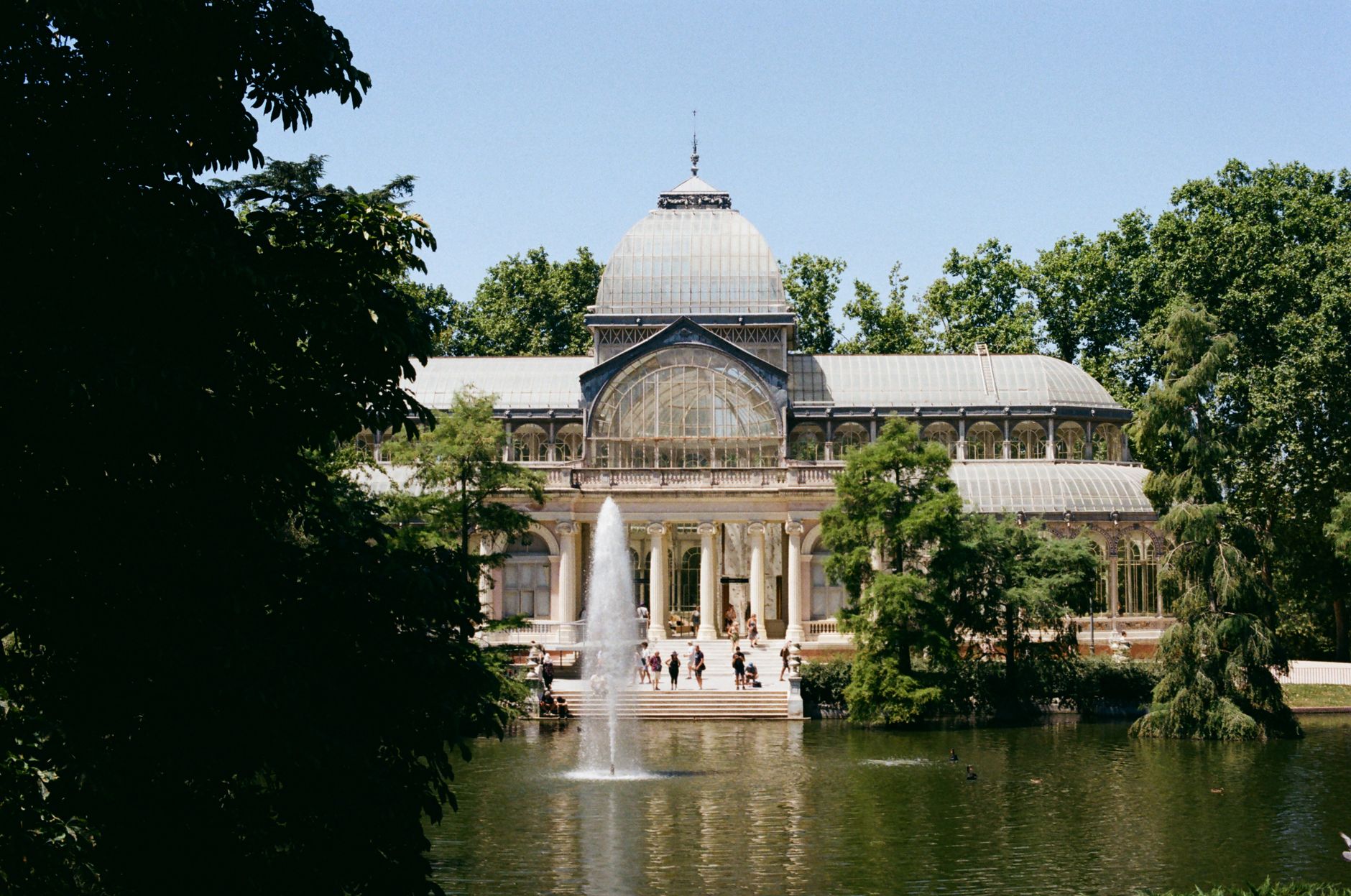
What travellers say about Parque del Retiro
Located in the center of Madrid, this beautiful park offers a refreshing escape from the city, with very little concrete and plenty of greenery. It’s the perfect place to visit after exploring the museums or the busy city center. I highly recommend coming early in the morning to enjoy the peaceful atmosphere before it gets crowded. If you want to experience Madrid’s park culture, take a slow walk, breathe in the fresh air, and simply enjoy the calm surroundings.
Retiro Park is truly a gem in the heart of Madrid. Our family loved it so much — it feels like a peaceful escape right in the middle of a vibrant, busy city. The park is spacious and beautifully maintained, making it perfect for long walks, relaxing moments, and family time. What makes Retiro especially special is how naturally it blends nature with history: elegant monuments, historical buildings, and charming paths surrounded by trees and greenery. It’s a wonderful place to separate yourself from the city noise, slow down, and simply enjoy the calm atmosphere. Whether you want to walk, sit by the water, or just breathe fresh air, Retiro Park offers a perfect balance of culture, nature, and tranquility. A must-visit for families and anyone looking to feel Madrid at a gentler pace. 🌿
El Retiro Park is a wonderful escape from the energy of the city and one of Madrid’s most relaxing places to spend time. Despite being centrally located, the park feels calm and spacious, making it easy to forget you are in a bustling capital. We visited a couple of times during our stay and loved simply sitting, relaxing, and watching people stroll by. The atmosphere is unhurried and welcoming, whether you are walking the shaded paths, resting near the water, or enjoying the open green spaces. The park is quite large, which also makes it a pleasant and more serene way to cut across the city on foot. Whether you are looking for a break, a scenic walk, or just a quiet place to unwind, El Retiro is a must-visit while in Madrid.
El Retiro Park in Madrid is a must-visit, took me hours to explore and still didn't get enough! This place is massive, got loads of stuff to do, plenty of cafes and restaurants to grab a bite or chill. Spent hours strolling around the lake, taking in the views, and enjoying the street performers - it's like the whole city's vibe is right there. Perfect spot to unwind and soak up some culture.
El Retiro Park was truly breathtaking 🌳 It was that great I actually visited there twice in one day… the views and sites were just incredible. There are various walks you can do around the park, and plenty of spaces to sit on the grass with a nice picnic and enjoy the shade and sun. There are also plenty of cafes dotted around to have some lunch, drink and ice creams (take quite abit of money as they are expensive and not worth what you get)… Finally they have the beautiful lake where you can hire a boat out. Which was truly beautiful. It cost around €8 I believe and you have the boat for 45 minutes. Only niggle is, the app which you book on is in Spanish and it’s so hard to navigate around. We ended up asking someone in the end to help which they kindly did. You can also buy tickets from the hut but you could be waiting a while or may need to come back because they get very busy. A truly beautiful day! I would suggest you pop this on the list of places to visit ☀️
More of Madrid
Discover where to stay, what to do and the best deals for your trip.
Explore Madrid →More attractions in Madrid
All of Madrid →
Background adapted from Wikipedia (CC BY-SA) · map data © OpenStreetMap contributors · ratings & place photos via Google · other photos with per-image credit. Ticket links may earn us a commission at no extra cost to you.