
Parque de María Luisa
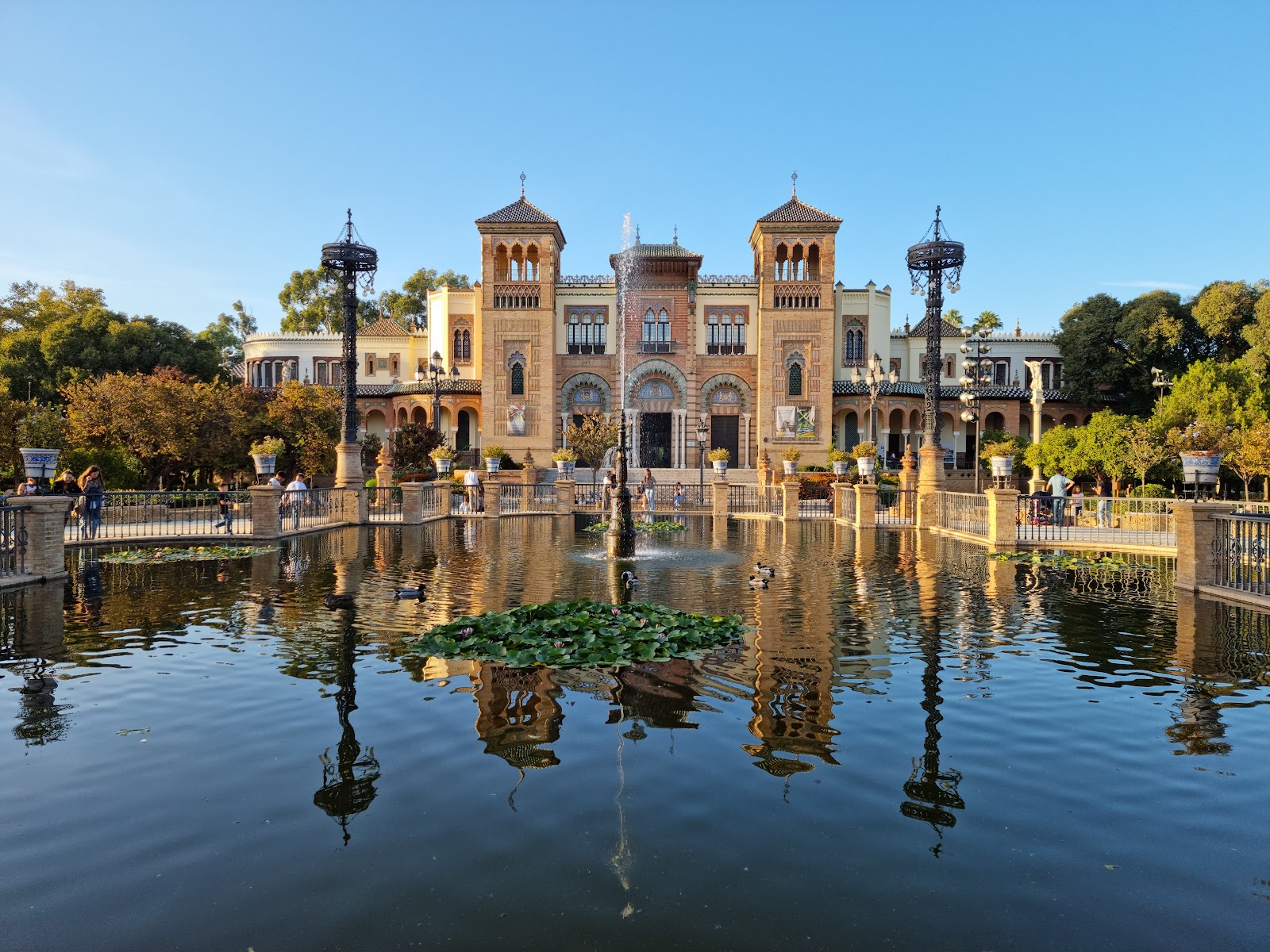
The park opens at eight in the morning, and if you arrive close to that hour you'll find Sevillanos already deep in their routines — cyclists threading the long avenues, an older man feeding doves near the Plaza de América, a runner disappearing between Mediterranean pines and orange trees. At nearly 34 hectares, Parque de María Luisa is large enough to lose an afternoon in without retracing a single step.
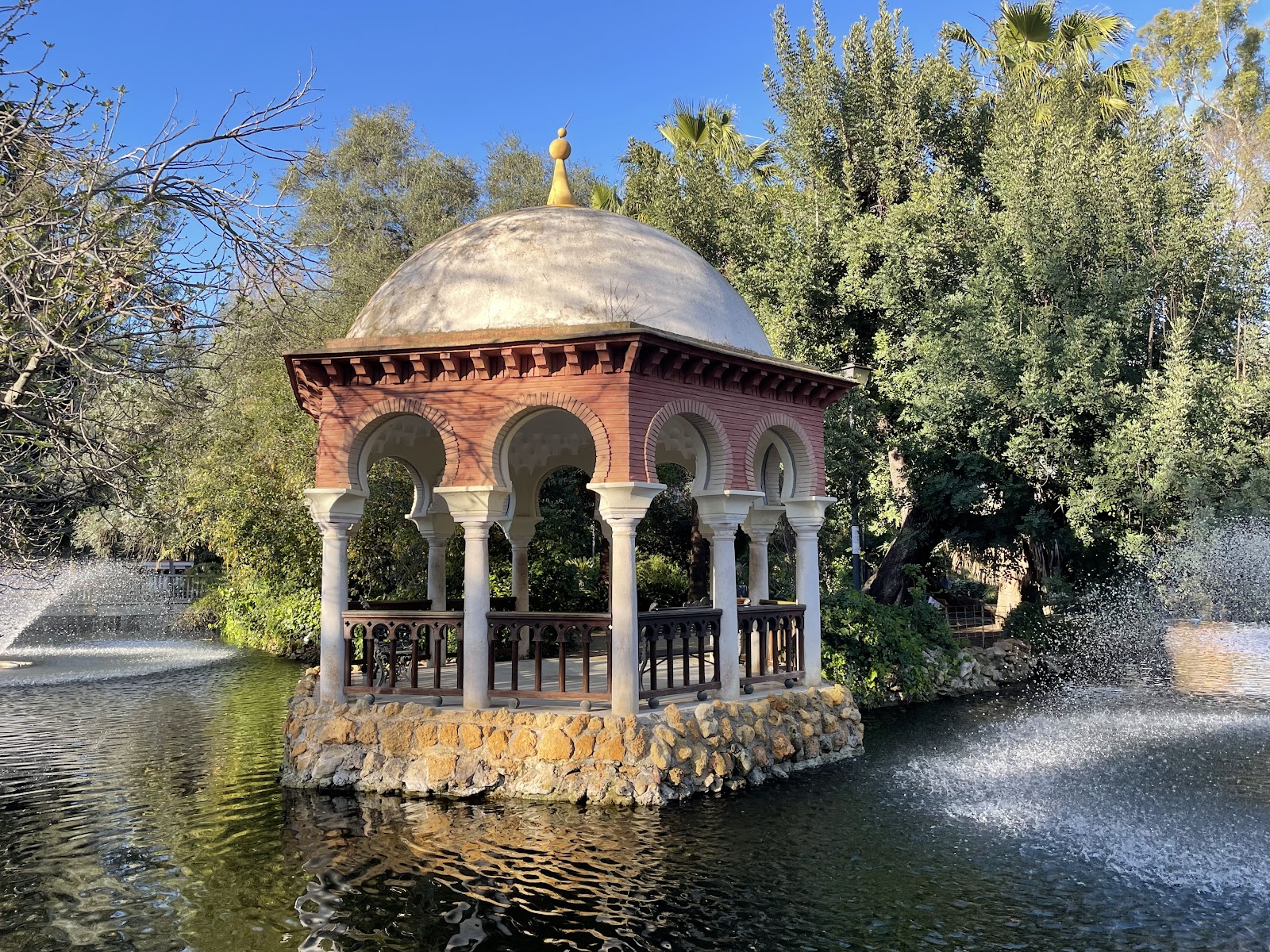
At its southern end, the Plaza de España curves in a long semicircular embrace of ceramic-tiled alcoves and canal bridges — built in 1928 for the Ibero-American Exposition, and still startling in its scale. The rest of the park rewards slower attention: a fountain of eight frogs aimed at a duck on a turtle, a small artificial mountain with a waterfall, a lotus pool, and the hexagonal turrets of the Costurero de la Reina rising above the tree line.
💛 What travellers fall for
People who return tend to do so before ten in the morning or after six in the evening, when the light drops low through the palms. The rowboats on the canal — six euros for thirty-five minutes — come up often as a specific pleasure. So does the Las Ranas fountain, easy to walk past if you don't know to look for it.
The story behind Parque de María Luisa
The land was once the private gardens of the Palace of San Telmo. In 1893, Infanta Luisa Fernanda, Duchess of Montpensier, donated it to the city of Seville — the same year the Costurero de la Reina, now the oldest Neo-Mudéjar building in Seville, was constructed on its grounds.
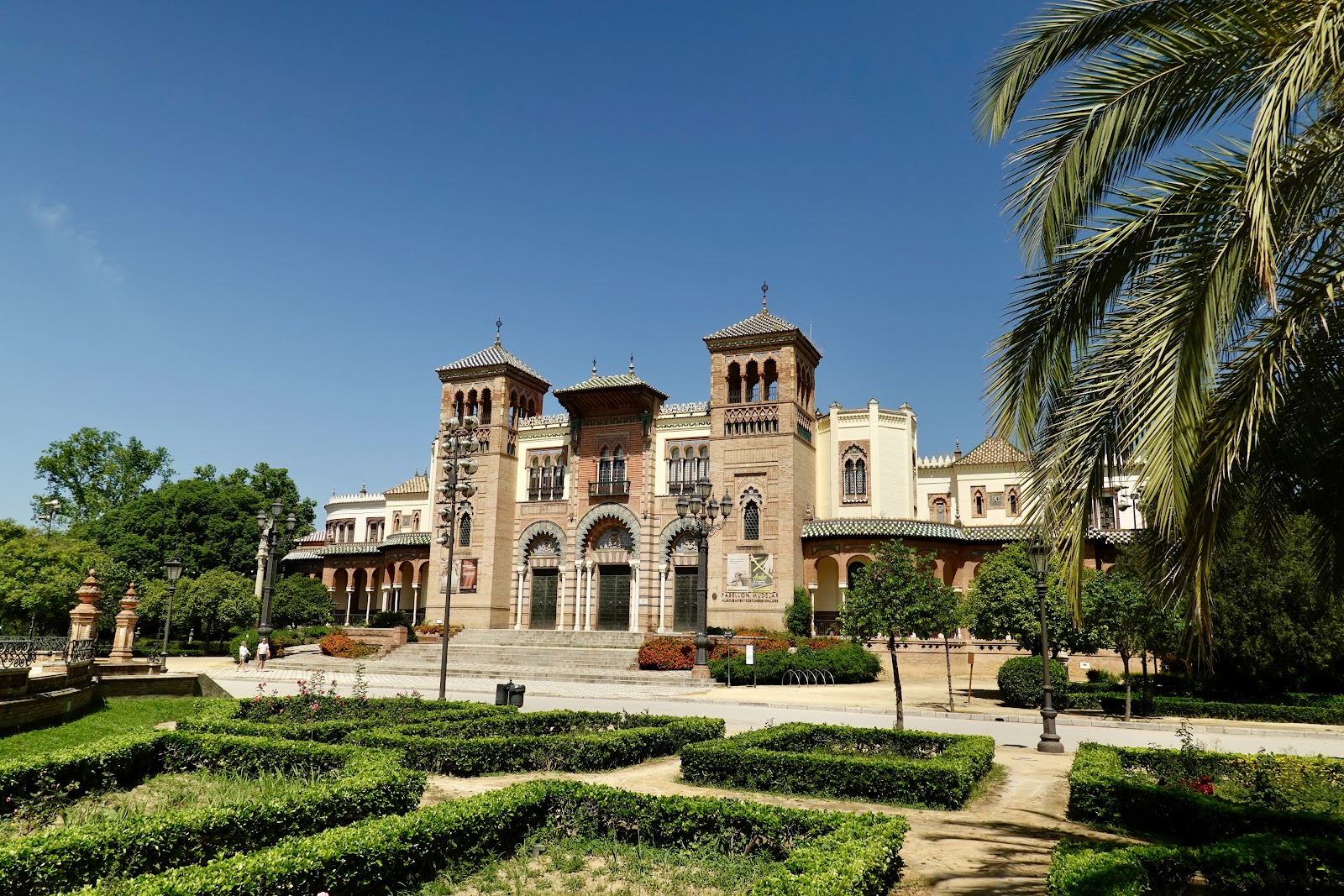
The park's present form took shape between 1911 and 1922, when French landscape engineer Jean-Claude Nicolas Forestier — then curator of the Bois de Boulogne in Paris — redesigned the gardens with the Generalife and the Alcázar gardens as his reference points. Architect Aníbal González oversaw the architectural elements, building toward the Ibero-American Exposition of 1929. The pavilions raised for that fair survive as the Archaeological Museum, the Museum of Art and Popular Customs, and the Casa de la Ciencia.
Good to know
Free entry, open daily 8 a.m. to 10 p.m. Take the tram to Puerta de Jerez or metro to Prado de San Sebastián. In July and August, go early or late — midday heat here is serious. Allow at least an hour; two is more honest.
Seville summers are genuinely hot, and the park offers real shade but not relief from the midday heat of June through September — morning or late-afternoon visits make a practical difference. Spring and autumn are the easiest seasons to be here, with mild temperatures and the orange trees in various states of fruit or flower.
Where is Parque de María Luisa?
More tickets & tours for Parque de María Luisa
Book directly at the provider
What travellers say about Parque de María Luisa
For me, the most beautiful park in the world. The plaza on its own is breathtakingly stunning. We have arrived end of April, 30 degrees but still manageable. The architecture from Gonzalez is exceptional. You can take a horse drawn carriage, hire a bicycle car type thing or a boat and row the canal. The 48 benches dedicated to provinces or Spanish cities are excellent for relaxing after walking around the park. There are view points all over the plaza and its all just so photogenic. We saw a flamenco show in the central area in the day and then there are flamenco guitar players and other musicians dotted around the plaza all day and into the night. The actual park has so many vibrant flowes, lots of shaded seating areas and water features and ponds (with some slightly grumpy ducks floating around). We went 3 times in one day and I am looking forward to going again on this trip. It was spectacular at sunset and with an almost full moon overhead. Wear comfortable shoes and take water.
Hands down the most beautiful park in the world! The sheer amount to do inside of a park is incredible, there is fountains, waterfalls, statues, monuments, wildlife! You can easily spend a whole day from dusk till dawn just wandering this park. If not though I personally recommend coming towards golden hour and watching the sunset so unbelievably stunning. I was in Seville end of November and the park was beautifully maintained - on my last day I saw a huge landscaping team working you can tell the city takes pride in the park. It was so peaceful at all times with families and friends hanging out - I sat in the evening by myself eating dinner and it was completely peaceful you couldn't say that about most parks imo. I really felt drawn to spend as much time as possible there I will definitely be back in springtime to see it in full bloom.
A gorgeous park in the middle of Seville, with Plaza de Espagna at its core. Enjoyed strolling here and resting under the abundantly flowersome pergolas and mature trees. There was a waterfall too and ice creams nearby, so peaceful and offered a bit of welcome shade and coolness. Finished off at the Plaza, admiring the astounding architectural details and soaking up the unique, old-timesque energy of this place. It has a slow, sultry, romantic feel to it with horse-drawn carriages passing here and there to and from the plaza and a sleepy canal with a stunning footbridge and small rowing boats adding to the overall charm.
What a wonderful place to take life a bit slower. The park is beautiful and there is lots happening around Plaza de Espana where you can hire a small row boat (there is a queue), take a horse snd carriage around the park or listen to some beautiful, traditional music and see flamenco dancing. The building itself is interesting. I did get a chance to go to the museum and see the other buildings so that's on my list for next time.
This park was so amazing. Really big and so many nice little squares and animals and water features. It was great to walk around for a while taking photos and videos and was nice and cool from all the shade away from the otherwise hot weather.
More of Seville
Discover where to stay, what to do and the best deals for your trip.
Explore Seville →More attractions in Seville
All of Seville →
Background adapted from Wikipedia (CC BY-SA) · map data © OpenStreetMap contributors · ratings & place photos via Google · other photos with per-image credit. Ticket links may earn us a commission at no extra cost to you.