
Park Güell
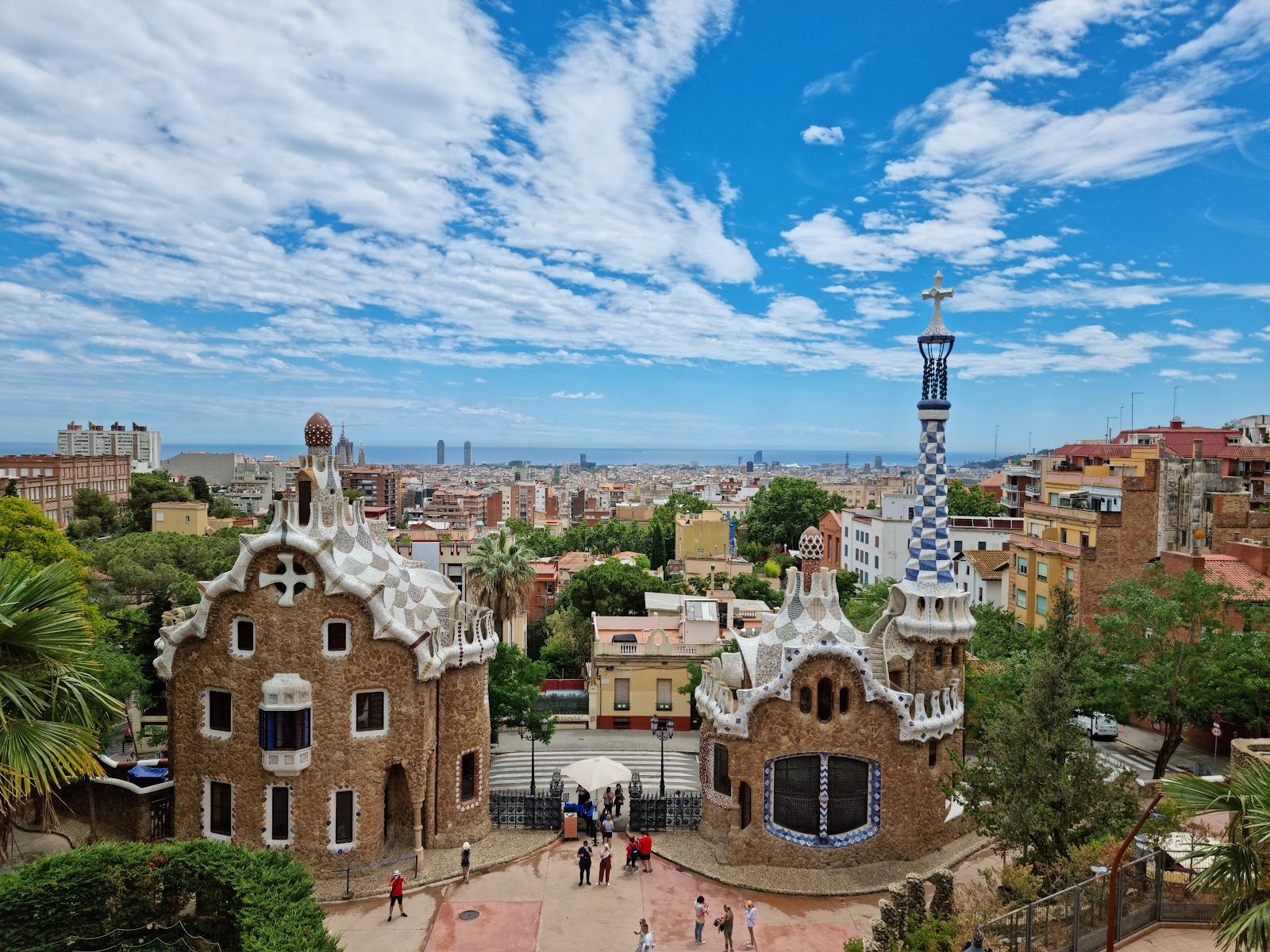
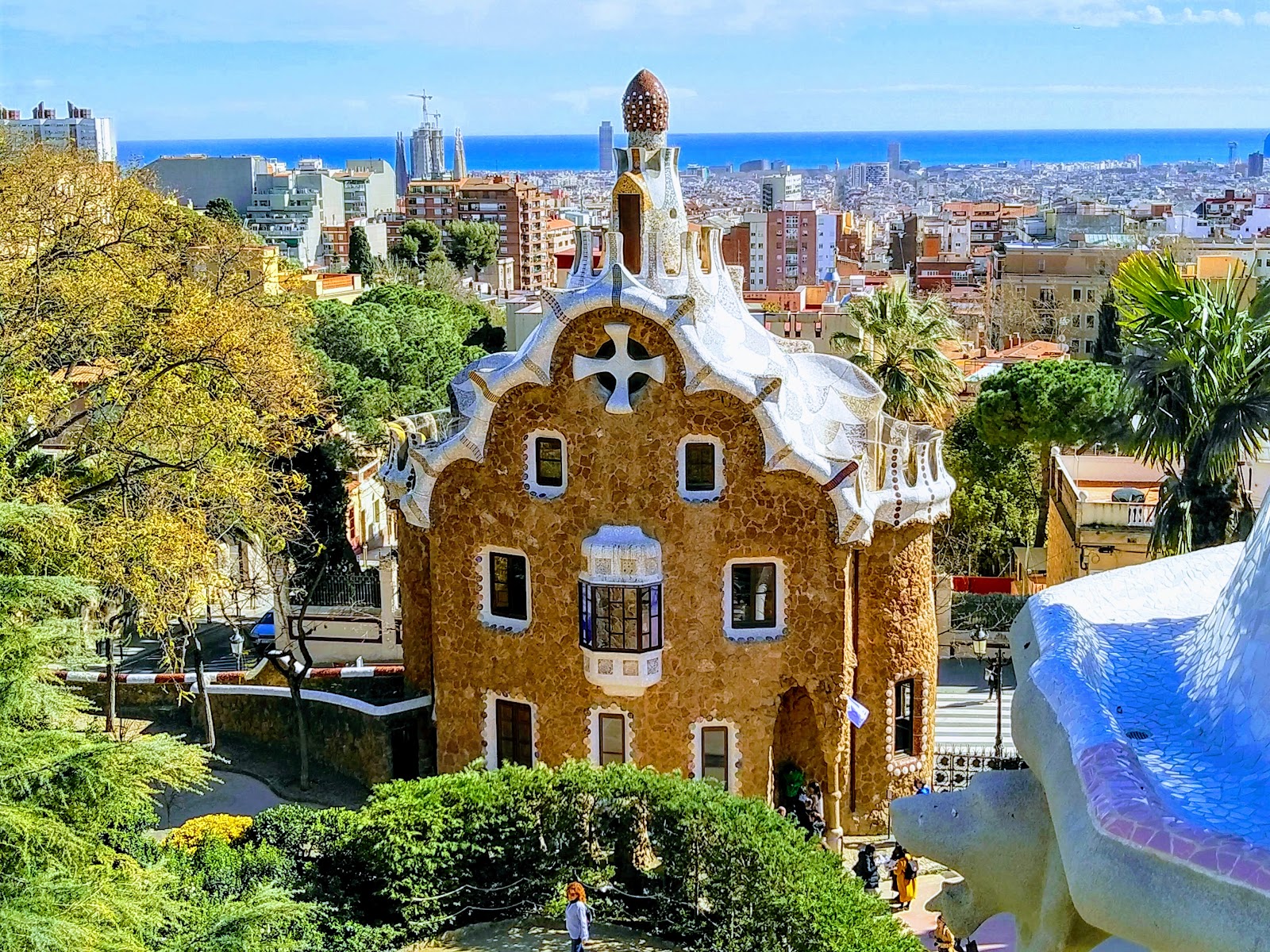
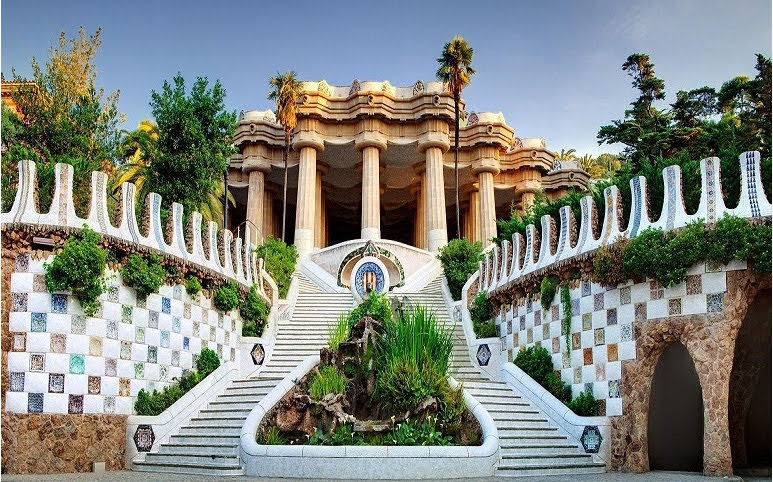
Park Güell sits on the slope of Carmel Hill, and the first thing that stops you is the dragon on the main staircase — a 2.4-metre mosaic lizard that has been photographed millions of times and still looks stranger in person than in any picture. Beyond it, 86 columns hold up a terrace that Gaudí called his Hypostyle Hall, inspired by Delphi, where the ceiling is a mosaic of ceramic shards and the light comes through in fragments.
The long serpentine bench that curves around the great esplanade above was shaped by Josep Maria Jujol to fit the human back — an ergonomic calculation buried inside what looks like pure improvisation. Gaudí himself moved into a house here in 1906 and stayed until near the end of his life.
💛 What travellers fall for
People who come back tend to skip the monumental zone entirely and walk the free forest paths up to the Three Crosses viewpoint at the top of the hill — Turó de les Tres Creus — where you get a full 360-degree sweep that takes in the Sagrada Família, Tibidabo and the sea at once, usually with far fewer people around you.
The story behind Park Güell
Eusebi Güell, a Catalan industrialist with a serious eye for architecture, commissioned Antoni Gaudí in 1900 to turn a hillside estate of more than 17 hectares into a residential development — sixty houses were envisaged. Work began that October. By 1903 the entrance pavilions, staircase and viaducts were taking shape; by 1907 the Hypostyle Hall was finished. The housing scheme, though, never materialised: only two of the sixty plots sold, and Gaudí himself became one of the residents, moving in with his father and niece in 1906.
Güell died in 1918 at his house in the park. His heirs sold it to the city in 1922, and it opened as a municipal park in 1926 — the same year Gaudí died. UNESCO added it to the Works of Antoni Gaudí World Heritage collection in 1984.
Good to know
Book a timed slot in advance — only 400 visitors enter every 30 minutes in the paid monumental zone. The metro stop Lesseps (L3) leaves you with a 20-minute uphill walk; the Avinguda del Santuari de Sant Josep de la Muntanya entrance has an escalator. The forested upper park is free and open access.
Spring and early autumn are the most comfortable seasons for the uphill walk — summers on the exposed terrace and upper paths get genuinely hot by mid-morning. Winter hours are shorter, but the park is open every day of the year and the views on a clear January morning are hard to argue with.
Where is Park Güell?
More tickets & tours for Park Güell
Book directly at the provider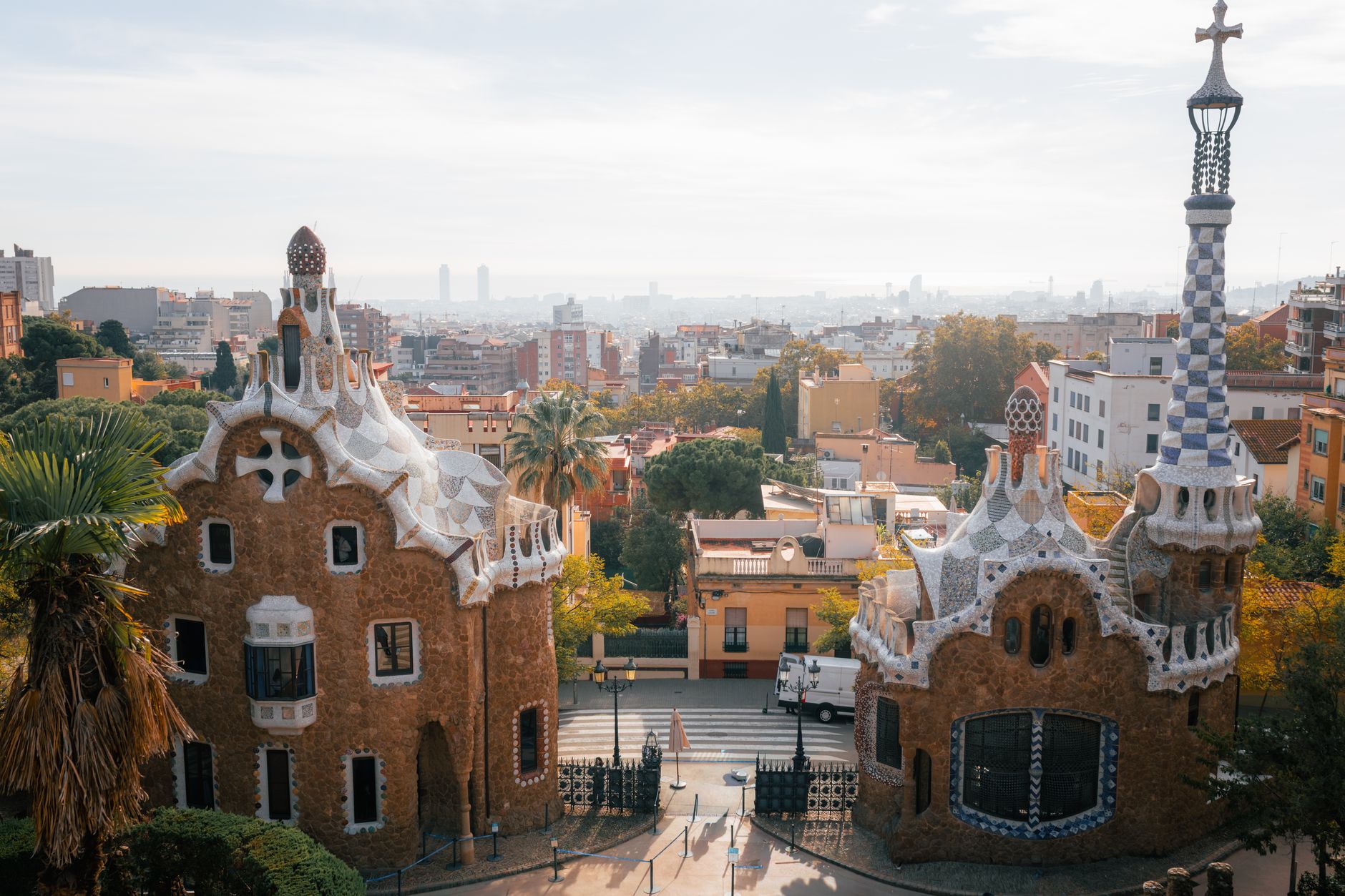
What travellers say about Park Güell
Amazing place with awesome structure and history. Every corner is a piece of art. Best to buy tickets in advance, you have choice to buy directly, or there are loads of companies give you collective guide tour. God to have an umbrella as it's all open area and visit while there is sunlight as not lighting arrangements. Good facilities for WC. Take refillable water bottles in summer. Good to have a binoculars as there are places where you can have good view of the city.
A fantastic place—it’s well worth walking the entire loop around the park! It’s crowded, but truly worth it. The park features many interesting architectural structures by Gaudí and plenty of greenery that makes for a great photo backdrop, plus a beautiful view of Barcelona.
A very beautiful park that is definitely worth visiting. It offers stunning views of Barcelona, especially of the Sagrada Família. It wasn't crowded at all. We had booked a specific time slot, and everything went smoothly. The staff were very friendly and helpful.
Did you know that this unique work by Antoni Gaudi was originally intended to serve as a garden city? However, the plans did not work out and today it is a city park that offers gardens, terraces and architectural features that you will not find anywhere else. And also a unique view of the city that you will not experience from any other place. Today, the cultural life of the city takes place here. Don't miss this when visiting Barcelona. However, here too, the earlier you arrive, the better your chance of avoiding the crowds. It is definitely better to buy tickets in advance. The park is truly beautiful. However, it depends on your expectations. If you are a nerd who only looks for flaws everywhere, it is better to stay somewhere in the city.
Park Güell was a great experience! We spent over 2hrs walking through it. There were excellent views of the City. We added the Museum House as an add on. It was interesting to see where Gaudi lived. The washrooms outside the museum house were extremely clean and there were no lines. All in all, it was worth the entrance fee.
More of Barcelona
Discover where to stay, what to do and the best deals for your trip.
Explore Barcelona →More attractions in Barcelona
All of Barcelona →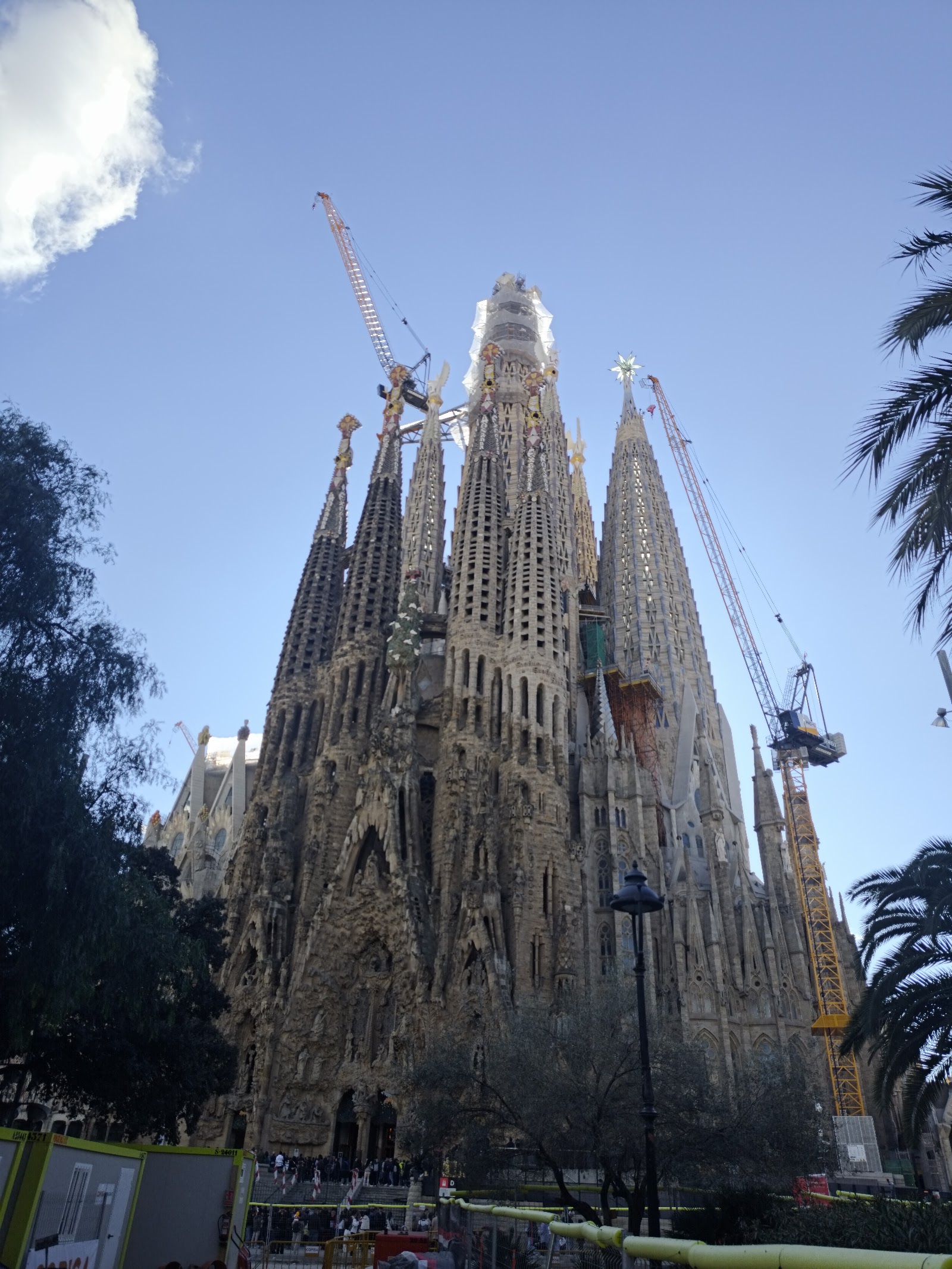
Background adapted from Wikipedia (CC BY-SA) · map data © OpenStreetMap contributors · ratings & place photos via Google · other photos with per-image credit. Ticket links may earn us a commission at no extra cost to you.