
Parc Phoenix
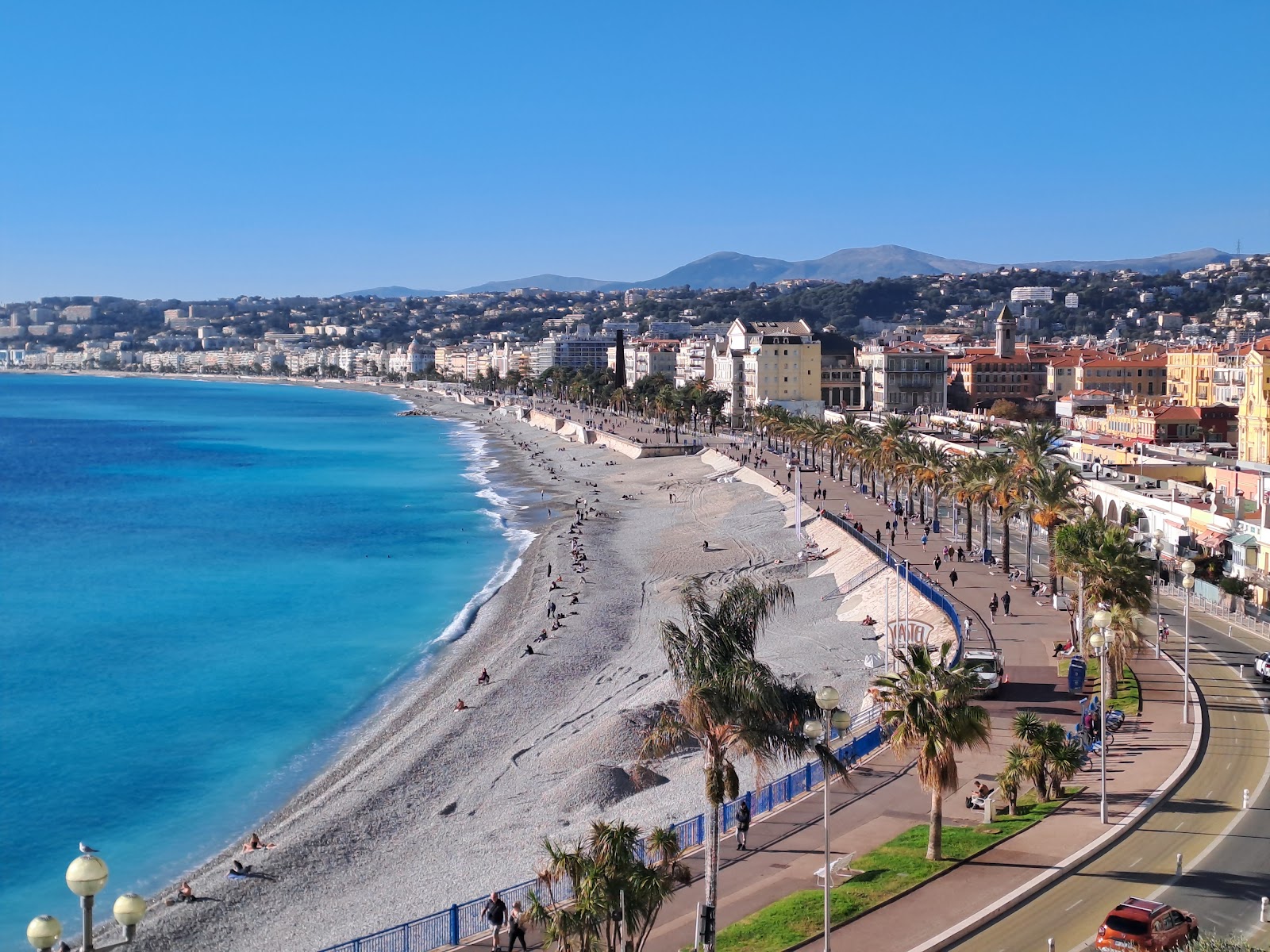
The name Parc Phoenix comes not from mythology but from the Phoenix palm — the Canary Island date palm that punctuates this 7-hectare stretch of green along the Promenade des Anglais. Planes lift off from Nice Côte d'Azur Airport directly overhead, close enough that you can read the livery, while peacocks cross the path in front of you without particular urgency.
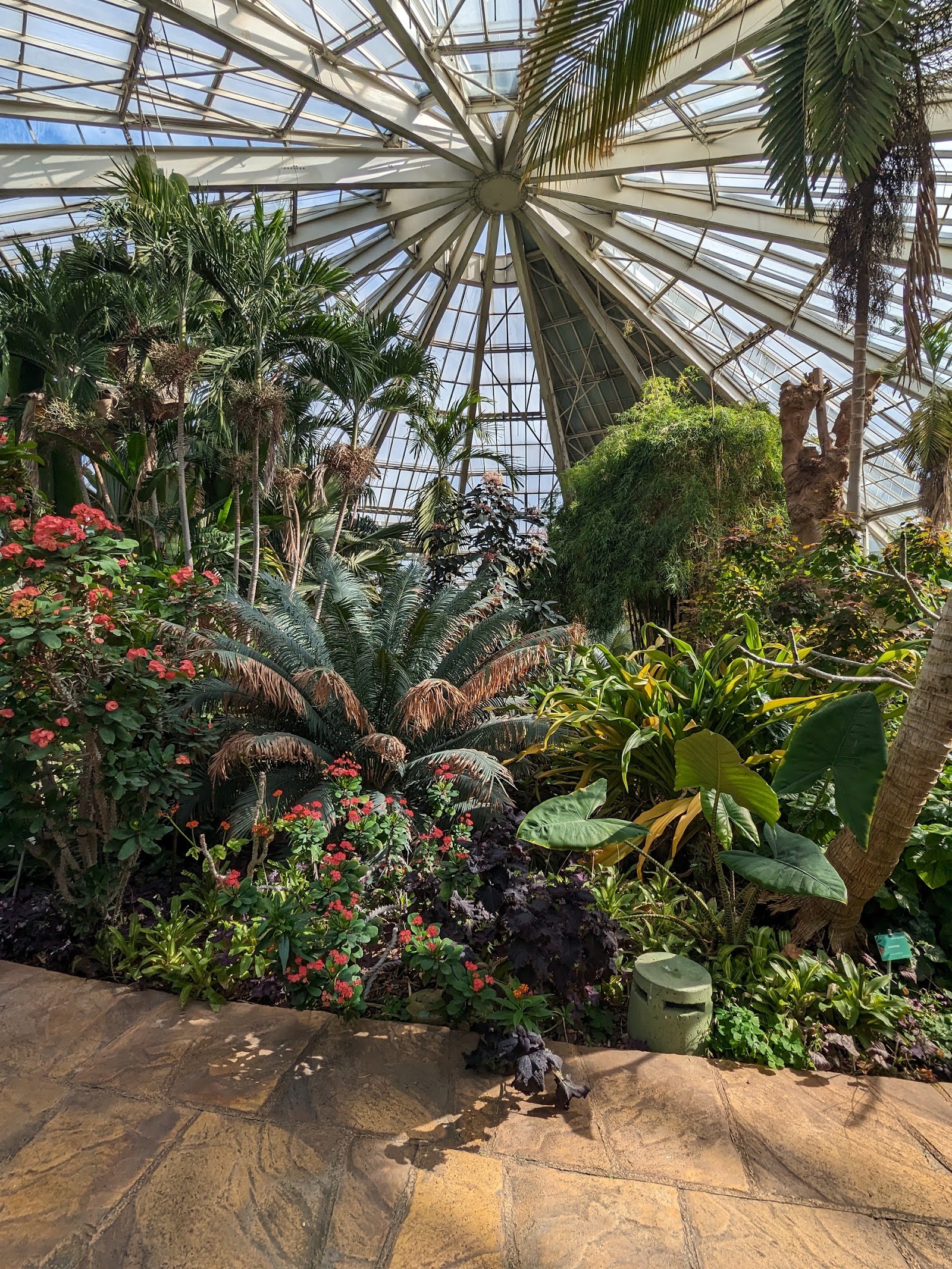
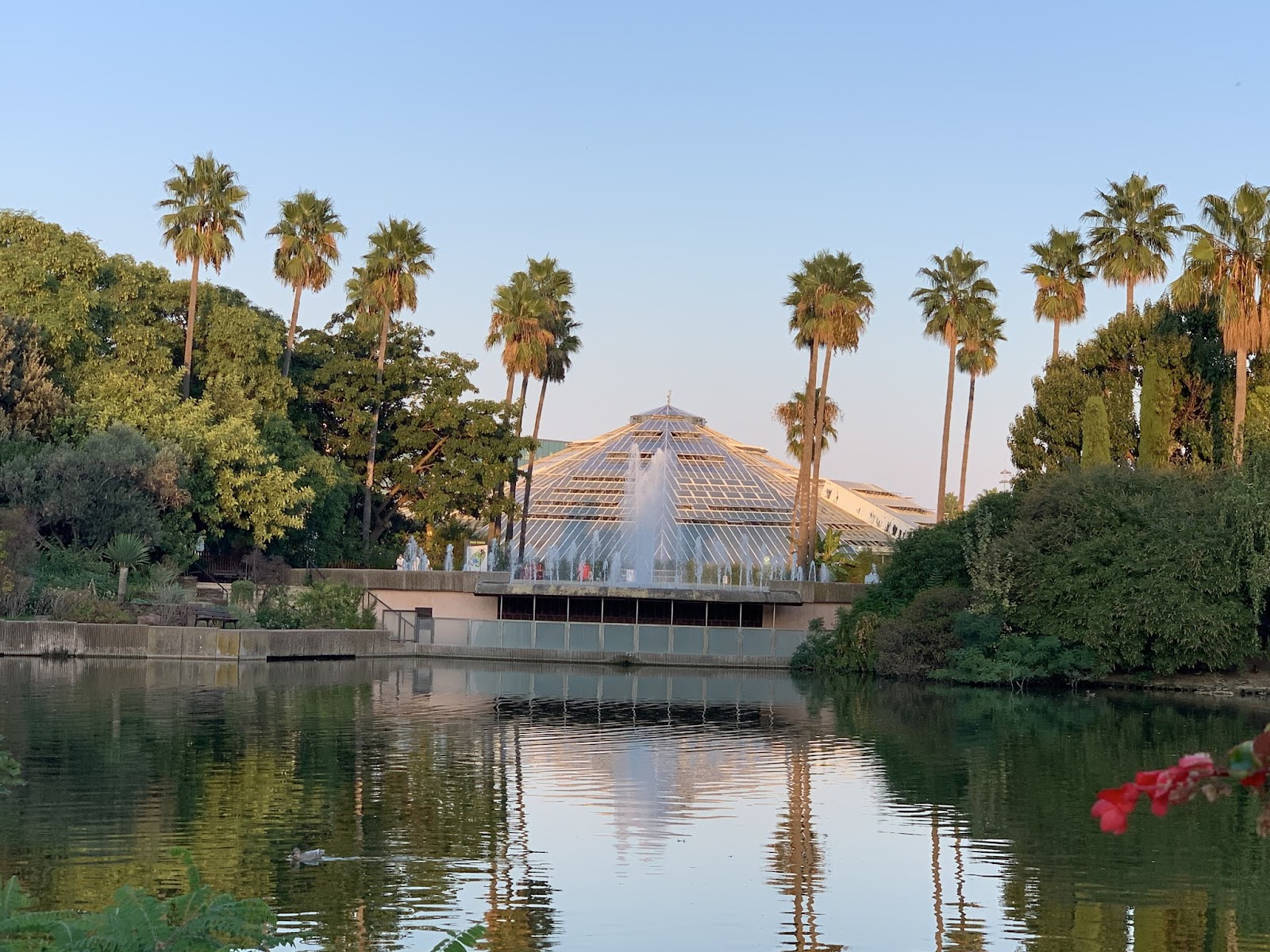
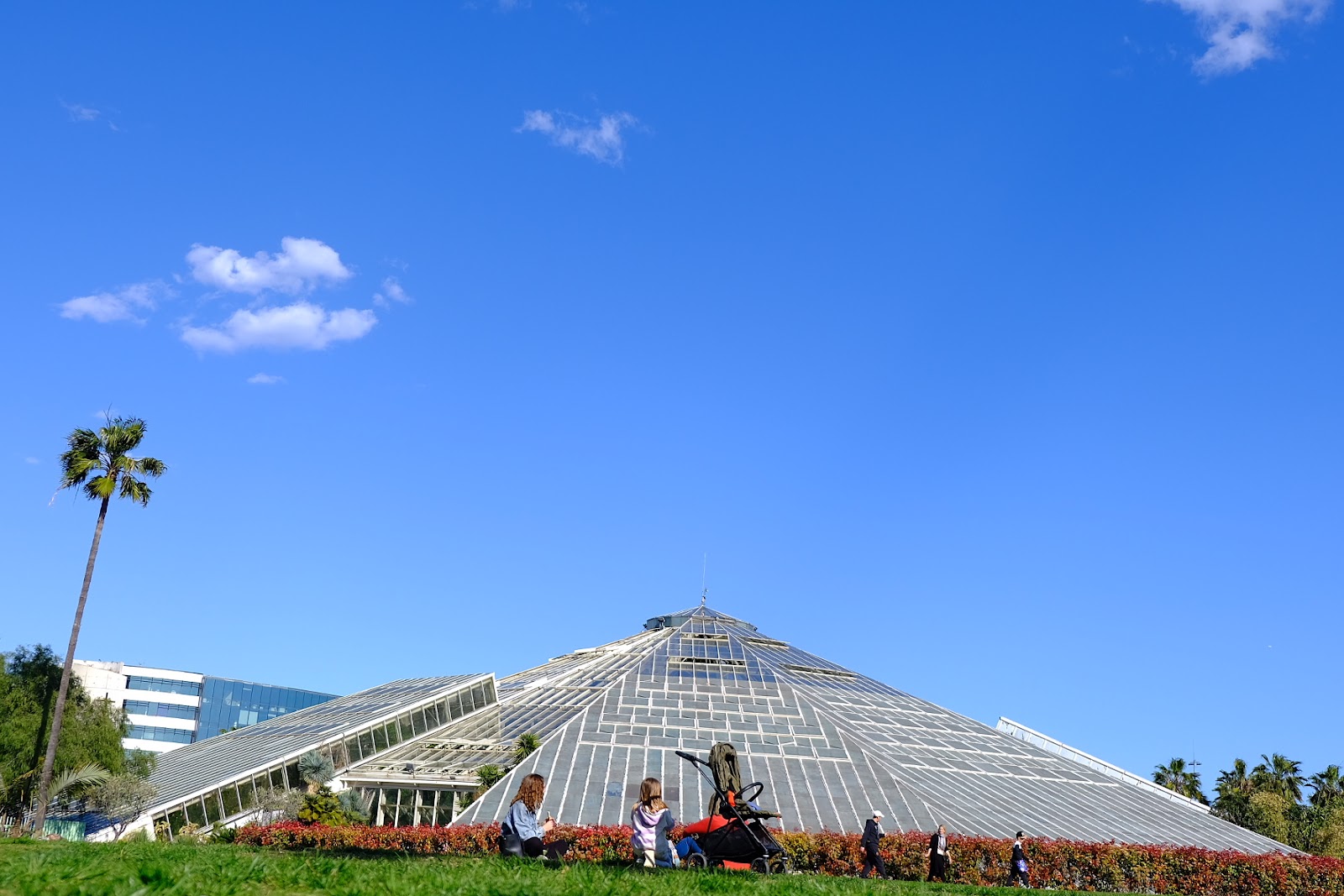
At the centre of it all sits the Diamant Vert, one of Europe's largest greenhouses — a glass dome 100 metres across and 25 metres high, holding six distinct tropical climates and some 2,500 plant species. Beside the lake, a Kenzo Tange-designed building houses the Museum of Asian Art, included in your entrance ticket.
💛 What travellers fall for
People who return tend to arrive early, before school groups fill the greenhouse. The lake pelicans are most active mid-morning. Skip the musical fountain unless you have children in tow, and leave time for the Asian Art Museum — most visitors walk past it without realising it's free with entry.
The story behind Parc Phoenix
The park opened on 28 February 1990, built on what had been marsh ground. Construction took more than 26 months and involved 80 separate companies — a scale that explains why the result feels less like a municipal garden and more like a considered landscape. In 1989, the United States gifted a Sequoia sempervirens to mark the bicentenary of the French Revolution; it still grows here.
Since 2011 the park has carried a 'Remarkable Garden' designation from the French Ministry of Culture. In 2020 it became an official Eco-Sanctuary, taking in animals seized by customs or surrendered by owners — which is why the bird population reads as unexpectedly diverse. A new open-air swimming pool was added in 2025, with two aviary domes for the parrot collection planned for 2026.
Good to know
Take Tram Line 2 to the Parc Phoenix stop — the only working entrance is on the tramway side. Admission is €5.50; under-12s enter free (up to three per family). Budget around four hours. Picnics are welcome; pets are not.
The greenhouse maintains a minimum of 16°C year-round, making it a genuine draw on cooler winter days. Summer visits are best in the morning before the heat builds on the open lawns; the park stays open until 7:30pm from April through September, which gives you the option of a late-afternoon arrival.
Where is Parc Phoenix?
More tickets & tours for Parc Phoenix
Book directly at the provider
What travellers say about Parc Phoenix
Parc Phœnix is a really enjoyable experience and great value for money, with entry costing around €6. There is plenty to see, including crocodiles, wallabies, otters, flamingos, insects, snakes, porcupines, peacocks, chickens, goats and more. The animals all appeared well cared for which was nice to see. One of the highlights is the indoor area with large glass ceilings, which creates a really unique environment. There are also lots of outdoor spaces with plenty of seating, surrounded by beautiful palm trees, gardens and water features. There is a small restaurant or snack hut on site, and toilets are available throughout the park. The staff are very friendly and helpful. In addition to the animals, there are also lots of interesting plants and flowers to explore. The location is very convenient, being close to transport links, the airport and nearby hotels, making it an easy and worthwhile visit. Overall, a great place to spend a few hours, especially for the price 🌴🦩
Beautiful gardens, and interesting smaller animals to see, can't believe it was only €5.50 entry! I loved the Tamarins, my husband liked the crocodiles, and we both liked the otters and chickens! We visited earlier today - a Tuesday in late May, by tram (very easily accesible from Nice), and it was quiet. Unfortunately the Museum of Asian Arts is closed on Tues. N.B. it is right next to the airport, so expect some noise and jet fuel smells (but you can't help the neighbours!).
Beautiful greenhouses and gardens with picnic tables if you want to pack a picnic( or small kiosk for crepes, Ice-cream) , a few animals and a playground for children. Restrooms near the entrance (also wheelchair accessible). Parking streetside could be problematic 2 hr max. Parking lot may be a better option. Located directly in front of Nice airport.
Amazing! What great value, our kids were free and we were only €5.50 each to get in. If this was in the UK it would be about £25-30 each, if not more..! We had such a lovely morning wandering around and enjoying all the park has to offer, we could probably have spent longer if we didn't have plans in the afternoon. Worth a visit for sure.
Parc Phoenix filled with mediterranean plants , birds . Check weather before going with children during very sunny days (June /July ) you might feel very warm as this is glass covered .
More of Nice
Discover where to stay, what to do and the best deals for your trip.
Explore Nice →More attractions in Nice
All of Nice →
Background adapted from Wikipedia (CC BY-SA) · map data © OpenStreetMap contributors · ratings & place photos via Google · other photos with per-image credit. Ticket links may earn us a commission at no extra cost to you.