
Parc de l'Orangerie
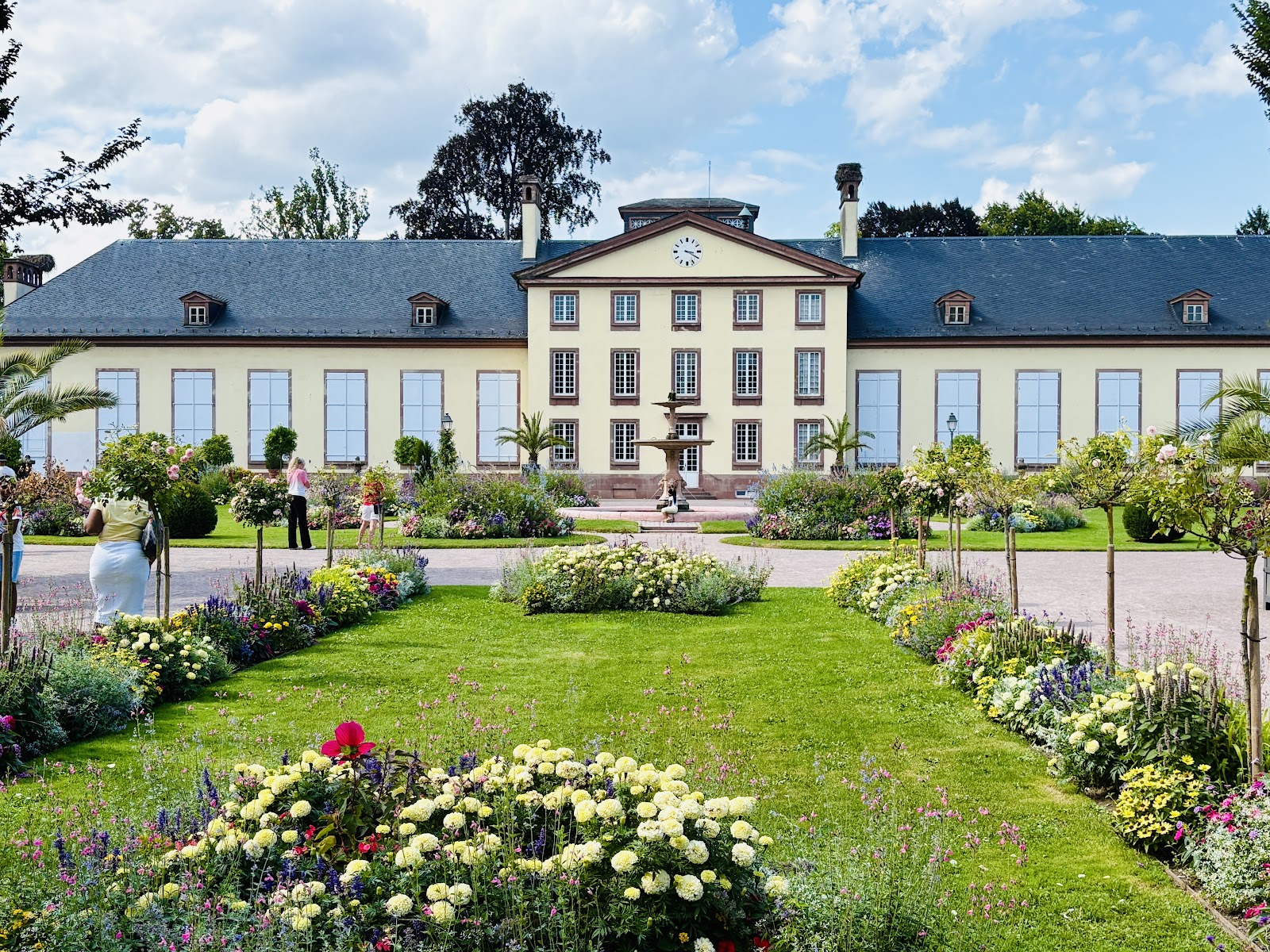
The first thing you notice at Parc de l'Orangerie is the storks. They've built their nests high in the trees and on purpose-made platforms, and in early spring they clatter and crackle overhead with a noise that sounds like someone shuffling a deck of oversized cards. Strasbourg has long been the stork capital of France, and this 26-hectare park near the European institutions is where the city makes good on that reputation.
Beyond the birds, the park holds a half-timbered Alsatian farmhouse that was dismantled in Molsheim and reassembled here for a 19th-century exhibition, a classical pavilion that burned down and was rebuilt stone for stone, a rowboat lake dug for the same occasion, and an ice cream van on the boulevard that Strasbourg residents treat as a civic institution.
💛 What travellers fall for
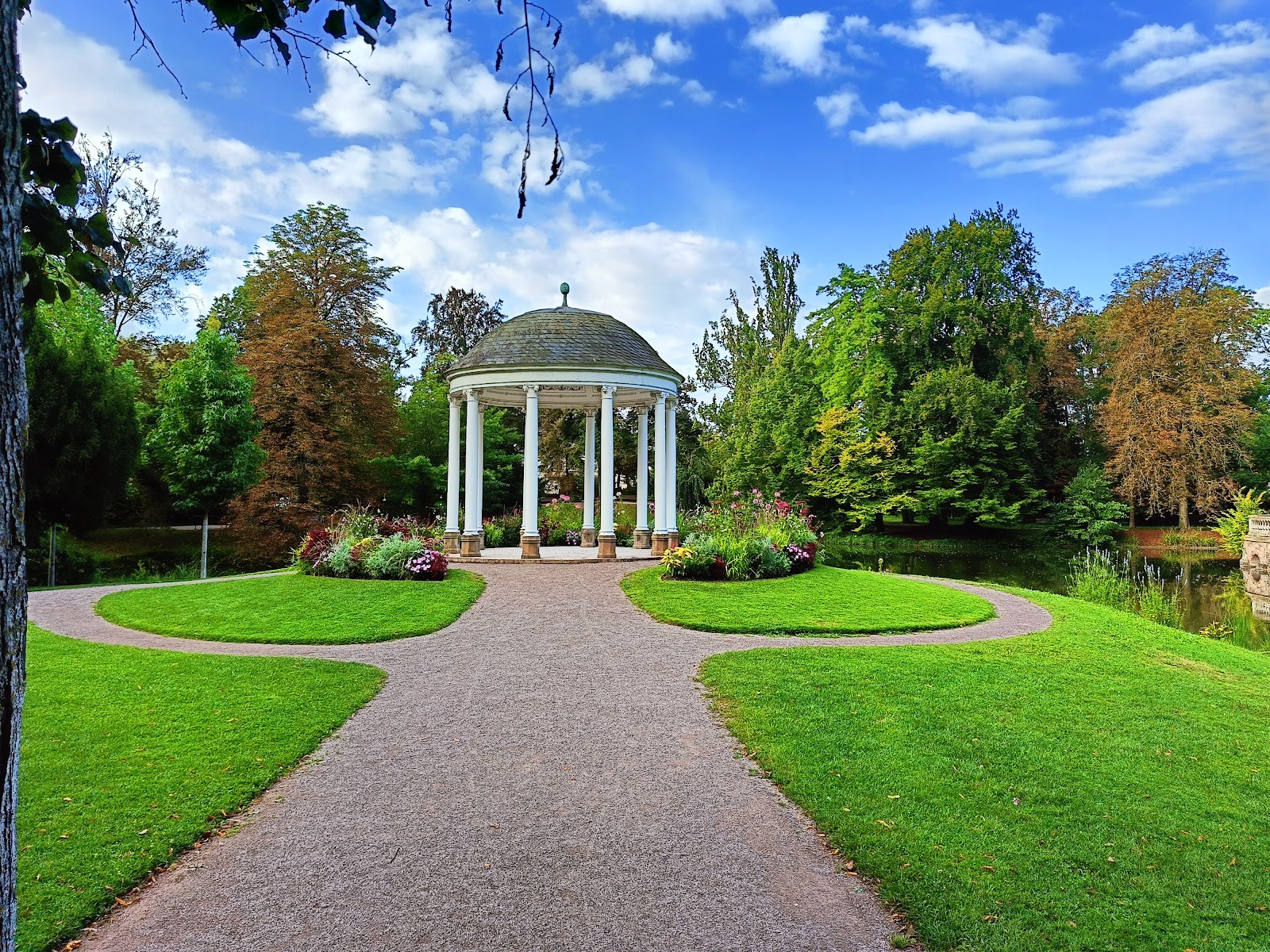
Regulars tend to time a visit around Franchi, the artisanal ice cream van that sets up on Boulevard de l'Orangerie in summer — the queue moves, and it's worth it. The Allée Joséphine gives you the park's formal spine in five unhurried minutes. Come back in March when the stork nests are active and the noise alone is worth the tram ride.
The story behind Parc de l'Orangerie
The park's earliest form dates to 1692, when Marshal d'Huxelles had a broad driveway laid toward the Robertsau for cavalry training. Within a few years, lime and elm-lined walkways gave it the bones of a formal garden. In 1801, 138 orange trees confiscated from the Hanau-Lichtenberg family at Château de Bouxwiller were ceded to the town, and by 1807 architect Valentin Boudhors had completed the Pavillon Joséphine — a classical structure with a central salon flanked by two wings to shelter the collection. The pavilion was named in honour of Empress Joséphine, who visited Strasbourg regularly. A fire destroyed it in 1968; it was rebuilt identically.
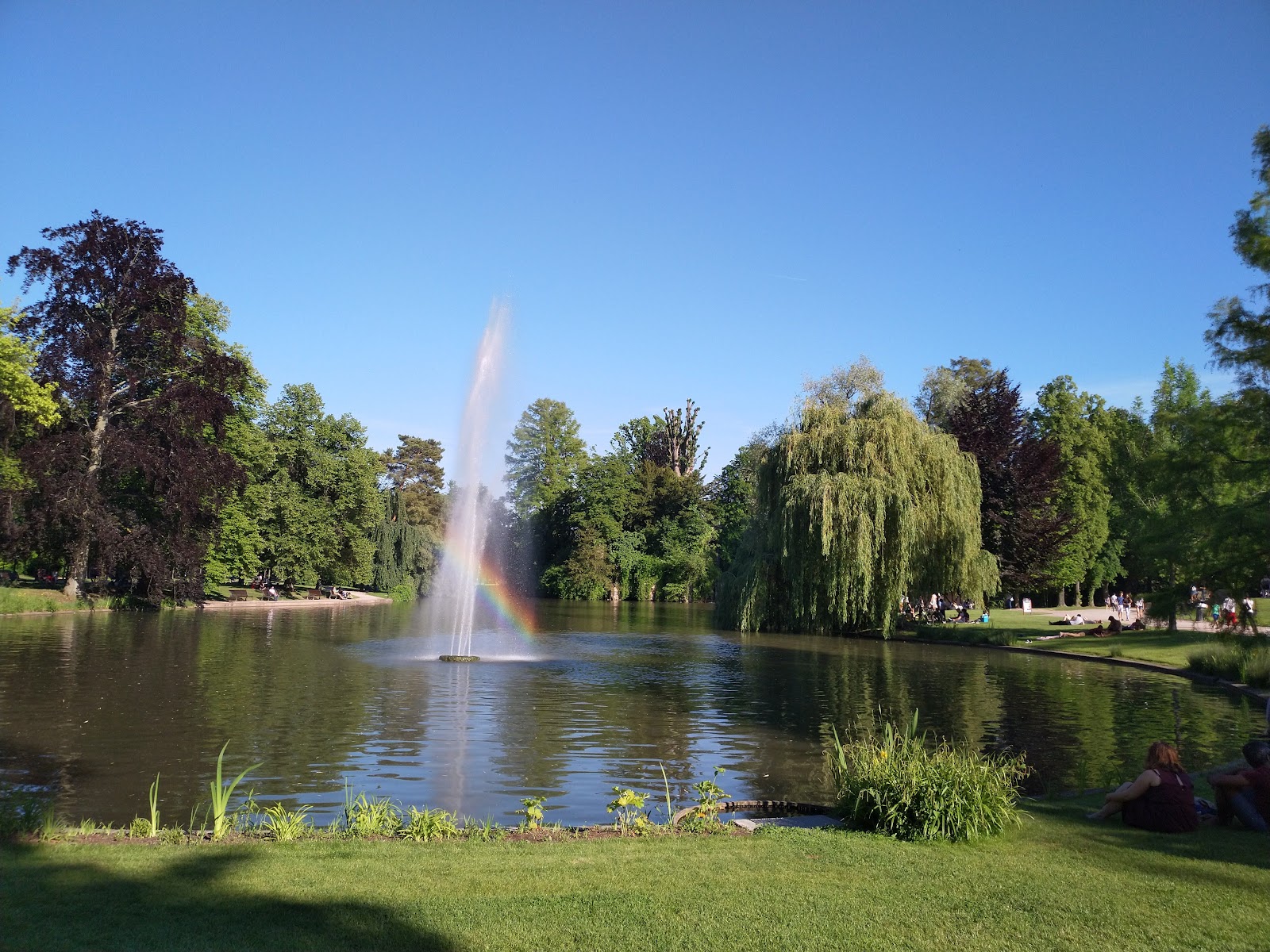
By 1830, under the influence of mayors Jean Frédéric de Turckheim and Georges Frédéric Schutzenberger, the park shed its French geometric rigour for the looser English landscape style. The bigger transformation came in 1895, when the city hosted an industrial and craft exhibition here: the park was enlarged, the artificial lake and waterfall were dug, and the Buerehiesel — a 17th-century half-timbered farmhouse from Molsheim — was relocated to the grounds, where it now houses a celebrated restaurant. The park has been listed as a Historical Monument since 1993.
Good to know
Tram E to Droits de l'Homme drops you at the park's edge; buses 6, 30 and 72 also stop here. Entry is free. Rowboat hire on the lake costs extra. The park opens daily from around 7:30 AM; hours shift with the season, so check before an early visit.
Spring is when the park earns its reputation — stork breeding runs through March and April, the lime trees are coming into leaf, and the lake reflects whatever light Strasbourg offers. Summer fills the paths and the ice cream queue. Winter strips the park back to its formal structure, which has its own quieter appeal.
Where is Parc de l'Orangerie?
More tickets & tours for Parc de l'Orangerie
Book directly at the provider
What travellers say about Parc de l'Orangerie
I recently visited and it was absolutely beautiful. The park is very well maintained, with lush greenery, peaceful walking paths, and plenty of space to relax. I especially enjoyed the lake area where you can see swans and other birds—it adds such a calming atmosphere. There are also playgrounds and open areas, making it great for families as well as couples or solo visitors. It’s the perfect spot to take a break from the city, have a picnic, or simply enjoy nature. Highly recommended if you're in Strasbourg!
A very popular, beautiful park in Strasbourg with a lovely pond and lots of gardens. Home to the storks and their huge nests. Lots of walking paths, benches, grass, a children's play area, a wooded area and many scenic views. My favorite park in Strasbourg, because it's manicured, cared for and is welcoming. ⭐⭐⭐⭐⭐ 5 stars
On a beautiful sunny day in April, we visited Parc de l’Orangerie with our family, including our two children aged 6 and 10. From the moment we entered, the park offered a calm and welcoming atmosphere—an ideal place to slow down and unwind after busier moments in the city. For families with young children, this park is a real gem. Our kids loved exploring the different playgrounds spread throughout the park. Each play area offered something slightly different, which kept them entertained for quite some time while we could relax nearby. It’s the kind of place where children can truly enjoy themselves, while parents get a chance to recharge. Visiting in early spring did come with a small downside. Some attractions, such as the rowing boats and the small car ride, were still closed—likely because the season had only just started. It didn’t significantly impact our visit, but it’s something to keep in mind if you’re expecting everything to be open. There are several pleasant dining options within the park, ranging from a pancake house to a brasserie and even a more upscale restaurant. This variety makes it easy to stay for a few hours without needing to leave the park for food or drinks. If there is room for improvement, it would be in the practical facilities. More parking spaces for electric cars would be a welcome addition, and additional public restrooms would make the experience even more comfortable, especially for families spending longer periods in the park. Overall, Parc de l’Orangerie is a lovely place to relax and enjoy some quality family time. It combines tranquility with child-friendly activities in a way that makes it easy to recommend, especially on a sunny day.
A lovely and peaceful park close to the center of Strasbourg. I visited in April, during spring bloom, and the whole area looked beautiful. It’s perfect for a short walk, relaxing, or taking nice photos. Clean, well-kept and easy to reach from the main sights. Great spot for a quick break while exploring the city.
A beautiful park that helps you escape the feeling that you’re in a city, just for a moment. You get to take in all of that greenery and the incredible storks’ nests that sit on top of the poles at the very end of the garden. Remarkable
More of Strasbourg
Discover where to stay, what to do and the best deals for your trip.
Explore Strasbourg →More attractions in Strasbourg
All of Strasbourg →

Background adapted from Wikipedia (CC BY-SA) · map data © OpenStreetMap contributors · ratings & place photos via Google · other photos with per-image credit. Ticket links may earn us a commission at no extra cost to you.