
Parc de la Mar
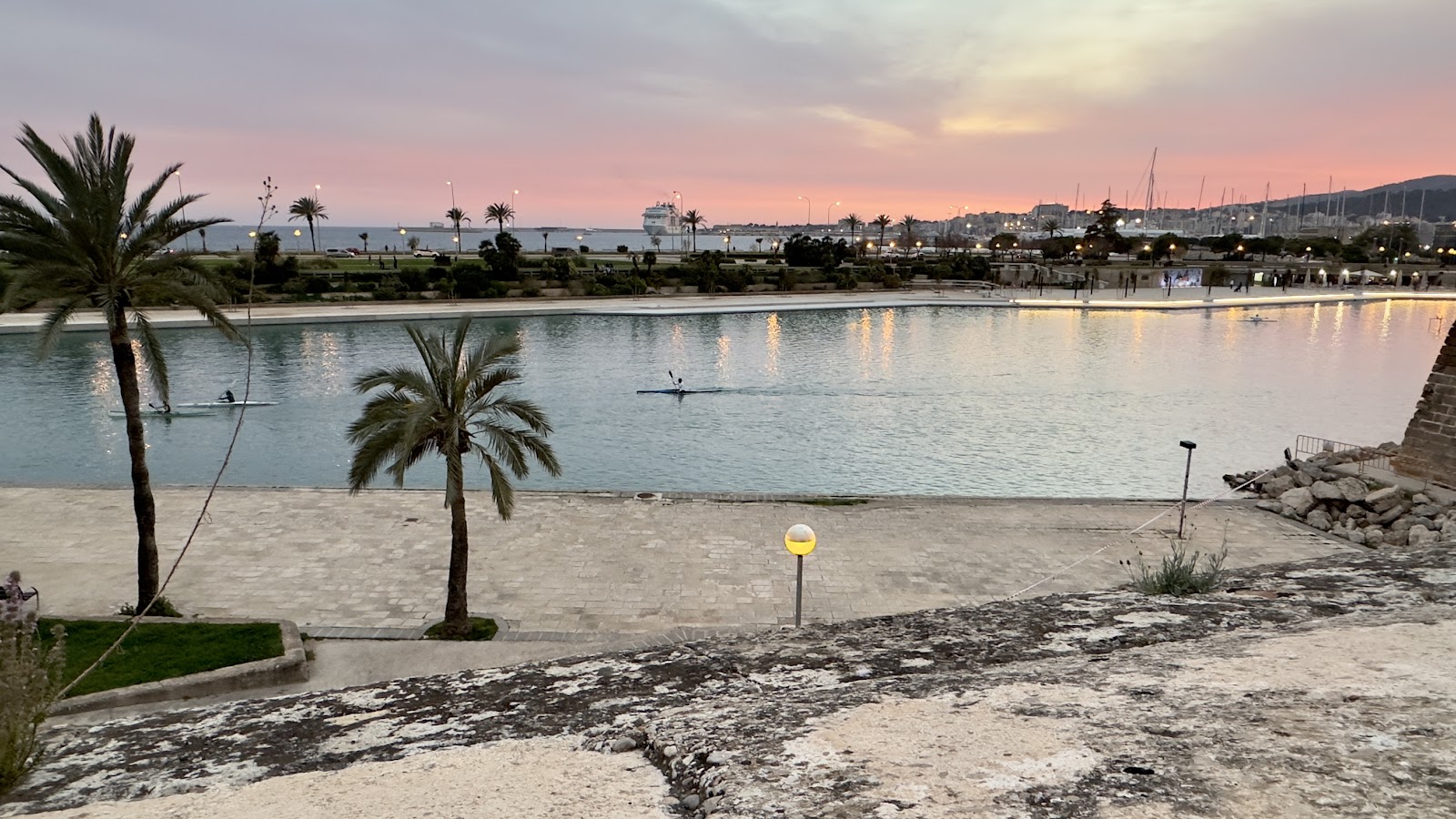
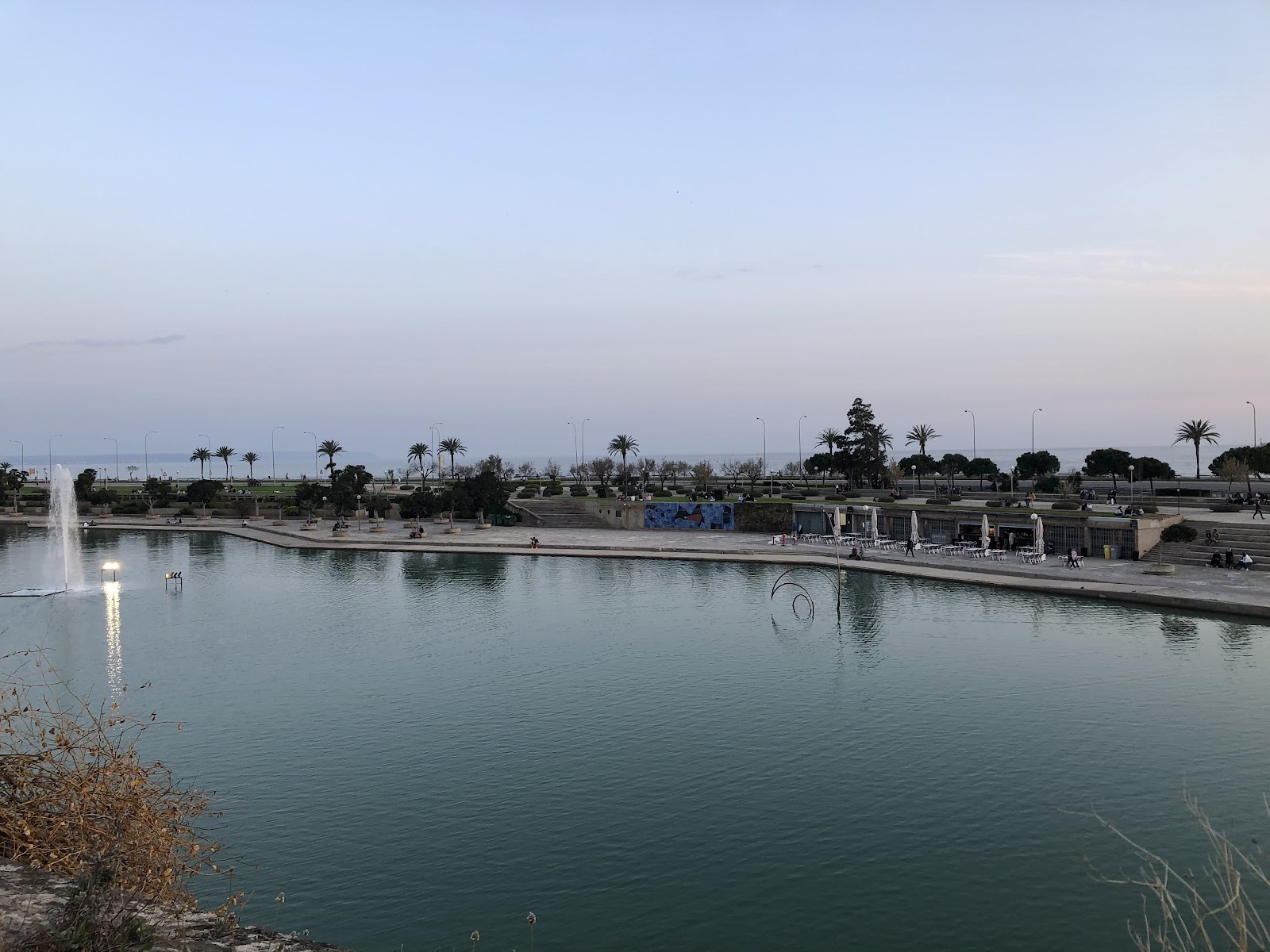
The first thing you notice is the reflection — La Seu's Gothic facade doubled in a long saltwater lake, so still on a calm morning that the image below looks more composed than the one above. Parc de la Mar sits at the foot of Palma's old city walls, a wide, open-air space that manages to hold a Joan Miró mural, sculptural arches by Josep Guinovart, and a fountain-lit lake within a single easy circuit.
The park runs free, all day and all night. Come evening, the cathedral lights up and the water catches it whole. In summer, a large screen rises from the centre of the lake for Cinema a la Fresca — outdoor films projected over the water, with the old walls behind you.
💛 What travellers fall for
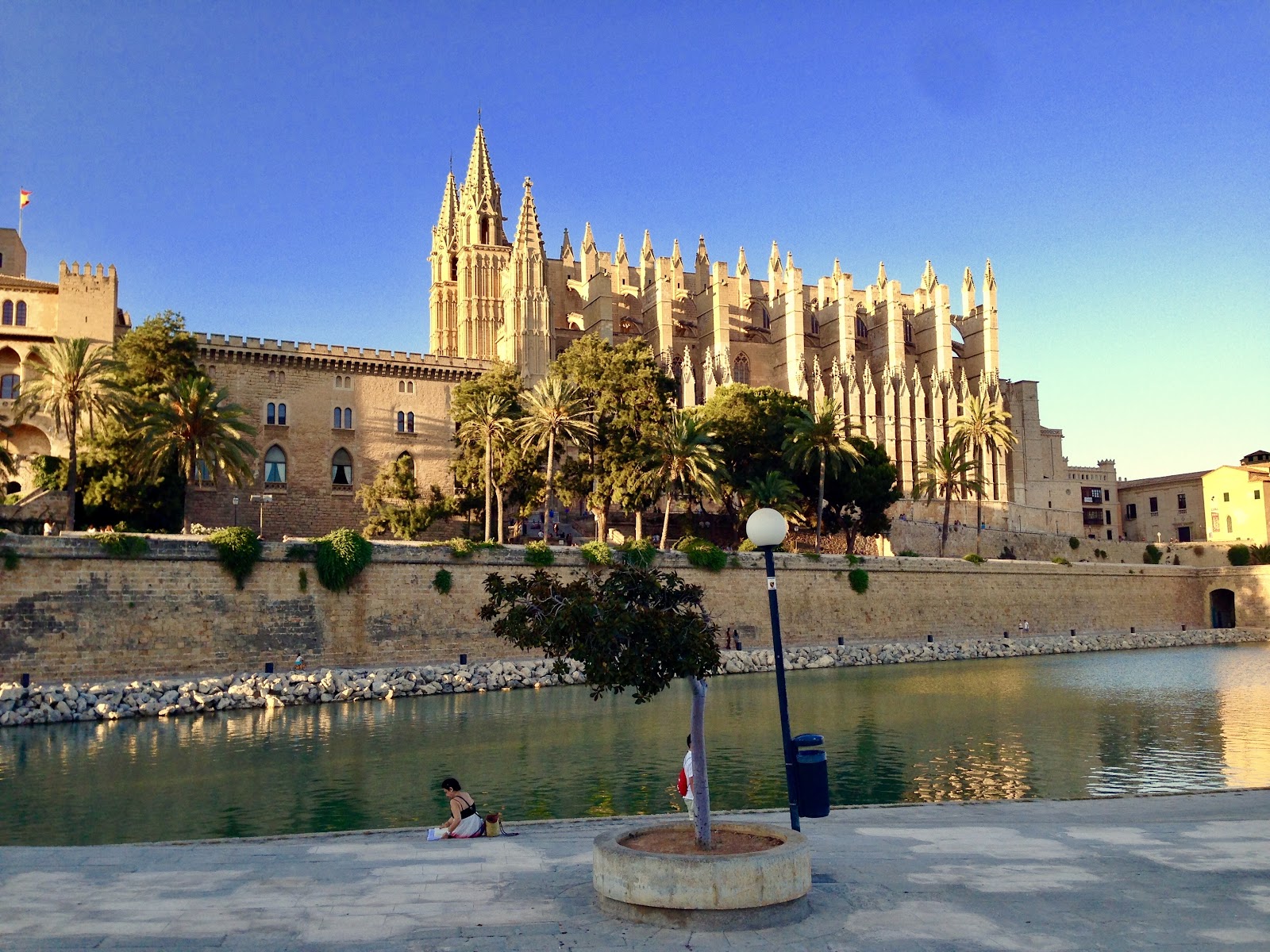
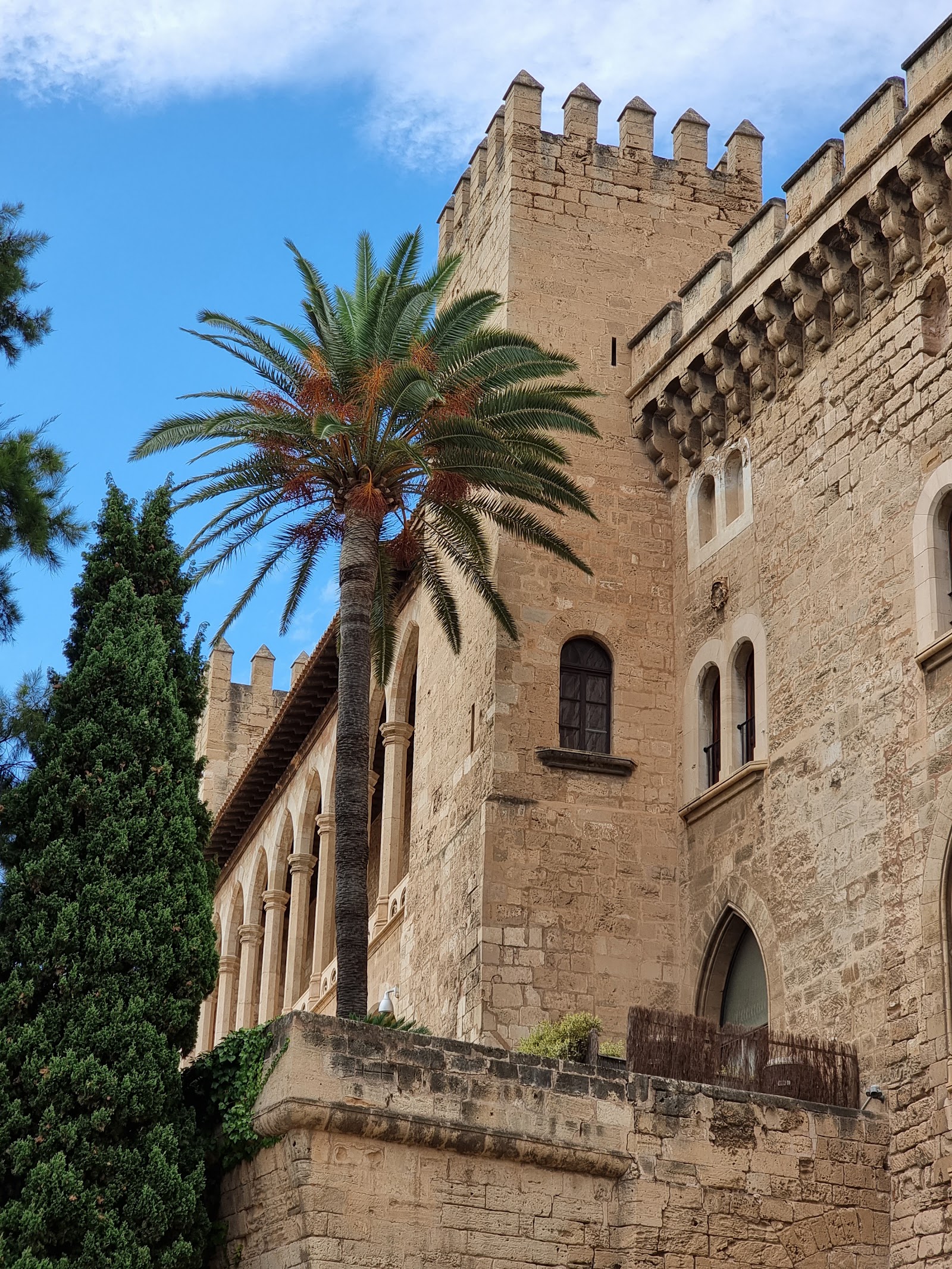
People who keep coming back tend to arrive early or late. The Dalt de Murada promenade — the walkway along the top of the old city wall — gets quiet at either end of the day, and the view down over the lake and out to the marina earns the detour. The art gallery built into the wall vaults at Ses Voltes is easy to miss; it shouldn't be.
The story behind Parc de la Mar
Until the 1960s, the sea came right up to the base of Palma's city walls. The construction of the Ma-19 coastal motorway severed that connection, and land reclamation left a broad, inert strip that was promptly turned into a car park. Locals pushed back — a rare public campaign during the final years of the Franco era — and in 1977 the city held an international design competition.
The winning team, called Zócalo and led by architect Pere Nicolau with collaborators Emili Nadal, Emili Gener, Santiago Bo, and engineers Mateu Castelló and José I. Cisneros, proposed an artificial saltwater lake and green promenades to restore some sense of the old seafront. The park opened in 1984. One element of the original plan — a direct connection between the lake and the sea via an underpass beneath the motorway — was never built, leaving the design technically incomplete.
Good to know
Free entry, open around the clock. Bus lines 3, 25, and CC stop at Plaza de la Reina, five minutes' walk away. The underground car park fills fast on summer weekends. The marina at Moll Vell is roughly 300 metres from the park's eastern edge.
Spring and autumn give you the park at its most comfortable — warm enough to linger, cool enough to walk the full circuit without flagging. July and August bring real heat by midday; the palm-shaded esplanades help, but early morning or evening is when the light is best and the crowds thinnest.
Where is Parc de la Mar?
Location
- In Palma de Mallorca
- 39.5663, 2.6497
- Open in Google Maps
More tickets & tours for Parc de la Mar
Book directly at the provider
More of Palma de Mallorca
Discover where to stay, what to do and the best deals for your trip.
Explore Palma de Mallorca →More attractions in Palma de Mallorca
All of Palma de Mallorca →

Background adapted from Wikipedia (CC BY-SA) · map data © OpenStreetMap contributors · ratings & place photos via Google · other photos with per-image credit. Ticket links may earn us a commission at no extra cost to you.