
Palau de l'Almudaina
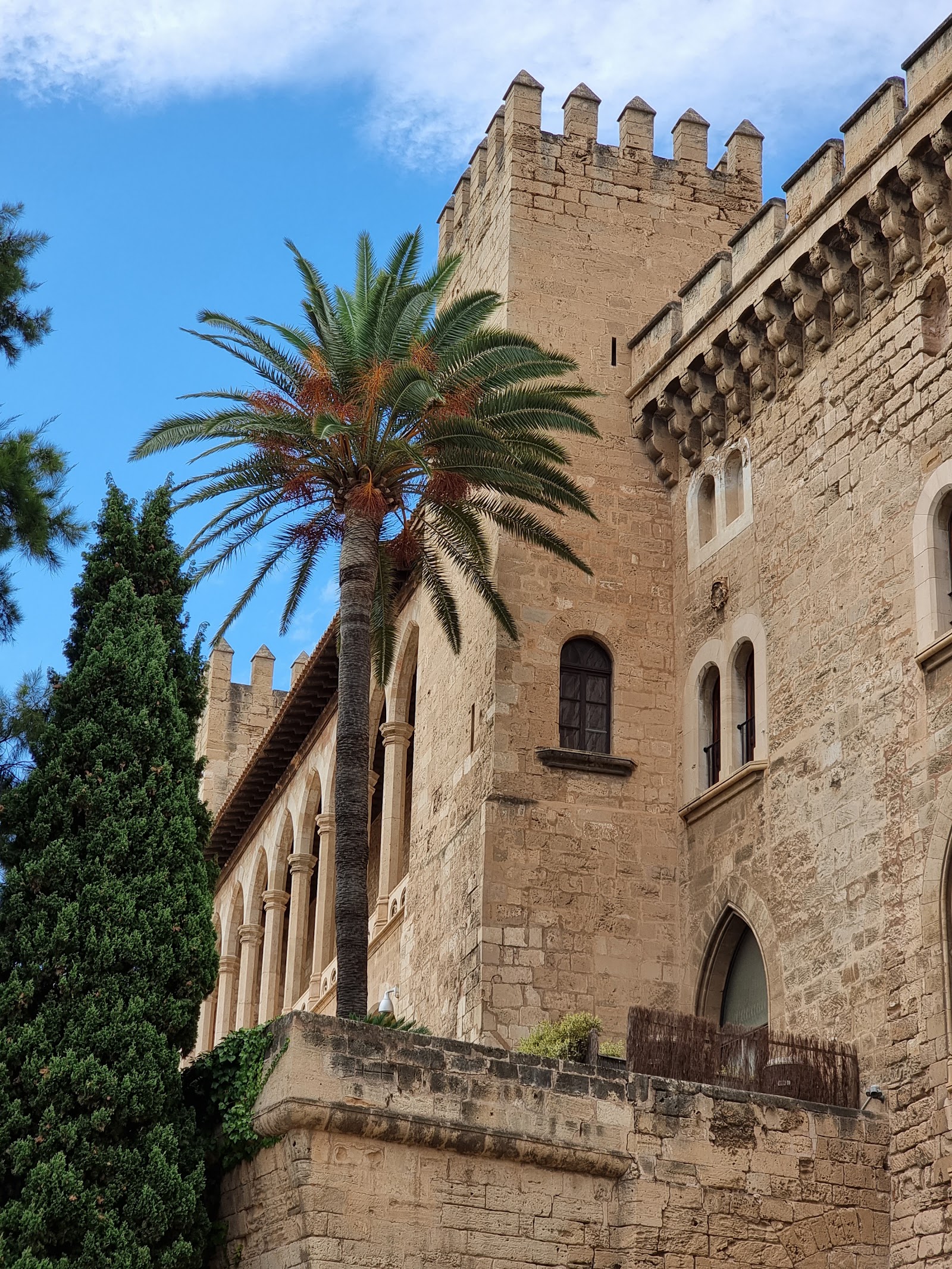
Opposite the Cathedral of Mallorca, the Almudaina sits on ground that has been fortified, prayed over, and ruled from for the better part of a thousand years. The name comes from the Arabic for citadel, and the building wears its layered past honestly — Moorish foundations, Gothic arches, a 16th-century upper floor added by Charles V, and a courtyard of original stone pavement that has been walked by kings, soldiers, and now ordinary visitors.
The Spanish royal family still uses the palace for official functions, which means access can shift without much notice. When it is open, you move through rooms hung with Flemish tapestries, past a Romanesque chapel portal cut from Pyrenean marble, and out into a palm-lined parade ground that has barely changed since 1309.
💛 What travellers fall for
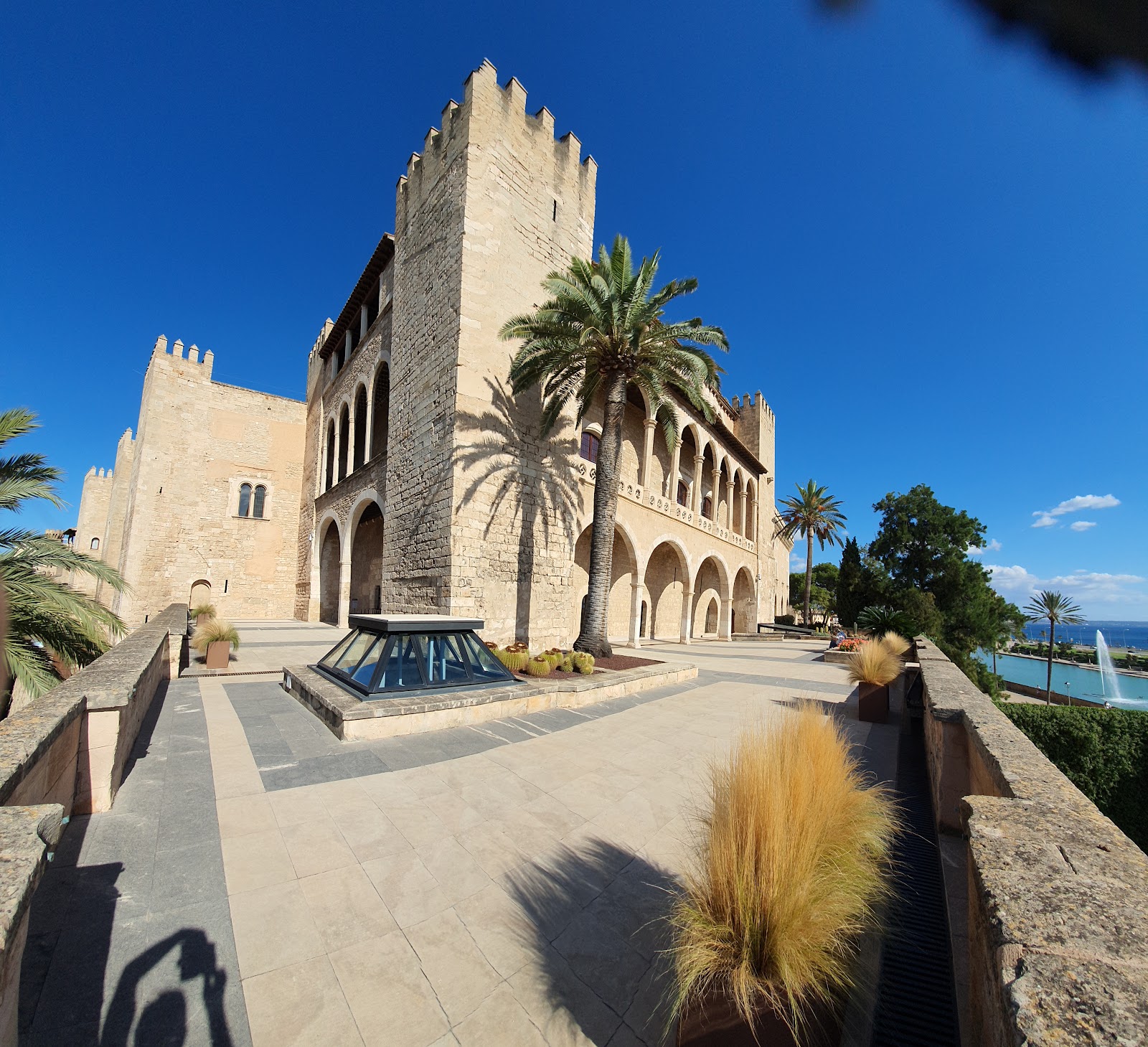
People who return tend to linger in the King's Courtyard rather than rush the apartments — the proportions of the space, ringed by towers and open to the sky, do something that photographs don't quite capture. The Chapel of Santa Ana is easy to walk past; it rewards a second look for that marble portal alone.
The story behind Palau de l'Almudaina
The site was already ancient when the Moors built their alcazaba here in the 10th century, layering over Roman and Talaiotic remains. That fortress held as the seat of Islamic power on the island until 1229, when James I of Aragon took Mallorca and began converting it into a Gothic palace.
The more systematic transformation came under James II of Majorca, who launched a rebuilding program in 1298. Between 1309 and 1314 the Great Hall was raised, the Chapel of Santa Ana founded, and the Angel's Tower completed with its bronze Archangel Gabriel. The palace passed to the Crown of Aragon under Peter IV in 1349, and two centuries later Charles V added the upper floor. Architect Gaspar Bennazar restored the southern facade in the early 20th century.
Good to know
Check the official website before visiting — the palace was closed for renovation works as of mid-2026, and hours vary seasonally between 10 AM–6 PM and 10 AM–8 PM. EU citizens enter free; the first Sunday of the month is free for all. Mornings are quieter. Flash and tripods are not permitted inside.
Where is Palau de l'Almudaina?
Location
- In Palma de Mallorca
- 39.5671, 2.6467
- Open in Google Maps
Rating
4.5 ★ · 7,461 Google reviews
More tickets & tours for Palau de l'Almudaina
Book directly at the provider
What travellers say about Palau de l'Almudaina
A magnificent historical palace with impressive architecture that blends Moorish and Gothic styles. The interiors are elegant, with beautiful halls, tapestries, and royal rooms still used for official ceremonies. The views over the bay of Palma are spectacular. A must-visit for history and culture lovers in Mallorca.
We had actually came here to see famous Cathedral which is located next to Royal Palace. By the the time we finished seeing Cathedral, it was quite late as we wanted to see Old Town also. We just saw it from outside. It looked beautiful. May be next time...
Palace located next to the cathedral. Sadly was closed and seems to be closed for a while now, maybe being refurbished?
I was happy to go through the palace on my own, no need to prebook tickets. The audio guide was good and explained things with not too much and not too little detail (they had a choice of a half hour or one hour tour). The rooms were rather bare but there were some gorgeous old tapestries which were mind-boggling!
The building itself and architecture is of course stunning, but the rooms are pretty much empty with only a few tapestries and cabinets on display and no information provided about them. We weren't aware until after our visit that an audio guide is available so perhaps this information is in that guide. The star I deducted was for the attitude of the staff. I felt like it was a chore for the girl at the desk to even sell us the tickets and the 2 security men that put our belongings through the xray machine looked like they were sucking lemons and couldn't care less.
More of Palma de Mallorca
Discover where to stay, what to do and the best deals for your trip.
Explore Palma de Mallorca →More attractions in Palma de Mallorca
All of Palma de Mallorca →

Background adapted from Wikipedia (CC BY-SA) · map data © OpenStreetMap contributors · ratings & place photos via Google · other photos with per-image credit. Ticket links may earn us a commission at no extra cost to you.