
Palau de la Música Catalana
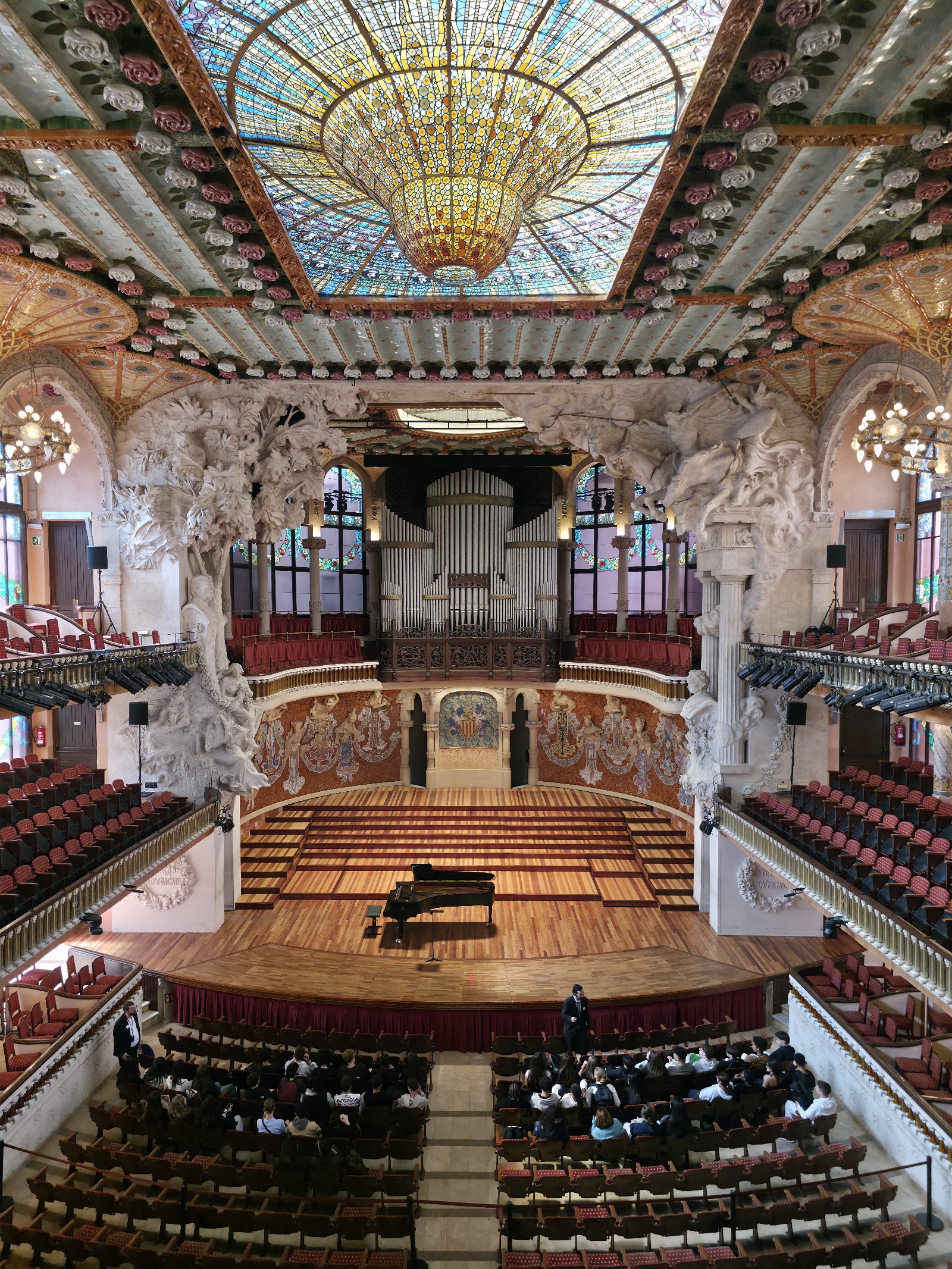
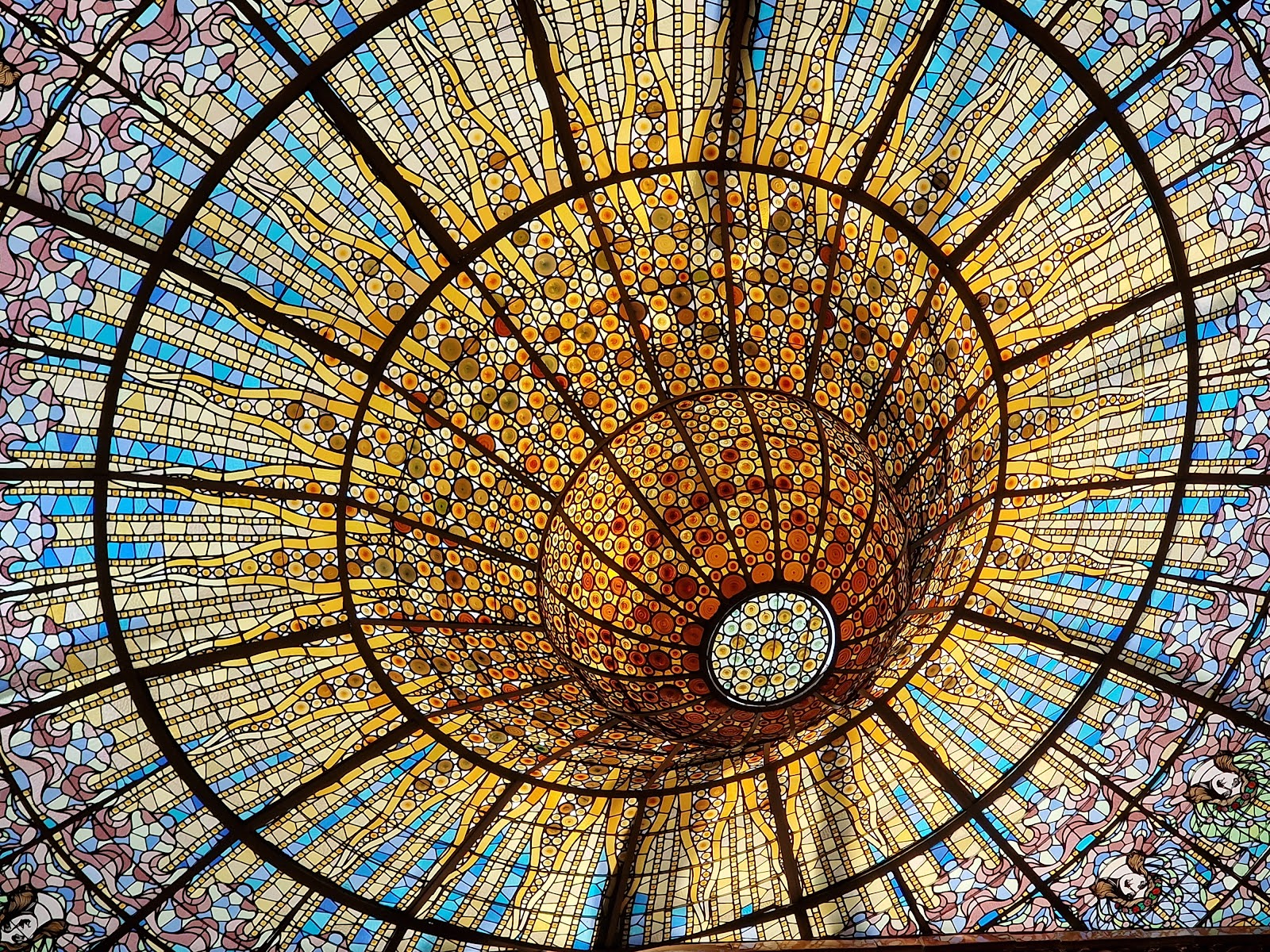
The ceiling of the main concert hall is the first thing that stops you: an inverted dome of amber and cobalt stained glass, ringed with women's faces, pouring natural light down onto the 2,200 seats below. It is the only concert hall in Europe lit entirely by daylight, and standing under it, you understand why Lluís Domènech i Montaner won Barcelona's prize for best building the year after it opened.
Built between 1905 and 1908 for the Orfeó Català choral society, the Palau de la Música Catalana is Catalan modernisme at its most concentrated — every surface carrying sculpture, mosaic, or glass. Pau Gargallo and Eusebi Arnau carved the figures; Antoni Rigalt made the stained glass; Miquel Blay's sculptural group crowns the façade alongside stone busts of Bach, Beethoven, and Wagner.
💛 What travellers fall for
People who come back tend to book a concert rather than just a tour — the acoustics and the afternoon light through Rigalt's dome together are a different experience from the guided visit. The Lluís Millet Hall, with its own stained-glass windows overlooking the street, is worth lingering in. Arrive at 9am on a weekday for the quietest tour slot.
The story behind Palau de la Música Catalana
The Orfeó Català was founded in 1891 by composers Lluís Millet and Amadeu Vives as a vehicle for Catalan choral music. Within fifteen years the society had outgrown its rehearsal spaces and commissioned Domènech i Montaner — then a professor at Barcelona's school of architecture, a post he held for 45 years — to build a permanent home. Funding came largely from Orfeó Català itself, supplemented by the city's industrial bourgeoisie. The building opened on 9 February 1908.
After seven decades of use the fabric needed serious attention. Between 1982 and 1989, architects Oscar Tusquets and Carles Díaz carried out an extensive restoration and extension, adding the underground Petit Palau auditorium, which opened in 2004 with a capacity of 538. UNESCO recognised the building as a World Heritage Site in 1997, jointly with Hospital de Sant Pau.

Good to know
Urquinaona metro (L1 or L4) puts you three minutes away on foot. Book the guided tour online in advance — walk-in entry is not available, and tours fill up. Morning visits, roughly 9–11am, catch the best light through the stained glass. April, May, September, and October are the least crowded months.
Where is Palau de la Música Catalana?
More tickets & tours for Palau de la Música Catalana
Book directly at the provider
What travellers say about Palau de la Música Catalana
Located in the el Born district this UNESCO world heritage site concert hall is easily accessible by Metro and is a must see for architecture enthusiasts and art lovers. It was built 1905 and 1908, a prime example of Catalan cultural revival with intricate mosaics, stained glass, and innovative iron and glass structure. Beautiful from the outside spectacular from the inside. Be sure to take a paid entry tour to see the interior inverted stained-glass dome in the main auditorium. The venue hosts a wide range of musical performances, from classical to jazz and flamenco. Recommend purchasing advance tickets for shows or tours from ticket booth outside around the corner.
The Palau de la Música Catalana is nothing short of breathtaking. A masterpiece of Catalan Modernisme that feels as vibrant today as when it first opened in 1908. The building is superbly maintained, and every corner reflects the care and pride invested in preserving this UNESCO World Heritage Site. Stepping inside, you’re immediately struck by the richness of its architecture. Lluís Domènech i Montaner’s vision comes alive through the stained‑glass skylight, mosaic‑covered columns, sculptural details, and the extraordinary interplay of colour and natural light. It’s a rare example of a concert hall where architecture, craftsmanship, and artistry merge into a single immersive experience. The main auditorium is a highlight, a luminous, uplifting space that feels almost otherworldly. More than a century after its construction, it remains one of the world’s most distinctive concert venues, a true cultural landmark for Barcelona and a symbol of Catalan identity. Whether you visit for a performance or a guided tour, the Palau offers an unforgettable encounter with architectural brilliance, history, and impeccable preservation. A must‑see for anyone who appreciates design, culture, or simply a beautifully kept historic treasure.
Fantastic guided tour of this stunning art deco music palace. Every inch of it is well conceived, artfully executed, and carefully restored. Go for a concert. Go for the tour. Skip the instagram photo up and look at the details. A national treasure to be sure.
The Palau de la Música Catalana is a remarkable venue that offers an enriching cultural experience. The concert program was diverse and engaging, showcasing impressive talent and artistry. If the proportion of drum and percussion was given more weight, the performance would be more breathtaking. However I still rate both the content of the visit and the quality-to-price ratio at four stars, reflecting a commendable experience overall. Highly recommended for anyone interested in music and architecture.
Found the amazing Palau on a random walk. Stunned and speechless by its beauty, from outside to inside, but I decided to stay stunned sitting on the second floor of the music hall for a little longer. My ticket only included the audio guide on my phone; however I was lucky enough to be sitting next to a wonderful tour lady when she detailed the background of the Catalan culture and history. Shameful free rider (me) wanted to shout out and applause to her but ended up making a donation to pay tribute to everyone involved in creating, preserving, and sharing this beautiful Palau with the world. No need to say- worth it!
More of Barcelona
Discover where to stay, what to do and the best deals for your trip.
Explore Barcelona →More attractions in Barcelona
All of Barcelona →
Background adapted from Wikipedia (CC BY-SA) · map data © OpenStreetMap contributors · ratings & place photos via Google · other photos with per-image credit. Ticket links may earn us a commission at no extra cost to you.