
Palais Longchamp
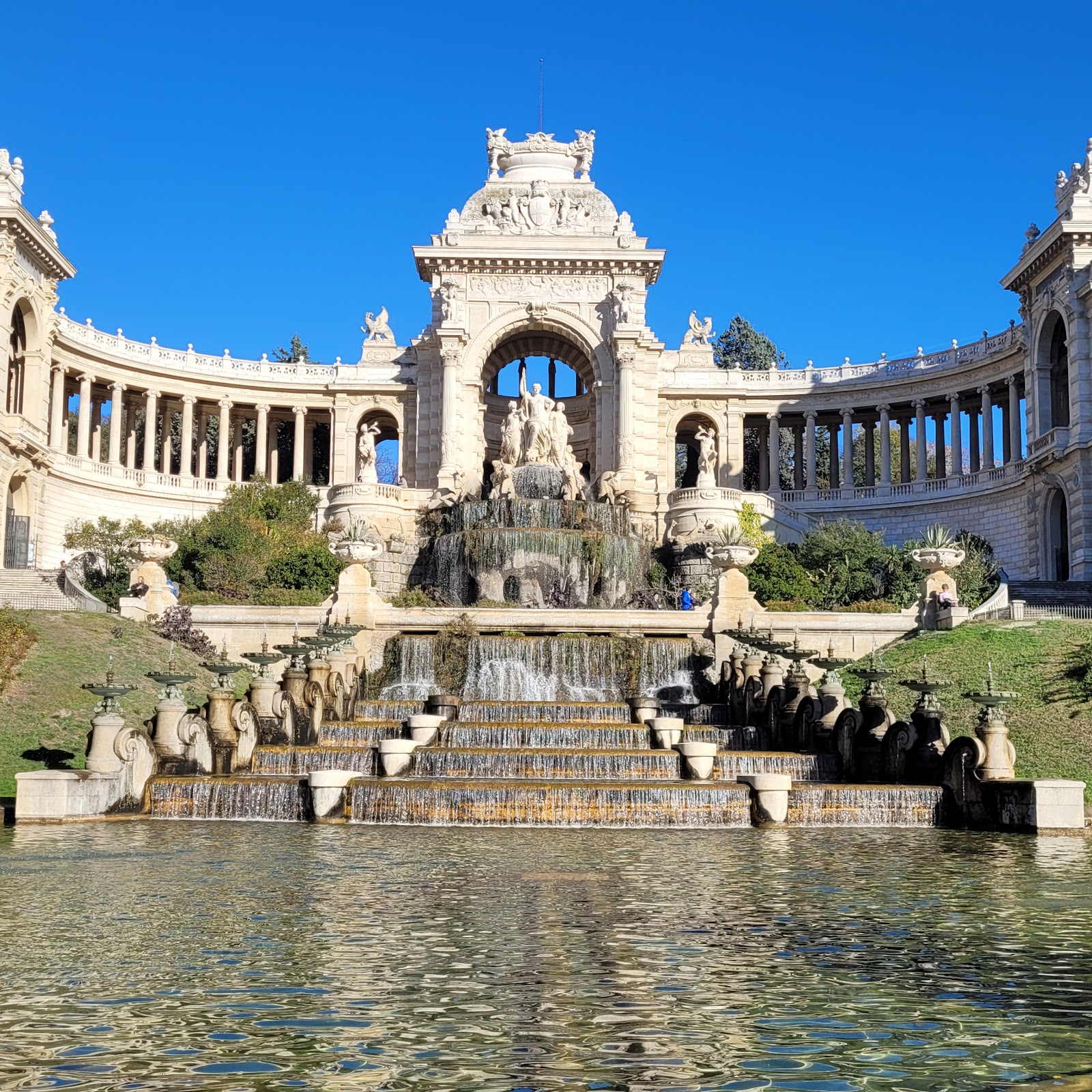
At the top of a long ceremonial approach, four Camargue bulls carved in stone haul a bronze chariot out of the water — Jules Cavelier's allegory of the Durance River arriving in Marseille after an 85-kilometre journey from the Alps. The cascade beneath them still runs, and the whole ensemble, designed by Henri Espérandieu and completed in 1869, functions as a monument to infrastructure as much as to architecture.
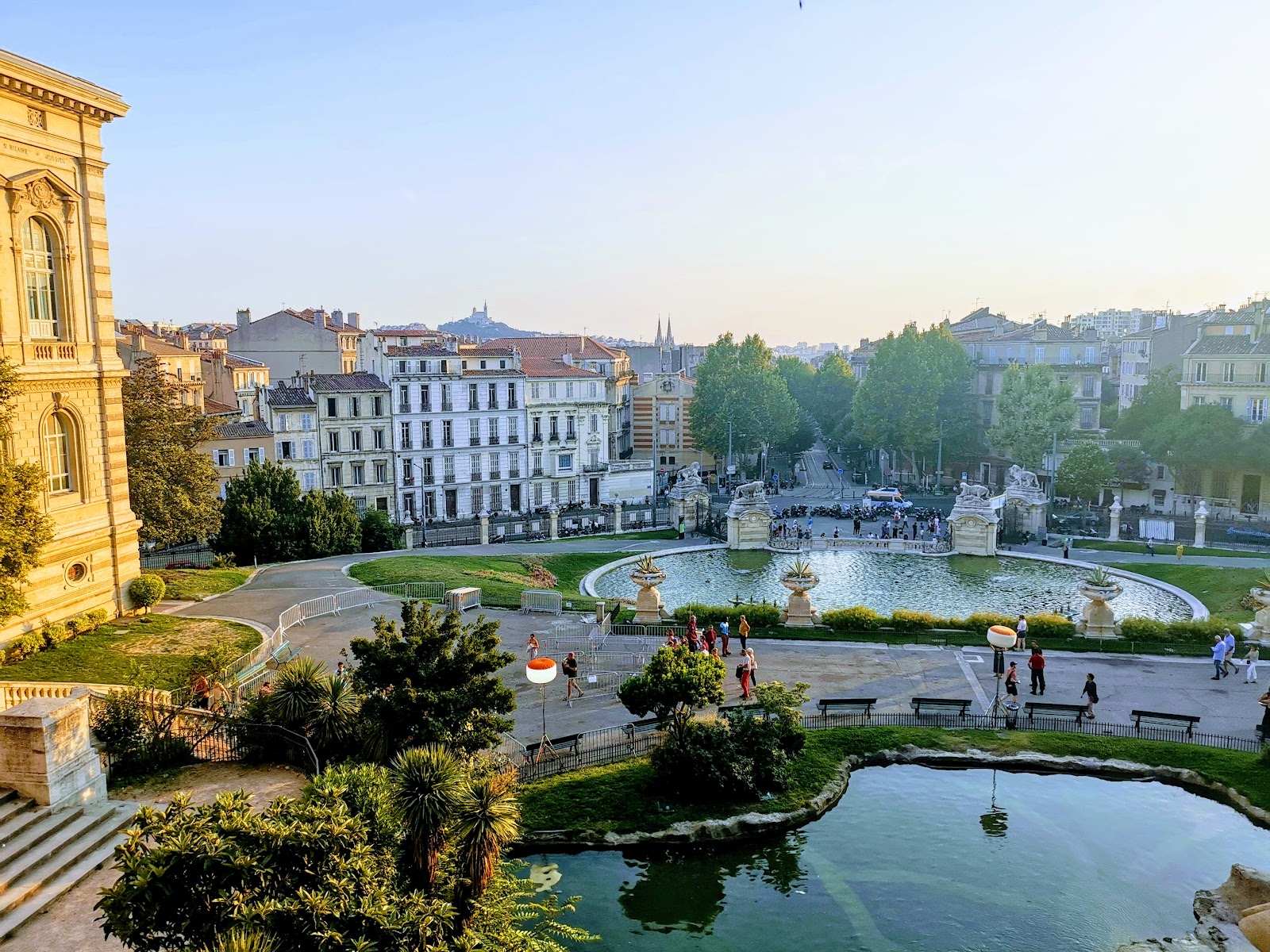
Behind the colonnaded wings sit two museums: the Musée des Beaux-Arts on the left, the Muséum d'Histoire Naturelle on the right. The eight-hectare park behind them holds an 1888 music kiosk, the ruins of a zoo that closed in 1987, and a giraffe pavilion built in an orientalist style for an animal that wintered here before being sent on to Paris.
💛 What travellers fall for
People who come back tend to arrive mid-morning on a weekday, when the fountain is running and the park is quiet enough to notice the old zoo cages — some still hold life-size fibreglass animals installed for Marseille's 2013 Capital of Culture year. The Natural History Museum, with its 80,000 animal specimens, rewards a slow hour more than most visitors expect.
The story behind Palais Longchamp
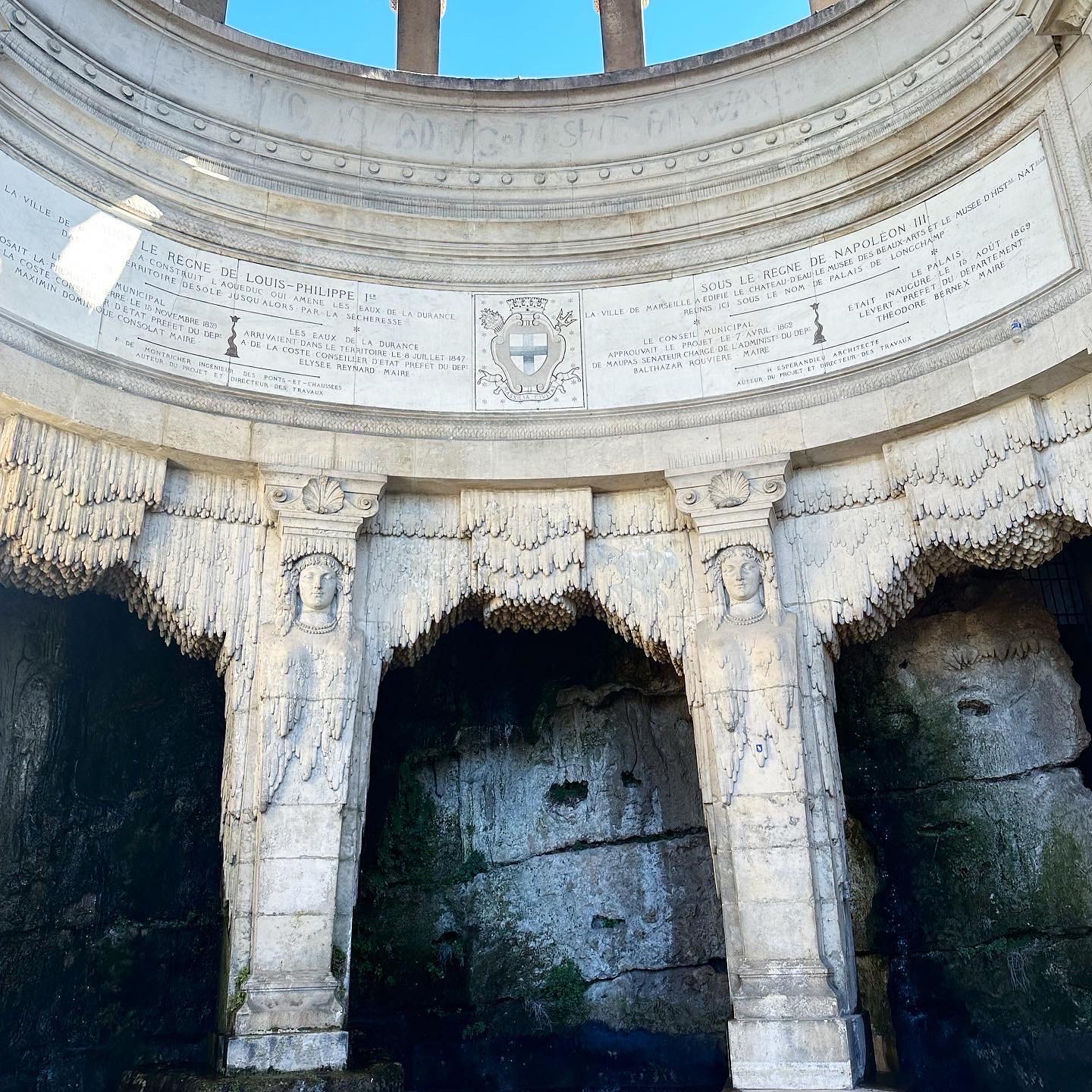
In 1835, a cholera epidemic tied directly to Marseille's water shortage killed thousands. Engineer Franz Mayor de Montricher's answer was a canal — 85 kilometres of it, drawing water from the Durance. The Duke of Orléans laid the foundation stone on 15 November 1839, and construction ran through 1849.
The city then commissioned Henri-Jacques Espérandieu to design a terminus worthy of the achievement. Work ran from 1862 to 1869, producing the château d'eau at its centre, the colonnaded wings, and Cavelier's sculptural group overhead. The Natural History Museum moved into the right wing in 1869, the Fine Arts collection into the left in 1873. A zoo had already been operating on the grounds since 1855 — the first provincial zoo in France — and ran until 1987.
Good to know
Metro line 1 to Cinq Avenues Longchamp, then five minutes on foot. The park is free and opens from 7am. Both museums close Mondays; admission runs €6–€10. Budget two hours for the park and exterior, another one to two if you're going inside.
The park is comfortable to walk in most of the year; spring and autumn give you mild temperatures and fewer crowds. Summer afternoons can be warm enough that the shade of the colonnades earns its keep.
Where is Palais Longchamp?
More tickets & tours for Palais Longchamp
Book directly at the provider
What travellers say about Palais Longchamp
The architecture is absolutely breathtaking, elegant, grand, and full of artistic details. The fountains and sculptures are especially stunning — every statue seems to tell a story. Walking through the palace and gardens felt peaceful and inspiring at the same time. The combination of history, art, and beautiful scenery makes this place unforgettable. If you visit Marseille, this is definitely a place you should not miss.
Easily one of the most magnificent landmarks in Marseille. Even if you don't plan on going inside the museums, the monumental fountain and colonnades are a masterpiece of architecture and a perfect backdrop for photography. The scale of the "chateau d'eau" is breathtaking, and the way the water cascades down is incredibly peaceful. Behind the palace, the Parc Longchamp is a beautiful green escape—ideal for a relaxed stroll or just to sit and people-watch. It’s well-maintained, full of history, and offers a much-needed breath of fresh air. Whether you’re a history buff, an art lover, or just looking for a stunning place to walk, this is an essential stop. Truly a jewel of the city!
Highly worth seeing. Standing in front of it, you’re simply fascinated. Breathtaking view over Marseille when you’re up top. Around the back there’s also a lovely garden to linger in. This is a must-visit. 🤝
This place is so pretty! I was considering going on a run here but most of it would be up hill and from what I walked around it would be under 1 mile. You get a great view of Marseille.
An experience not to be missed. The most magnificant fountain and park I ever laid eyes on. It was difficult to leave this place. I wanted to know more about it and it seems that the water flowing through this fountain comes from a river whereby the water served the population of Marseille. I could sit, listen and gaze at this masterpiece forever. A must on your Marseille bucket list. Tip: take the Tram line 2 straight to the Palais Longchamp stop and wait to be surprised as you step off the tram to get faced with stunning wonder.
More of Marseille
Discover where to stay, what to do and the best deals for your trip.
Explore Marseille →More attractions in Marseille
All of Marseille →
Background adapted from Wikipedia (CC BY-SA) · map data © OpenStreetMap contributors · ratings & place photos via Google · other photos with per-image credit. Ticket links may earn us a commission at no extra cost to you.