
Palais Gallien
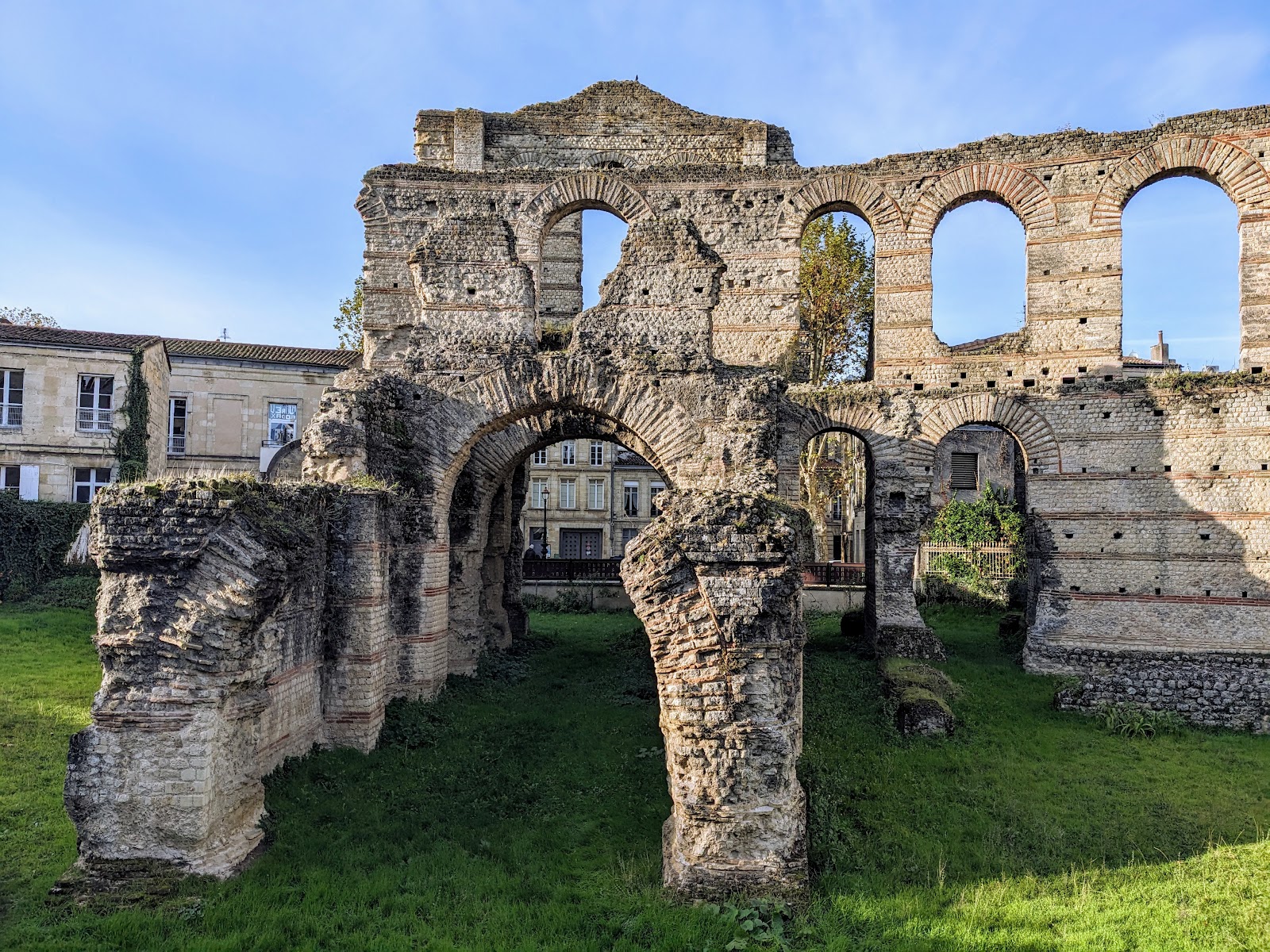
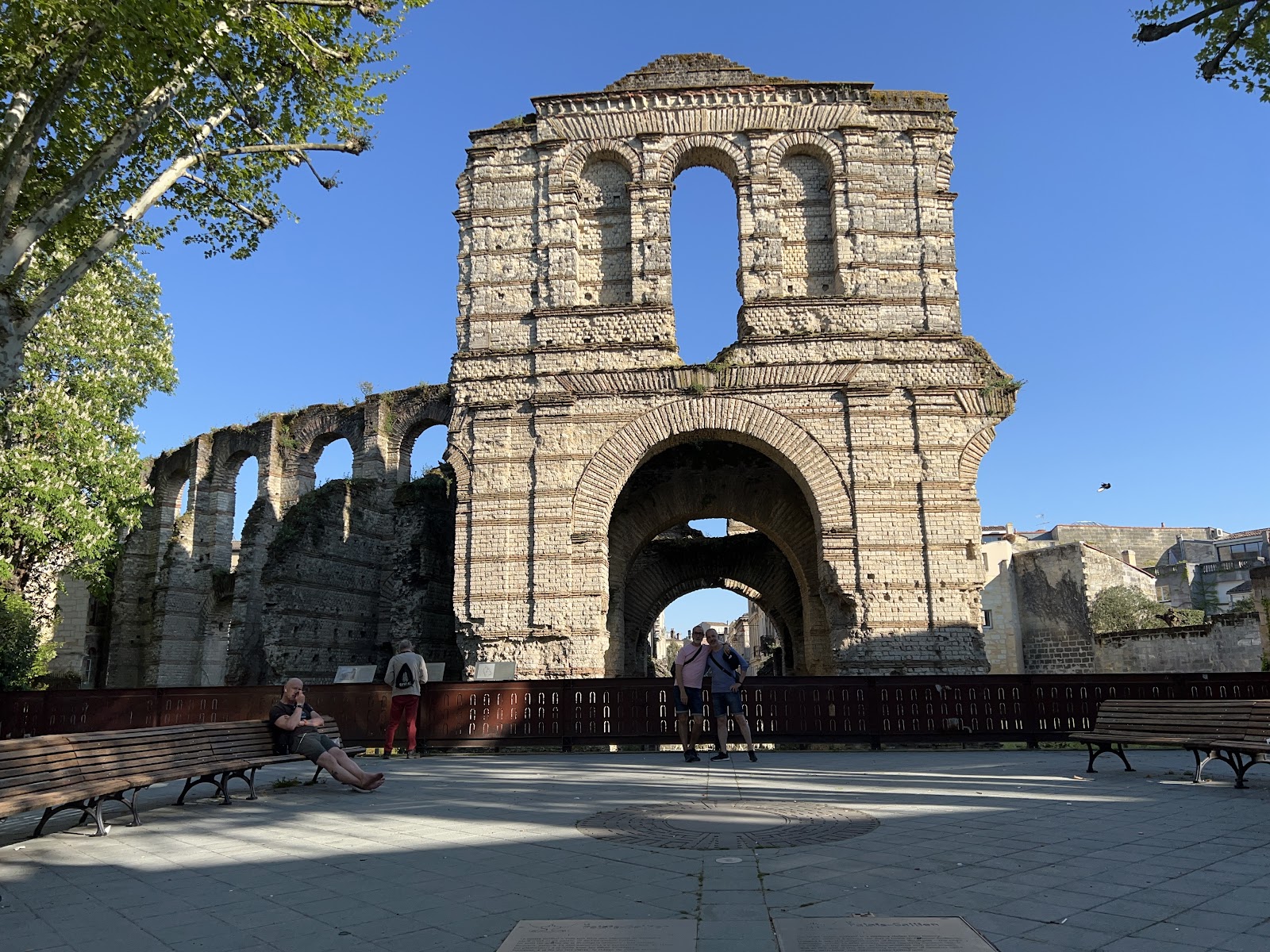
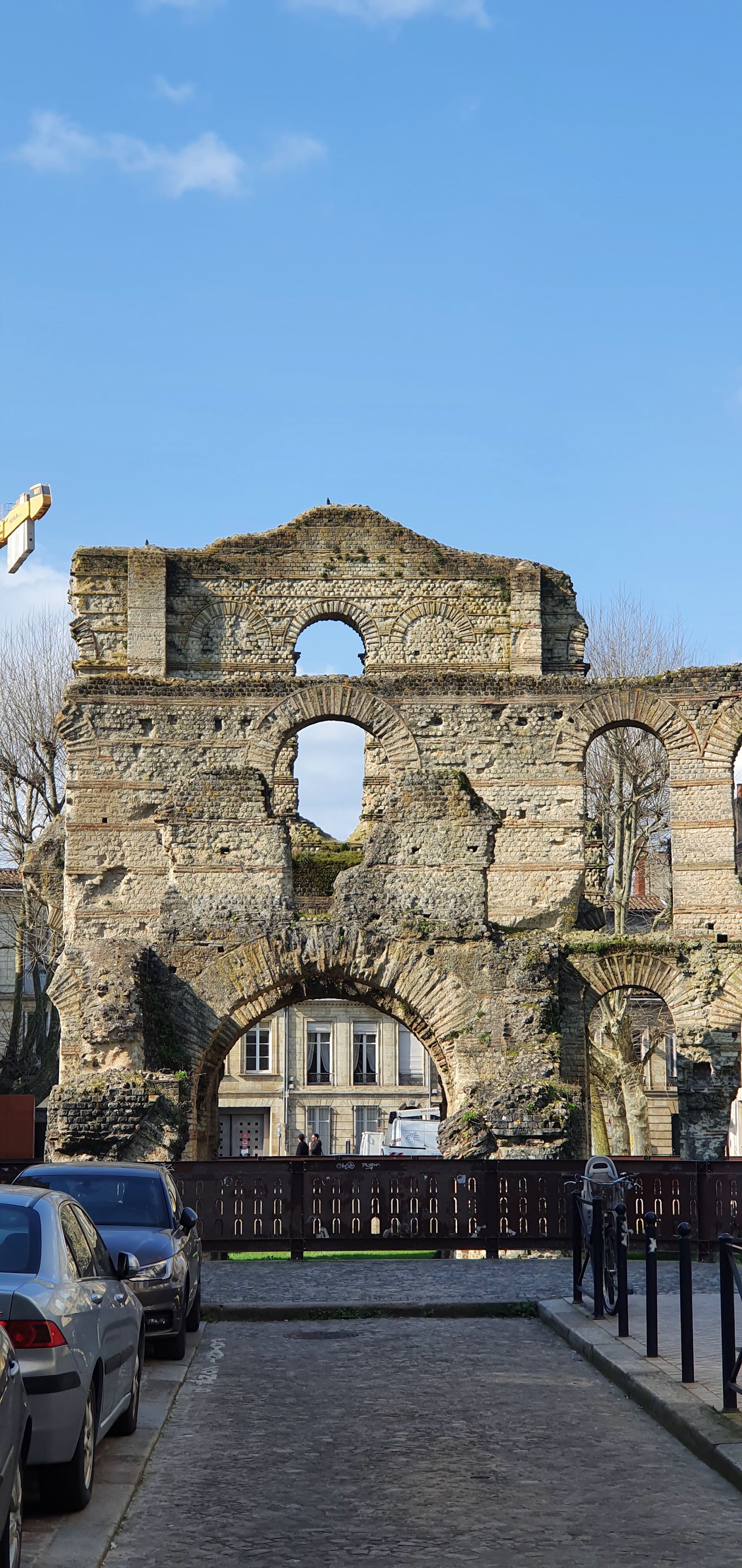
Two thousand years ago, Bordeaux was Burdigala, and its Roman amphitheater held around 22,000 people. What remains today — a northwest gate still carrying two of its original three arcade levels, a curve of radial wall, the ghost of an ellipse legible in the surrounding street plan — stands between the quiet houses of a residential quarter, fenced but free to visit.
The scale of the original structure only becomes clear when you do the arithmetic: 132 meters long, 25 meters high, 64 bays, timber seating packed with a crowd the size of a modern concert hall. The ruins now occupy a small green square, which makes the arithmetic feel more surprising, not less.
💛 What travellers fall for
People who come back tend to do it in late afternoon, when the sun works through the arcade openings and the opus mixtum — those alternating courses of stone and brick — reads more clearly. The streets around the site, particularly rue du Colisée, give you different angles without needing to go inside. The Fondaudège district bakeries are the logical next stop.
The story behind Palais Gallien
The amphitheater was built in the late 1st or early 2nd century CE, when Bordeaux served as the provincial capital of Roman Aquitaine. By the 10th century it was already known as "les Arènes," and from 1367 the name Palais Gallien appears in records — drawn, according to local legend, from either Emperor Gallienus or a mythical queen named Galienne, though neither claim has been verified.
The medieval city mined it for building stone. The 18th century used it as a quarry and dumping ground, and after the land was sold in 1793, sections were demolished to make roads. Lucien Bonaparte ordered the destruction stopped in 1800. The site received monument protection in 1840. Architect Charles Durand carried out consolidation work between 1886 and 1889, and archaeologist Robert Étienne led five excavation campaigns from 1953 to 1964.
Good to know
Free and open every day. Tram line D stops at Croix de Seguey or Fondaudège Muséum, a short walk away. Guided visits run daily 10:30–15:30 from June through September; booking required the rest of the year. Interior access varies, but the exterior is always worth the detour. Plan twenty minutes.
Bordeaux has a temperate oceanic climate — mild and often overcast. Summer afternoons can be warm enough to make the stonework glow; late afternoon light in particular falls well on the remaining arches. Winter visits are quieter and the ruins read clearly against bare sky.
Where is Palais Gallien?
More tickets & tours for Palais Gallien
Book directly at the provider
What travellers say about Palais Gallien
Beautiful ruins! Not so sure what the Google map meant by close, the platform you can see my picture still accessible and it’s free to look at, no ticket required! Anyone visiting Bordeaux should come here as well!
The so-called Palais Gallien in Bordeaux, France, was the amphitheater of Roman Burdigata, erected during the 1st century AD. Until the end of the 3rd century as many as 15,000 spectators would watch as gladiators wrestled with wild animals here. On a wall in an alley off Rue du Dr Albert Barraud across the street is a graffiti-style stencil artwork titled Monkeybird.
What a find! As someone who has visited a lot of Roman sites in Europe, this one was easy to find and the history around the area, including why there is so little left was worth the walk. We approached it from two different streets and spent some time discussing the way that the area would have looked and how large the amphitheatre would have been.
NICE BUT NOT MUCH TO IT You can visit this ruin from two streets, though those two streets aren't at all interconnected (you have to walk around). You can see it from the street level, but you can't walk around the ruins yourself. It's an interesting piece of Roman history, but you won't be here any more than 5 minutes, as there's not much more to see other than what you see in the pictures.
A hidden spot in Bordeaux. It's interesting but you won't spend more than 20 minutes there 😅
More of Bordeaux
Discover where to stay, what to do and the best deals for your trip.
Explore Bordeaux →More attractions in Bordeaux
All of Bordeaux →
Background adapted from Wikipedia (CC BY-SA) · map data © OpenStreetMap contributors · ratings & place photos via Google · other photos with per-image credit. Ticket links may earn us a commission at no extra cost to you.