
Palacio Real de Madrid
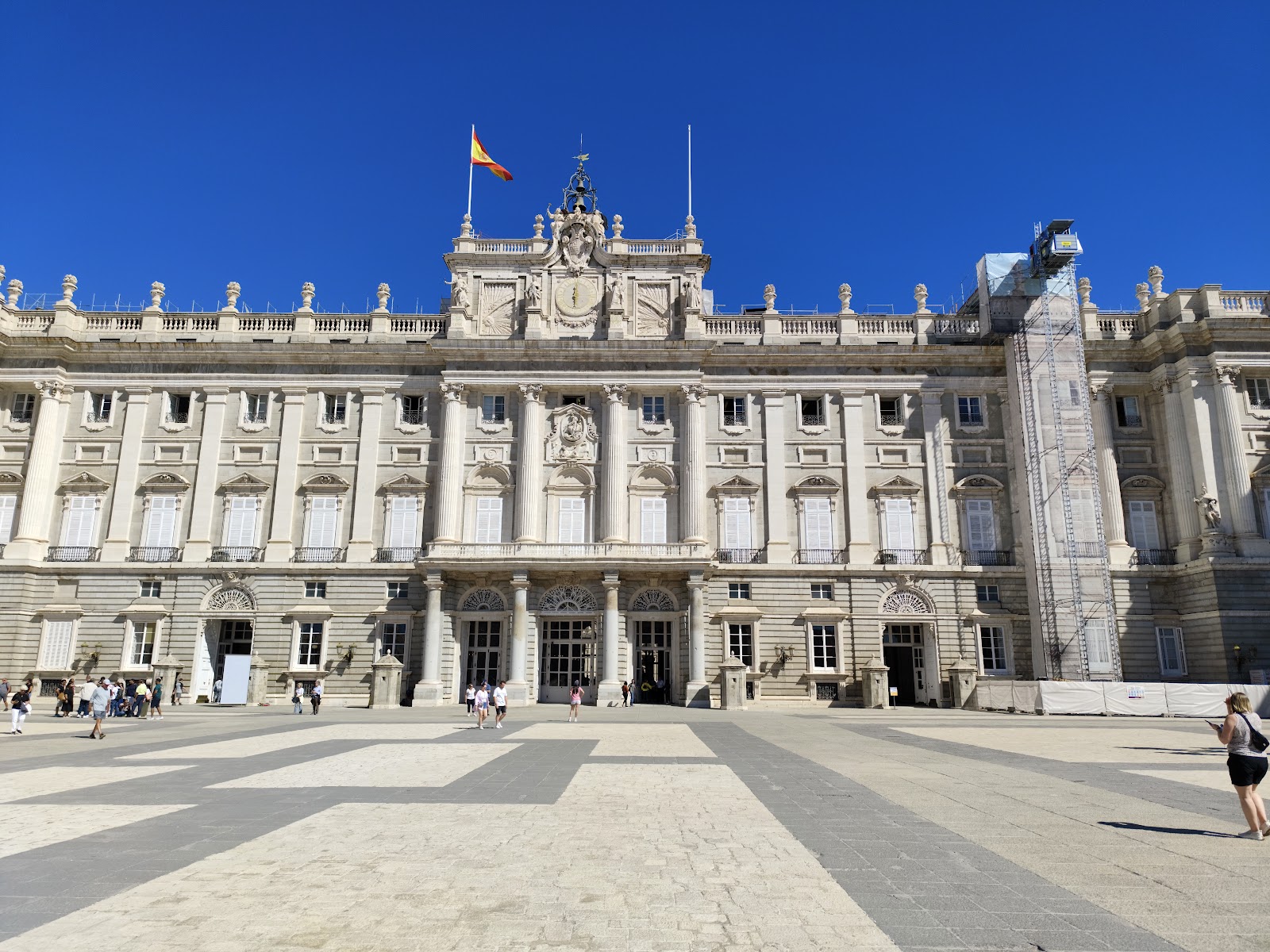
The numbers alone stop you: 3,418 rooms, 135,000 square metres of floor space, the largest royal palace in Western Europe. But what the statistics can't prepare you for is standing in the Throne Room beneath a Tiepolo ceiling, or finding, in a quiet gallery, the only complete Stradivarius string quartet in the world — four instruments made by the same hand, kept together for centuries.
The Spanish royal family hasn't lived here since the 20th century — they keep to the Palacio de la Zarzuela on the city's outskirts — which means the Palacio Real functions as something rarer than a residence: a building that has outlasted its purpose and become purely itself.
💛 What travellers fall for
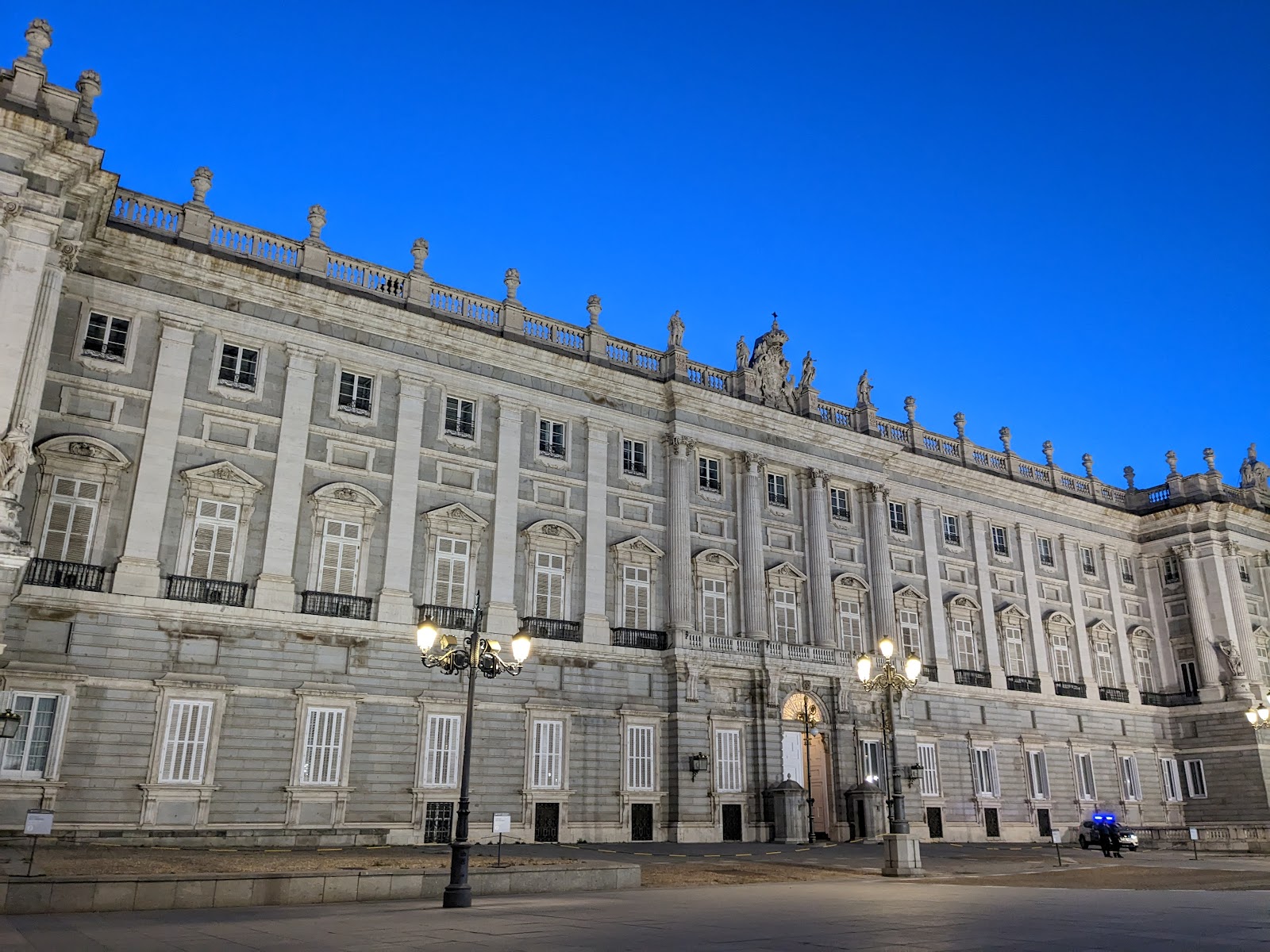
People who return tend to pick a room and slow down — the Hall of Mirrors, or Charles III's private chamber, or the Royal Armoury with its 16th-century armour. The Sabatini Gardens on the north side are worth fifteen minutes after you exit: symmetrical, quiet, and one of the better angles from which to read the palace's full facade.
The story behind Palacio Real de Madrid
A Muslim fortress stood on this ridge above the Manzanares River from the 9th century. It passed to the Castilian crown, grew into the Alcázar that Philip II made his seat of government when he fixed the royal court in Madrid in 1561, and burned to the ground on Christmas Eve, 1734.
Philip V ordered a replacement in stone — no more wooden structures that could catch fire. The Turinese architect Filippo Juvara drew up a Berniniesque design but died before construction began. Giambattista Sacchetti took over, breaking ground in 1738. The building was finished in 1764, when Charles III moved in; he later brought in the Sicilian architect Francesco Sabatini to enlarge it further. Ventura Rodríguez also contributed to the project — the palace is, in that sense, an argument between several strong architectural minds, resolved in Baroque stone.
Good to know
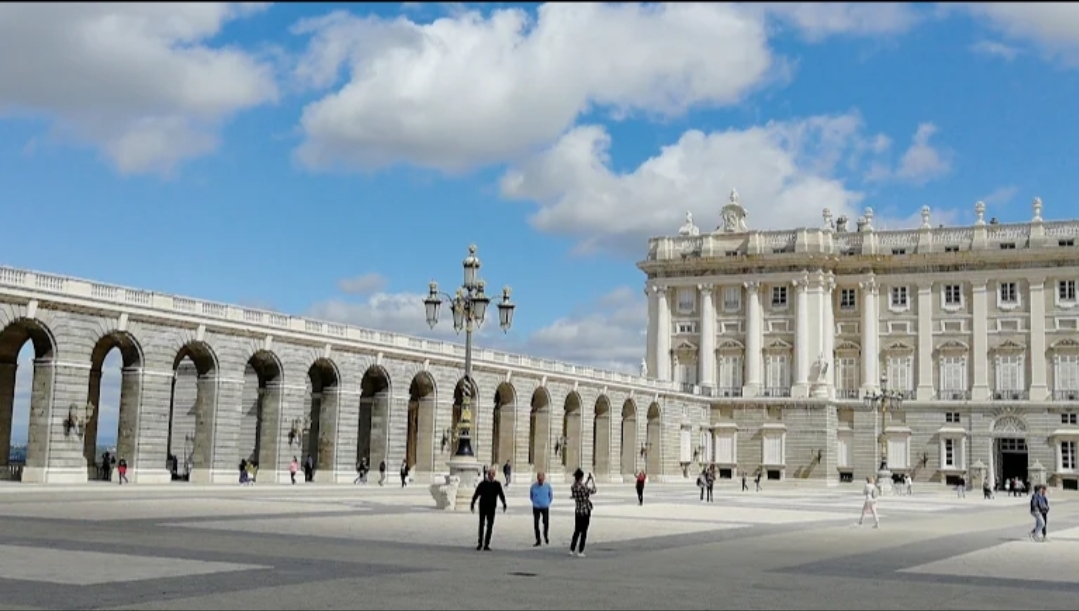
Metro Ópera (lines 2, 5, and Ramal R) leaves you a short walk across Plaza de Oriente. Tickets are €12; EU citizens get free entry Monday–Thursday in the late afternoon — bring your passport. Budget 90 minutes to two hours. Book ahead to skip the queue at the door.
Where is Palacio Real de Madrid?
More tickets & tours for Palacio Real de Madrid
Book directly at the provider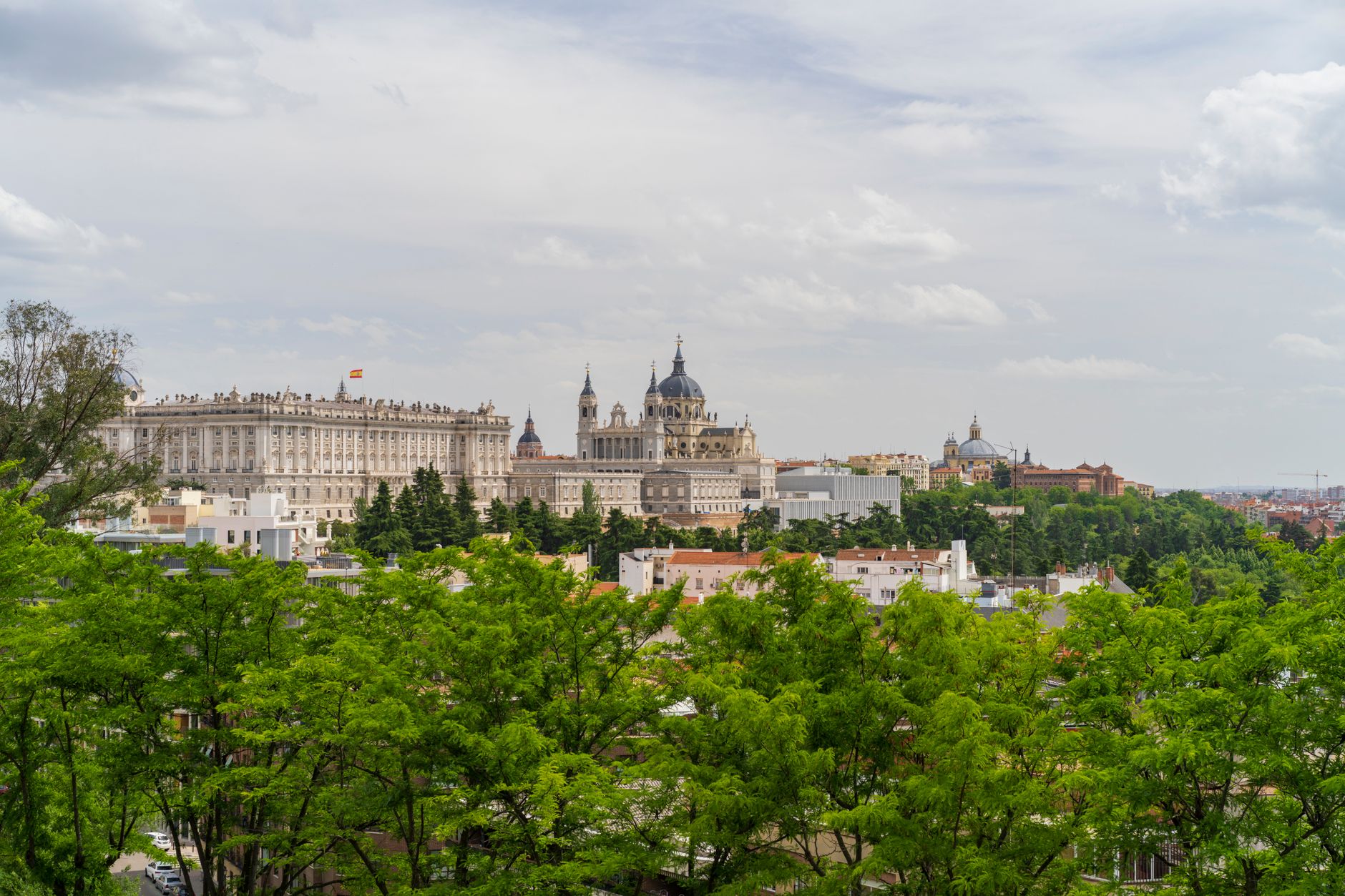
What travellers say about Palacio Real de Madrid
I visited the Royal Palace of Madrid and did the English guided tour, and it was absolutely worth it. Our guide was knowledgeable, engaging, and very friendly, which made the experience even more enjoyable. The historical context and detailed explanations really brought the palace to life. I highly recommend booking tickets in advance. We had to reserve our guided tour about four days ahead of time, and I’d suggest planning even earlier if you want a self-guided ticket, as those tend to sell out further in advance. The palace itself is stunning. The craftsmanship throughout the building is incredible, the level of detail in the architecture, decor, and artwork is truly impressive. I especially enjoyed learning about the frescoes and the stories behind them, understanding who the figures represented and the symbolism involved added so much depth to the visit. There’s a lot of fascinating history woven into every room. Overall, it was a beautiful and memorable experience, and I’d definitely recommend it to anyone visiting Madrid.
Wonderful experience. Recommend the guided tour to get the history, can order tours direct through the website in Spanish and English. Recommend booking in advance. Not a lot of shade during the summer outside in front of the palace, bathrooms inside available at the gift shop. Cute selection of unique memorabilia at the gift shop. Thank you for the hospitality and immersive experience into the Spanish monarchy!
I was truly impressed by the Royal Palace in Madrid. The size of the building is breathtaking, and the level of decoration is simply outstanding. What I enjoyed most was the diversity of the rooms, each with its own unique style, colors, and artistic details. Every hall felt different and carefully designed. The combination of history, elegance, and rich interior decoration makes this place unforgettable. I highly recommend visiting it if you are in Madrid.
An excellent visit. We went during the two-hour free entry period they offer at the end of the day. The wait wasn't very long. If you don't qualify for free entry, it's definitely worth buying tickets. The castle is impressive and one of the city's landmarks. Highly recommended!
We toured this palace as part of a group tour. It was amazing, having also toured Versailles in France a week earlier, I think this palace was maybe even more stunning. The vastness and detail of the rooms just can't be put into words. If you are touring Madrid even for 1 day this should be at the top of your list, I can't recommend it enough. Also consider doing a guided tour because the background and insight you will get is definitely worth it.
More of Madrid
Discover where to stay, what to do and the best deals for your trip.
Explore Madrid →More attractions in Madrid
All of Madrid →
Background adapted from Wikipedia (CC BY-SA) · map data © OpenStreetMap contributors · ratings & place photos via Google · other photos with per-image credit. Ticket links may earn us a commission at no extra cost to you.