
Palacio de la Madraza
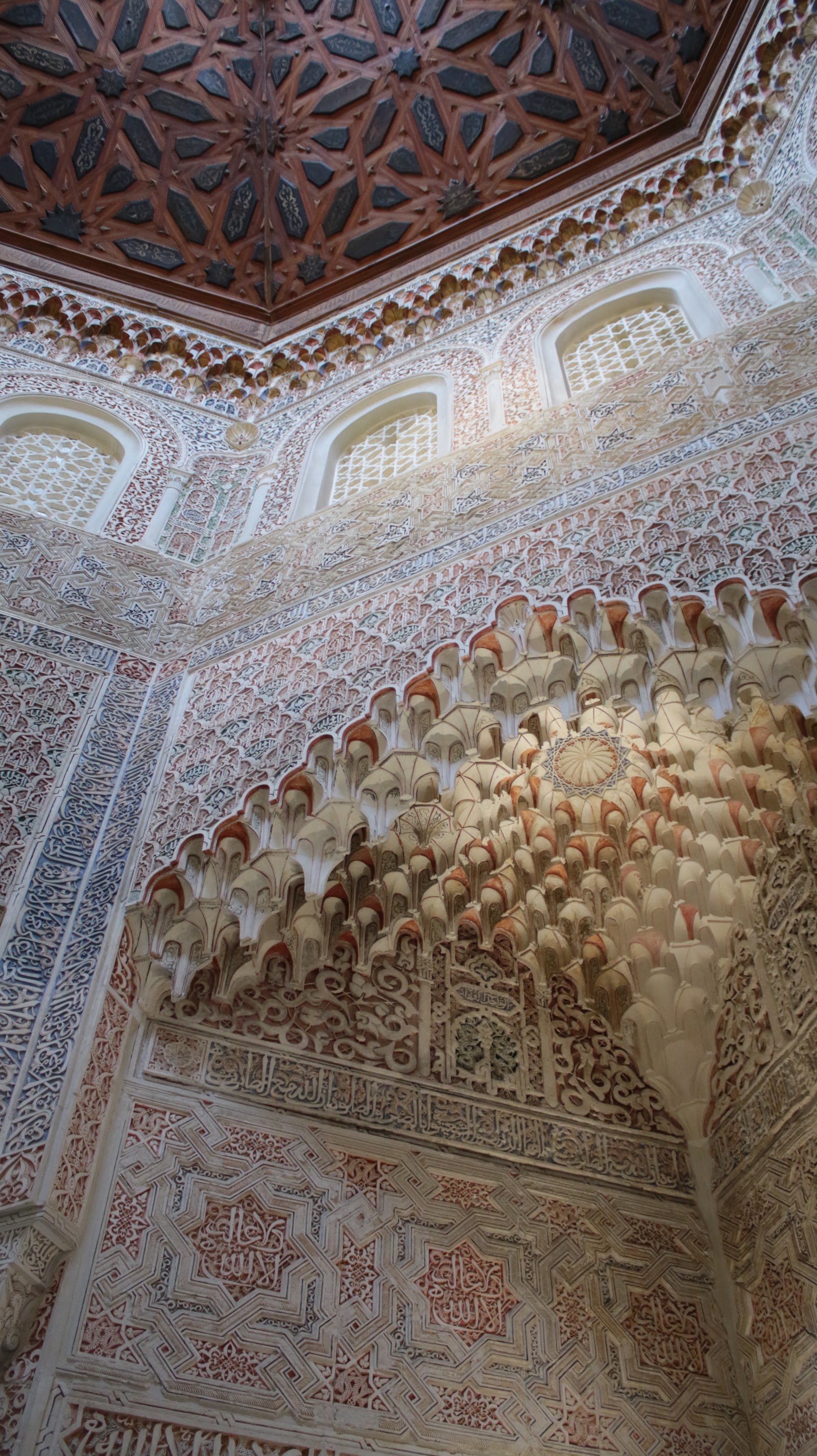
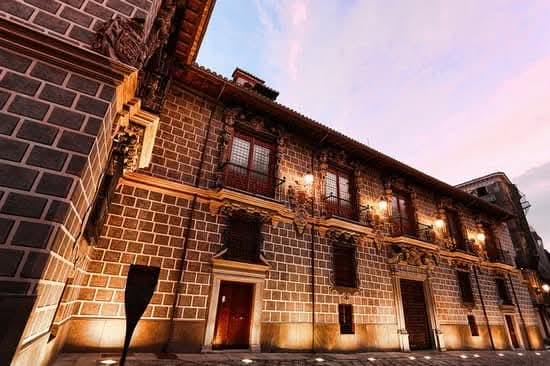
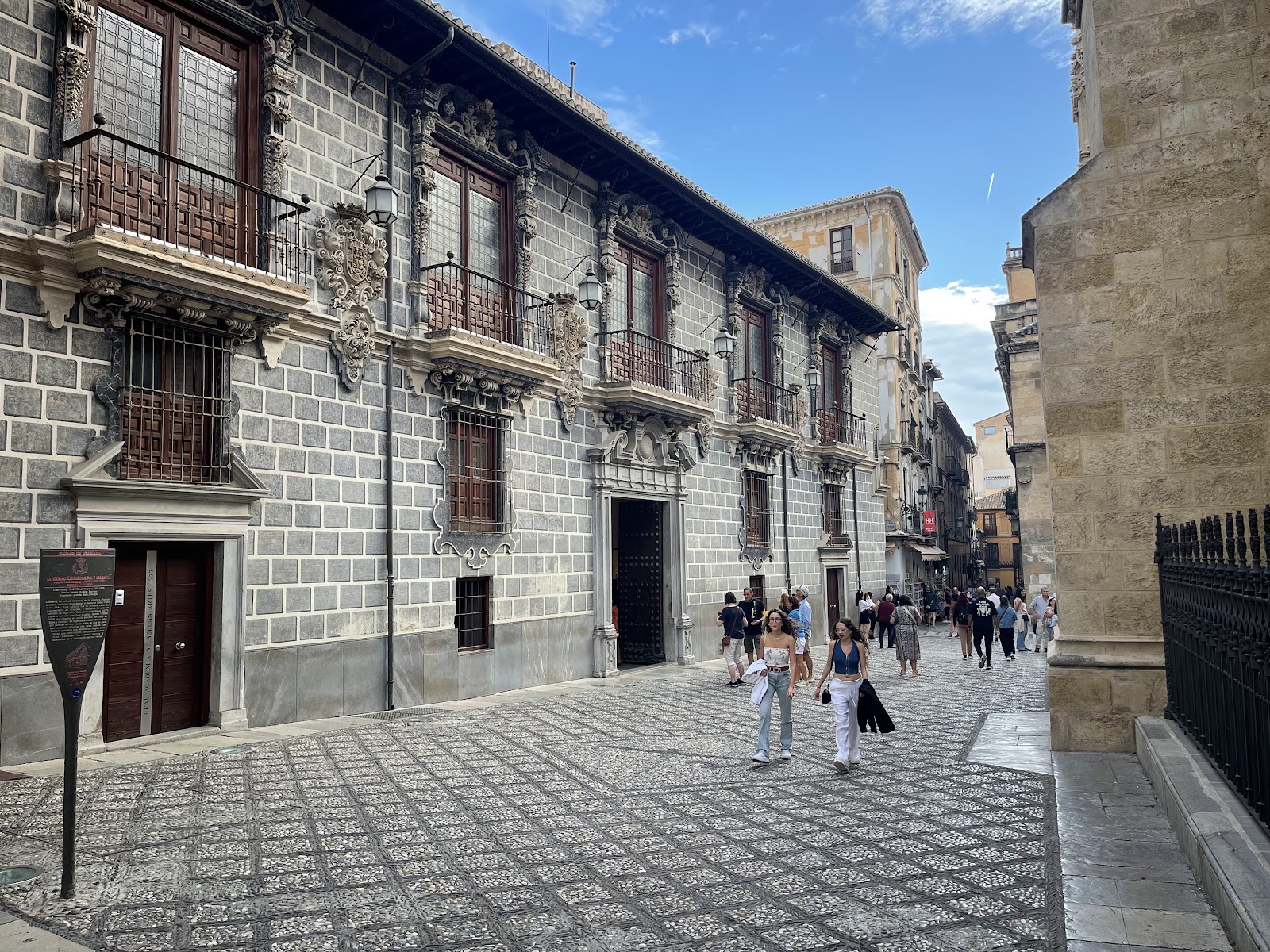
On Calle Oficios, a few steps from the Cathedral, a €2 ticket buys you entry into one of the stranger architectural collisions in Granada. The Palacio de la Madraza wears two centuries on the same face: a Baroque exterior of stone, wood balconies and wrought-iron railings wrapped around a surviving Islamic oratory whose stucco mihrab is carved with a precision that makes the air around it feel quieter.
Beneath the courtyard's polished marble, glass panels reveal the archaeological bones of the original structure — a reminder that you are standing on a building that has been, at different moments, a centre of Islamic learning, a city hall, and now a public exhibition space belonging to the University of Granada.
💛 What travellers fall for
People who come back tend to linger in the oratory rather than the courtyard. The mihrab's stucco detailing rewards a slow look — the Arabic inscriptions, the geometric layering. The student guides run 15-minute tours in several languages and are worth catching; they tend to know which floor is currently accessible and what's on in the Sala de los Caballeros Veinticuatro.
The story behind Palacio de la Madraza
Yusuf I, Sultan of Granada, founded the Madraza Yusufiyya in 1349 as the city's first institution of higher learning — a place of science, theology and law. Among those who studied here were the poets Ibn al-Khatib and Ibn Zamrak, whose verses later decorated the walls of the Alhambra. The school functioned until around 1500, when the Treaty of Granada ended Nasrid rule; the library's contents were burned in a public bonfire at Bib-Rambla on the orders of Cisneros.
Ferdinand II converted the building into a city hall. By 1722, most of the original madrasa had been demolished and replaced with the Baroque structure designed by José de Bada — though the oratory, with its mihrab and Mudejar coffered ceiling, survived. The city acquired it in the early 20th century, restoration followed in 1939, and in 1976 the University of Granada took ownership. It opened to the public in 2011.
Good to know
Open daily 10:00–19:00 in winter; hours shift seasonally, so check before you go. Entry is €2, payable at the door or online. From the Cathedral it's a four-minute walk down Calle Oficios. Bus lines 4, 8, 11 and several C-routes stop at Gran Vía/La Catedral.
Where is Palacio de la Madraza?
More tickets & tours for Palacio de la Madraza
Book directly at the provider
What travellers say about Palacio de la Madraza
La Madraza in Granada is a historic building that was the first public university in Al-Andalus, founded in 1349 by the Nasrid Sultan Abu al-Hajjaj Yusuf I. Also known as the Yusufiyya School, it served as a prestigious center of learning for several centuries, offering studies in various fields such as philosophy, medicine, mathematics, and astronomy. The current building is now part of the University of Granada and preserves some original elements of Islamic architecture, including the mihrab and an elegant prayer hall, though the original façade was replaced with one in Baroque style. ⸻ Additional Information about La Madraza • Foundation: Established in 1349 by Sultan Yusuf I. • Fields of Study: The institution taught language, literature, and Islamic law, along with medicine, mathematics, astronomy, engineering, logic, and philosophy. • Historical Significance: It was one of the most important educational centers in Al-Andalus. Parts of the original structure still survive today, making it the only remaining Islamic madrasa of its kind in the region. • Current Status: The building now belongs to the University of Granada, housing the Academy of Fine Arts, while preserving some of its original Islamic architectural features. • Location: Situated on Calle Oficios, in the heart of Granada’s city center, near the site where the Granada Cathedral now stands.
A quick visit yes but also a beautiful one. You can't miss it as it is very close to the Cathedral and the Royal Chapel, and the entrance is free. So why not stopping, get impressed, take some photos and continue to your next landmark, probably the Alcaicería bazaar? This building, once named the Madraza, was the house of the Muslim School of Islamic Law. Today it belongs to the University of Granada. Be aware that on Mondays it is closed as all the Museums and official buildings . Just take a look at the pictures.
It's a pretty Palace that's worth visiting if you're passing. The first floor is open to the public as of 10/31/22 but the rest was closed. The decorations are beautiful and you can see some ruins of the original structures protected within the first floor. There is no cost to enter the first floor. Be aware of over eager street vendors in front of its main doors.
A very nice historical building worth visiting. I was surprised to see a free of charge expo inside.
I visited this place 10 years ago. But still cant forget the ticket seller a “she creature” shouted at me in front of many visitors. The reason was bec i was going to sit on the banks in the entrance while waiting the place to open. But the real reason was an obvious racism. Like everybody I was shocked couldn’t say anything. Visited two museums at the same place there. One is of the first universities in European continent setup by Andalusians. The other is museum of universal values suffering from many like this woman. Unfortunately Europe once champion of universal values is now a museum of it. And this pity woman was just another declaration of this reality.
More of Granada
Discover where to stay, what to do and the best deals for your trip.
Explore Granada →More attractions in Granada
All of Granada →
Background adapted from Wikipedia (CC BY-SA) · map data © OpenStreetMap contributors · ratings & place photos via Google · other photos with per-image credit. Ticket links may earn us a commission at no extra cost to you.