
Oud Metha

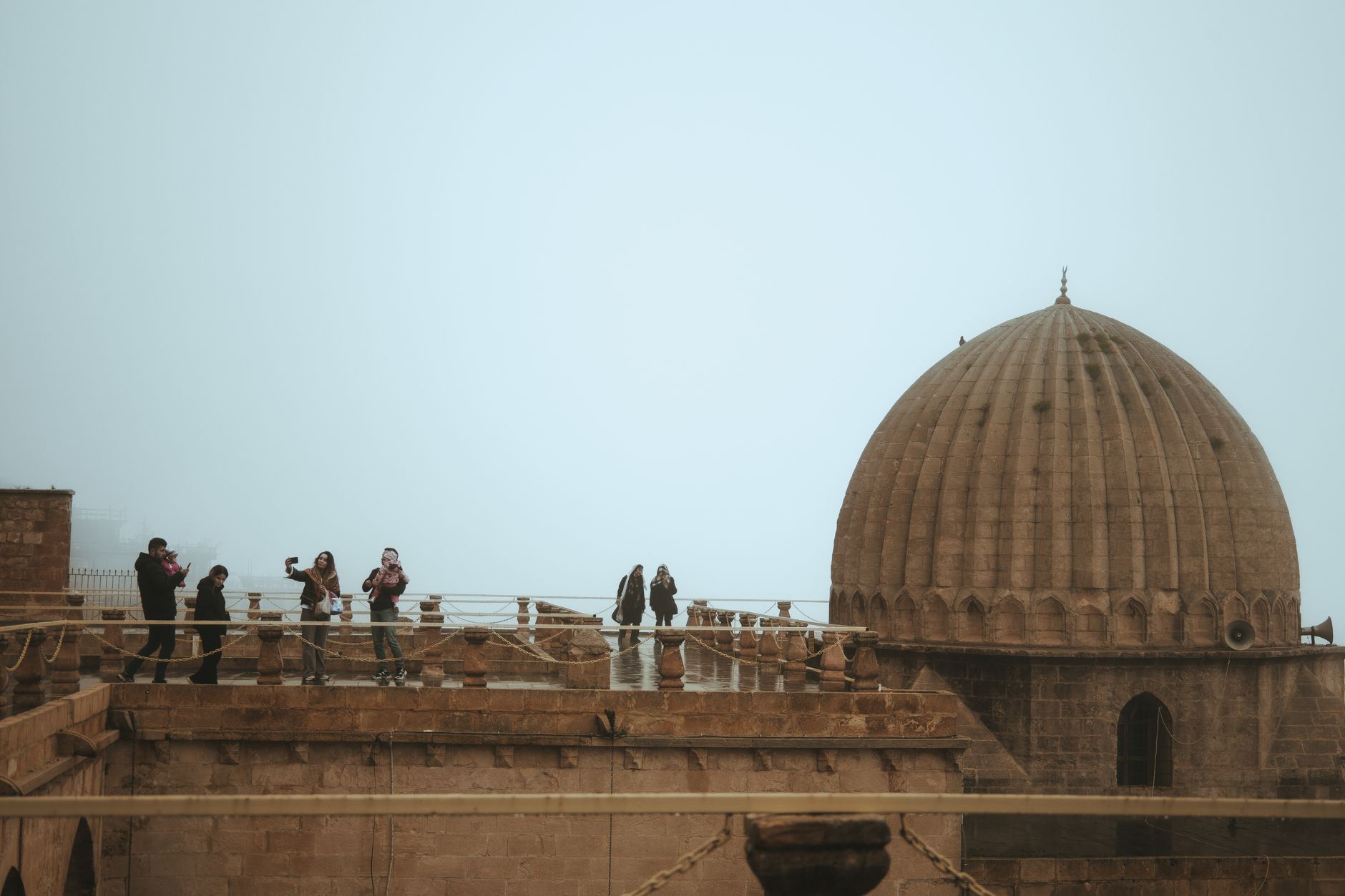
Oud Metha sits between the creek-side older districts and the glass towers further inland, and its four-storey apartment blocks have been home to Dubai's working and middle-class expatriate communities for decades. The Dubai Frame rises above Zabeel Park at the neighbourhood's edge — 150 metres of steel and glass shaped like a picture frame, framing the old city on one side and the new on the other, which turns out to be an accurate metaphor for where Oud Metha actually sits.
This is not a district built around tourism. It has a Catholic church that opened in 1968, a sports club founded in 1945, and schools that predate the UAE itself. Walk its streets and you are in the Dubai that residents actually live in — a place of mosques, Indian restaurants, Pakistani associations, and the low hum of ordinary urban life.
💛 What travellers fall for
People who spend time here tend to mention the same few things: the Iranian Mosque's blue tilework is worth tracking down on foot, WAFI Mall's Egyptian pyramid exterior is genuinely strange and worth a look even if you skip the shops inside, and the India Club — here since 1974 — remains one of the more atmospheric places in the city for an unhurried lunch.
Deals in Oud Metha
Book directly at the provider
How Oud Metha came to be
The neighbourhood took its modern shape in the late 1970s, when low-rise apartment buildings, schools, and mosques were laid out to house a growing expatriate workforce. But the institutions that give it character are older: Al Nasr Sports Club was founded in 1945, the Indian High School opened in 1961 as the first Indian-curriculum school in the Gulf, and St. Mary's Catholic High School followed in 1968. The India Club, established elsewhere in Dubai in 1964, relocated here in 1974.
Zabeel Palace, the official residence of Sheikh Mohammed bin Rashid Al Maktoum, sits within the district's boundaries, its gardens separating the ruler's residence from the apartment blocks and community schools that define the rest of Oud Metha's texture.
Who and what shaped it
People who shaped it
Landmark buildings
See Oud Metha in motion
Plan your visit
On the map
When to go
December through February brings mild days around 20°C — the most comfortable time to walk the streets and spend time in Zabeel Park. From late April onward, heat and humidity build steadily; by July temperatures average above 36°C, and time outdoors becomes something to minimise rather than plan around.
Right now
Background & history adapted from Wikipedia (CC BY-SA) · specs from Wikidata (CC0) · weather from Open-Meteo · map data © OpenStreetMap contributors · photos from Wikimedia Commons / Unsplash with per-image credit. No third-party reviews or social posts reproduced.