
Omonia Square
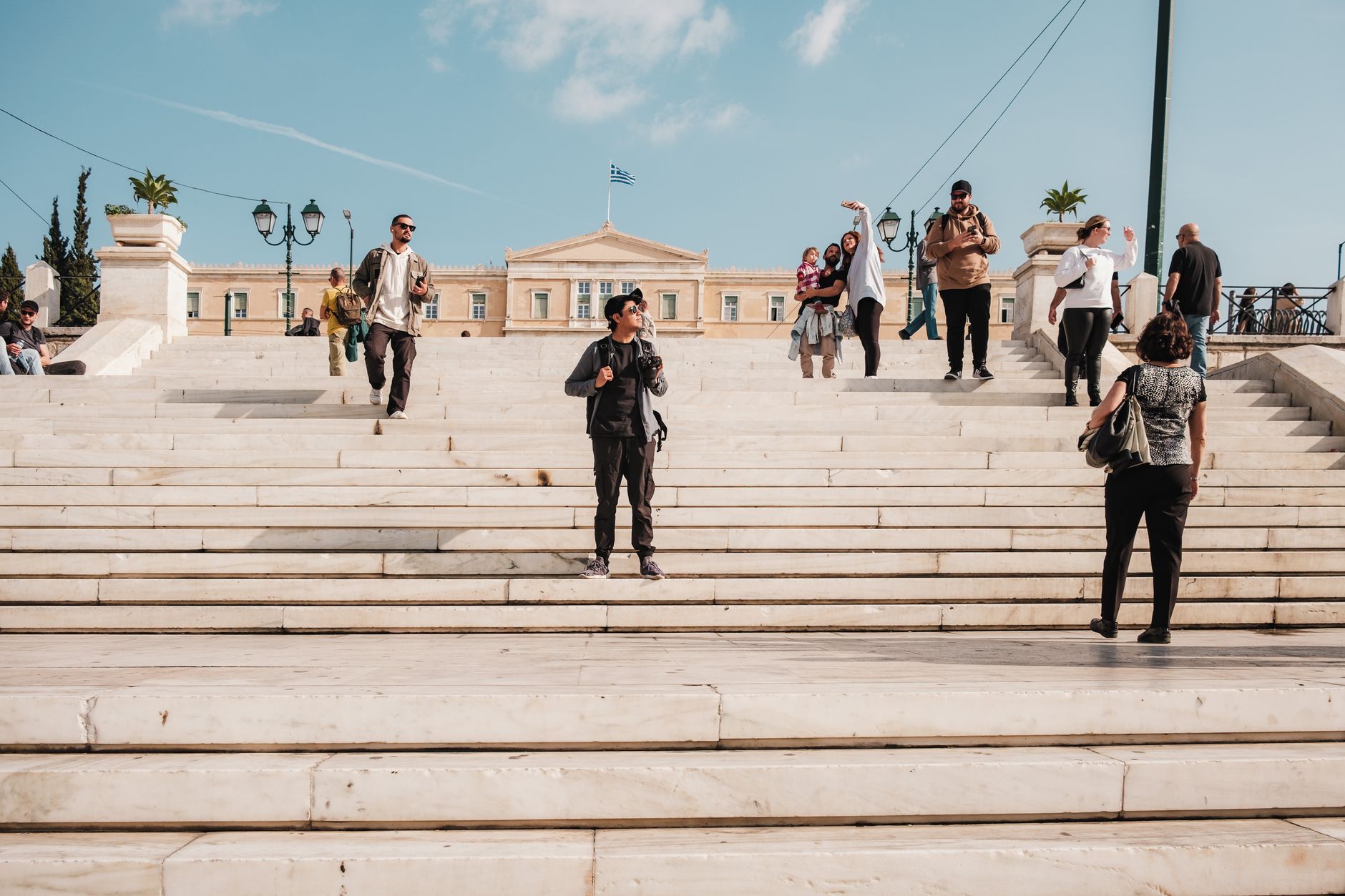
The fountain at the centre of Omonia shoots water twenty metres into the air through 188 jets, lit at night by 177 underwater LEDs. It is the first thing you notice, and almost the last thing anyone expects to find so striking. Around it, the square moves at a pace that has nothing to do with tourism — commuters changing metro lines, vendors, delivery riders, a pharmacist who has been here since the civil-war migration years.
Omonia is where Athens stops performing. The architecture is largely functional postwar concrete, the cafés are quick and cheap, and Athinas Street leads south toward the covered food markets that supply half the city's restaurants.
💛 What travellers fall for
Regulars tend to mention the rooftop bars on the surrounding hotels at dusk — Acropolis and Lycabettus both visible from up there, while the square below settles into its evening rhythm. Early morning is also worth knowing: the Varvakios Agora on Athinas is at its best before nine, and Omonia metro puts you right at the door.
Deals in Omonia Square
Book directly at the provider

How Omonia Square came to be
The square was laid out in 1846 by architects Stamatios Kleanthis and Eduard Schaubert, who had originally earmarked the site for a royal palace. It was named Palace Square, then Othonos Square in honour of King Otto, Greece's first modern monarch. When Otto was dethroned in 1862, the square was renamed Omonoia — concord — after rival political factions swore a public oath of peace on the spot.
The underground station arrived between 1925 and 1930, and by 1954 the subterranean level held banks, shops and a post office. A 1958 design competition produced the original fountain, the work of sculptor George Zongolopoulos and architect Kostas Bitsios. That fountain was demolished in 1992 for metro Line 2 construction, restored during a 2019–2020 renovation, and reopened on 14 May 2020. Zongolopoulos also contributed the motion sculpture Pentakiklon — five water-activated circles — placed in 2001, when he was one hundred years old.
Who and what shaped it
People who shaped it
Landmark buildings
See Omonia Square in motion
Plan your visit
On the map
When to go
Athens runs hot and dry from June through August; the square, open and largely unshaded, offers little relief in the midday heat of summer. Spring and October are the most comfortable seasons for any time spent above ground here.
Right now
Background & history adapted from Wikipedia (CC BY-SA) · specs from Wikidata (CC0) · weather from Open-Meteo · map data © OpenStreetMap contributors · photos from Wikimedia Commons / Unsplash with per-image credit. No third-party reviews or social posts reproduced.