
Norcia

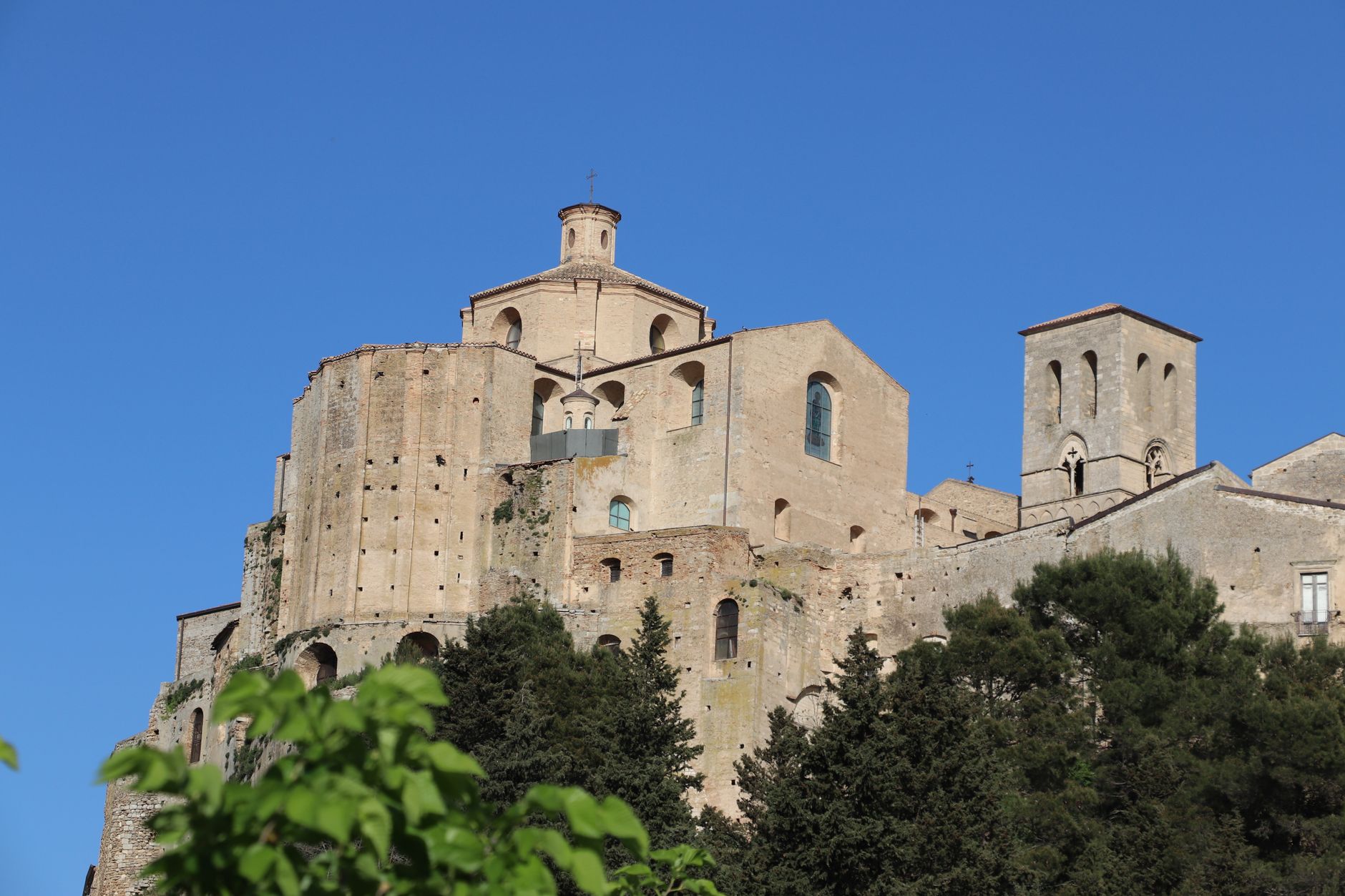
Norcia sits in a high Umbrian valley at around 600 metres, ringed by walls that have outlasted every earthquake the Apennines have thrown at it — and there have been many. The central square, Piazza San Benedetto, is where you take the town's measure: the Gothic facade of the Basilica of San Benedetto still stands, its interior gutted by the 2016 quakes, reconstruction ongoing. Around it, the butchers' shops and cured-meat counters carry on, because Norcia is also, stubbornly, a place that eats well.
The town was the birthplace of Benedict of Nursia, born here in 480 AD, who would go on to write the rule that shaped Western monasticism. That fact hangs over everything, but Norcia wears it without ceremony.
💛 What travellers fall for
People who come back tend to time it around the morning market hours, when the norcineria counters are freshest. They mention the Tempietto on Via Battisti — 1354, compact, and better preserved than anything else in town — as the one building that stops them cold every time. The Castellina's museum is quieter than you'd expect for a Vignola.
Experiences you don't want to miss


Deals in Norcia
Book directly at the provider

How Norcia came to be
Norcia's origins reach back to a Sabine settlement in the 5th century BC, and by 205 BC the town was sending soldiers to Scipio during the Second Punic War — its first recorded appearance in history. Rome absorbed it, and the crypt beneath the Basilica of San Benedetto preserves the remains of a 1st-century Roman structure traditionally identified as the birthplace of Benedict and his sister Scholastica.
The 1859 earthquake under the Papal States prompted unusually strict building codes — no more than three storeys, specific materials — that shaped the low, solid profile you see today. The earthquakes of August and October 2016 were the most destructive in modern memory: the basilica's nave collapsed on 30 October, though its facade held. Seven years later, on 30 October 2023, mass was held inside it again.
Who and what shaped it
People who shaped it
Landmark buildings
See Norcia in motion
Plan your visit
On the map
When to go
Summers are warm and dry — August peaks around 29°C with only about 47 mm of rain — while January drops to lows near 0°C and snow is possible from November through March. May through September is the most comfortable window, with long sunny days and temperatures that make the walled streets easy to walk.
Right now
Background & history adapted from Wikipedia (CC BY-SA) · specs from Wikidata (CC0) · weather from Open-Meteo · map data © OpenStreetMap contributors · photos from Wikimedia Commons / Unsplash with per-image credit. No third-party reviews or social posts reproduced.