
Nippes
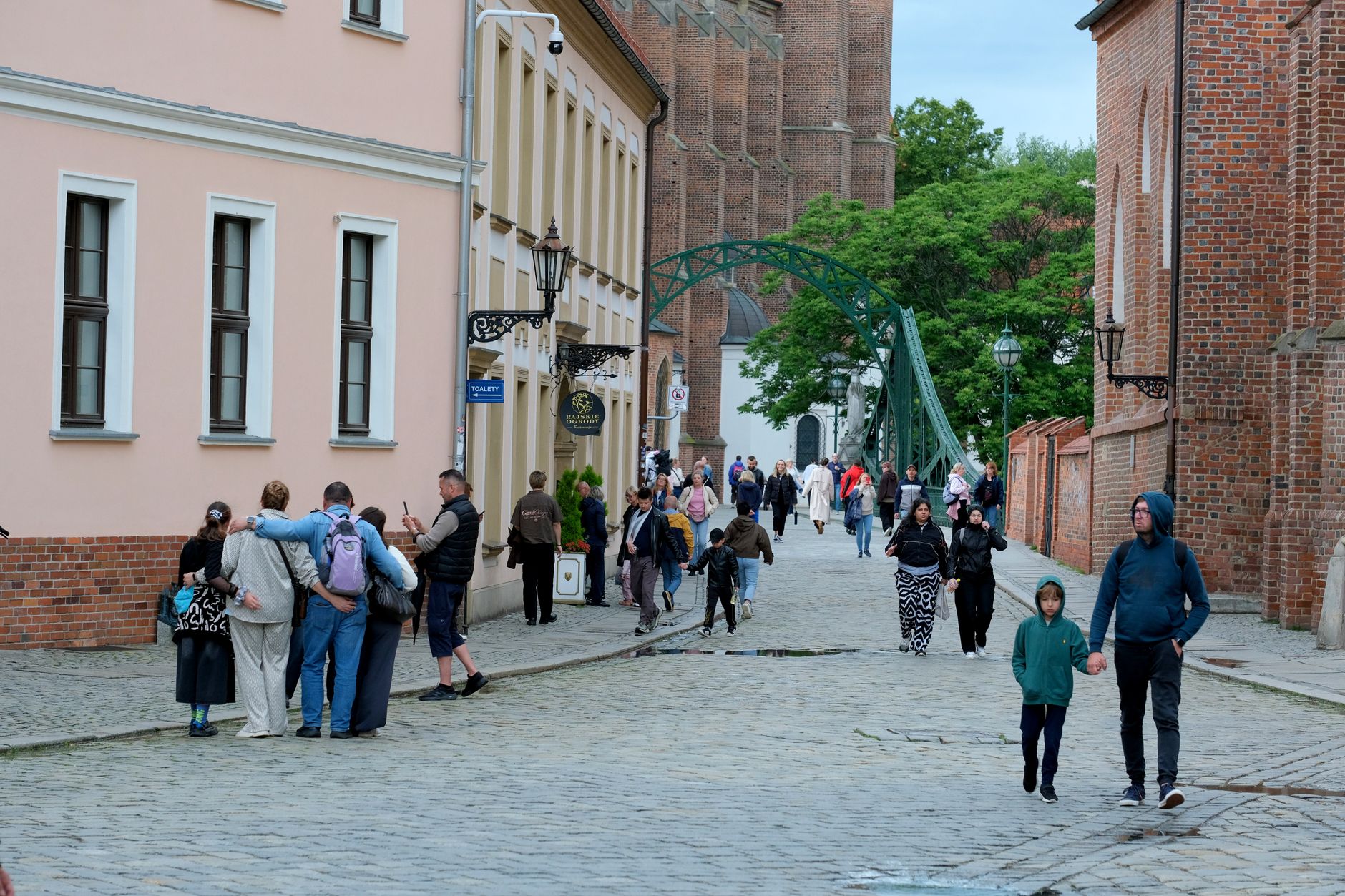
Nippes announces itself through small things: a window box on a brick workers' cottage, the smell of coffee drifting from the kiosk at Wilhelmplatz, a Sunday flea market spread across the same cobbles where Germany's first cast steel was poured in 1839. This is a district that earned its character through industry and then, slowly, grew into something else — a place where the Sechzigviertel's terraced streets feel genuinely lived-in, Neusser Straße runs long and purposeful, and the artist Odo Rumpf has built a self-declared free state for art and culture out of what might otherwise have been forgotten space.
Nippes sits north of the ring road, close enough to the centre to be convenient, far enough that the pace changes. The food market on Wilhelmplatz runs Monday to Saturday; on certain Sundays, the stalls give way to second-hand finds. Neither version disappoints.
💛 What travellers fall for
People who come back tend to anchor their visit to Wilhelmplatz at different times of day — coffee and a sandwich from KaffeeKiosk in the morning, the market mid-morning, then a slow walk into the Sechzigviertel to look at those brick cottages up close. Odonien, Odo Rumpf's art compound with its beer garden and live music, earns its own return trip.
Deals in Nippes
Book directly at the provider


How Nippes came to be
In 1839, Jacob Mayer set up operations at what is now Wilhelmplatz and became the first person in Germany to produce cast steel using a process already known in England. The railways followed: a workshop opened in 1861, and the Rheinische Eisenbahngesellschaft chose Nippes for its repair facilities, shaping the area that would become the Sechzigviertel. Franz Clouth arrived with rubber manufacturing, and the company that bore his name reached its peak in 1962 with over 2,200 employees. Conveyor belts rolled out of the Clouth-Werken until December 2005.
Nippes was formally absorbed into Cologne in 1888 and became a named district in 1975. The Luther Church on Siebachstraße, inaugurated in 1889, still holds most of its original furnishings. St. Engelbert in Riehl, consecrated in 1931 and designed by Dominikus Böhm, is considered one of the first modern churches in Cologne.
Who and what shaped it
People who shaped it
Landmark buildings
See Nippes in motion
Plan your visit
On the map
When to go
Spring and early summer are the most comfortable seasons — May brings highs around 20°C and the outdoor market and parks come into their own. Summers are warm rather than hot, peaking around 25°C in August; winters are grey and cold, with highs rarely above 6°C, though the covered market on Wilhelmplatz remains a reason to visit year-round.
Right now
Background & history adapted from Wikipedia (CC BY-SA) · specs from Wikidata (CC0) · weather from Open-Meteo · map data © OpenStreetMap contributors · photos from Wikimedia Commons / Unsplash with per-image credit. No third-party reviews or social posts reproduced.