
Niagara Falls, Canada/USA
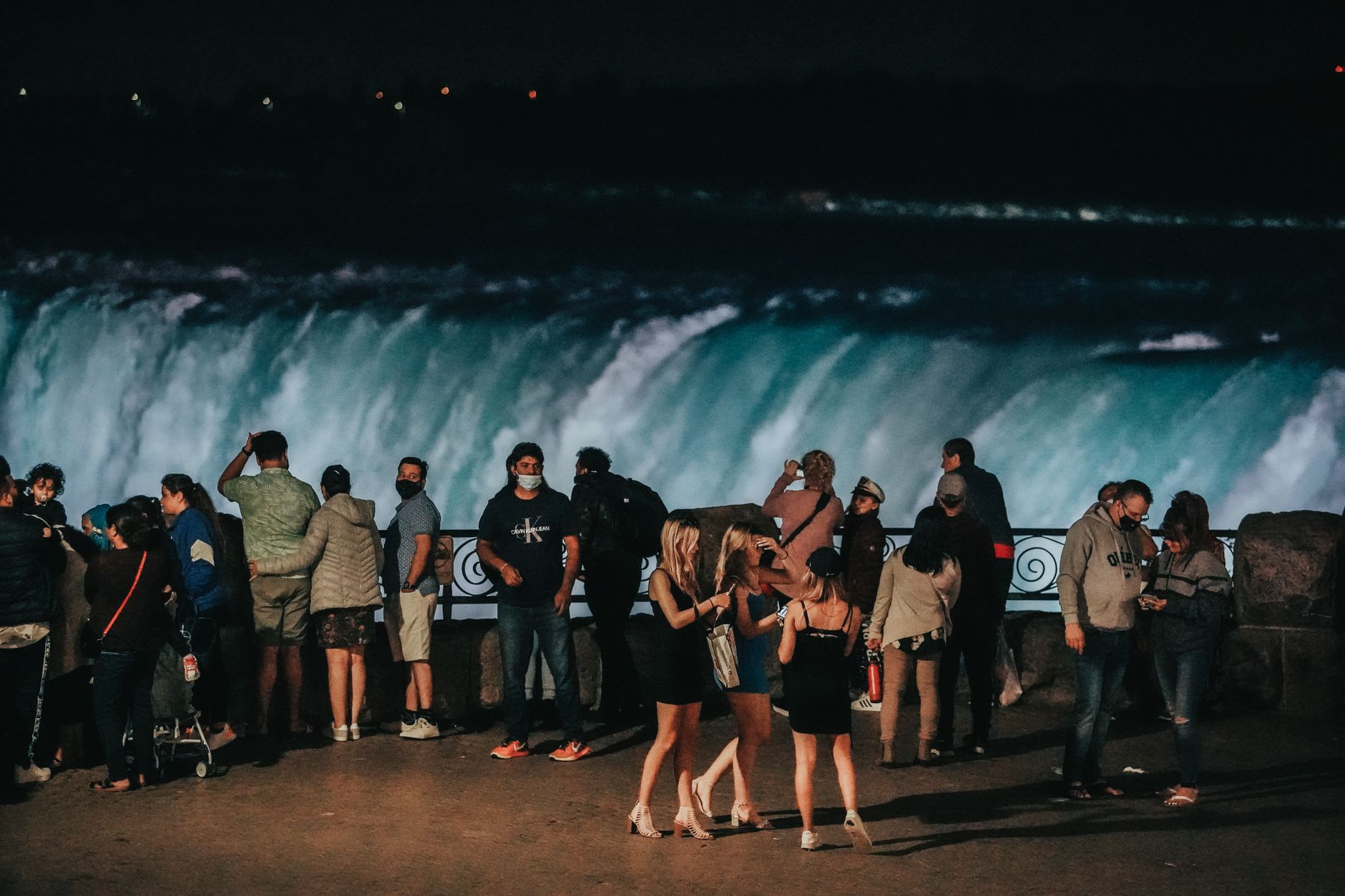
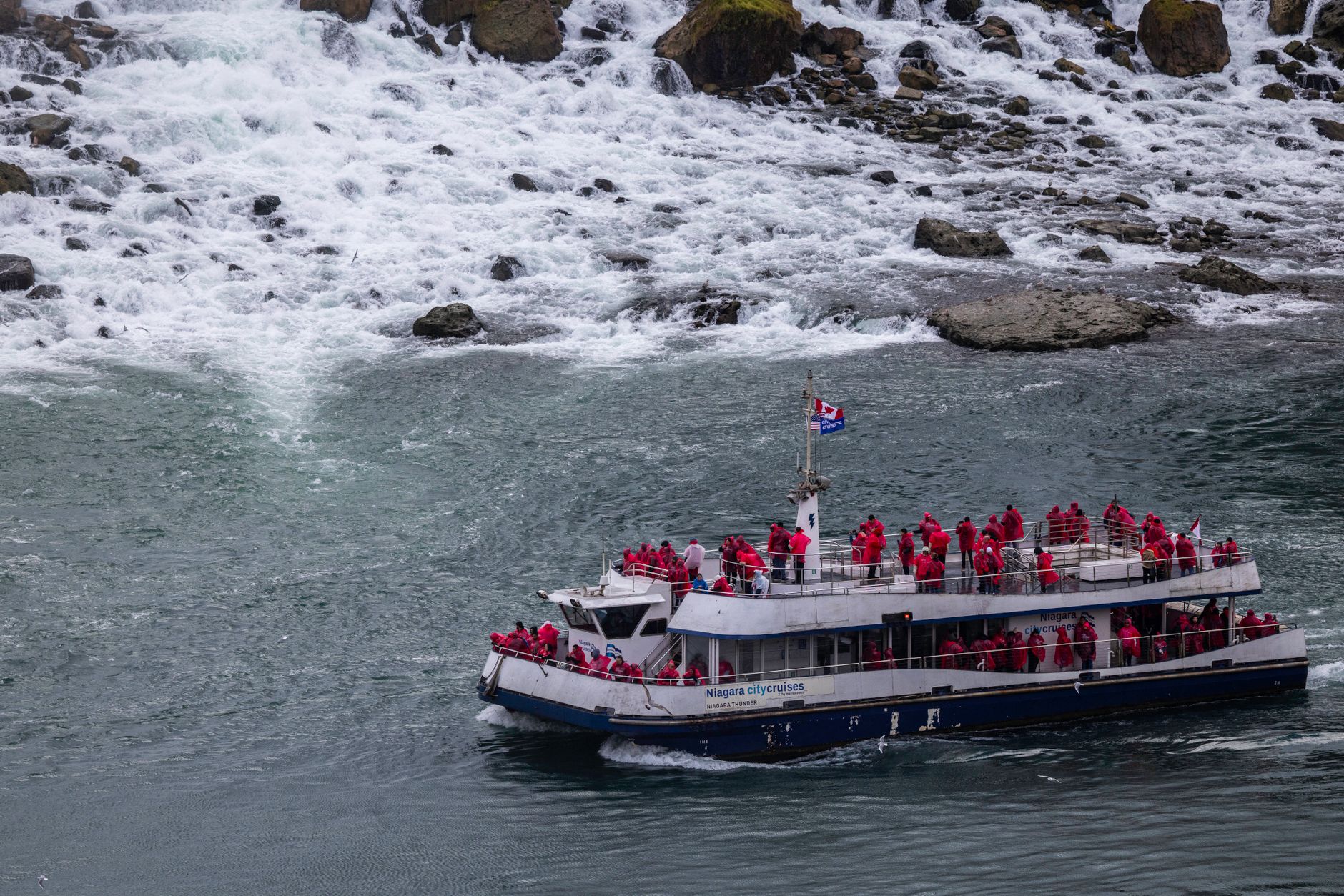
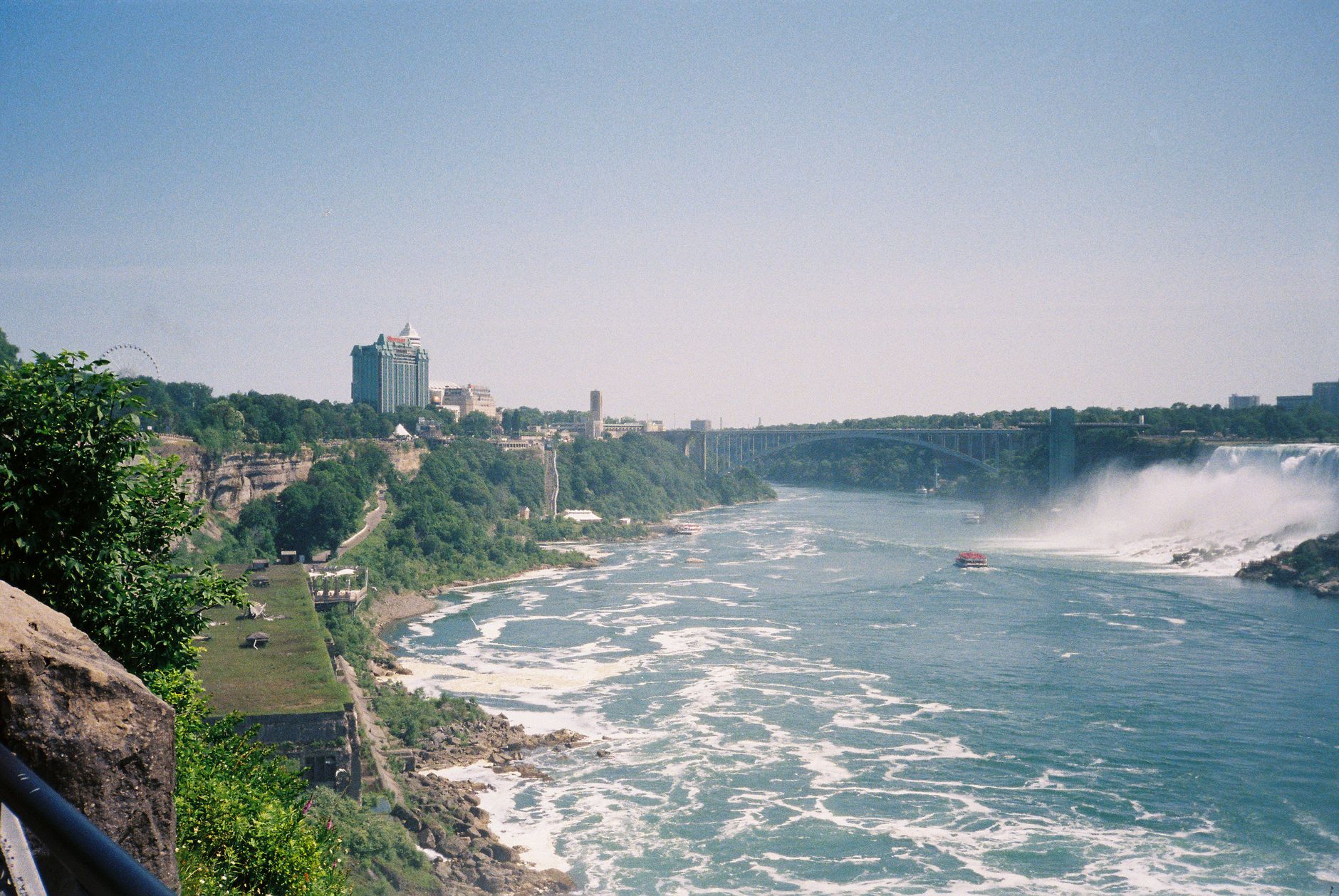
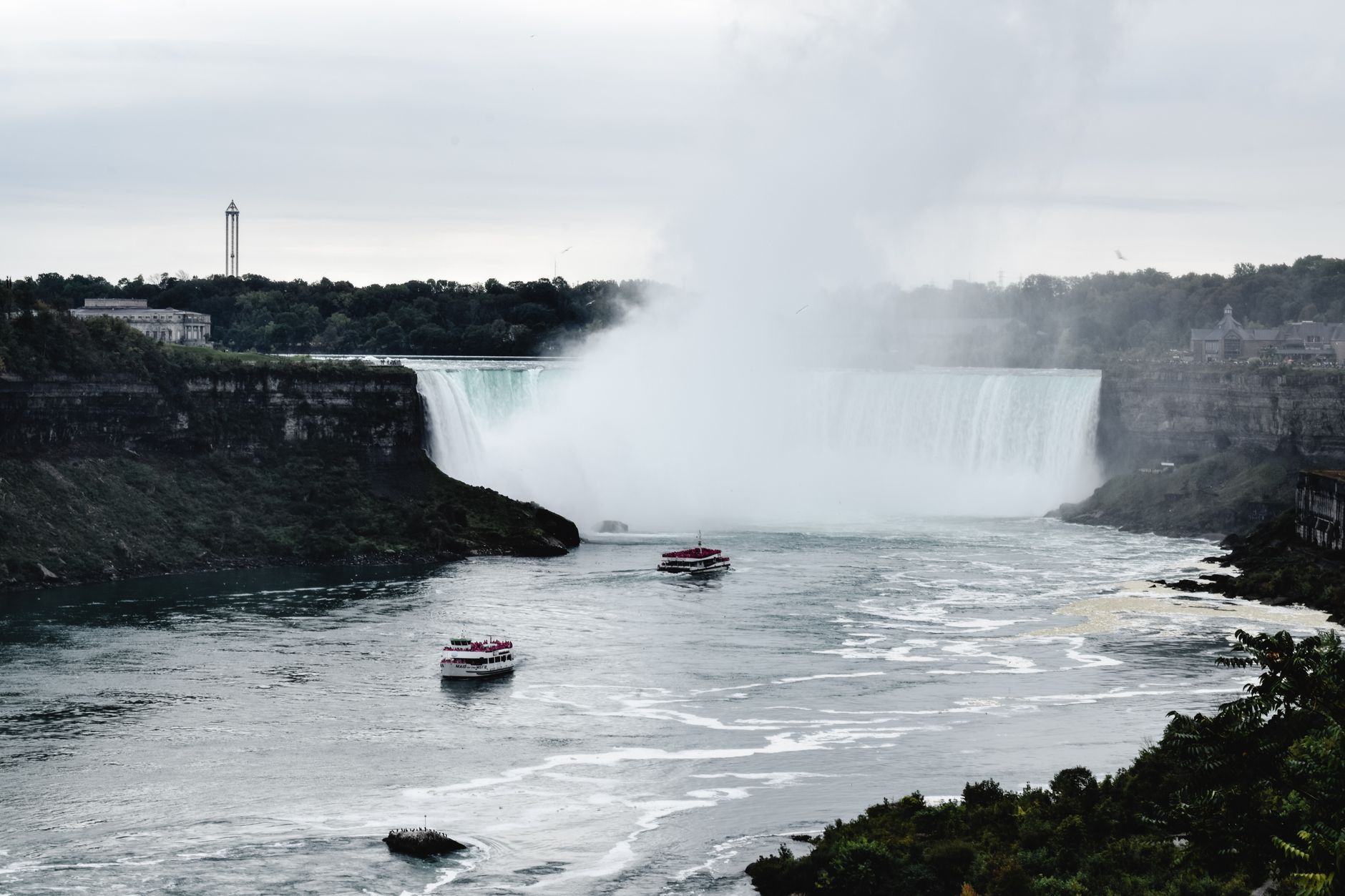
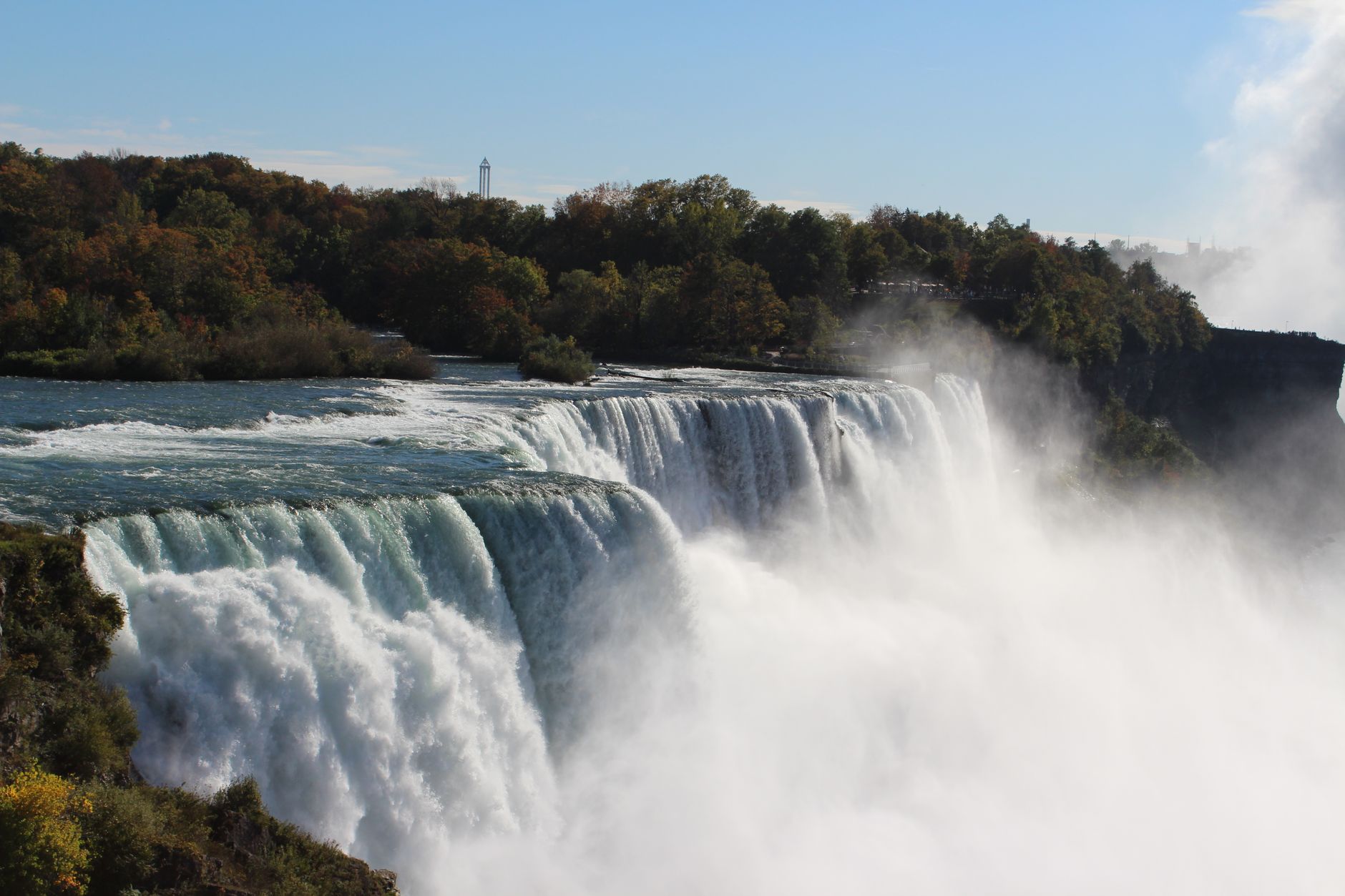
Three waterfalls meet the Niagara River here — American Falls, Bridal Veil Falls, and Horseshoe Falls — and the sound reaches you before the water does. Horseshoe Falls alone stretches roughly 2,500 feet across and drops 167 feet, moving so much water that the mist hangs in the air like its own weather system.
The falls straddle two countries, which means the experience shifts depending on which bank you're standing on. The Canadian side gives you the panoramic view; the American side, anchored by the oldest state park in the US, gets you closer to the edge. Most visitors end up crossing between them.
💛 What travellers fall for
People who come back tend to time it for dusk on the Canadian side, when the light goes flat and the falls read as something almost geological rather than touristic. The WEGO bus pass is worth it for the first day — it removes every parking headache and runs between the main points without fuss.
How Niagara Falls, Canada/USA came to be
The falls took shape more than 12,000 years ago as glacial meltwater carved through the Niagara Escarpment. French explorer Father Louis Hennepin arrived in December 1678, and the site has drawn visitors — and schemers — ever since. Jean François Gravelet, known as Blondin, crossed the gorge on a tightrope in 1859, returning eight more times that year. In 1901, a 63-year-old schoolteacher named Annie Edson Taylor became the first person to survive going over in a barrel.
The falls also powered a revolution in electricity. The world's first large-scale hydroelectric generating station opened here in 1895, and the following year Nikola Tesla demonstrated that alternating current could be transmitted from Niagara to Buffalo — a proof of concept that reshaped how the modern world runs. The 1950 Niagara River Water Diversion Treaty between Canada and the US still governs how much water flows over the falls today.
Who and what shaped it
People who shaped it
Landmark buildings
See Niagara Falls, Canada/USA in motion
Plan your visit
On the map
When to go
Summers are warm and genuinely crowded, with July temperatures around 80°F (27°C). Winters are cold and often dramatic — ice formations build along the riverbanks and the mist freezes into elaborate structures — but many outdoor attractions close or reduce hours from December through March.
Right now
↡ Cities
Background & history adapted from Wikipedia (CC BY-SA) · specs from Wikidata (CC0) · weather from Open-Meteo · map data © OpenStreetMap contributors · photos from Wikimedia Commons / Unsplash with per-image credit. No third-party reviews or social posts reproduced.