
Newtown
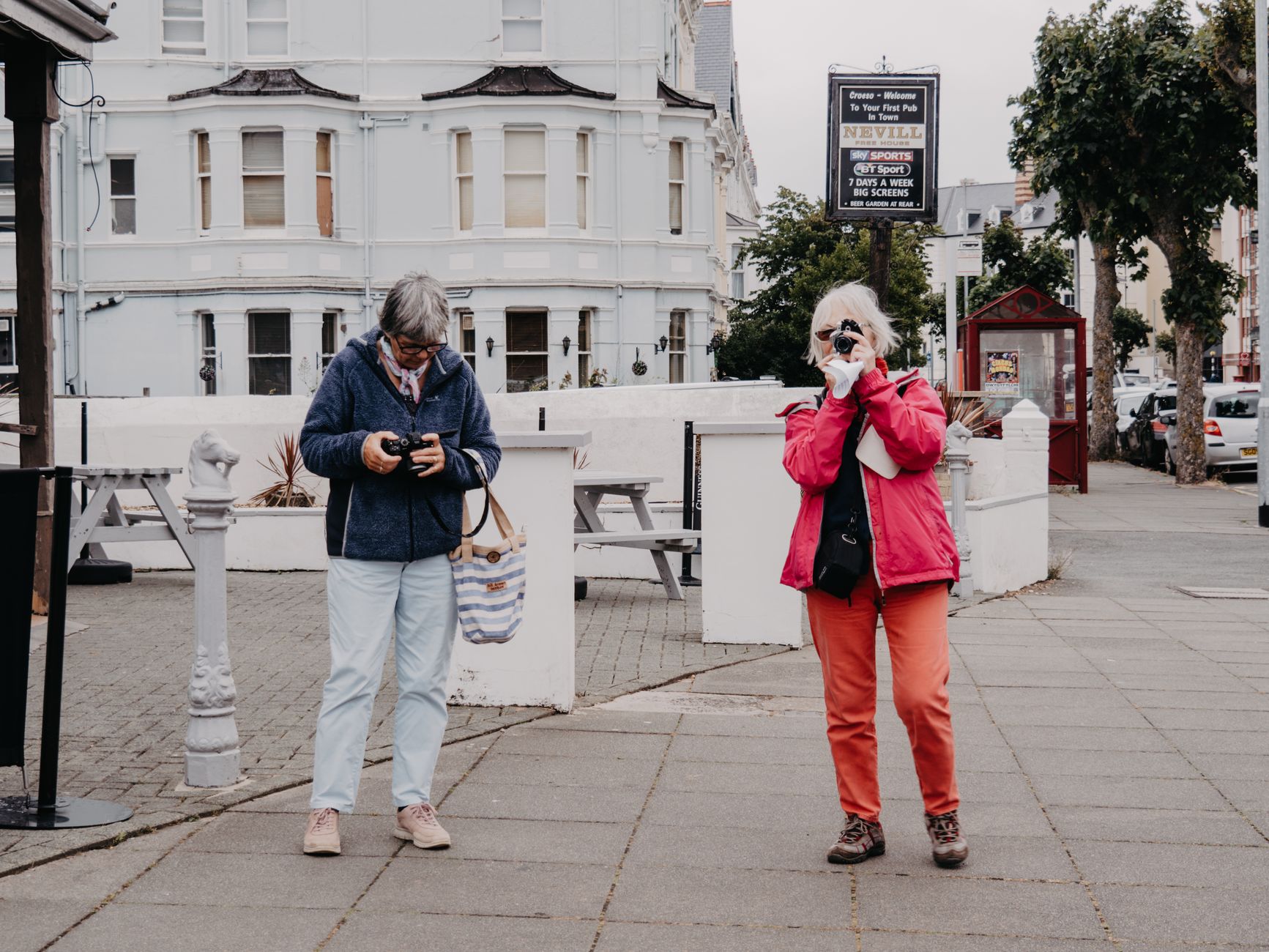
King Street runs for kilometres without once pretending to be somewhere else. The Victorian shopfronts — registered on the National Estate as the best-preserved high street of their era in Sydney — sit alongside second-hand bookshops, live-music venues and a theatre that has been staging provocative work since 1973. The street has its own argument with gentrification, and it's still ongoing.
Newtown arrived at its current character through a particular sequence: colonial land grants, a brief moment as one of Sydney's wealthiest suburbs, then decades of low rents that drew university students and artists close to the expanding University of Sydney. That layering is still legible if you pay attention.
💛 What travellers fall for
People who come back tend to build a route around Gould's Book Arcade — Bob Gould opened it in 1967 and the shelves have never quite been tamed — then follow King Street south past the New Theatre toward Camperdown Cemetery, where old gravestones sit among the trees of what is now a park. St Stephen's is worth the detour for the 1874 Walker and Sons organ alone.
Deals in Newtown
Book directly at the provider

How Newtown came to be
The land here started as colonial grants. Governor Arthur Phillip gave Nicholas Devine, Superintendent of Convicts, two parcels totalling 210 acres in 1794 and 1799. By 1827 the name 'New Town' was in common use, and that year a convict named Bernard Rochford bought Devine's land and sold it on to some of Sydney's wealthiest residents. The Sydney Gazette formalised the name in print by 1832.
Newtown was incorporated as a municipality on 12 December 1862, covering 480 acres. By 1912 it was described as one of the most prosperous suburbs around Sydney. The reversal came gradually — from the 1960s onward, low rents attracted students and bohemian households, and the suburb reoriented itself around that culture rather than away from it.
Who and what shaped it
People who shaped it
Landmark buildings
See Newtown in motion
Plan your visit
On the map
When to go
Sydney's climate means Newtown is walkable year-round, but the long King Street corridor is fully exposed in summer heat — January and February can push well above 30°C. Autumn and spring are the more comfortable seasons for covering ground on foot.
Right now
Background & history adapted from Wikipedia (CC BY-SA) · specs from Wikidata (CC0) · weather from Open-Meteo · map data © OpenStreetMap contributors · photos from Wikimedia Commons / Unsplash with per-image credit. No third-party reviews or social posts reproduced.