
New Town

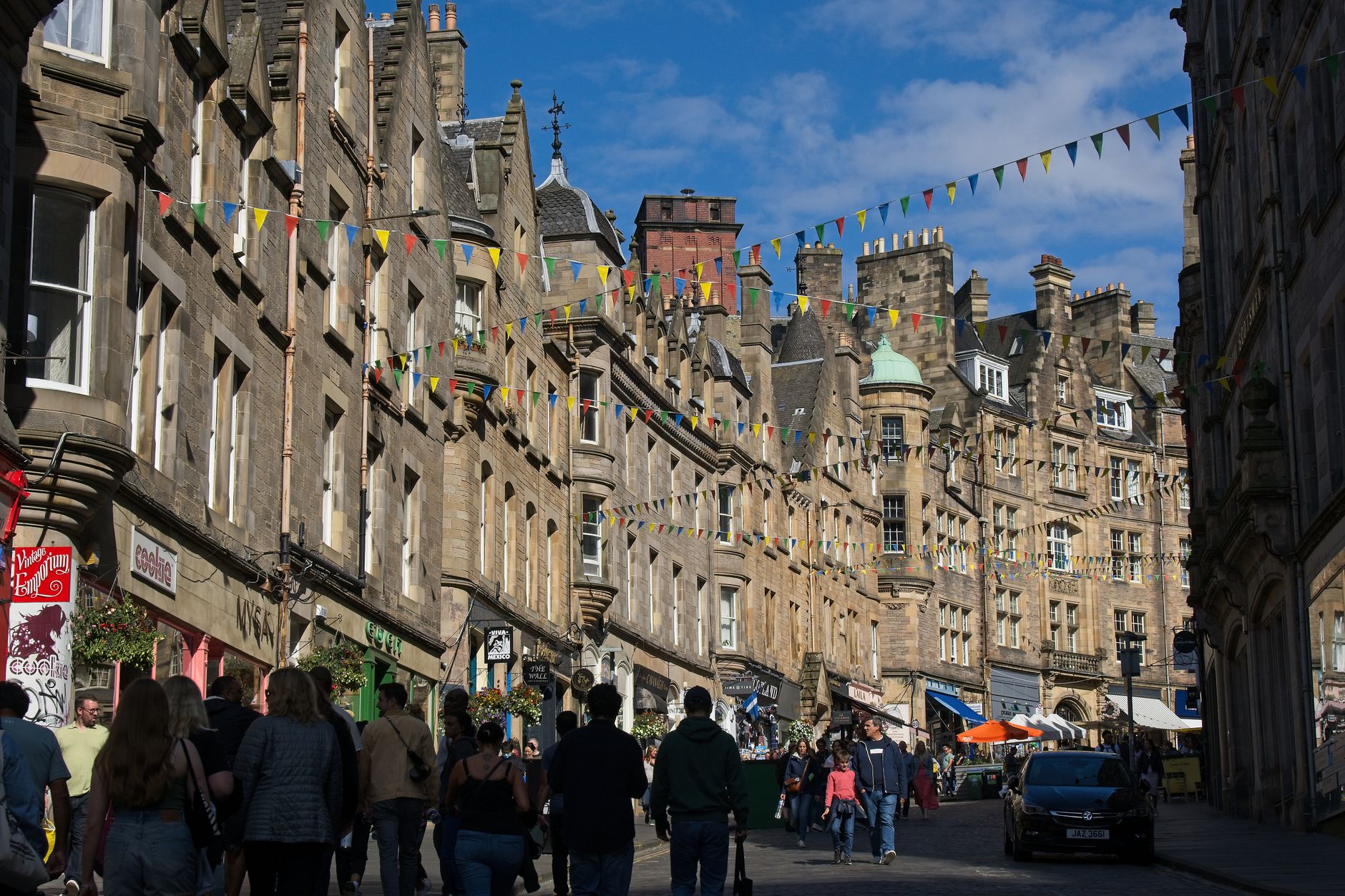

Stand at the top of the Scott Monument on Princes Street and you can trace the whole logic of Edinburgh New Town below you: a grid of pale Georgian stone running west from St Andrew Square to Charlotte Square, with George Street as its spine and Rose and Thistle Streets threading quietly between. This was planned space, drawn up in 1767 by a young architect named James Craig, conceived as a deliberate answer to the medieval tangle across the valley.
What makes it worth a long afternoon — or several — is that the plan was executed at a level of architectural ambition that still reads clearly. Robert Adam's palace-fronted townhouses on Charlotte Square, William Playfair's paired temples on The Mound, the Melville Monument rising from its garden in St Andrew Square: these aren't scattered monuments but pieces of a coherent city-building project that took nearly a century to complete.
💛 What travellers fall for
People who come back tend to find a favourite stretch of Thistle Street — quieter than George Street, with independent shops tucked into the ground floors of the oldest surviving New Town buildings. Others keep returning to Charlotte Square on a weekday morning, when the north side's Robert Adam facades have the square almost to themselves.
Deals in New Town
Book directly at the provider

How New Town came to be
In 1767, Edinburgh's town council held a competition to solve a problem: the Old Town was overcrowded and its conditions were dire. The winner was James Craig, then largely unknown, whose plan laid out three main streets — Princes Street to the south, Queen Street to the north, George Street along the ridge between them — flanked by two formal squares. Craig stipulated that Princes Street's south side remain unbuilt, preserving the view across the drained Nor Loch to the Old Town and castle. The first phase was mostly complete by 1820, when Robert Adam's Charlotte Square was finished.
A second phase followed almost immediately, pushing northward toward the Water of Leith between 1800 and 1830. William Playfair produced the extension plan in 1819 and went on to design the National Gallery of Scotland and the Royal Scottish Academy Building on The Mound. The whole ensemble — New Town, Old Town, and West End together — was designated a UNESCO World Heritage Site in 1995.
Who and what shaped it
People who shaped it
Landmark buildings
See New Town in motion
Plan your visit
On the map
When to go
Edinburgh is cool and changeable year-round; even in July you'll want a layer for the evening. Spring and early autumn bring the clearest light for reading the stonework, while winter days are short but the streets are quieter and the architecture easier to study without the crowds.
Right now
Background & history adapted from Wikipedia (CC BY-SA) · specs from Wikidata (CC0) · weather from Open-Meteo · map data © OpenStreetMap contributors · photos from Wikimedia Commons / Unsplash with per-image credit. No third-party reviews or social posts reproduced.