
Museum of Archaeology and Anthropology


On the ground floor of this Downing Street museum, a Roman woman's skeleton sits in a case that stopped Sylvia Plath in her tracks and produced a poem. Nearby: freeze-dried Peruvian potatoes at least five centuries old, a second-century Roman pot shaped like a penis, and the Trumpington Cross — a tiny early Christian brooch pulled from the grave of a teenage girl found three miles from where you're standing.
The Museum of Archaeology and Anthropology holds around a million objects gathered through Cambridge expeditions, colonial-era fieldwork and individual bequests. Entry is free, the building is Grade II listed, and a fourteen-metre totem pole from the Queen Charlotte Islands rises through the interior as though it simply refused to fit anywhere smaller.
💛 What travellers fall for
People who come back tend to head upstairs first. The Andrews Gallery on the third floor has a mezzanine quality — rain on the roof, a view down into the World Cultures Gallery below — that changes depending on the light and the hour. Late afternoon on a grey Tuesday, with the cases lit and the room nearly empty, is when the Samurai armour with its boar-bristle moustache really holds its ground.
Deals in Museum of Archaeology and Anthropology
Book directly at the provider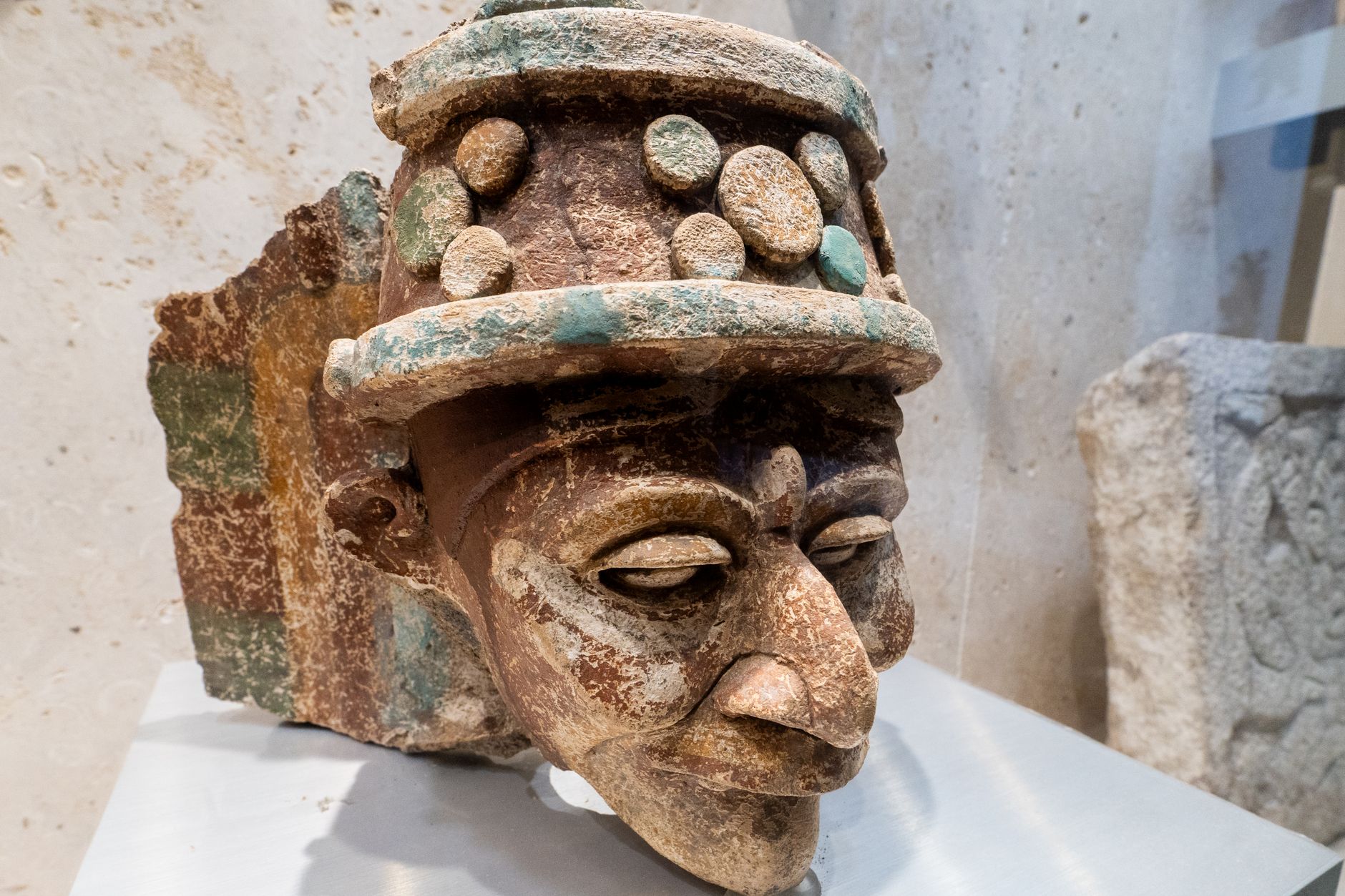

How Museum of Archaeology and Anthropology came to be
The museum began in 1884 as the University's Museum of General and Local Archaeology, drawing on antiquities gathered by the Cambridge Antiquarian Society and early Pacific donations from Alfred Maudslay and Sir Arthur Gordon. Its first curator, Anatole von Hügel, added his own South Pacific collection. In 1898, Alfred Haddon and W. H. R. Rivers led a Cambridge expedition to the Torres Strait, and the material they brought back — along with the fieldwork of students they later trained, including Gregory Bateson — shaped the museum's ethnographic depth.
The collection moved to Downing Street in 1913, though the galleries weren't fully installed until after the First World War. Louis Clarke succeeded von Hügel, followed by Arctic scholar Thomas Paterson in 1937 and archaeologist Geoffrey Bushnell from 1948 to 1970. A major refurbishment reopened the museum in 2013, with a new public entrance directly onto Downing Street and a reconfigured ground floor.
Who and what shaped it
People who shaped it
Landmark buildings
See Museum of Archaeology and Anthropology in motion
Plan your visit
On the map
When to go
Cambridge sits in East Anglia, one of the drier parts of the UK, but winters are raw and grey — the museum's lit interior is a reasonable argument for visiting between October and March. Spring and early autumn keep the courtyard usable without the summer crowds.
Right now
Background & history adapted from Wikipedia (CC BY-SA) · specs from Wikidata (CC0) · weather from Open-Meteo · map data © OpenStreetMap contributors · photos from Wikimedia Commons / Unsplash with per-image credit. No third-party reviews or social posts reproduced.