
Museo Thyssen-Bornemisza
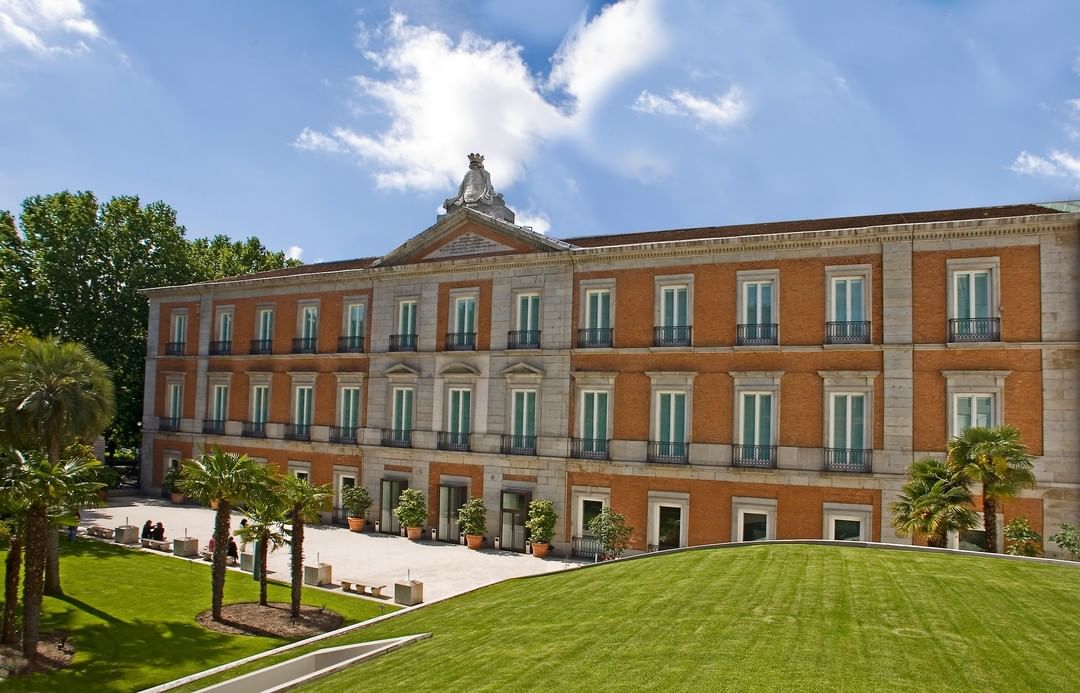
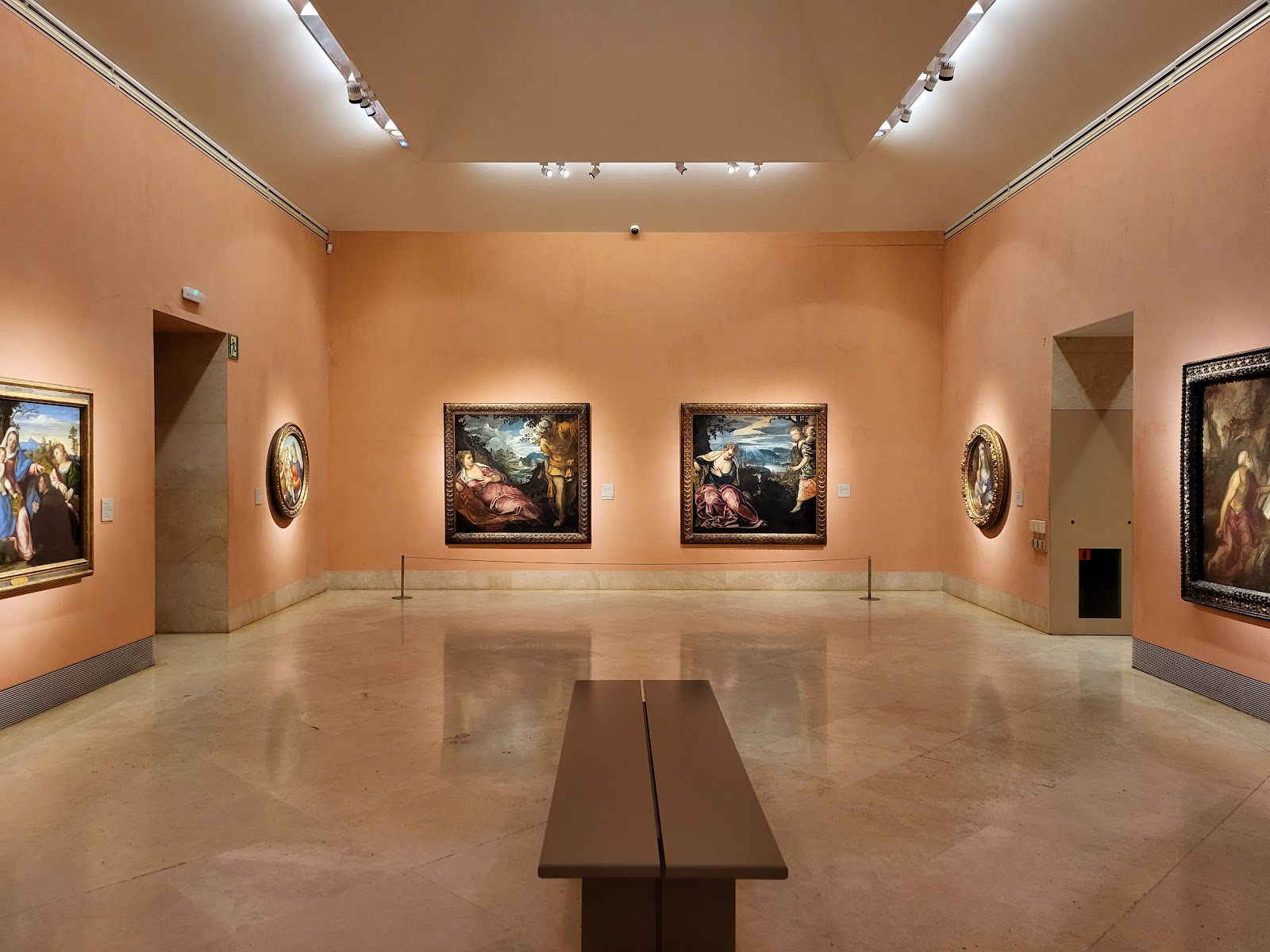
The walls inside the Thyssen are salmon pink — a specific, considered shade chosen personally by Baroness Carmen Thyssen-Bornemisza — and that detail tells you something about the place. This is a collection shaped by taste and conviction, not committee. Arranged across the Palacio de Villahermosa on Paseo del Prado 8, the museum holds roughly 1,600 works spanning seven centuries, from medieval panel paintings to American Abstract Expressionism, filling the gaps that the Prado and Reina Sofía, its neighbours on the same boulevard, deliberately leave open.
💛 What travellers fall for
People who come back tend to arrive at 10:00 on a Tuesday, when the marble floors are still quiet and the skylights do most of the work. The free Monday afternoons draw queues worth knowing about. Saturday nights, the Thyssen Nights programme opens until 23:00 at no charge — a different city, a different pace through the same rooms.
The story behind Museo Thyssen-Bornemisza
The collection began in the 1920s under Baron Heinrich Thyssen-Bornemisza, a German-Hungarian industrialist with an appetite for Old Masters. His son, Baron Hans Heinrich Thyssen-Bornemisza (1921–2002), expanded it into one of the largest private art holdings in the world. The works had long been split between a villa in Switzerland and a loan to Spain when Carmen Cervera — former Miss Spain 1961, who married the Baron in 1985 — helped persuade him to settle the collection in Madrid permanently.
The Spanish State purchased the core collection in 1993 for around €300 million. The home chosen was the early 19th-century Palacio de Villahermosa, converted between 1989 and 1992 by architect Rafael Moneo and opened to the public in October 1992. A 2002–2004 expansion by Francesc Pla and the BOPBAA practice extended the museum into the adjacent Goyeneche and Guaqui palaces. Carmen Thyssen's own collection, on long-term loan, was formally integrated in 2004 under a lease agreement renewed in February 2022.
Good to know
Metro Line 2 to Banco de España drops you a short walk away. Adults pay €13; under-18s enter free, as do teachers and those with disabilities. Monday free entry runs 12:00–16:00 (permanent collection only, tickets at the door). Closed 1 January, 1 May, 25 December.
Where is Museo Thyssen-Bornemisza?
More tickets & tours for Museo Thyssen-Bornemisza
Book directly at the provider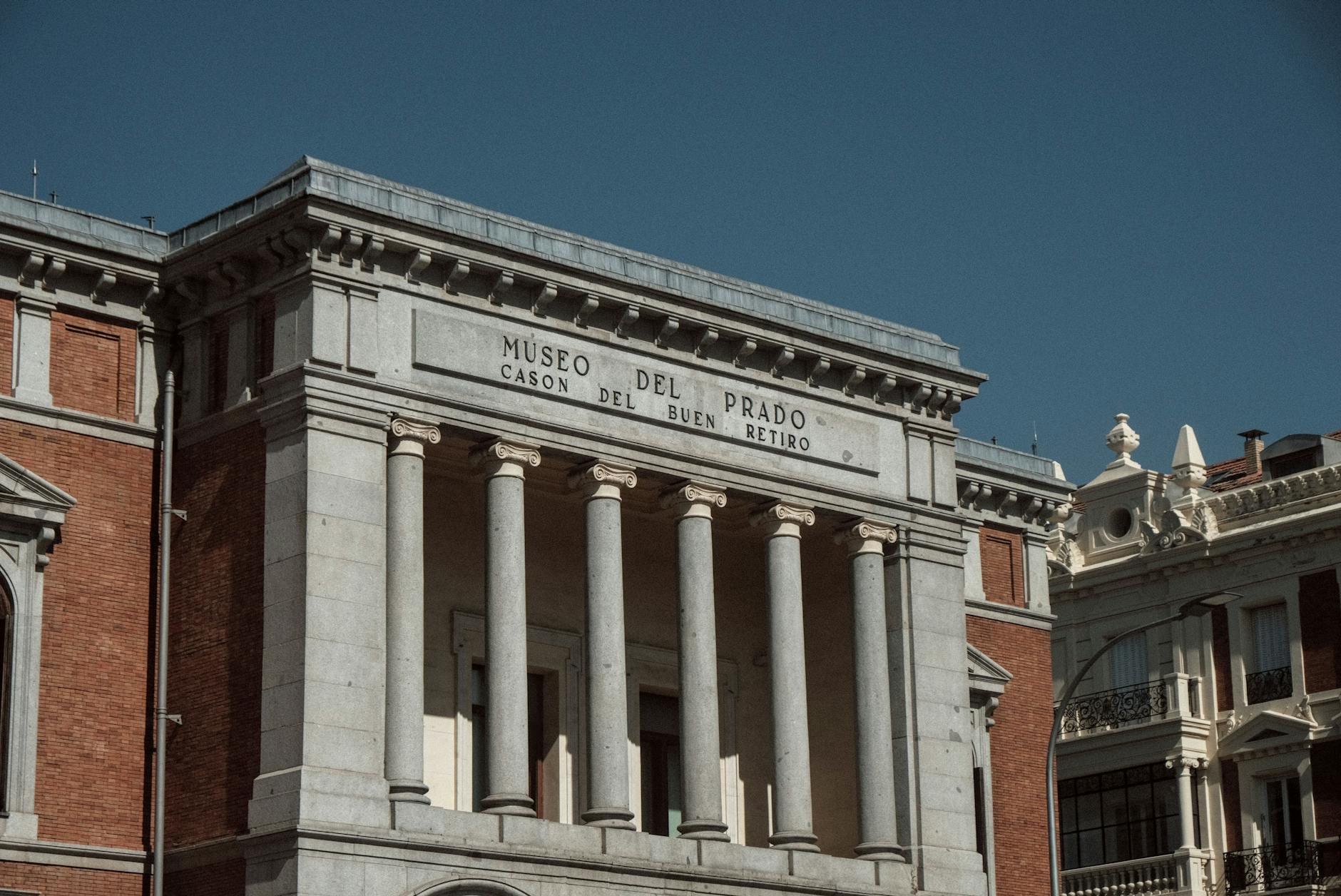
What travellers say about Museo Thyssen-Bornemisza
Spent a about 2 hours at the Thyssen Museum and honestly loved it. The collection is incredibly diverse — from classic masterpieces to modern art — and every room feels different from the last. It’s one of those museums where you can easily lose track of time just wandering around and discovering new favorite paintings. Definitely one of the best cultural experiences in Madrid and well worth visiting, even if you’re not usually a big museum person. Beautiful atmosphere, amazing art, and a perfect way to slow down and enjoy the city for a while.
A lovely collection with a wide variety of pieces, new and old and everything in between. We spent almost 3 hours there looking at every piece. I prefer the landscapes and like that this museum has a lot more of them compared to the Museo del Prado. But it’s not free for students. But it is okay to take photos.
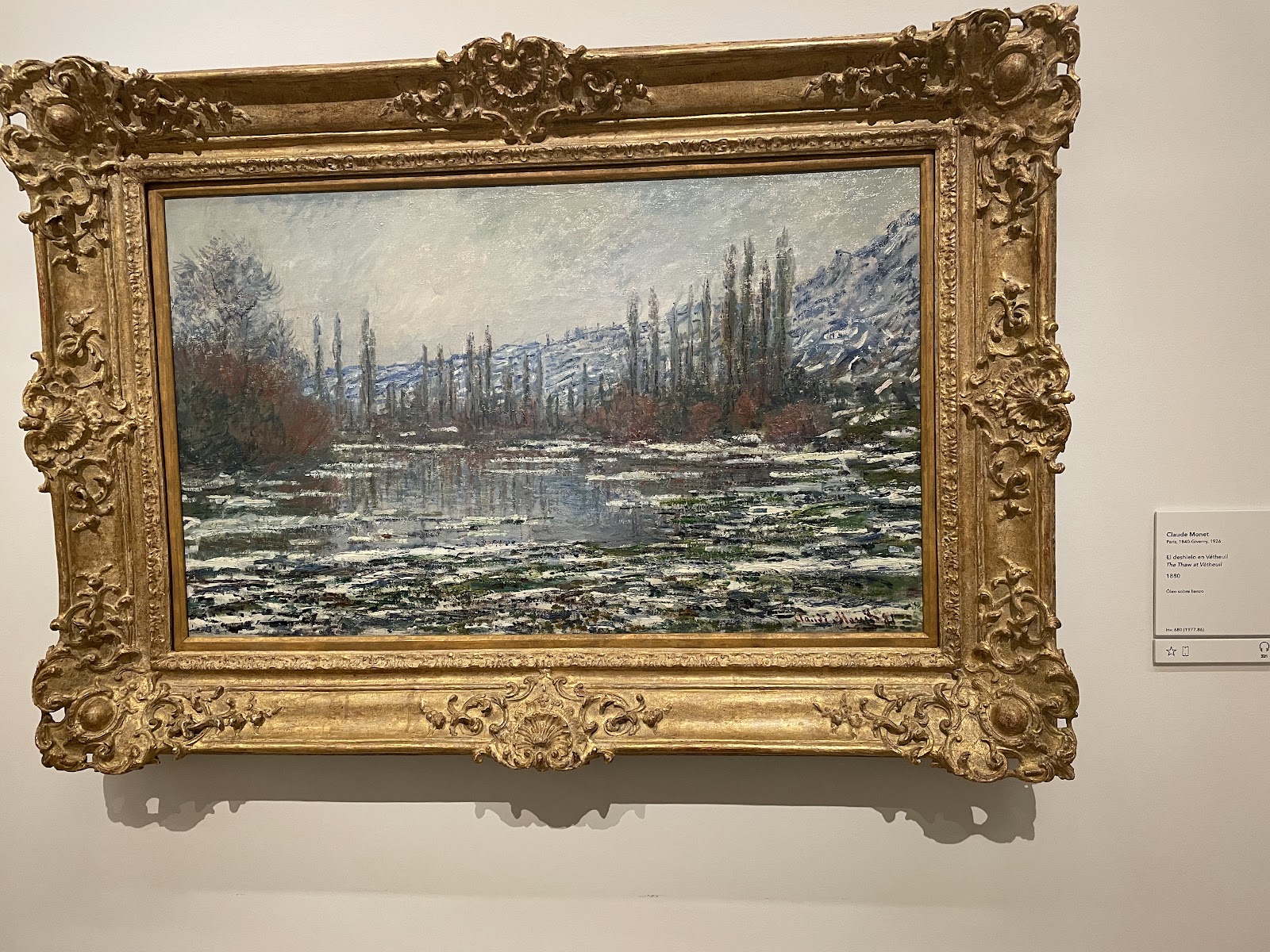
This museum offers one of the best organized art journeys I’ve experienced. Because it follows a chronological order across its floors, you can clearly see how art evolved from early religious paintings to modern masterpieces. It feels much more intimate and less overwhelming than other large museums in Madrid. The collection is incredibly diverse you’ll find everything from Van Gogh and Monet to Pop Art. The natural light in many of the galleries and the salmon-colored walls create a warm atmosphere that makes wandering through the rooms very pleasant. I suggest starting on the top floor and working your way down. It’s a great choice if you want to see world class art at a more relaxed pace.
A wonderful complement to the Prado, the Museo Nacional Thyssen-Bornemisza offers an incredibly diverse and approachable collection spanning centuries of European and American art. The museum originated from the private collection of the Thyssen family — industrialists and passionate art collectors — who assembled one of the most important private collections in the world during the 20th century. Spain eventually acquired much of the collection in the 1990s, giving Madrid a remarkable museum that helps bridge the artistic gaps between the Prado’s classical works and the Reina Sofía’s modern masterpieces. We spent about two hours here, though art lovers could easily stay longer. If you’re visiting Madrid and enjoy museums, this is absolutely worth your time. Slow down, stroll through the rooms, and see what catches your eye.
The entrance of the museum on Mondays from 12 to 4 PM is free. We waited half an hour (11.40-12.10)online and as soon as it opened, the queue went so quickly. The museum is beautiful. It has three floors.. you can spend the whole day so many beautiful paintings to see. Like heaven.. The only place I didn’t like was the cafeteria with a very rude man who saw me coming to the till and asked me to go back and wait. However, it was rather expensive, so not too hard to spend time there if you really don’t need to.
More of Madrid
Discover where to stay, what to do and the best deals for your trip.
Explore Madrid →More attractions in Madrid
All of Madrid →
Background adapted from Wikipedia (CC BY-SA) · map data © OpenStreetMap contributors · ratings & place photos via Google · other photos with per-image credit. Ticket links may earn us a commission at no extra cost to you.