
Museo Nacional Centro de Arte Reina Sofía
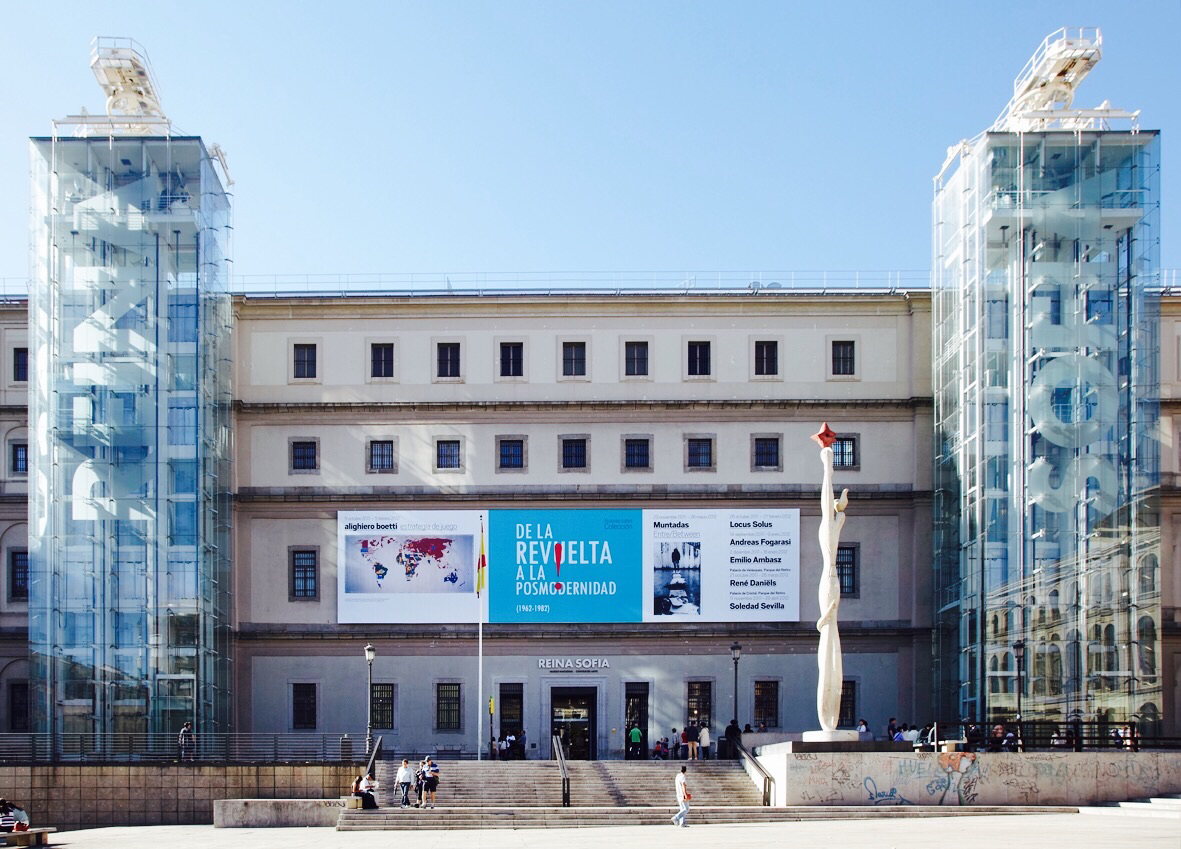
The building that houses Spain's foremost collection of 20th-century art started life as a hospital, and you can still feel the logic of those long wards in the way the galleries open one into another. At its centre, in a room scaled precisely to receive it, hangs Picasso's Guernica — eleven feet tall, twenty-five feet wide, grey and black and white, painted in 1937 and still the loudest thing in Madrid.
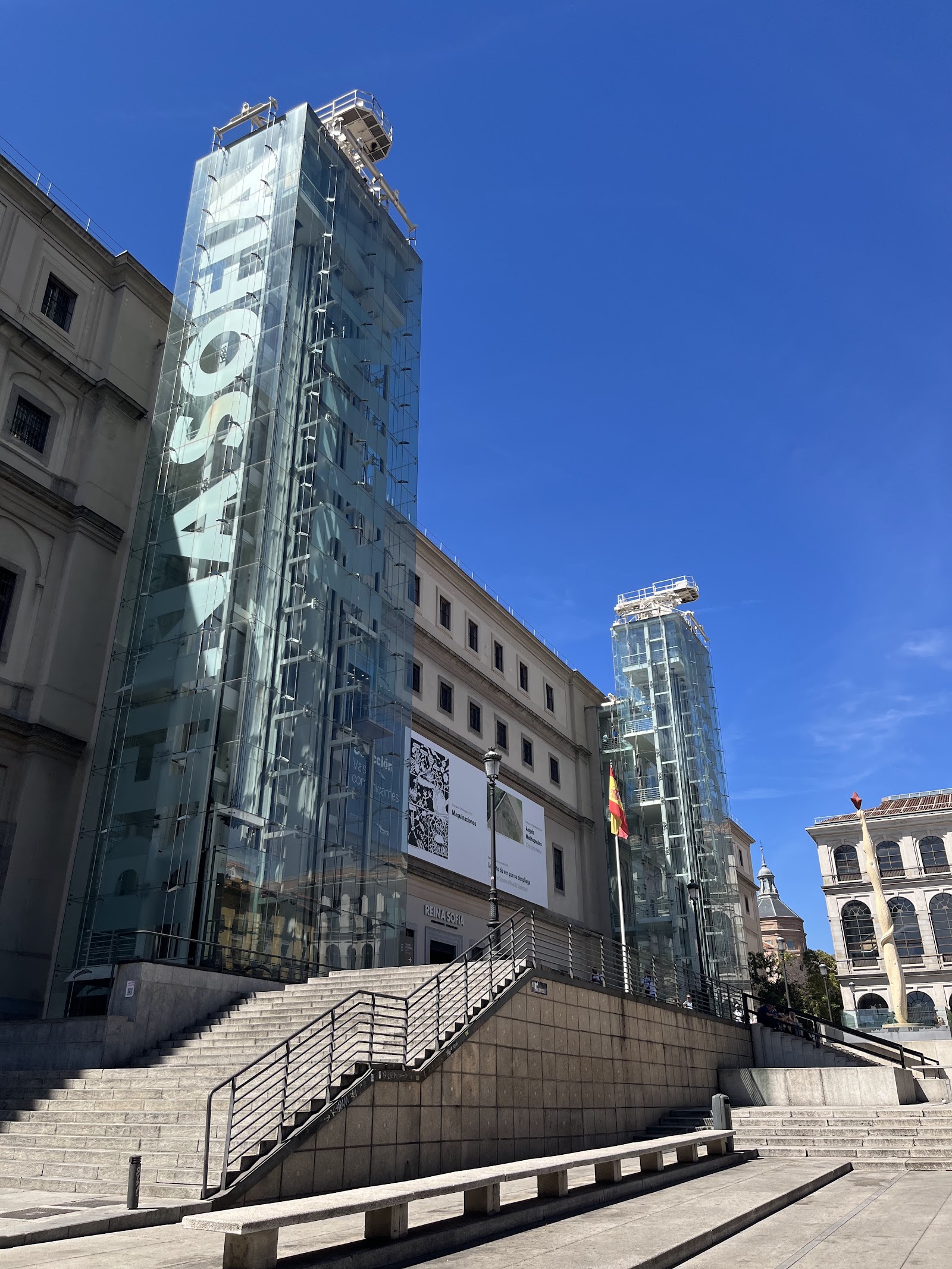
The Sabatini Building's 18th-century stone exterior gives way, once you're inside, to Ian Ritchie's three glass elevator towers added in 1989, and then to Jean Nouvel's 2005 steel-and-aluminium extension — a sequence of three distinct architectural eras that somehow cohere.
💛 What travellers fall for
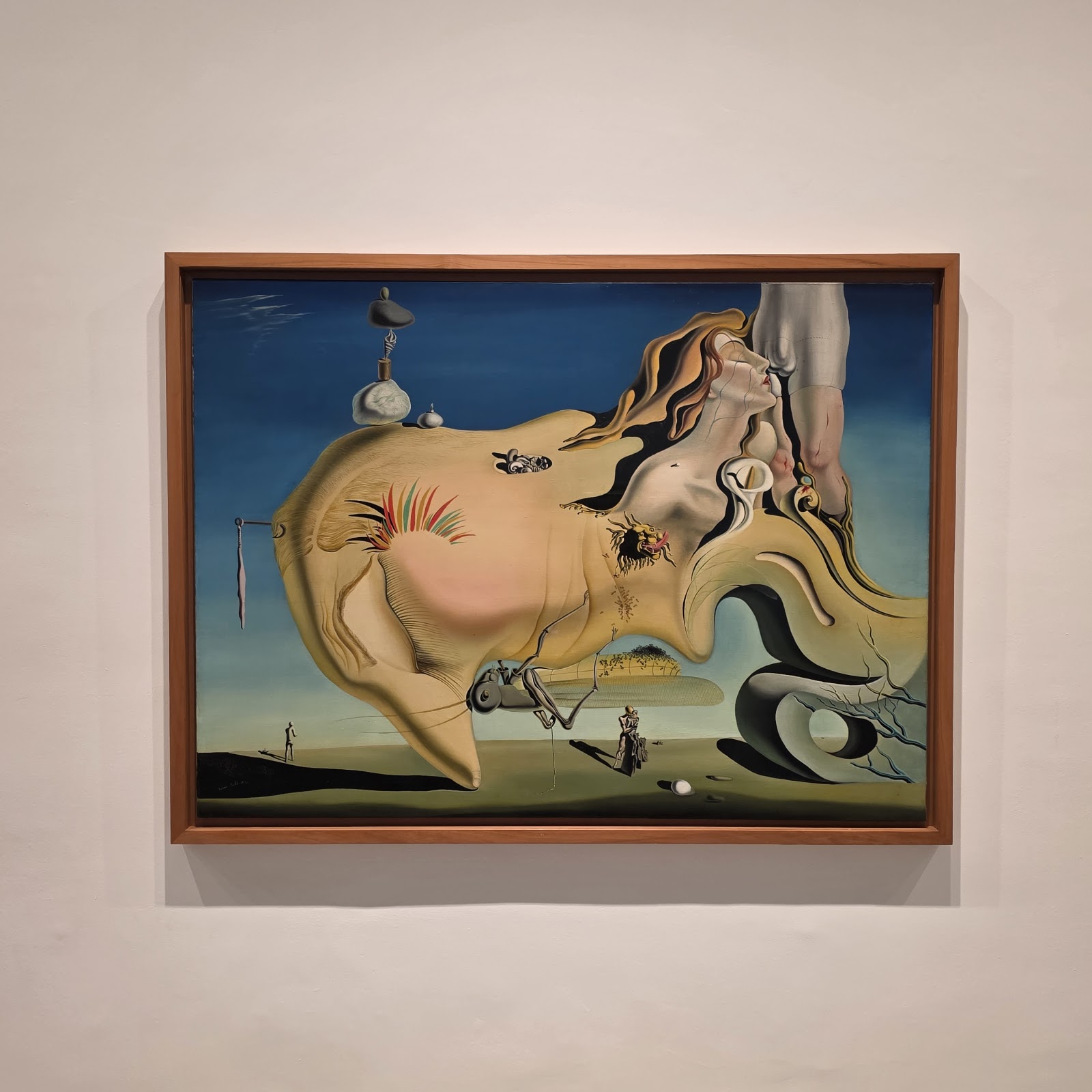
People who come back tend to arrive just after 2pm, when the morning crowds have cleared, and go straight past Guernica to spend time with the Dalí and Miró rooms — where the work is just as serious and the competition for space is considerably lighter. The rooftop terrace, reopened in 2025 with three large geometric sculptures, is worth the detour.
The story behind Museo Nacional Centro de Arte Reina Sofía
The building on Calle de Santa Isabel began as a hospital, its plans drawn by José Agustín de Hermosilla in 1756 and continued by the Italian architect Francesco Sabatini through the second half of the 18th century. It functioned as a working hospital until 1968, was acquired by the Ministry of Education in 1976, and opened as an art centre in 1986 before being formally established as the Museo Nacional Centro de Arte Reina Sofía in 1988. The official inauguration came on September 10, 1992.
Jean Nouvel — selected in 1999 from a shortlist that included Zaha Hadid and Tadao Ando — added 8,000 square metres of new space, opened in October 2005, bringing two auditoriums, temporary exhibition galleries, and a bookshop under a single cantilevered roof of red-painted steel.
Good to know
Take Line 1 to Estación del Arte, about six minutes on foot to the main entrance. Free entry runs Monday–Saturday 7–9pm and Sunday 12:30–2:30pm, when it gets busy; the quietest window is roughly 2–6pm. The ticket office closes 30 minutes before the museum does. Closed Tuesdays.
Where is Museo Nacional Centro de Arte Reina Sofía?
More tickets & tours for Museo Nacional Centro de Arte Reina Sofía
Book directly at the provider
What travellers say about Museo Nacional Centro de Arte Reina Sofía
From 7 PM the entrance is free. We visited the museum from 7 to 9 PM. And they open the entrance at seven. The queue goes very quickly. Second floor is the most interesting with beautiful paintings. We didn’t like very much the fourth floor, which is quite a lot of modern art and install installation. The lifts are very nice so you can watch the square going up and down. Being a hospital building it’s very interesting how it became a museum. The square in front of is very joy, joyful. With lots of cafés, and you can also sit in the square on the benches.
Some weird conceptual “art” in this place… But beyond that, there are many good pieces to look at, and stories to uncover. There was an employee strike, so we didn’t get a lot of information, and an entire floor was closed (maybe preparing a new exhibit) They cover modern and contemporary art. For old, old art, you have to visit El Prado. In the Reina Sofía museum they have Picasso, Miró, Gris, Salvador Dalí, and many other great artist. There is a painting by an artist named Ángeles Santos that you have, have to see! Also, don’t miss out on the textile murals and sculptures exhibition at the adjacent building; it is extremely impressive. The place offered free wifi but when we tried to get in, we had to create an account to receive the wifi. We entered our info but didn’t get the service. Don’t rely on their wifi.
Guernica. Seeing that piece in person is amazing and worth the trip. It's massive and stunning and moving. Otherwise, the museum has a very extensive collection of Spanish Contemporary art with some interesting pieces by Dali and Miro and of course the Picasso collection featuring Guernica. As I mentioned, seeing Guernica in person is worth the trip even though the rest of the museum seemed a little lackluster to me. If I were to go again, I would have spent some time reading about the other artists and works in the collection, and that would have made it an overall better experience. The line to get in was very long, but we booked with a tour guide and were able to skip the line which I'd recommend. It wasn't much more expensive to book with Viator than just getting entry tickets, so that seemed like a good idea.
04/04 要拍照的話,不建議免費時段進場 The Museo Nacional Centro de Arte Reina Sofía is Spain’s national museum of 20th-century and contemporary art, located in Madrid near Atocha station and forming part of the city’s major cultural “Art Triangle,” alongside the Prado Museum and Thyssen-Bornemisza Museum. Housed in a former hospital building that has been expanded with modern architectural additions, the museum combines historical architecture with contemporary design elements. It is best known for its extensive collection of modern Spanish art, including works by Pablo Picasso, Salvador Dalí, and Joan Miró. Its most famous exhibit is Picasso’s Guernica, a monumental painting created in response to the bombing of the Basque town during the Spanish Civil War. This artwork is considered one of the most powerful anti-war statements in modern art and is the museum’s central highlight. The Reina Sofía Museum also features rotating exhibitions, photography, video art, and installations, making it a dynamic cultural space that reflects evolving artistic movements. Today, it is one of Madrid’s most important museums and a key destination for understanding modern Spanish and European art history.
The Museo Reina Sofía is one of those museums that leaves a strong impression even if you’re not particularly into modern art. The space itself is beautiful, with plenty of natural light and a calm flow that makes the visit feel relaxed rather than tiring, even if you stay for a while. The mix between the historic building and the more contemporary elements works really well and fits the character of the exhibitions. The main highlight is of course Picasso’s Guernica, which feels completely different in person and has a kind of intensity that makes you stop and take your time with it. Beyond that, the collection as a whole is quite engaging, with some works that make you think and others that you simply enjoy visually, without feeling the need to overanalyze them. Overall, it’s definitely a museum worth visiting if you’re in Madrid. It doesn’t feel boring or cold, and you leave with the sense that you’ve experienced something meaningful, even if you don’t remember every artist or movement afterward. It’s also great for a more laid-back visit, without the pressure of having to see absolutely everything.
More of Madrid
Discover where to stay, what to do and the best deals for your trip.
Explore Madrid →More attractions in Madrid
All of Madrid →
Background adapted from Wikipedia (CC BY-SA) · map data © OpenStreetMap contributors · ratings & place photos via Google · other photos with per-image credit. Ticket links may earn us a commission at no extra cost to you.