
Museo de Bellas Artes de Valencia
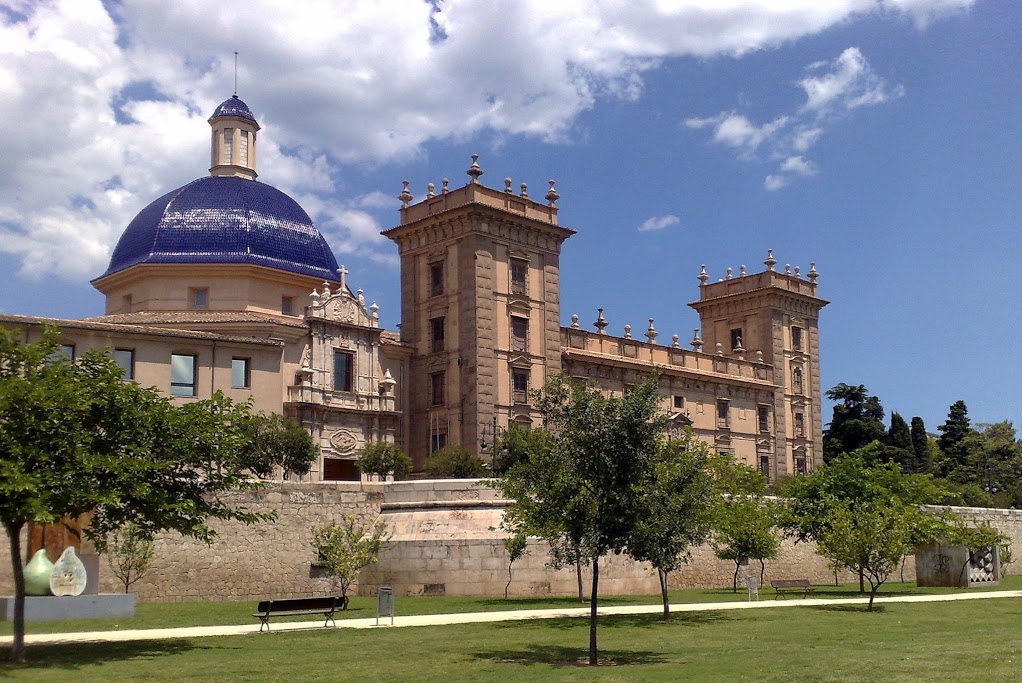
The cobalt dome gives it away from a distance — a flash of blue above the Turia gardens that turns out to belong to one of Spain's largest fine-art collections, free to enter and rarely crowded. The building started life as a seminary founded by Archbishop Juan Tomás de Rocabertí in 1683, and the bones of that institution are still readable inside: cloistered courtyards, palm-shaded stone, and a Renaissance patio transplanted wholesale from a demolished ambassador's palace.
The collection runs to around 2,000 works, weighted toward the 14th through 17th centuries, with 42 paintings by Joaquín Sorolla alone. A Velázquez self-portrait, an El Greco, a Goya, a Pinturicchio Madonna — the names appear without fanfare, on walls you can stand close to.

💛 What travellers fall for
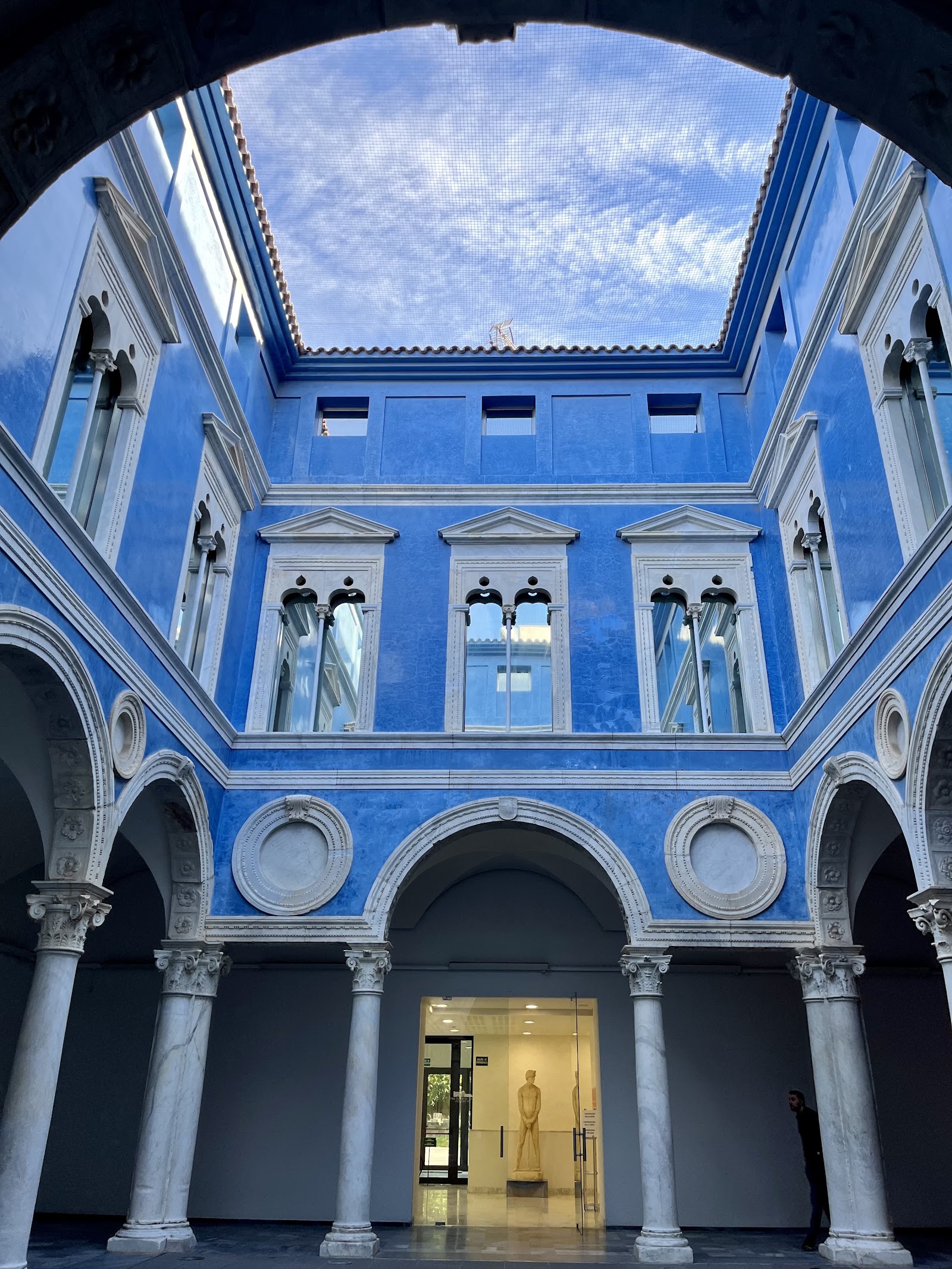
People who come back tend to head straight for the Courtyard of the Vich Ambassador — a Renaissance square painted blue with Genoese marble detailing, pulled from a palace that no longer exists. The café overlooking the main courtyard's greenery and arches is a good place to regroup. Take a coin for the lockers.
The story behind Museo de Bellas Artes de Valencia
Archbishop Juan Tomás de Rocabertí commissioned architect Juan Pérez Castiel to design a seminary for priests in 1683, though construction stretched well into the 18th century. The building — a quadrangular plan around a cloister, with two towers facing the old Turia riverbed — passed through several hands over the following century: a Beneficencia house, a state army warehouse after 1835, and a military hospital during the Spanish Civil War.
The museum's formal separation from the Real Academia de Bellas Artes de San Carlos came by royal decree on 24 July 1913. The church on the site was demolished in 1925 and rebuilt with the octagonal plan and blue-glazed dome you see today. The Jardines del Real — the gardens immediately adjacent — make a natural extension of the visit.
Good to know
Free entry, open Tuesday to Sunday 10:00–20:00, closed Mondays and major holidays. The nearest metro stops are Alameda and Pont de Fusta. The layout can be disorienting — follow the numbered rooms rather than your instincts. Budget at least two hours; the Sorolla rooms alone reward a slow look.
Where is Museo de Bellas Artes de Valencia?
More tickets & tours for Museo de Bellas Artes de Valencia
Book directly at the provider
What travellers say about Museo de Bellas Artes de Valencia
The Museo de Bellas Artes de Valencia was my first stop on this visit to the city. It did not disappoint with a particularly-stunning collection of medieval and Renaissance religious art. The museum also holds temporary exhibits. The current one (writing in July 2026) is about Rubens and his contemporaries. These highlights are all on the ground floor. There are still 3 more stories of art to explore. The upper floors, though, are a maze, particularly with renovations going on. You will have to find different sections by going up and down seemingly-random flights of stairs. If you have the time, it could still be worth it to see the more-modern parts of the museum's collection. Admission to this fine cultural institution is free! Just be sure to bring a 1-euro coin so that you can deposit on your things in the cloakroom.
I really enjoyed my visit. The museum has a wonderful collection of artworks, and the garden is beautiful and peaceful. A great place to spend a few hours in Valencia. An added bonus is that admission is free, so there is no need to buy a ticket. Highly recommended.
Fabulous art gallery (note, not a museum) with 100's of old religious art works. The Prado I'm Madrid feels 50 times bigger but still worth the visit. The gallery showcases many local Valencian artists which were good to see. Highly recommended
I was very impressed with this art gallery. It does not have an entry fee which was a very plesant surprise. The entrance hall as some amazing painting . There are lockers to put your belonging in . You need a 1 Euro coin. This is returned once you finish.Also they have perspex doors so you can see which is yours. There are toilet facilities which are very clean. There is a cafe..this is a let down as its vending machines. It is a place to rest and it looks like it use to be more than it is now. Cutbacks I guess but the place is free to enter.
1. The second most important museum in Spain The museum is considered the second largest art museum in the country after the Prado. Its collection is particularly strong in Valencian Gothic and Renaissance art, making it a key center for the study of regional art. 2. Located in a historic 17th-century building The museum occupies the former College of the Seminary of San Pio V, built in the 17th century. Inside, the monastery cloisters have been preserved, as well as the restored Renaissance courtyard of the Ambassador Vich (Patio del Embajador Vich), one of Valencia's architectural masterpieces. 3. Birthplace of Sorolla's early works The collection includes early works by Joaquín Sorolla, a native of Valencia, as well as works by Goya, Velázquez (workshop/circle), and El Greco. This allows us to trace the evolution of Spanish painting from the Middle Ages to the 19th century.
More of Valencia
Discover where to stay, what to do and the best deals for your trip.
Explore Valencia →More attractions in Valencia
All of Valencia →
Background adapted from Wikipedia (CC BY-SA) · map data © OpenStreetMap contributors · ratings & place photos via Google · other photos with per-image credit. Ticket links may earn us a commission at no extra cost to you.