
Musée Marc Chagall
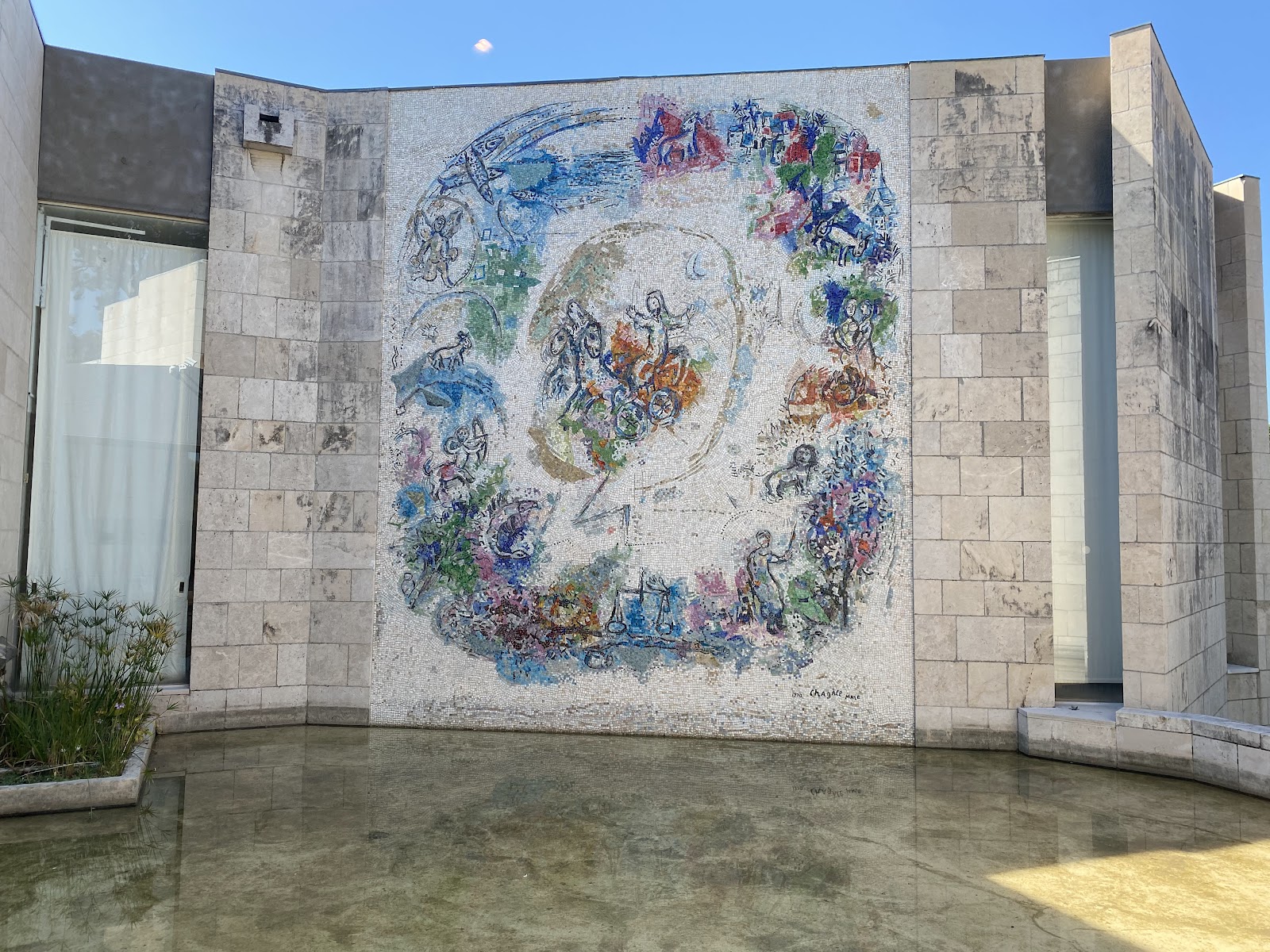
On the outer wall of the Musée Marc Chagall, a mosaic of the Prophet Elijah floats above a still reflecting pool — the first thing you encounter before you've even crossed the threshold. The building sits in the Cimiez district on a plot the city of Nice donated for the purpose, and it was designed by André Hermant around a single ambition: to give Chagall's Biblical Message cycle the light and space it actually needs.
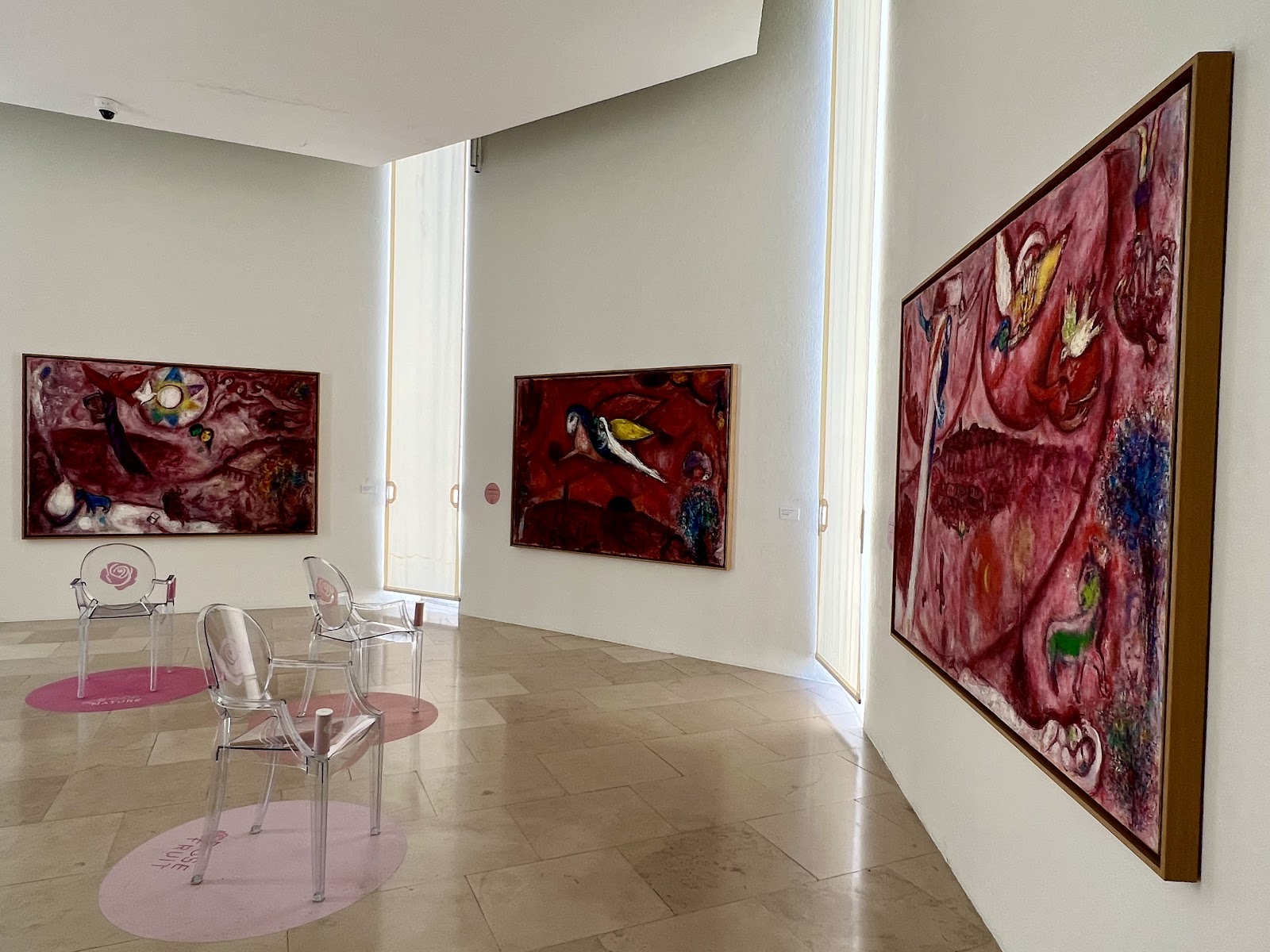
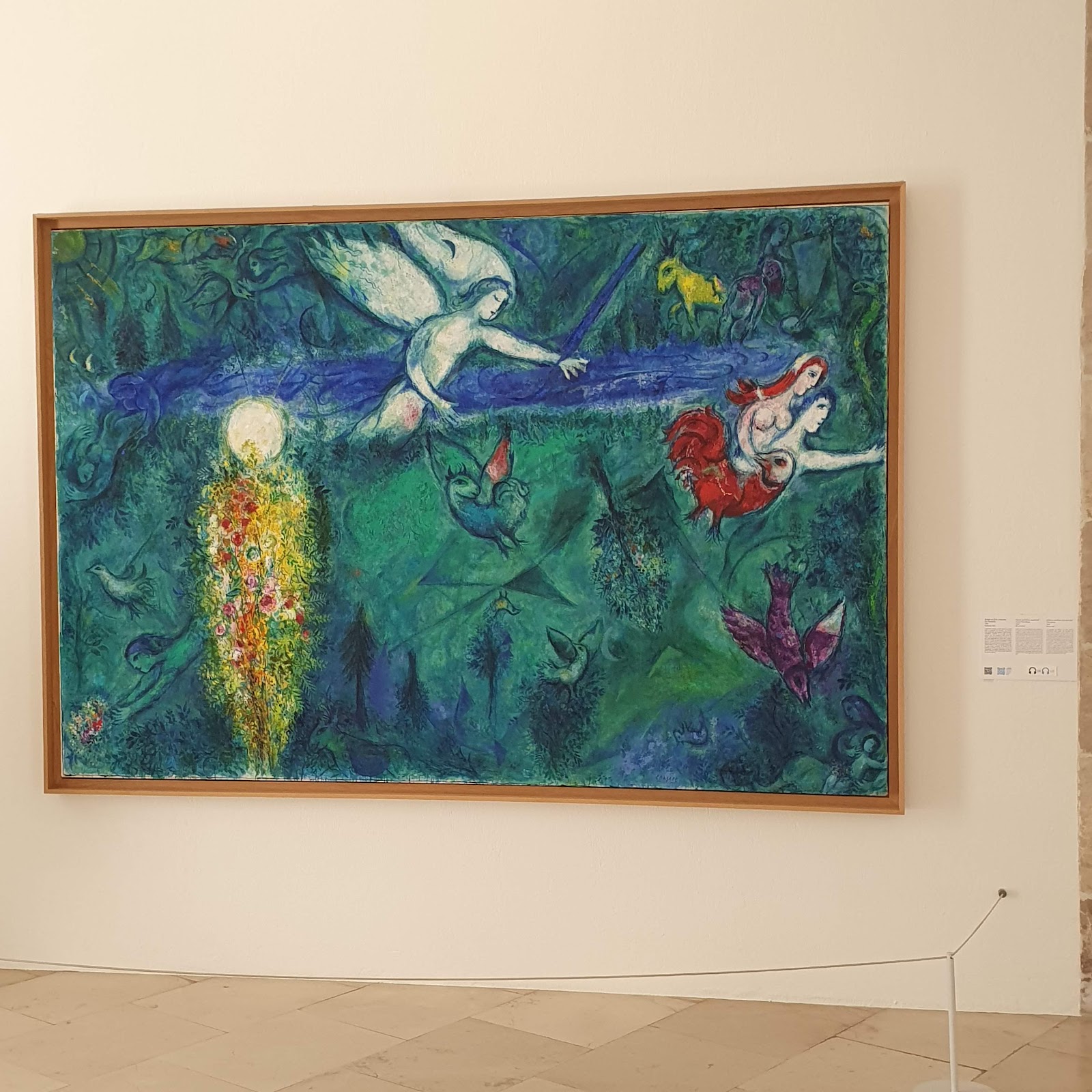
Inside, twelve large canvases illustrating Genesis and Exodus are arranged around a three-diamond layout, so each painting commands its own wall. The auditorium behind them has stained glass windows Chagall made with master glazier Charles Marcq, depicting the creation of the world.
💛 What travellers fall for
People who come back tend to do the garden first — olive, cypress, pine and holm oak, planted by Henri Fisch in cool whites and blues that Chagall himself signed off on. The first Sunday of each month is free, which makes it worth planning around. The ticket office closes at 3:30pm, so an afternoon visit needs an early start.
The story behind Musée Marc Chagall
In 1969, French Minister of Culture André Malraux initiated a museum after Chagall donated his Biblical Message cycle — seventeen large-format paintings made between 1956 and 1966 — to the French state. Architect André Hermant, a former collaborator of both Auguste Perret and Le Corbusier, designed a low, light-filled building in two perpendicular wings, calibrated to the scale of the canvases. It opened on 7 July 1973, Chagall's birthday, with the artist present.
The museum was originally named the Musée National Message Biblique Marc Chagall — the first national museum anywhere dedicated to a living artist. It became simply the Musée National Marc Chagall in 2008, reflecting a broader mandate. Two renovations, in 2007 and 2018, added reception space and updated accessibility without disturbing Hermant's restrained original frame.
Good to know
Bus 5 or the Nice Le Grand Tour drops you at the Musée Chagall stop. Tram 1 to Gare Thiers is a 15-minute walk away. Free parking for cars and coaches. Open daily except Tuesdays and major public holidays; hours shorten significantly November through April (closed 1pm–2:30pm).
Where is Musée Marc Chagall?
More tickets & tours for Musée Marc Chagall
Book directly at the provider
What travellers say about Musée Marc Chagall
A must-visit museum. We were lucky enough to have free entry, which made the experience even better. The museum has several rooms showcasing Marc Chagall’s works, and they are very well presented. Before entering, the staff checks visitors’ bags, which is understandable and well organized. We were also greeted by a cat at the entrance, who seems to live there and added a charming, unexpected touch to the visit. The only thing to keep in mind is that the walk to the museum can feel a bit unusual if you’re coming from the train station, and there are quite a lot of stairs along the way. Overall, I highly recommend this museum.
We visited this museum in April, which is considered winter season in Nice. It's not yet crowded with tourists. But there was already a line outside. We waited about half an hour. It was a weekday in the morning. An adult ticket costs 10 euros per person. There's a bag search at the ticket office and at the museum entrance. We had to leave our backpacks behind. They also took our water. It's very convenient that you can listen to an audio guide in many languages using the app's screenshot. It helps you understand the meaning of the paintings and the artist's intent. I thought the museum was too small, but that's just my opinion. I asked the security guard if I could buy a ticket online. He told me it wasn't possible. It's easy to get there on foot or by bus. The grounds are beautiful and picturesque. Across the street, there's a beautiful park where you can relax with your family or alone.
The collection is great, but not huge - 1.5h should be fine if you stay to watch the documentary. A must if you are interested in dance. However, the museum clearly has a few issues to address. First of all, it should be written on the website that large bags are not allowed, especially if you spend some time getting there - I couldn’t find anything. I understand there are no big lockers inside, but this is a major downside for a national museum that is mainly visited by international tourists. Besides, security checks are overwhelming, especially cause majority of staff don’t speak English and get easily annoyed and irritated, which is problematic in a touristic city like Nice. I understand there are protocols and rules, which I accept, but there are many other ways to arrange the checks in a more effective way so that you don’t have to open your bags twice, for example. Moreover, the lady at the last check was extremely rude. She started to argue with me when I was sharing some thoughts with my partner about the checks - very inappropriate and unprofessional. I am an artist and I've been in museums all over the world, and my experience here has been the weirdest I've ever had. Visitors should be welcomed and supported, not the opposite. The only staff member who was polite and helpful was the one taking care of the bags - she was lovely. The treasure you have there must be shared with as many people as possible, so make visitors experience as good and accessible as it can be!
I was truly impressed by the museum, it left a very deep and lasting impression on me. The exhibition is beautifully structured into three main sections: • a hall dedicated to the Biblical Messages series, filled with powerful and expressive works, • a hall focused on the creation of the ceiling painting for the Paris Opera, offering fascinating insight into the artistic process, • and a hall devoted to the design of the ballet The Firebird in New York, which feels especially vibrant and theatrical. In the concert hall, a film about Marc Chagall’s life is shown, starting from his birth in Vitebsk and following his artistic journey across the world. What makes it especially moving is that Chagall himself speaks about his life and its different stages, which allows you to connect with him more deeply as a person and see what a joyful and warm spirit he was. The stained glass windows in the hall are absolutely breathtaking, they create an atmosphere that feels almost magical.
Must visit place in Nice.the day I was there the tickets were for free anyway it’s not huge museum but still worse to visit.the art there worth your attention. The interior is amazing, from one room you’ll have a big glass so you can see the outdoor Design, which is amazing. They also have a few bunches inside so you can relax nice café outside of museum but inside of the park.
More of Nice
Discover where to stay, what to do and the best deals for your trip.
Explore Nice →More attractions in Nice
All of Nice →
Background adapted from Wikipedia (CC BY-SA) · map data © OpenStreetMap contributors · ratings & place photos via Google · other photos with per-image credit. Ticket links may earn us a commission at no extra cost to you.