
Musée de la Castre
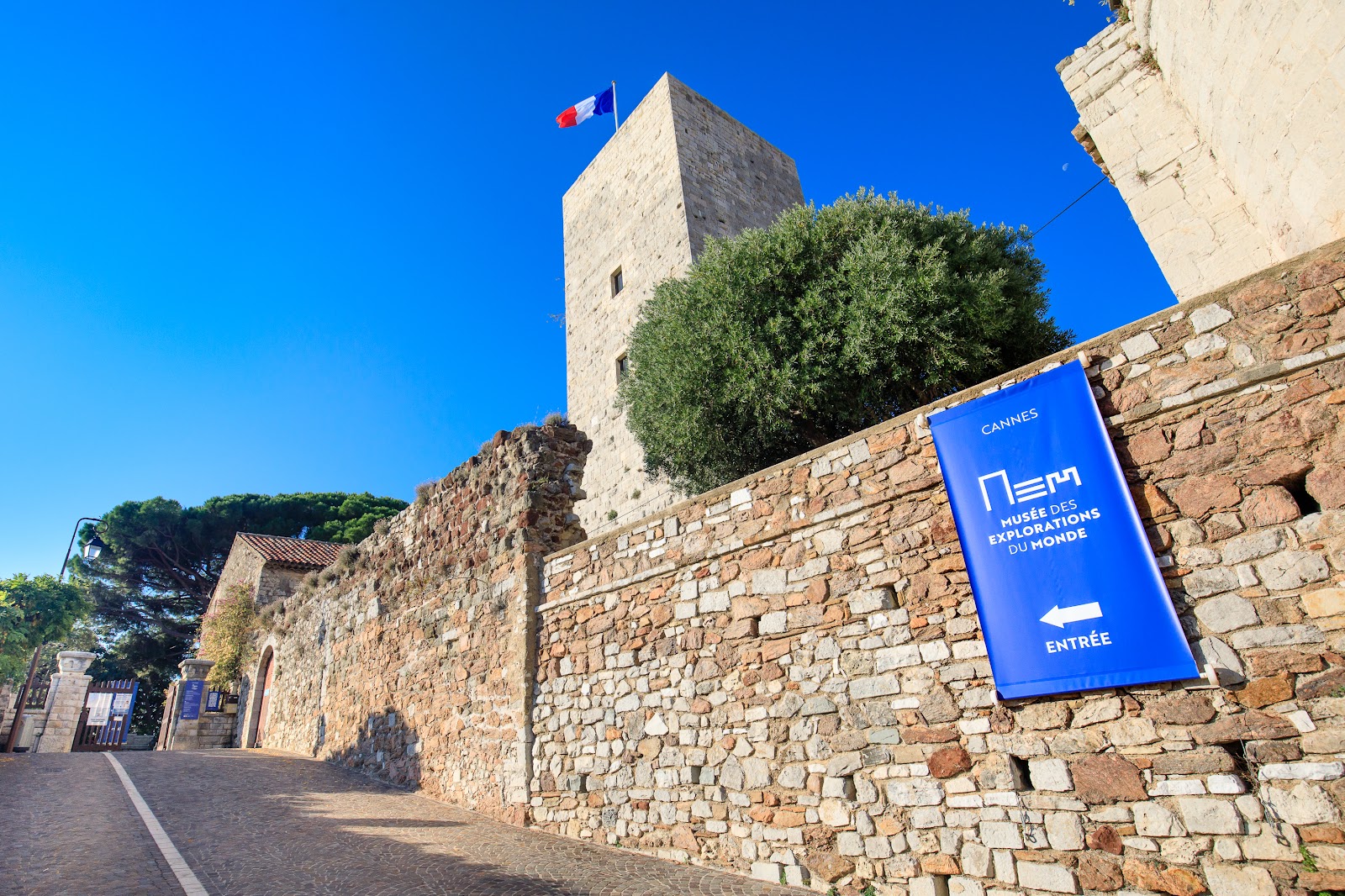
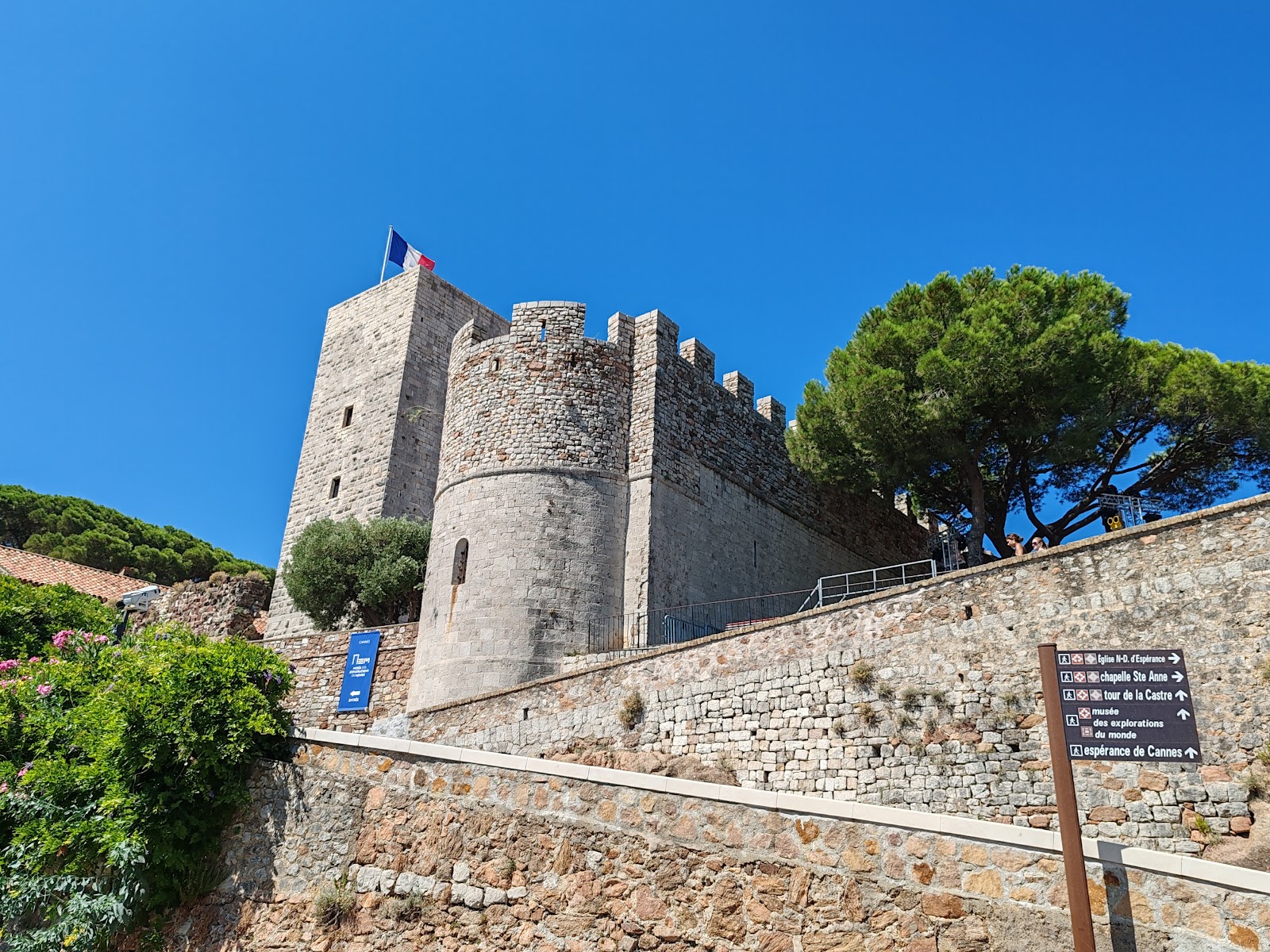
At the top of Le Suquet, past the stone pines at the garden entrance, the Musée des Explorations du Monde occupies a medieval castle that monks from the Îles de Lérins began building in the eleventh century. The complex — convent, chapel, courtyard, watchtower — has the compact geometry of a fortress, which makes it an unlikely home for Himalayan masks, Arctic tools, and a chapel full of instruments from Oceania and the Americas.
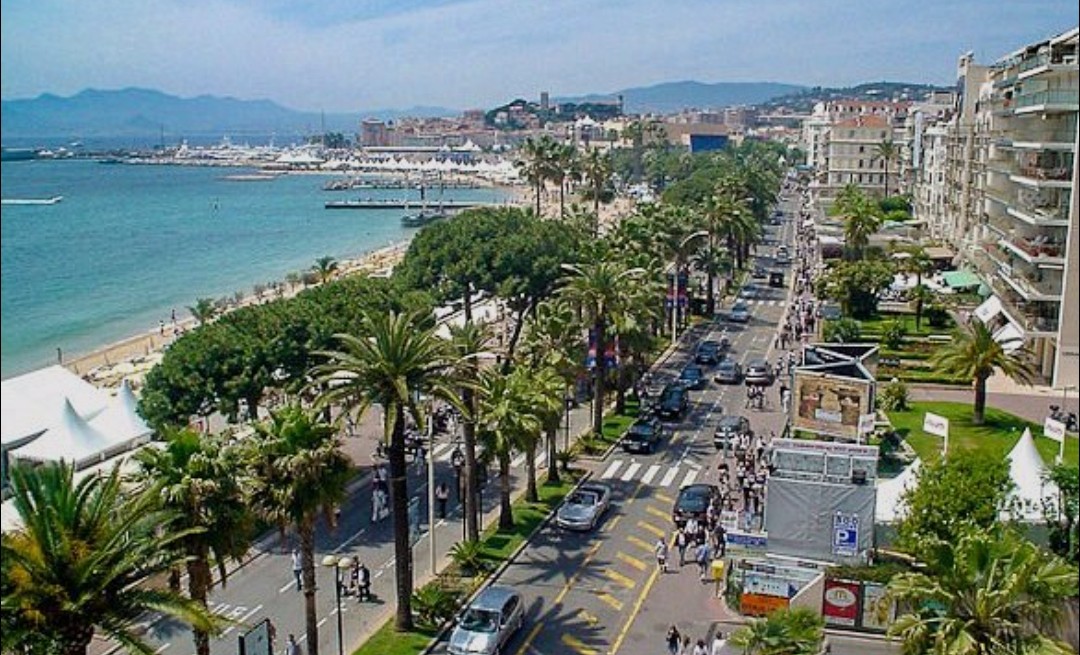
Climb the 109 steps of the square tower and you get the view that explains why monks chose this hill: the whole curve of the bay, the port below, the islands offshore. The collection inside earns the climb on its own terms.
💛 What travellers fall for
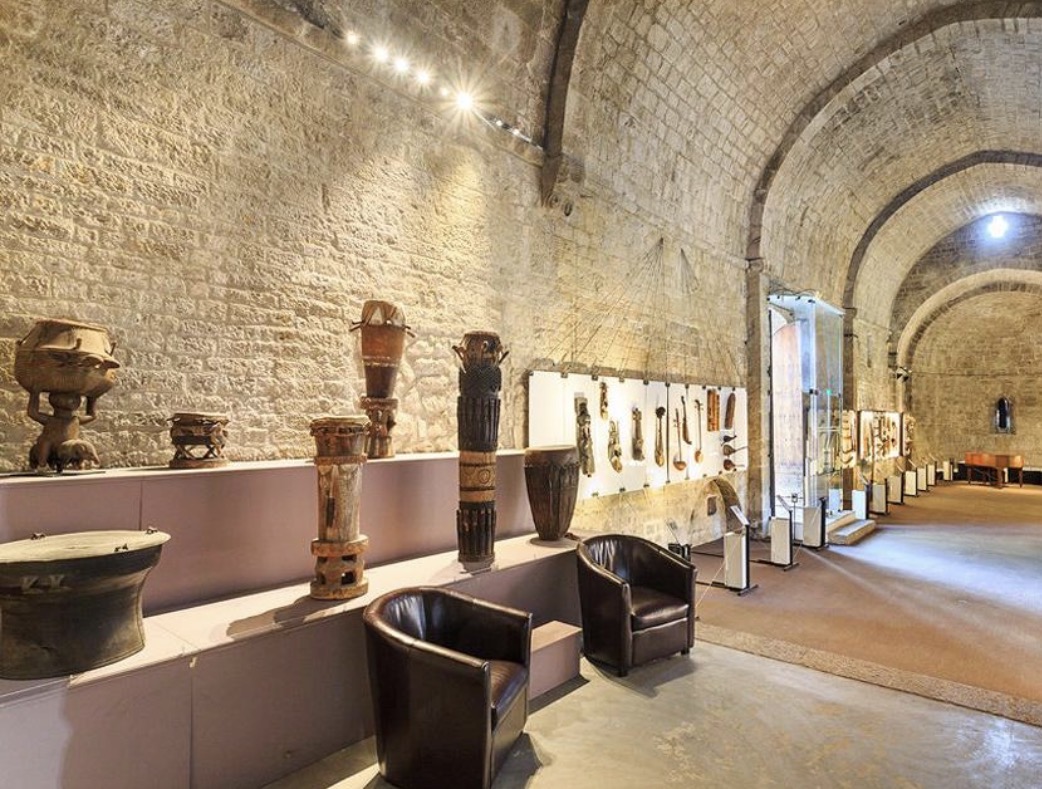
People who come back tend to time it for a Wednesday evening in summer, when the museum stays open until nine and the tower view shifts into something else entirely as the light drops over the water. The Saint-Anne's Chapel, easy to walk past quickly, rewards a second look — the density of instruments from four continents in one small Romanesque room is quietly disorienting.
The story behind Musée de la Castre
The castle's origins lie with the monks of Lérins, who began construction on Mont Chevalier in the eleventh century as a fortified outpost on the mainland. The complex passed through centuries of use before the City of Cannes purchased the buildings in 1919.
The museum's founding story belongs to a Dutch aristocrat: Baron Tinco Martinus Lycklama in Nijeholt, who settled in Cannes in the late nineteenth century and spent years assembling antiquities, oriental objects, and ethnographic material from across the world. He bequeathed the entire collection to the city in 1877. It sat in the Town Hall until the château was ready to receive it from 1920 onward. In 2021 the museum was officially renamed the Musée des Explorations du Monde.
Good to know
The Suquet Shuttle (€1.50) runs from Hôtel de Ville every 25 minutes, 9am–7pm, and saves your legs for the tower stairs. In winter, first Sundays are free. Last entry is 30 minutes before closing — easy to miss on a long afternoon.
Where is Musée de la Castre?
More tickets & tours for Musée de la Castre
Book directly at the provider
What travellers say about Musée de la Castre
An impressive, well curated little museum, managing to contain so many precious artefacts and art pieces from different epochs and regions within its solid walls. The personnel was very friendly, it was well worth a visit on a rainy day. Also interesting exhibition on the physical/sexual forms of the feminine. Maybe next one about Sophia, the feminine embodiment of the wise, divine soul? 😉
Charming small museum housed in a small medieval tower with great panoramic views of Cannes. The ethnographic and archaeological collections are interesting but limited in depth. Worth visiting if you are in the area for the view and to explore Le Suquet, but not a destination museum. Best suited for a quick cultural stop.
A larger-than-expected museum with many interesting exotic exhibitions. It also has a tower that has a stunning 360 view of Cannes
Tucked into the heart of Cannes, this little gem of a museum only costs 4.5€, and in just 10–15 minutes, it whisks you through four compact rooms full of tribal and pre-Colombian treasures. Not for everyone, but if you’re the kind of traveler who slows down at masks, maps, and ancient myths, it’s absolutely worth the stop. Think of it as a bite-sized adventure before your next gelato. 🎭
Entrance is €6.50, and the staff are very nice. The museum is small, probably taking 20 minutes. The tower in the middle is a great view of the city, and the main reason to go to the museum. There are English explanations on cards in most of the rooms.
More of Cannes
Discover where to stay, what to do and the best deals for your trip.
Explore Cannes →More attractions in Cannes
All of Cannes →

Background adapted from Wikipedia (CC BY-SA) · map data © OpenStreetMap contributors · ratings & place photos via Google · other photos with per-image credit. Ticket links may earn us a commission at no extra cost to you.