
Musée d'Aquitaine
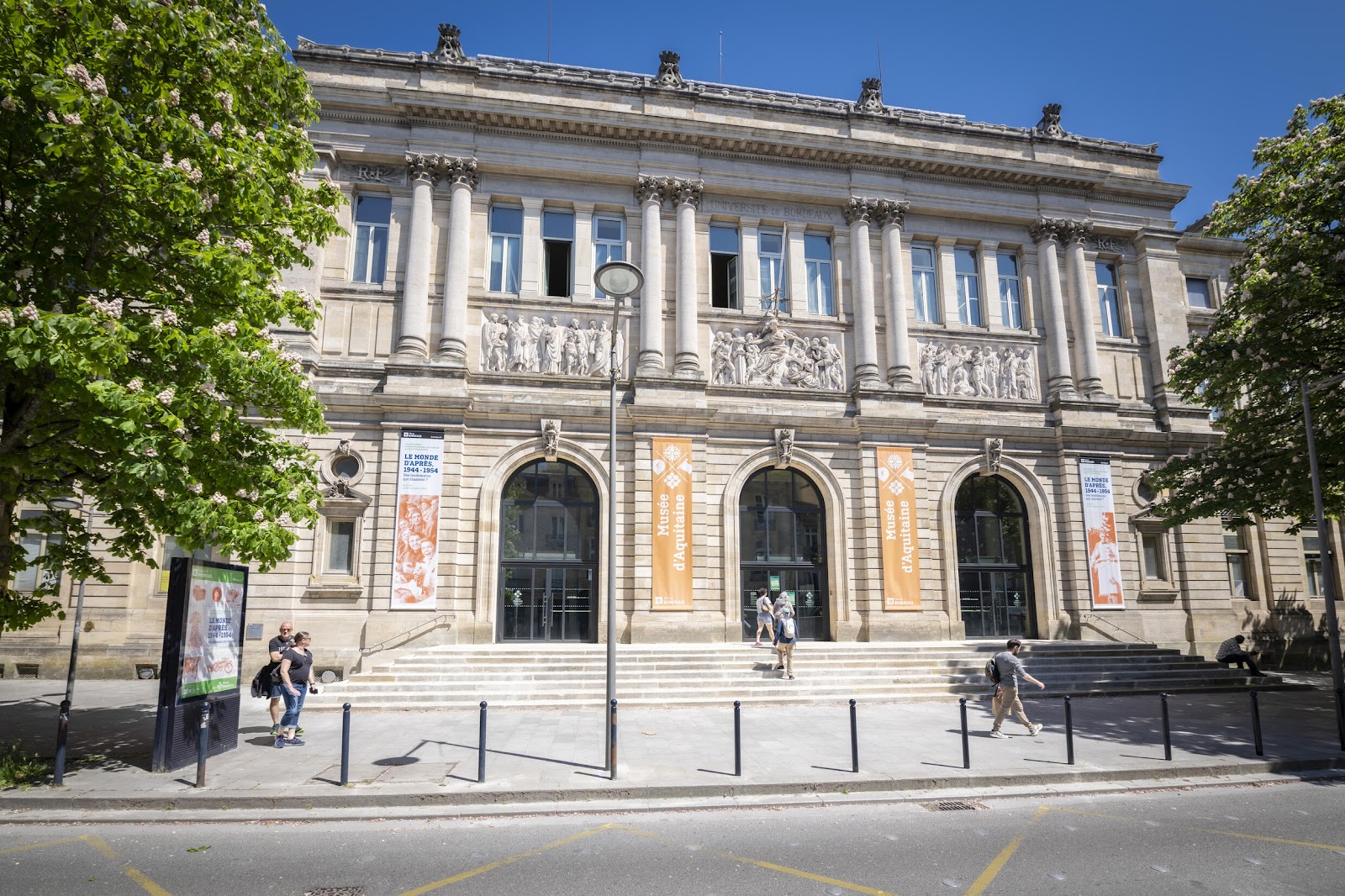
Somewhere near the ground floor, in a room dedicated to 16th-century Bordeaux, you'll find a cenotaph. It belongs to Michel de Montaigne, who was buried on this very site in 1592 — long before the building existed, when a Feuillants convent occupied the land. That layering of time is what the Musée d'Aquitaine does best.
The collection runs from a 25,000-year-old carved limestone figure — the Venus of Laussel — all the way through to documents recording the nearly 150,000 enslaved people deported from Bordeaux between 1672 and 1837. More than 70,000 pieces in total, spread across two floors of a neoclassical former university building.
💛 What travellers fall for
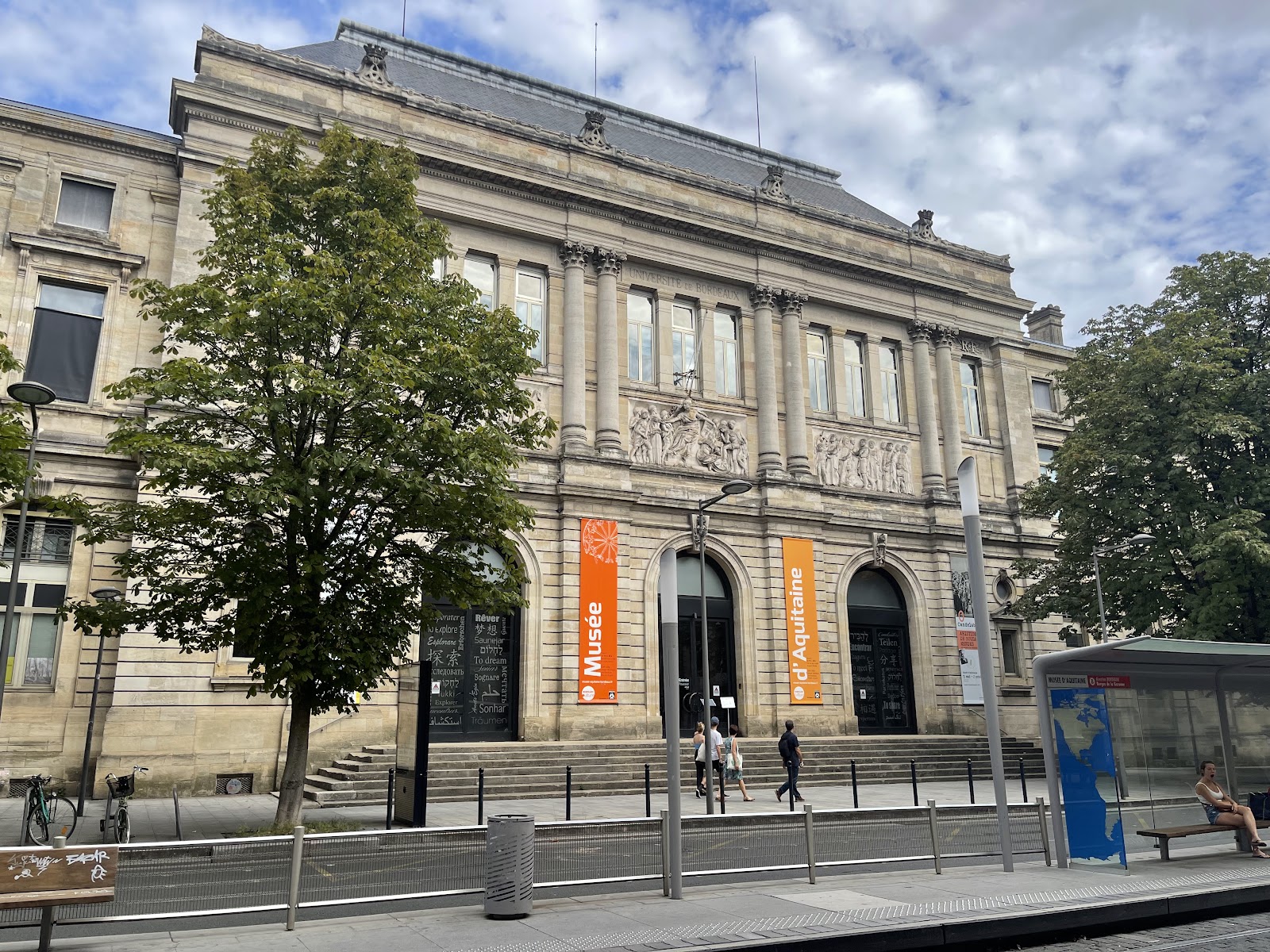
People who come back tend to spend the most time on Level 1, where the Atlantic trade rooms hold their weight without flinching. The free audio app is genuinely useful here — download it before you arrive. Ground floor prehistory moves fast; the Roman collection rewards slowing down.
The story behind Musée d'Aquitaine
The story begins in 1783, when the Academy of Bordeaux established a lapidary museum. Collections accumulated across separate institutions — a Prehistoric and Ethnographic Museum, a Museum of Arms and Ancient Objects — until 1962, when museologist Georges Henri Rivière consolidated them under a single identity: the Musée d'Aquitaine.
The current building came later. Municipal architect Charles Durand designed it in the 1880s as a Faculty of Letters and Sciences. The ground beneath it had already lived several lives: a Feuillants convent from the 16th century, destroyed during the Revolution; a high school that burned in 1871; then a university. The museum moved in on 9 January 1987. In 2009, it opened permanent rooms confronting Bordeaux's central role in the transatlantic slave trade.
Good to know
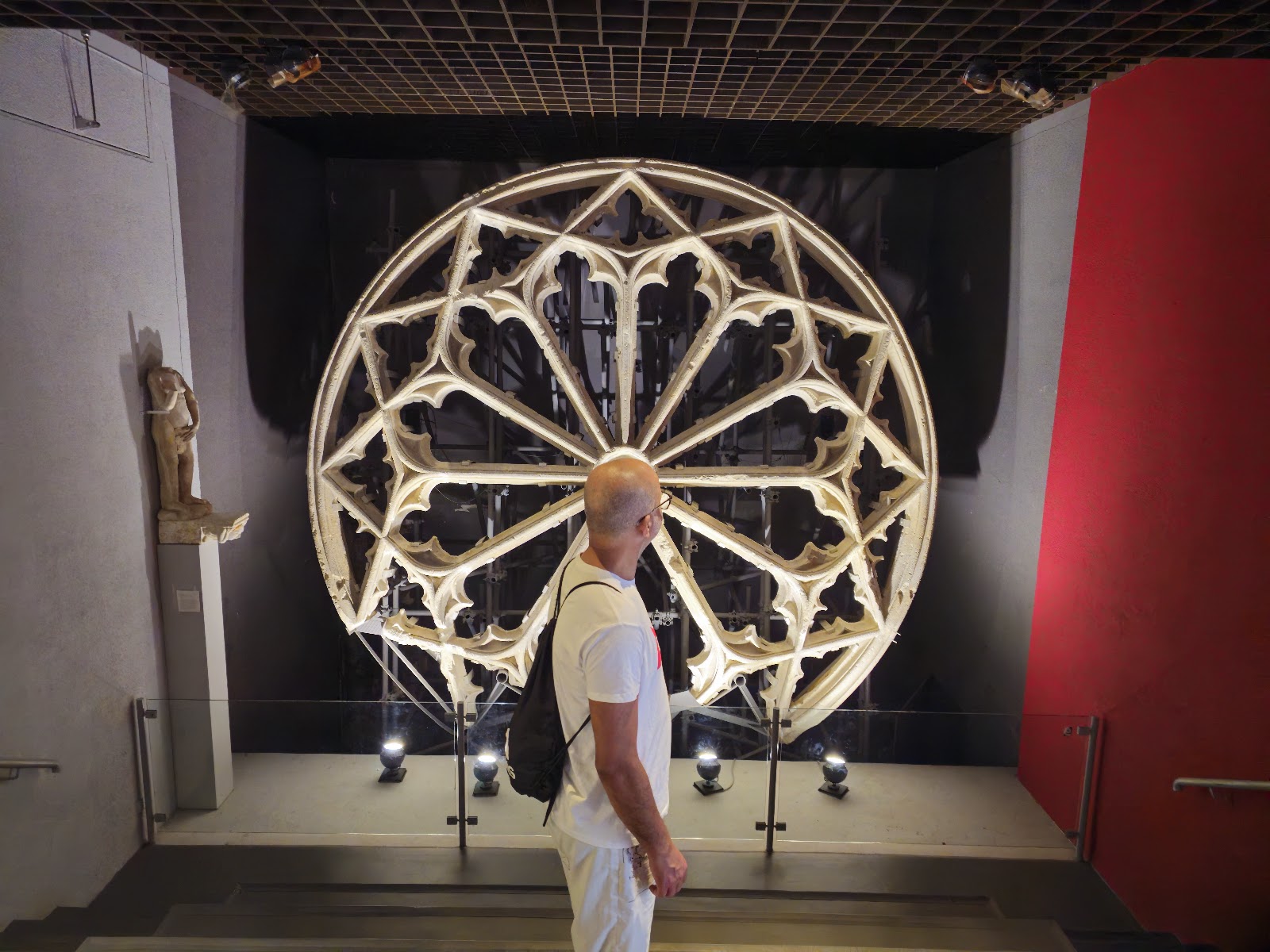
Tram Line B stops directly outside. Open Tuesday through Sunday, 11am–6pm; closed Mondays and public holidays. Entry is €6.50, free on the first Sunday of each month (September through June). Budget at least two hours, more if the ethnographic collections draw you in.
Where is Musée d'Aquitaine?
More tickets & tours for Musée d'Aquitaine
Book directly at the provider
What travellers say about Musée d'Aquitaine
Absolutely superb museum, full of interactive exhibits and original artifacts. You can easily spend 3 - 5 hours here discovering the history of Bordeaux across millenia. From prehistory to the Roman era and medieval France with its fascinating encounter with the UK, I was impressed by its huge range of statues, pots, amphora, metal objects and variety of display. If you are English or Spanish speaking, each descriptive plaque is available in these languages as well as French. Upstairs, the history of the port, including a sensitive look at the slave trade is both challenging and beautifully staged. The growth of the city is explored right up to the modern day. I have rarely enjoyed a museum as much as this one and, on a week day, in school term time, I was one of only a handful of visiters. A very accessible six euro entry fee means this is a comprehensive introduction to the city and its place in France and the wider world. Go. You will not be disappointed. Tram B takes you directly there.
It takes 2 hours to cover fully at least. Interesting museum with ancient artifacts. But boring for kids but nice to discover the human evolution. Recommended
Roman hall is amazing. We made a self-guided tour to identify gods and goddesses. Made it a quest with AI and loved it.
Lots of 5-3000 BC artifacts of Aquitaine. Expect more of Bordeaux history with the rebuilding of the city in the mid 18th century. Lots of stuff on the slave trade and France’s part in it. Found this interesting esp given the juxtaposition of what’s happening with the current USA administration and revisionist history.
Excellent museum. Extensive collection and a thoughtfully curated display - doesn't feel overwhelming at all. Possibility to take a break in the inner yard. Very friendly staff. Would certainly recommend!
More of Bordeaux
Discover where to stay, what to do and the best deals for your trip.
Explore Bordeaux →More attractions in Bordeaux
All of Bordeaux →
Background adapted from Wikipedia (CC BY-SA) · map data © OpenStreetMap contributors · ratings & place photos via Google · other photos with per-image credit. Ticket links may earn us a commission at no extra cost to you.