
MuCEM - Musée des Civilisations de l'Europe et de la Méditerranée
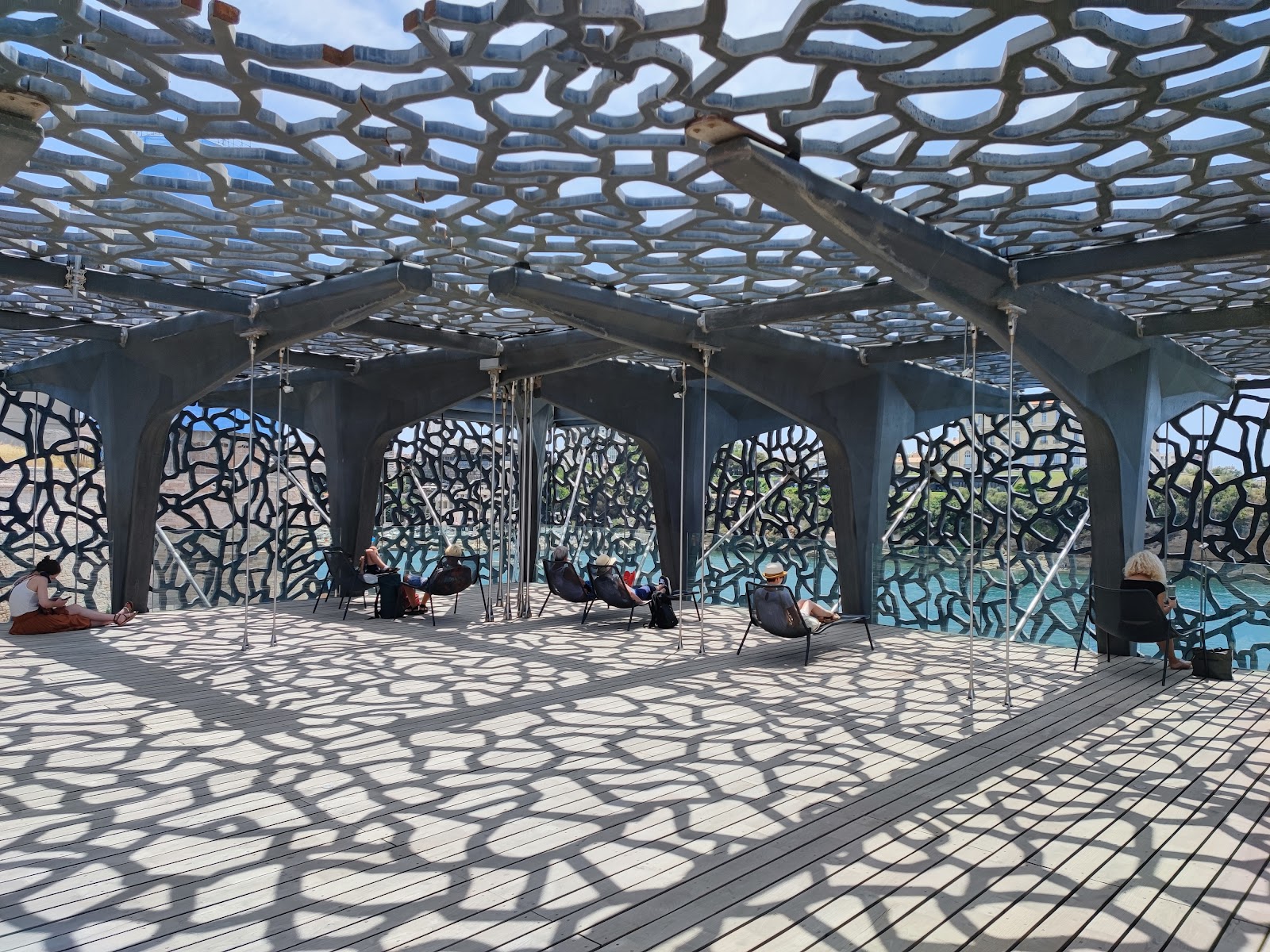
The J4 building announces itself before you've decided to look at it. Rudy Ricciotti and Roland Carta's concrete lattice — a ten-metre-deep skin of fiber-reinforced ultra-high-performance concrete — extends beyond the glazed box inside like a reef held upright, and at night Yann Kersalé's lighting washes it in blue and turquoise so it reads from the sea as something between architecture and signal fire.
MuCEM occupies the edge where Marseille meets the Mediterranean in every sense: physically on the old J4 ferry-terminal site, conceptually at the intersection of European and Mediterranean civilisations. Two footbridges stitch it to Fort Saint-Jean and, beyond that, to Le Panier. The outdoor esplanade and the fort's Jardin des Migrations are free to enter — no ticket required to walk the bridge and take in the water on both sides.

💛 What travellers fall for
People who come back tend to time it for the first Sunday of the month (free entry) and arrive when the doors open. The panoramic restaurant draws a crowd by midday. The 115-metre footbridge to Fort Saint-Jean is the walk most visitors rush and most regulars slow down for — the view back to the J4 facade from mid-span is the one worth lingering on.
The story behind MuCEM - Musée des Civilisations de l'Europe et de la Méditerranée
MuCEM's collections trace back to the Musée d'Ethnographie du Trocadéro, opened in Paris in 1878, and then to the Musée national des Arts et Traditions populaires, founded in 1941. For decades the collection sat in the capital, largely inaccessible. In 2000 an interministerial decision confirmed its move south, to a city whose entire history is Mediterranean exchange.
The building opened on 7 June 2013, inaugurated by President François Hollande as the centrepiece of Marseille's year as European Capital of Culture. Two years later it received the Council of Europe Museum Prize. The site itself carries older memory: locals once called the foreshore Les pierres plates and used it for swimming.

Good to know
Reach it on foot in ten minutes from Joliette metro (line 2), or walk from Vieux-Port. Closed Tuesdays. Full price €9.50; free on the first Sunday of each month and European Heritage Days (third weekend of September). Budget two to three hours for the museum proper; the fort and esplanade can extend that considerably.
Where is MuCEM - Musée des Civilisations de l'Europe et de la Méditerranée?
More tickets & tours for MuCEM - Musée des Civilisations de l'Europe et de la Méditerranée
Book directly at the provider
What travellers say about MuCEM - Musée des Civilisations de l'Europe et de la Méditerranée
This is another must-see historical site to see when you are in Marseille. Unfortunately, due to the time constraints, we were not able to purchase a ticket and go up on top to walk across for a spectacular view of Marseille. Inside this contemporary museum, I understand it really shows off the beauty of European and Mediterranean culture. As astounding as all the displays are, one thing visitors should be aware of is the museum's photography policy. They have strict restrictions on photography, which they take very seriously, so adhere to the strict rule during your visit or risk losing your phone or camera. Very close to the waterfront and a great place to tour inside as well as the outside for stunning visuals. As for ticket prices, I cannot comment on those since my husband handled all of our reservations and admissions throughout the trip.
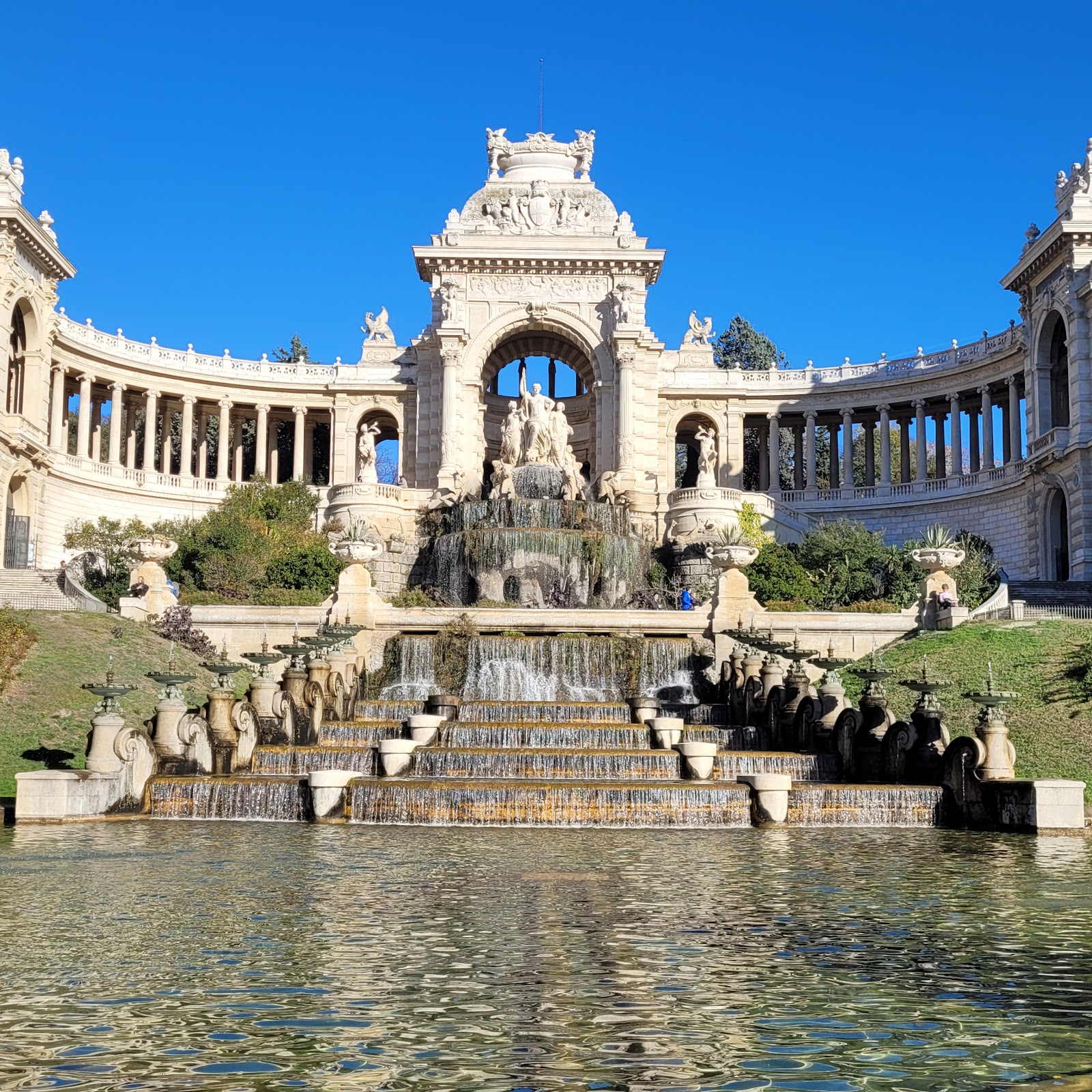
Other than my fabulous spot at the Parc Longchamp, this museum is my other favorite all around spot and experience throughout Marseille. The walk around within the interior as well as the expositions are wonderful. The best, however, is the incredible roof terrace that overlooks onto the mediterranean sea. The cement sculpted architectural structure envelopping the building is nothing short of creatively spectacular. Grab a chair or lounger and have a bite or drink while contemplating life and enjoying their (free entry) terrace. The bonus is to then walk across the suspended bridge and visit the Fort Saint Jean. Both are must visits in Marseille.
This multi floor museum presents items and histories of Mediterranean cultures. Beyond Europe it particularly emphasizes Egypt and Tunisia. These respectively seem to be the most acceptable antique culture to Europeans and the place where France had the most headline making colonial history in the decades before the museum's construction. The displays smack of guilt. The supplemental exhibits focusing on similarities among cultures, in astrology or pottery for example, present insightful comparisons and fascinating example objects. The museum will probably never run out of topics for comparative exhibits (cooking, gardening, print making, etc), so living nearby and being able to see them all is enviable. The museum's ground and top floors both feature cafes, and there is an entertaining gift shop at bottom. The adjoining fort has been redeveloped into gardens and art displays. A walk along the ramparts provides wonderful views of the city and harbor.
A smalller, modern museum hosting a permanent and various temporary exhibitions. The permanent exhibition is a bit small and could do with some expansion. However, the museum itself is impressive and offers some exceptionally views and easy access to Fort Saint-Jean, which is considered part of the museum.
This is one of the best museums im the world. It frequently houses temporary exhibits. Its permanent collection is great. The building is beautiful and the views from the site are some of the best it the city. Although exterior areas can get very uncomfotrable in high winds.
More of Marseille
Discover where to stay, what to do and the best deals for your trip.
Explore Marseille →More attractions in Marseille
All of Marseille →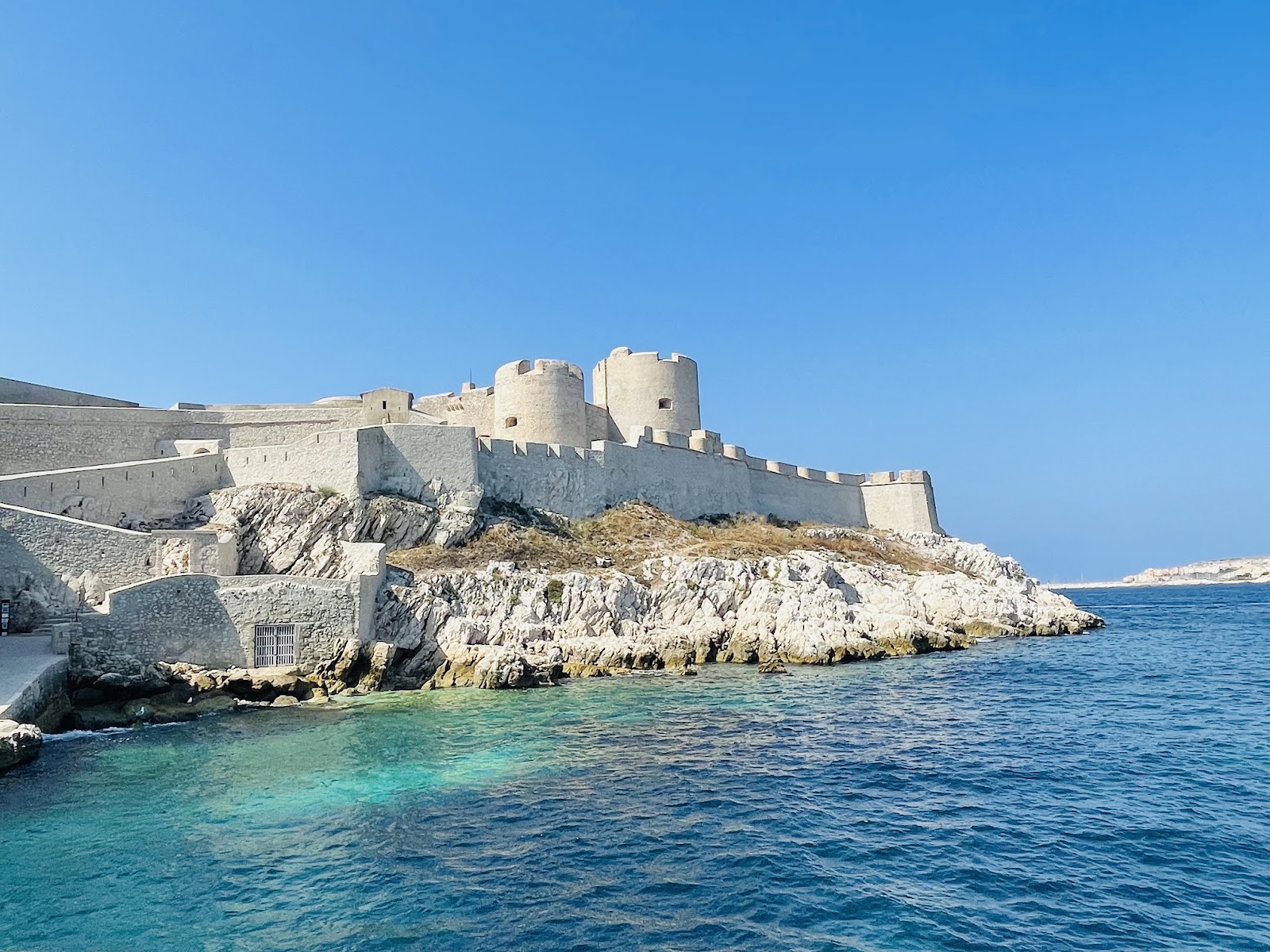
Background adapted from Wikipedia (CC BY-SA) · map data © OpenStreetMap contributors · ratings & place photos via Google · other photos with per-image credit. Ticket links may earn us a commission at no extra cost to you.