
Mosque of Cristo de la Luz

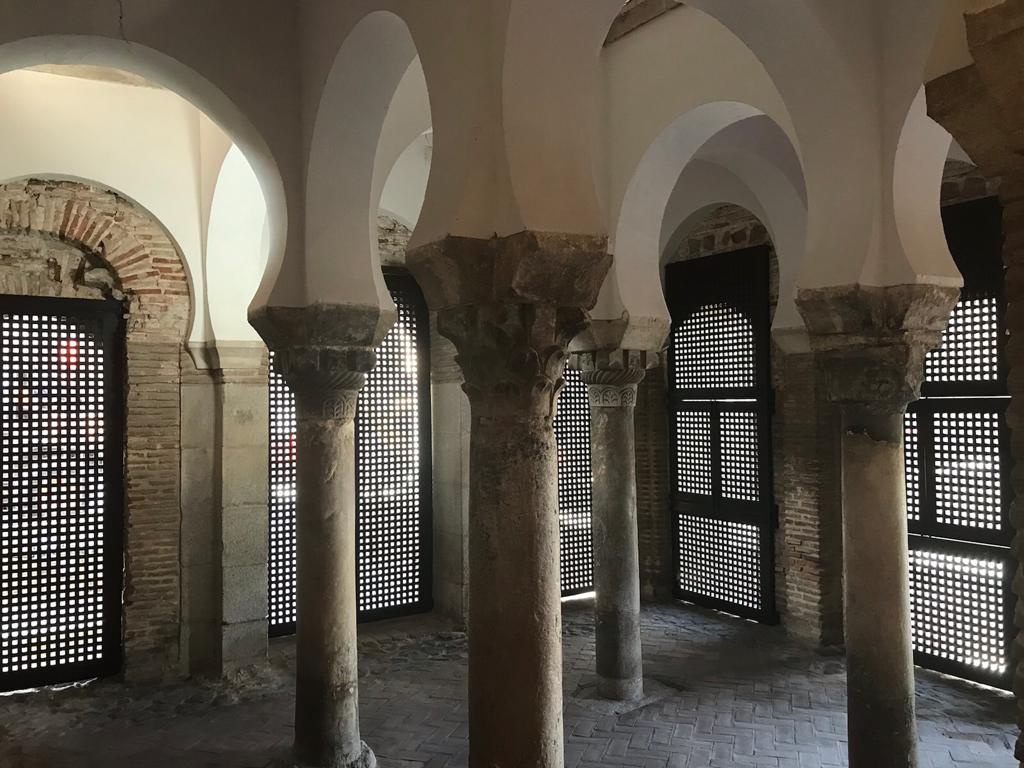
The rope notches are what stop you first. Cut into the stone lip of the well in the small western patio, they were worn smooth by centuries of worshippers drawing water before prayer — and they make the year 999 feel suddenly close. This is one of Toledo's oldest surviving Islamic buildings, a mosque barely larger than a generous living room, eight metres square, its nine vaulted bays held up by four columns with Visigothic capitals that were already antique when the builders set them here.
A Kufic inscription runs along the brick façade, hidden behind a wall for centuries until 1899. Below the altar, excavations in 2006 turned up a Roman road and what may be a Roman quarry. Three civilisations are stacked quietly underfoot.

💛 What travellers fall for
People who return tend to come back at different times of day. The light through the small windows shifts constantly, throwing new shadow patterns across the vaults each hour. The terrace garden beside Puerta del Sol is worth lingering in — the view is long and the crowds from the cathedral rarely make it this far.
The story behind Mosque of Cristo de la Luz
Ahmad ibn Hadidi, from one of Toledo's established families, commissioned the mosque in 999. The architect Musa ibn Alí and his co-director Sa'ada completed it in the Islamic month of Muharram, year 390 — the date is known because an inscription recorded it on the façade. Its original name, Mezquita Bab al-Mardum, came from the city gate nearby.
When Alfonso VI took Toledo in 1085, the mosque became a church. In 1186, Alfonso VIII handed it to the Knights of the Order of St John, who added a Mudéjar apse to the south end. That apse preserves some of the southernmost Romanesque paintings in Spain, including a Pantocrator ringed by the four evangelical symbols — Christian iconography grafted onto Islamic architecture with a matter-of-factness that is very Toledo.
Good to know
Located on Calle Cristo de la Luz near Puerta del Sol in the historic centre, it's walkable from most of Toledo's other monuments. Admission is €2.80, or covered by the €14 seven-monument wristband. Open daily; closed 1 January and 25 December. Thirty to forty-five minutes is enough.
Where is Mosque of Cristo de la Luz?
More tickets & tours for Mosque of Cristo de la Luz
Book directly at the provider
What travellers say about Mosque of Cristo de la Luz
A small church converted from a mosque. It features a tranquil little garden offering panoramic views of northern Toledo. The mosque was built in 999 AD, and the church's current architecture, including its pillars and ceilings, reflects this style. Inside, there is a statue of Jesus on the cross, and directly above and behind it, a 13th-century fresco depicting Christ Pantocrator.
not worth to pay for 2minutes visit inside the building! seriously they make us pay to see one spot!! that is weird and i wouldnt go or do it again. waste of money. the building structure from inside is nice but u can see much nicer
Stunning Mosque/Church to visit, make sure you get the wrist band so you can see all the monasteries in the one set price. price changes through the seasons but I paid £14. I think there are 7 to visit. The visit will last you about 10-15min, it's not large one chamber room with garden grounds. I love history and anything to do with it. Built in 999, the Mosque of Cristo de la Luz is the oldest standing monument in Toledo. This small building is rich in history and art.
Nice views and it is an old piece of architecture. Not really worth the 4€ but if you buy the 14€ ticket (access to 7 places) then it’s worth it for sure.
This small former mosque is over 1,000 years old — a rare and impressive piece of history. While it might feel underwhelming if you’ve seen grander mosques, its age still makes it worth a visit. What I personally appreciated even more was the peaceful garden surrounding the mosque and terrace with lovely city views, usually empty as it’s part of the mosque grounds.
More of Toledo
Discover where to stay, what to do and the best deals for your trip.
Explore Toledo →More attractions in Toledo
All of Toledo →


Background adapted from Wikipedia (CC BY-SA) · map data © OpenStreetMap contributors · ratings & place photos via Google · other photos with per-image credit. Ticket links may earn us a commission at no extra cost to you.