
Montignac
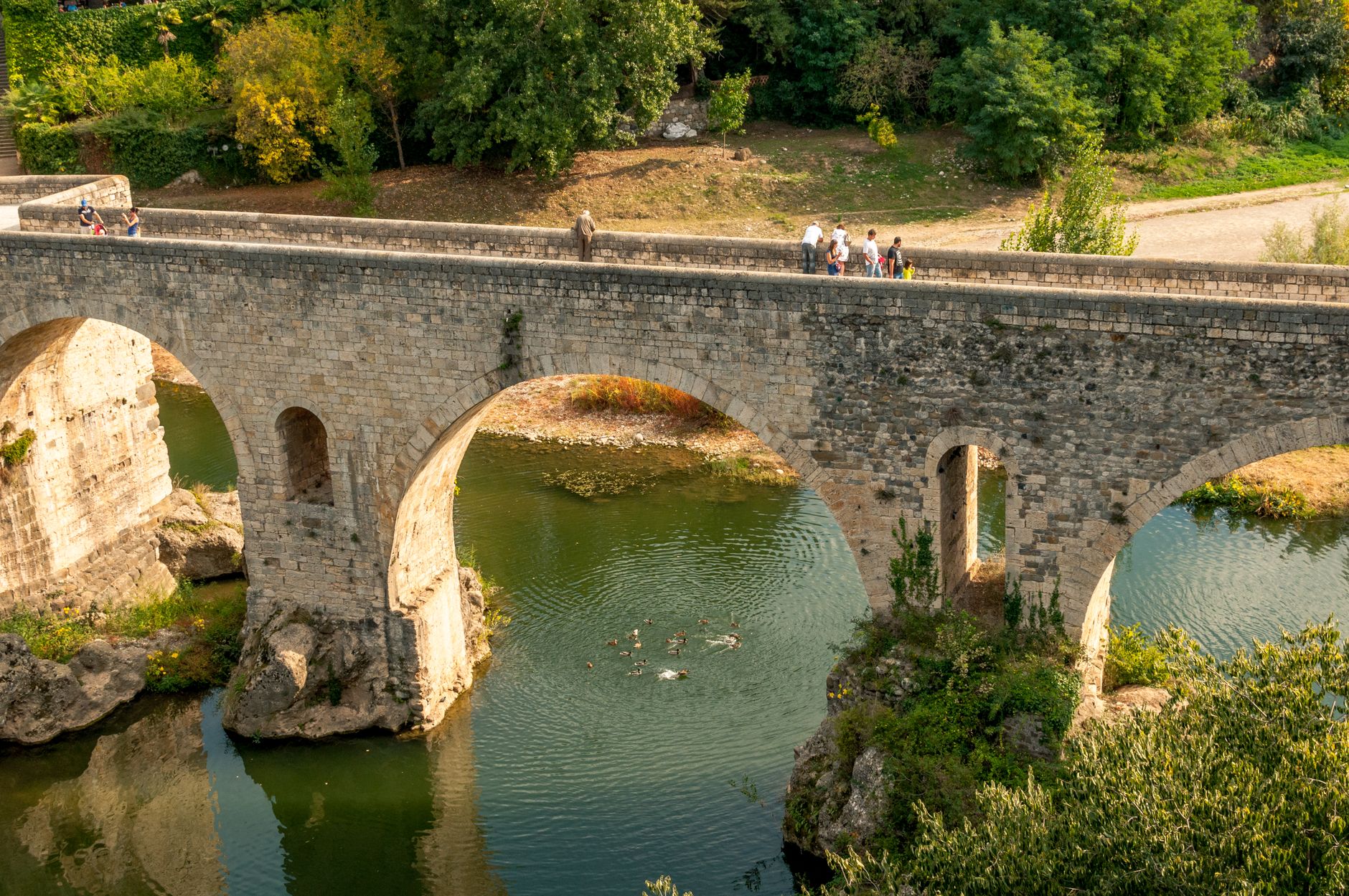

Montignac sits on a bend in the Vézère river, its medieval right bank leaning over the water on stone stilts, half-timbered facades reflected below. The town is modest in scale — a morning's walk covers the old alleys of Rue de la Pègerie, the 12th-century church of Saint-Pierre-ès-Liens, the 1766 bridge — but it carries an outsized weight in human history. On 12 September 1940, an 18-year-old named Marcel Ravidat discovered a cave just outside town whose painted walls, 17,300 years old, would rewrite what anyone thought they knew about early human imagination.
Lascaux IV, the full-scale replica built by Snøhetta and opened in 2016, brings that cave into reach without further damaging the original. Twenty-five artists spent two years hand-painting 900 metres of resin rock using the same pigments the Paleolithic painters used. The town around it is quiet, market-going, river-running — a place that earns a full day without trying.
💛 What travellers fall for
People who come back tend to time it for a Tuesday or Saturday market morning, then walk the left-bank quays once the stalls thin out. The houses on the river edge are best seen from the old bridge in low light. Book Lascaux IV tickets before you arrive — the morning slots go first, and the afternoon crowd is noticeably thicker.
Experiences you don't want to miss


Deals in Montignac
Book directly at the provider
How Montignac came to be
The name reaches back to Roman *Montiniacus*, a landowner's domain, and two Roman villas have been traced in the surrounding area. By the 11th century Montignac was a fortified seat of the Counts of Périgord, passing through marriage and sale until the Albret family held it. In 1603 Henry IV ceded the town to François de Hautefort, Lord of Thenon. The château that once dominated the hill was demolished in 1825; what remains are wall bases, terraces, and a single tower above the town.
Montignac became a canton capital in 1790, and in 2015 was named capital of the newly formed Canton de la Vallée de l'Homme — the Valley of Man, a name that fits. The writer Eugène Le Roy, a district tax collector here in the 19th century, set his novels of rural Périgord life in the landscape around this river bend; a small museum in town is dedicated to him.
Who and what shaped it
People who shaped it
Landmark buildings
See Montignac in motion
Plan your visit
On the map
When to go
The Dordogne has a temperate oceanic climate: winters are mild and wet, summers warm and relatively dry. Late spring and early autumn give you the most comfortable weather for walking the riverbanks and exploring the town without the peak-summer crowds.
Right now
Background & history adapted from Wikipedia (CC BY-SA) · specs from Wikidata (CC0) · weather from Open-Meteo · map data © OpenStreetMap contributors · photos from Wikimedia Commons / Unsplash with per-image credit. No third-party reviews or social posts reproduced.