
Monterosso al Mare
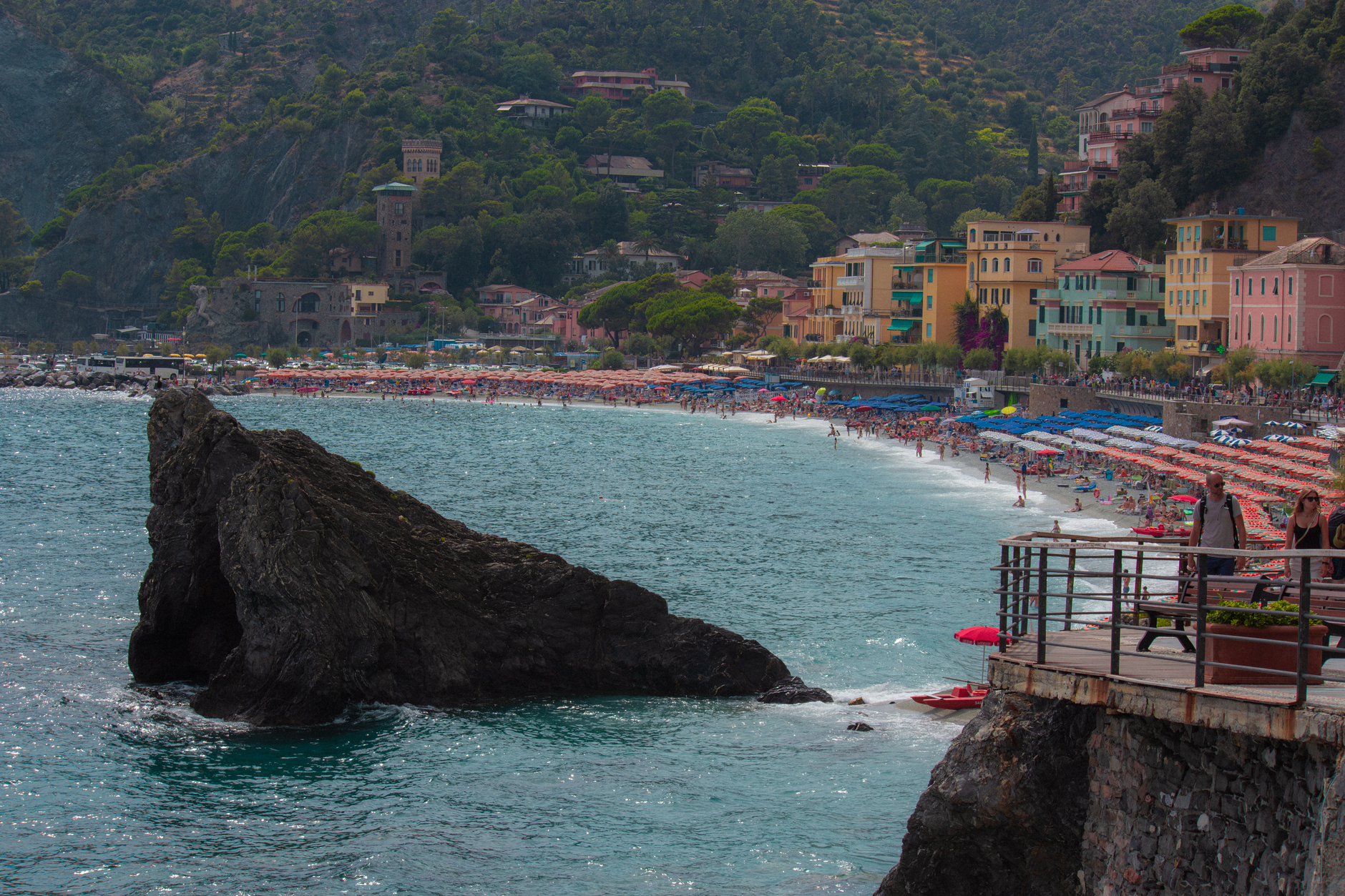
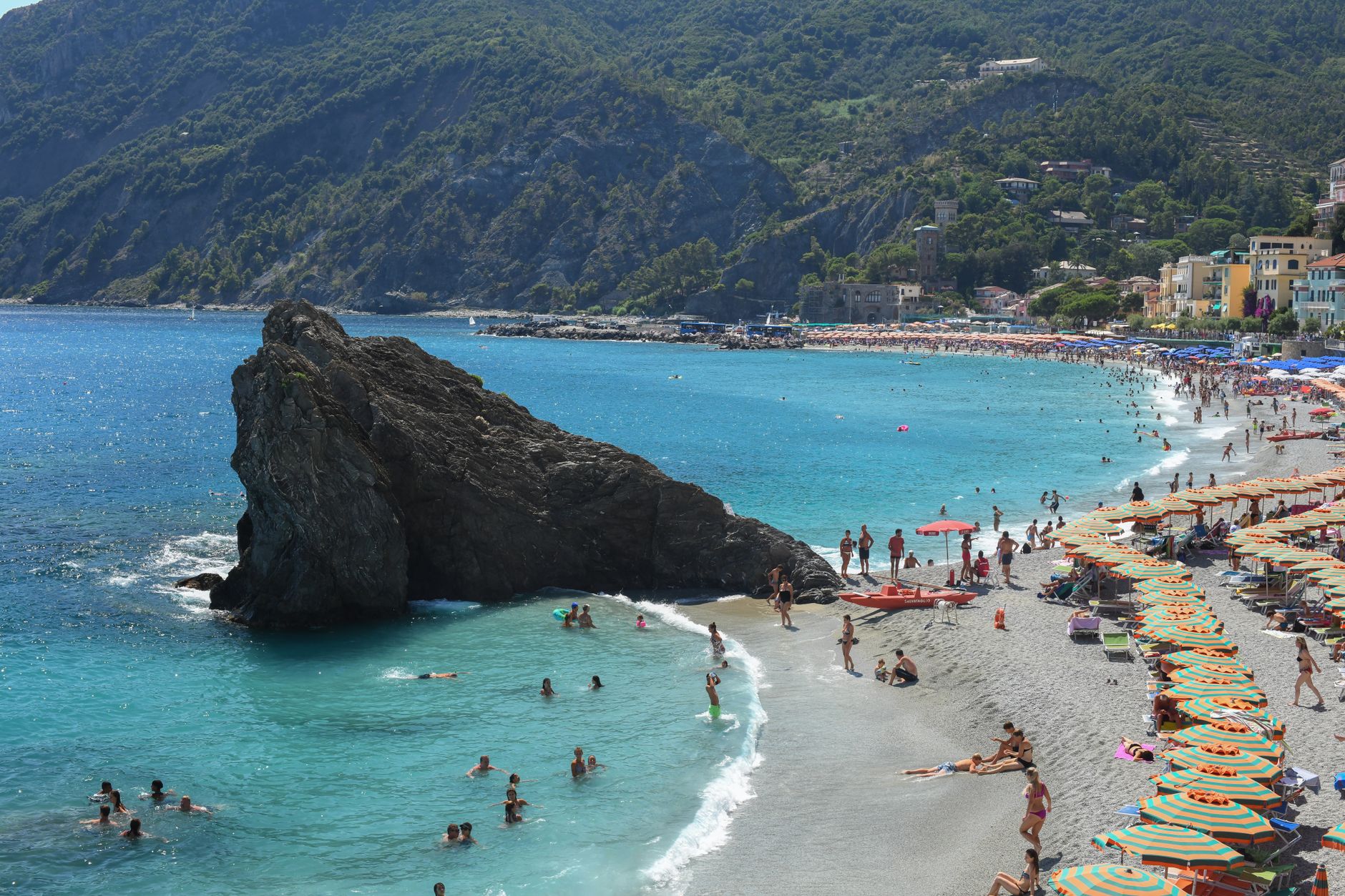
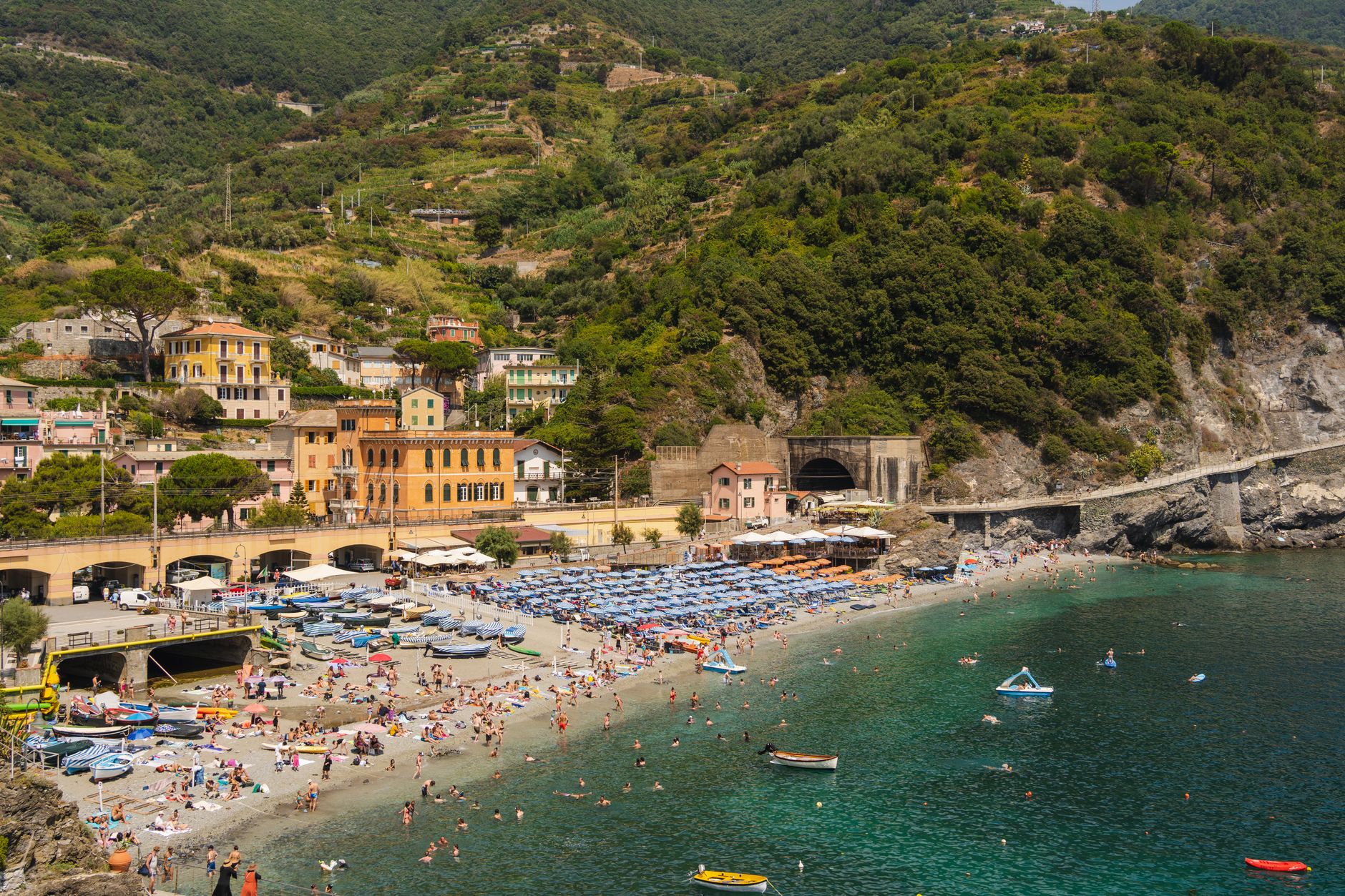
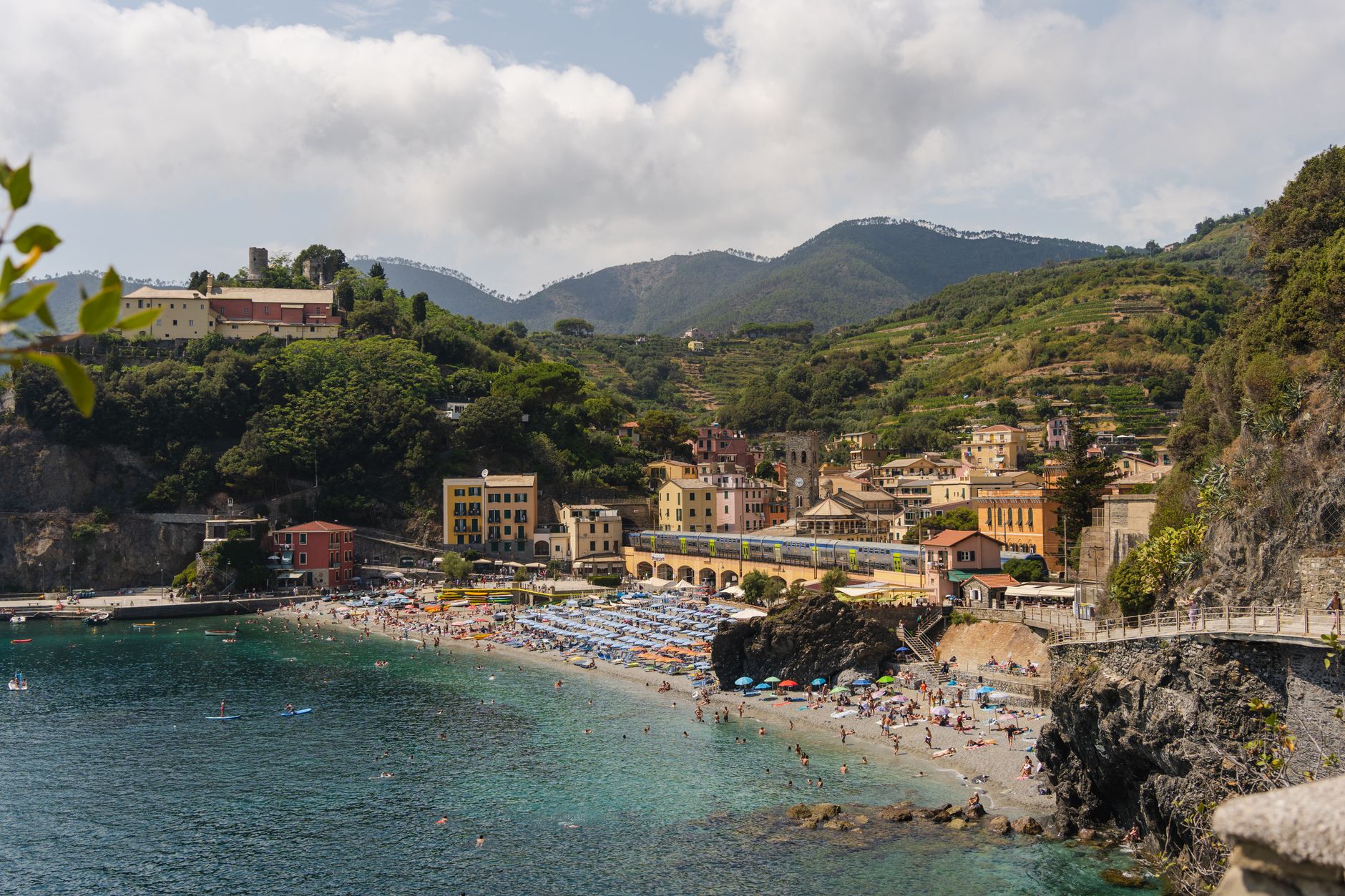
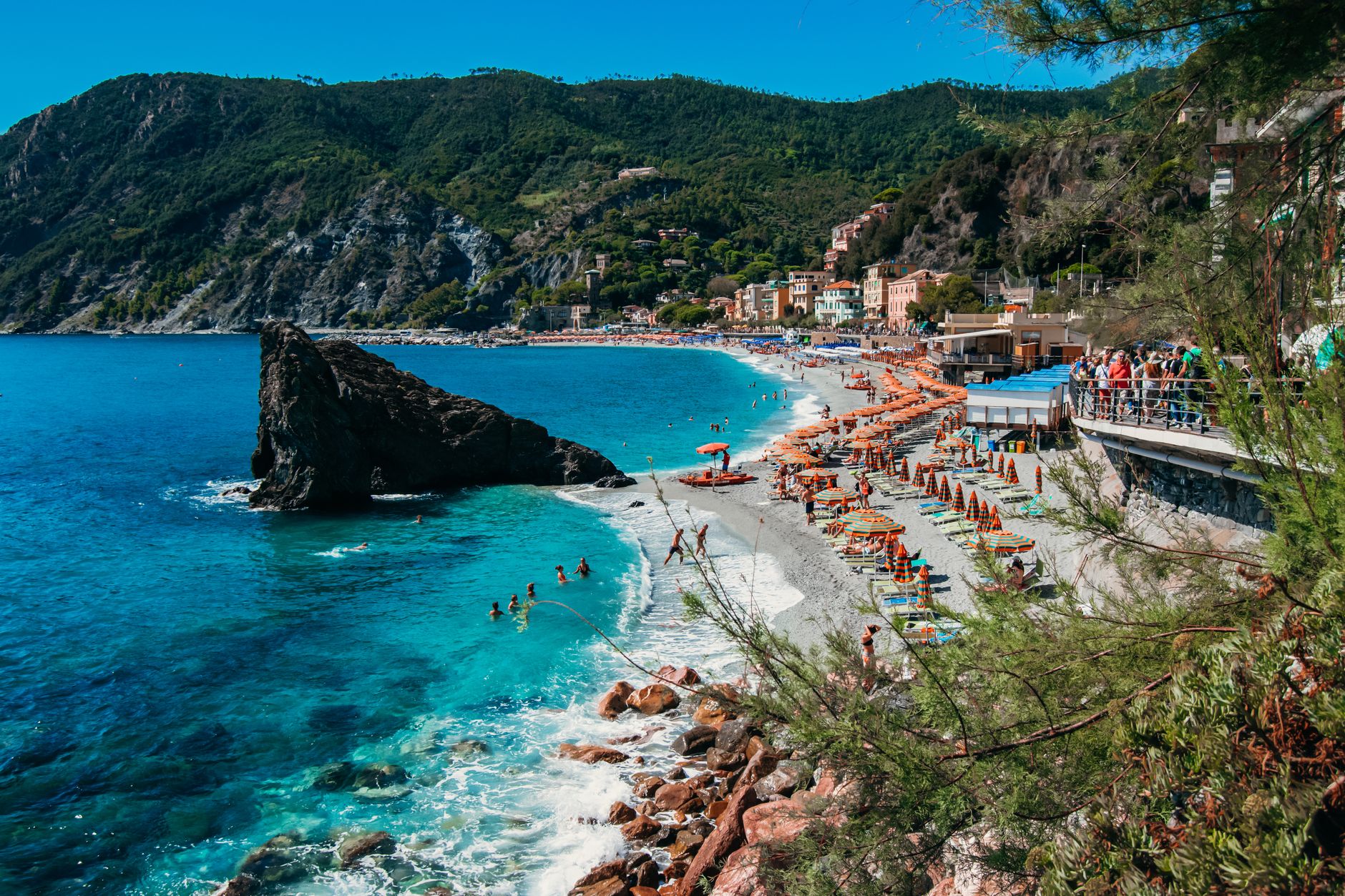
Monterosso al Mare is the only Cinque Terre village with a real sand beach, and that single fact shapes almost everything about it. The Fegina promenade runs along that beach, and somewhere on it stands Villa Montale — a yellowish pagoda flanked by two palms, the summer house where Eugenio Montale wrote poems that would eventually earn him a Nobel Prize.
The town splits into two distinct halves: the medieval old town with its tight lanes and the Church of San Giovanni Battista, whose façade alternates white marble and dark green serpentine, and the newer Fegina district beside the train station. A 200-metre pedestrian tunnel beneath the San Cristoforo promontory connects them, which sounds modest until you emerge on the other side.
💛 What travellers fall for
People who come back tend to sort themselves out early: luggage stored at the staffed station office, Cinque Terre Card in pocket for the trains, then straight through the tunnel to the old town before the day-trippers arrive. The Capuchin convent on the hill, with its Van Dyck and a Cambiaso, gets quieter than you'd expect for somewhere that good.
Experiences you don't want to miss


Deals in Monterosso al Mare
Book directly at the provider
How Monterosso al Mare came to be
A deed of donation dated 27 February 1056 gives the town its first written mention, as 'Monte Russo', though the coastal settlement is older than that — people pushed down from inland villages during the Lombard invasions of the 7th century CE and planted themselves here on the Ligurian shore. Above the town, on a ridge at 465 metres, a church had already stood since 740 CE; the Santuario Nostra Signora di Soviore is now considered the oldest Marian sanctuary in Liguria.
The Genoese fortified Monterosso heavily in the 16th century, raising walls and the Aurora Tower on the hill of San Cristoforo against Saracen raids — the town was sacked regardless in 1545. It became a formal municipality in 1861, the year of Italian unification, and the railroad arrived thirteen years later, the station inaugurated on 24 October 1874.
Who and what shaped it
People who shaped it
Landmark buildings
See Monterosso al Mare in motion
Plan your visit
On the map
When to go
Summers are warm and mostly clear, peaking around 27°C in August; winters drop to around 11°C in February with more cloud cover and rain. The Ligurian Sea runs at an annual average of 18.5°C, but it is warmest and most swimmable from June through September.
Right now
Background & history adapted from Wikipedia (CC BY-SA) · specs from Wikidata (CC0) · weather from Open-Meteo · map data © OpenStreetMap contributors · photos from Wikimedia Commons / Unsplash with per-image credit. No third-party reviews or social posts reproduced.