
Montefalco
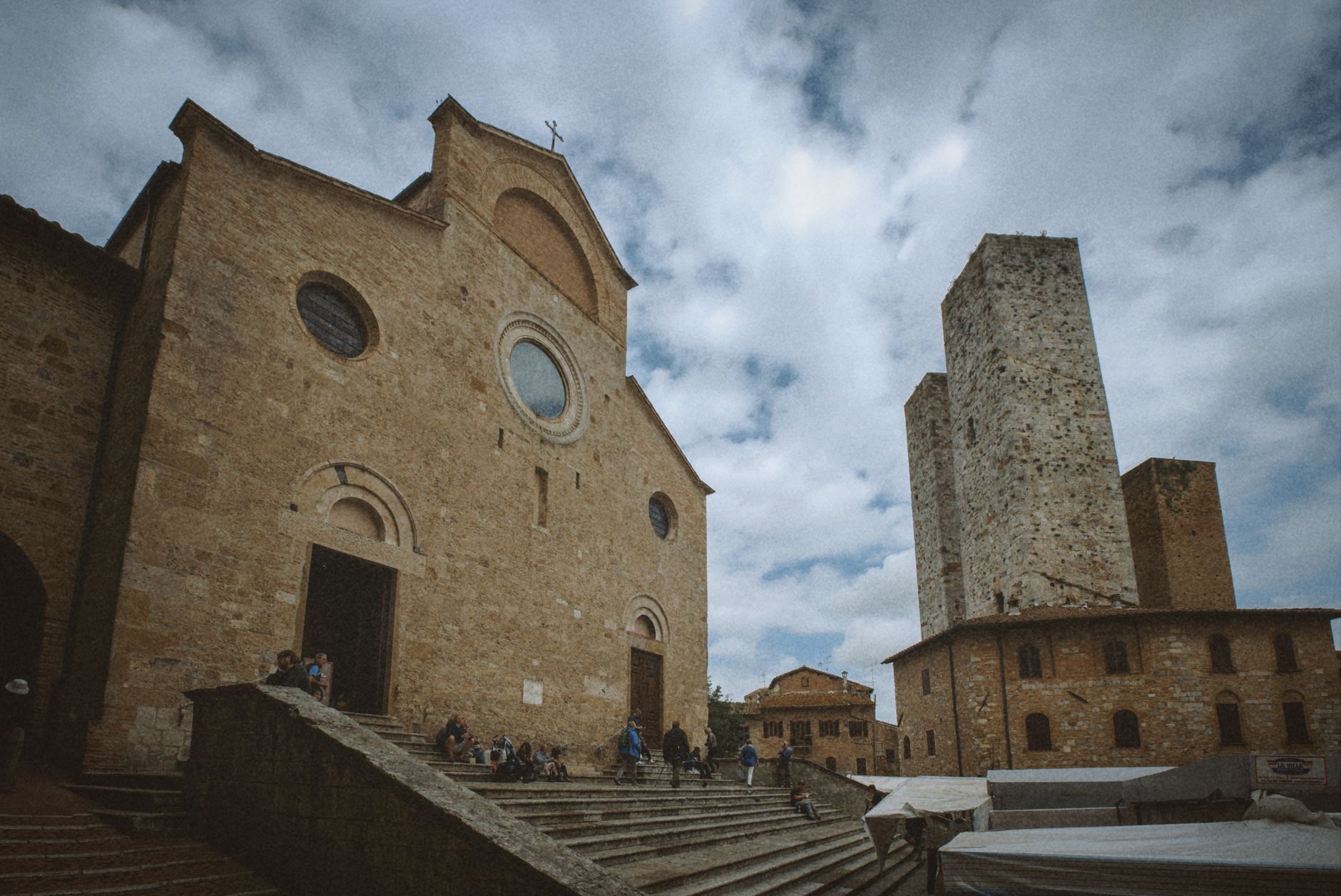
From the top of Montefalco's five-sided central piazza, you can see clear across the Vale of Spoleto — which is why, in 1240, Emperor Frederick II paused here long enough for the town to rename itself after his falcons. That specific act of imperial vanity turned out to be a gift: the name stuck, and so did the attention of painters, saints and popes who followed.
The town sits on a rounded hill in central Umbria, its medieval walls still forming a near-complete circle. Five roads run like spokes from the gates to the Piazza del Comune at the centre. It is compact, walkable in an afternoon, and dense with frescoes.
💛 What travellers fall for
People who come back tend to arrive late in the day, after the tour coaches have cleared, and take a table on the piazza with a glass of Sagrantino — the tannic, locally grown red that the surrounding vineyards have been producing for centuries. The Museo di San Francesco is worth a second visit once you've had time to sit with the Gozzoli frescoes.
Experiences you don't want to miss


Deals in Montefalco
Book directly at the provider


How Montefalco came to be
The hill was Umbrian, then Roman — the Romans left villas — and in the Middle Ages the settlement was called Coccorone. In February 1240, Frederick II of Swabia stopped here, and the town took the name Montefalco, almost certainly in reference to the emperor's celebrated falcons. Frederick sacked it again in 1249, a reminder that imperial favour was never stable.
From the 13th century Montefalco operated as a free comune, then passed to the Trinci family of Foligno, before falling to the Papal States in 1446. It remained under Rome's administration until the Umbrian plebiscite of November 1860 brought it into the Kingdom of Italy. Pope Pius IX had granted it the formal title of city just twelve years earlier, in 1848.
Who and what shaped it
People who shaped it
Landmark buildings
See Montefalco in motion
Plan your visit
On the map
When to go
Summers are warm and dry, with July and August reaching the high twenties Celsius — the hilltop position catches whatever breeze there is. Spring (April–May) and autumn (September–October) bring mild temperatures and clearer light, better for walking the walls and the roads between vineyards.
Right now
Background & history adapted from Wikipedia (CC BY-SA) · specs from Wikidata (CC0) · weather from Open-Meteo · map data © OpenStreetMap contributors · photos from Wikimedia Commons / Unsplash with per-image credit. No third-party reviews or social posts reproduced.