
Monchique
The chimneys give Monchique away before anything else — tall, cylindrical, each one wearing a carved stone skirt called a saia, a detail so particular to this corner of the Serra de Monchique that you start noticing them on every roofline. At 902 metres, Fóia is the highest point in the Algarve, and the town below it sits in a microclimate of its own: wetter, greener, cooler than the coast an hour south.
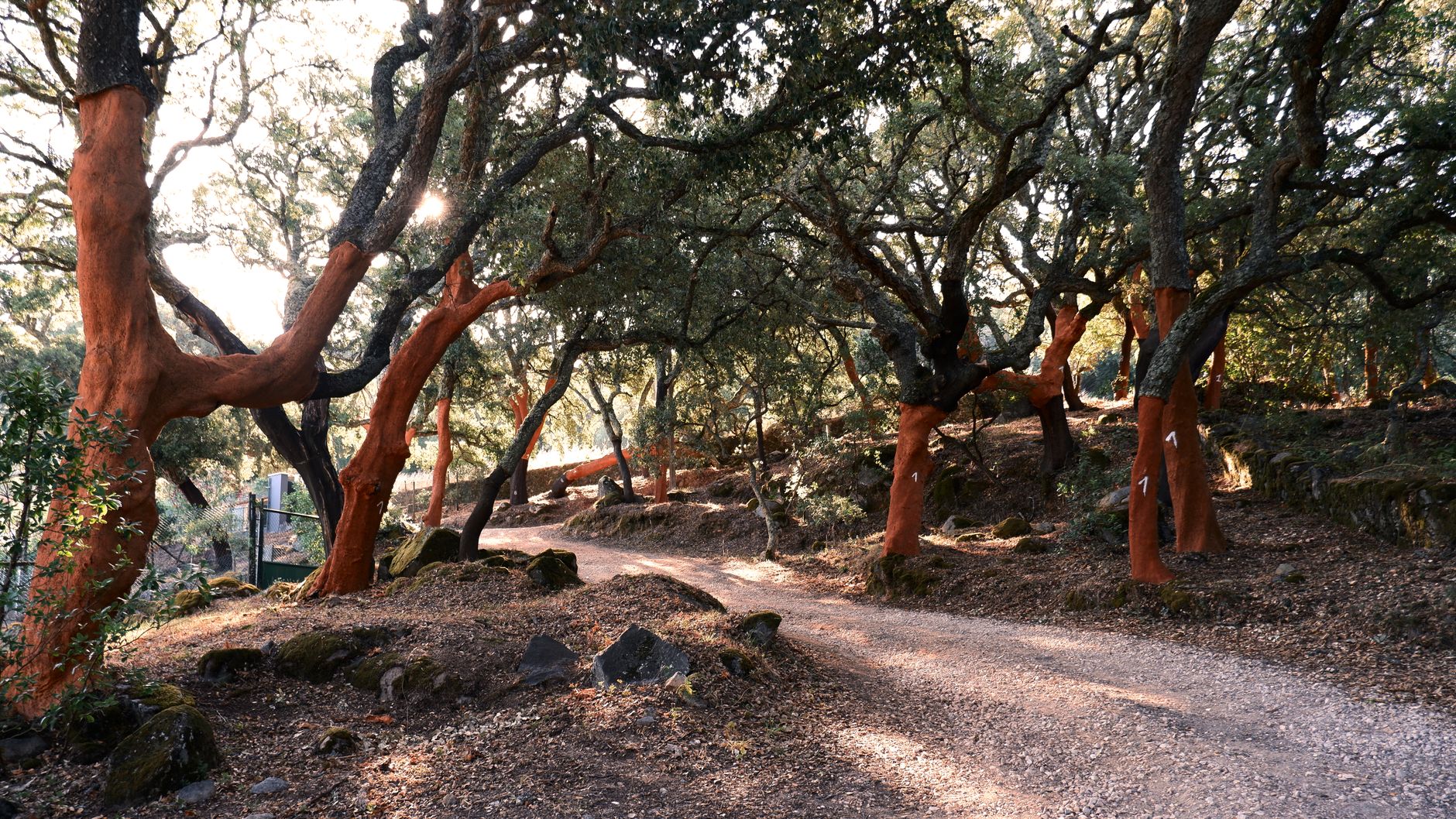
Monchique trades in cork oak and oranges, medronho brandy and black pork, and a quiet that the beach towns rarely manage. The cobbled streets are narrow enough that two people walking abreast fill them. The ruined Franciscan convent on the hill is on private land now, and the owners leave the gate open.
💛 What travellers fall for
People who come back tend to mention the same ritual: a small glass of medronho somewhere on the main square, then the uphill walk to the Convento de Nossa Senhora do Desterro before the afternoon light flattens. They also mention Studio Bongard — the sculptors Sylvain and Tara relocated here from the coast in 2020 — as a reason to linger longer than planned.
Deals in Monchique
Book directly at the provider

How Monchique came to be
People have been drawn to this mountain for a long time. Neolithic cist tombs date to the 5th–4th millennia BCE, and grave goods found here — including linen cloth — have been dated to around 2450 BCE. The Romans considered the thermal waters at Caldas de Monchique sacred. When Muslim geographers named the place Munt Šāqir, they were calling it the Sacred Mountain.
The town's civic charter came in 1773, after a failed 16th-century attempt to separate from Silves. Two years before that charter, the 1755 Lisbon earthquake badly damaged the structures that defined the place, including the Convento de Nossa Senhora do Desterro, a Franciscan monastery founded in 1631 by Pêro da Silva — a man who would later serve as Viceroy of India. The Igreja Matriz, with its Manueline doorway of twisted rope columns, was rebuilt in the aftermath.
Who and what shaped it
People who shaped it
Landmark buildings
See Monchique in motion
Plan your visit
On the map
When to go
Altitude makes Monchique wetter and cooler than the Algarve coast — December can bring a dozen rainy days, and the forest carries real fire risk through July and August. March to May offers comfortable walking temperatures and almost no rain; autumn, roughly 18–26°C, is a quieter second option.
Right now
Background & history adapted from Wikipedia (CC BY-SA) · specs from Wikidata (CC0) · weather from Open-Meteo · map data © OpenStreetMap contributors · photos from Wikimedia Commons / Unsplash with per-image credit. No third-party reviews or social posts reproduced.