
Miroir d'eau
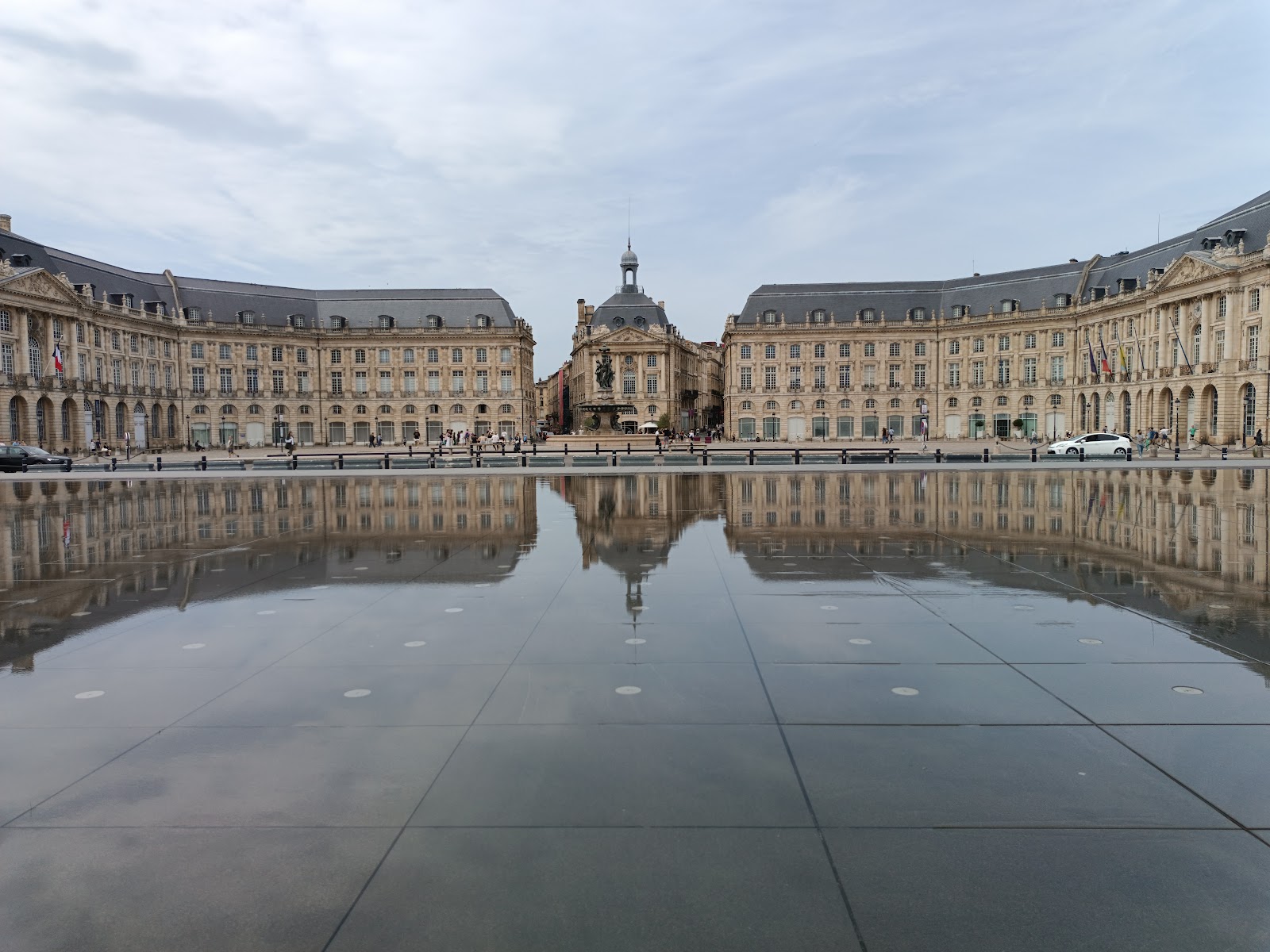
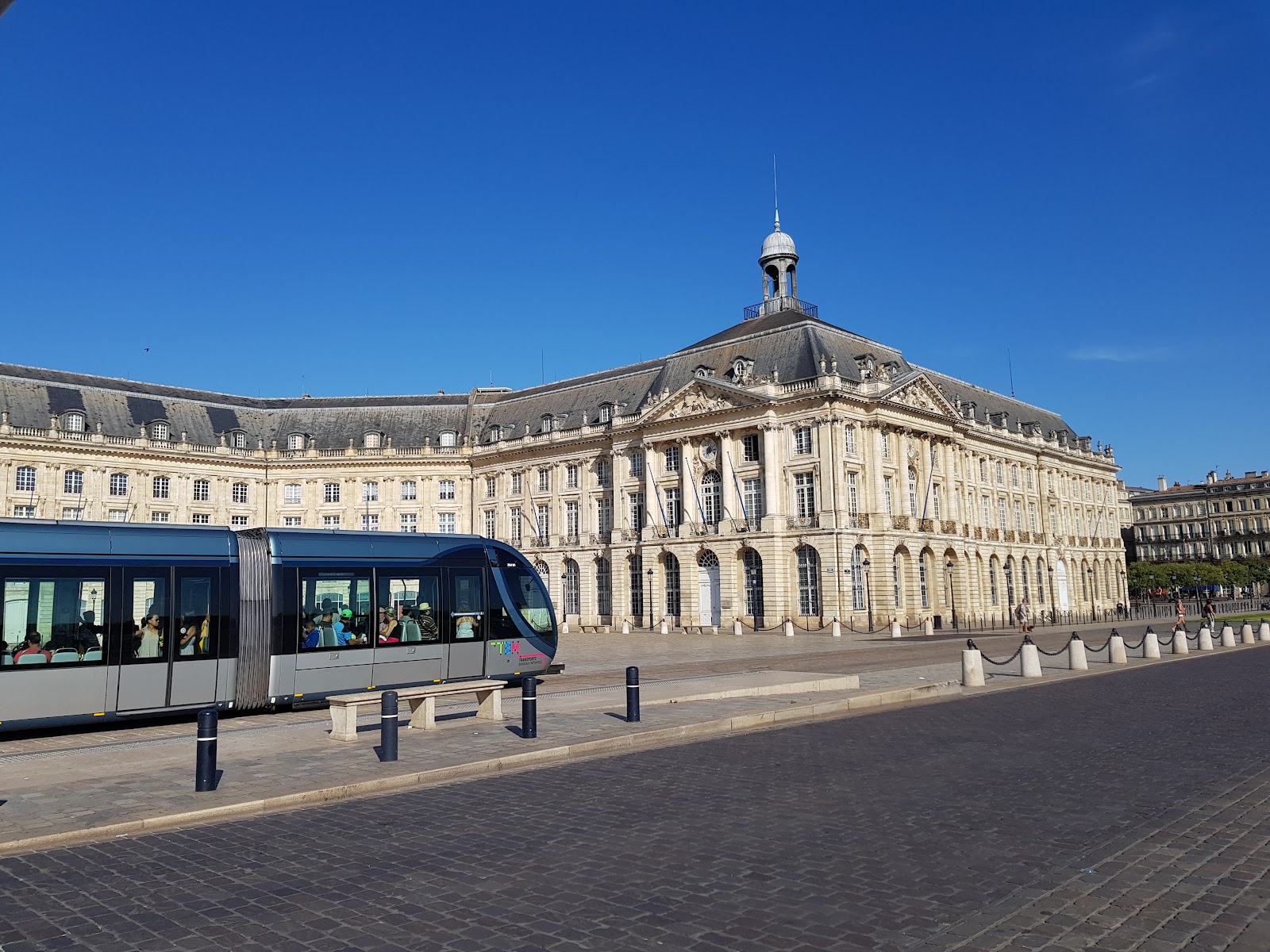
At its best, the Miroir d'eau is a 3,450-square-metre sheet of water two centimetres deep, sitting on a granite slab along the Garonne quays and throwing the honey-coloured facade of Place de la Bourse back at the sky. Every twenty-five minutes or so, the water drains away and a low mist rises — up to two metres — before the cycle begins again. Children run through it. Photographers crouch at its edge. The whole thing is free, open to anyone, and was a car park with ten traffic lanes before the city reimagined this stretch of waterfront in the early 2000s.
What makes it work is the precision of the reflection: on a calm, sunny afternoon, the 18th-century limestone arcade doubles itself so cleanly in the water that the line between building and mirror nearly disappears.
💛 What travellers fall for
People who come back tend to arrive before 9 AM — the light is low and raking, the quays are quiet, and the reflection holds without wind or foot traffic to ripple it. Sunset is the other window worth planning around: the Garonne sky goes pink and the Bourse facade lights warm to amber.
The story behind Miroir d'eau
The design competition for this stretch of the Garonne quays was launched in 1999, and the Miroir d'eau was built between May 2005 and July 2006. The team behind it — fountain-maker Jean-Max Llorca, architect Pierre Gangnet, and landscape-urbanist Michel Corajoud — repurposed a former underground warehouse beneath the slab to hold the 800-cubic-metre reservoir and all the mechanical infrastructure the cycles require.
Corajoud, who died in October 2014 at 77, spoke of Venetian inspiration — St. Mark's Square flooded with water — as the conceptual seed. The project landed in the same year Bordeaux's historic centre received UNESCO World Heritage status, and it went on to become a reference point for similar reflective water features built across France and as far as China.
Good to know
Tram Line C drops you at Place de la Bourse; Grand Théâtre tram stop is a three-minute walk. The mirror runs April through October only — pipes are drained each winter. No tickets, no entry fee. Allow 45 minutes, more if you stay for a full mist cycle.
The mirror operates April through October; come in summer for the full experience, but low wind is what actually determines the quality of the reflection. Winter closure is absolute — the pipes can't survive a freeze.
Where is Miroir d'eau?
More tickets & tours for Miroir d'eau
Book directly at the provider
What travellers say about Miroir d'eau
The riverfront is beautiful. The 18th-century buildings were designed to present the city as a wealthy and powerful trading center when viewed from the water, and the more modern additions of the riverfront promenade, Miroir d’eau (Water Mirror), green spaces, waterfront markets, cafes, and museums have made the area a fantastic place to wander, go for a bike ride or a run, or just relax in the gardens as the locals do.
A striking contemporary landmark. This massive granite installation functions as the world's largest reflecting pool, creating beautiful visual symmetry with the surrounding architecture. It is worth noting that the water feature is deactivated during the winter months, which leaves the area as an open paved square rather than a functioning pool. The site remains a central part of the city's UNESCO World Heritage landscape and offers a spacious area for walking and photography.
Get the right conditions and this a magical place , it reflects the palace opposite and also has smoke effects. Its not earth shattering but its free and lends itself to some great photos
Such a great idea, simple that created a beautiful landscape. Reflecting the surrouding, the sky, the activities of people. Big playground for everyone especially kids 🥳
My wife and I thoroughly enjoyed the simple yet beautiful Miroir d'Eau. It is genius to create something that reflects the old and the new of a city! It is a wonderful feeling to remove one’s shoes and splash and slide your way across its surface! So many reviewers comment on how nice it is for children. I say it is just as nice for children of all ages…I’m 70 years old and a kid at heart…and I had a blast frolicking in the water! And if you get a clear, calm day, the reflections are amazing!! Go, enjoy…it’s free and it’s beautiful!
More of Bordeaux
Discover where to stay, what to do and the best deals for your trip.
Explore Bordeaux →More attractions in Bordeaux
All of Bordeaux →
Background adapted from Wikipedia (CC BY-SA) · map data © OpenStreetMap contributors · ratings & place photos via Google · other photos with per-image credit. Ticket links may earn us a commission at no extra cost to you.