
Millau
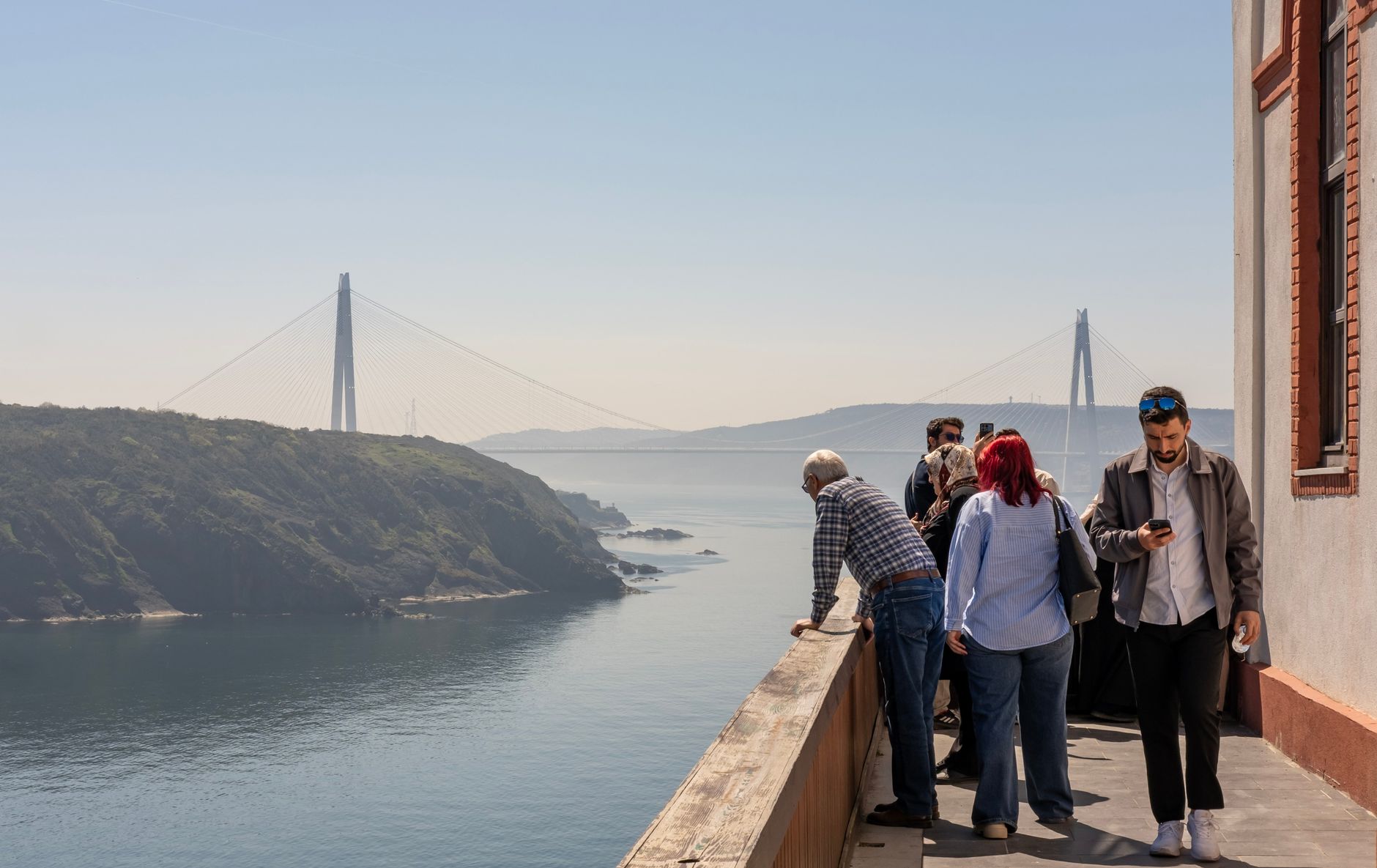
The thing that stops you first is scale. The Millau Viaduct — seven concrete piers, the tallest standing 343 metres above the Tarn gorge — carries the A75 autoroute so cleanly through the sky that the trucks crossing it look like slow punctuation marks. Norman Foster designed the deck; Michel Virlogeux engineered the structure; it opened in December 2004 and held the record as the world's tallest bridge for over two decades.
But Millau was already old when all of that happened. The town made gloves for centuries — at its peak, 12,000 people worked in the tanning and glove trade — and before that, Roman potters at La Graufesenque fired up to 40,000 ceramic vessels at a time in kilns that still sit beneath the soil at the edge of town. The viaduct and the Gallo-Roman kiln are, improbably, the same place.
💛 What travellers fall for
People who come back tend to go up rather than across. The belfry's 210 steps earn you a read of the whole valley — town, river, causses plateau, and that bridge threading through the distance. A few also book a paragliding slot; at least six local operators run tandem flights, and the weight limit is generous enough that most people qualify.
Experiences you don't want to miss


Deals in Millau
Book directly at the provider
How Millau came to be
The Romans settled here as Condatomagus, at the confluence of the Tarn and Dourbie, and by the second century A.D. the kilns at La Graufesenque were supplying pottery across the empire. Trade eventually collapsed under competition and then barbarian pressure; the community moved to the opposite bank and the name shifted through Amiliavum and Milhau en Rouergat to the French Millau. By 1187 the King of Aragon had granted it a Consular Charter — communal freedom and a seal — and the town became an administrative centre for the surrounding Rouergue.
Millau passed to the French crown in 1271, briefly to English rule during the Hundred Years War, and was formally tied to the monarchy by Louis XI in 1476. Through all of it, leather was the constant thread: lambskin gloves became the town's identity from the medieval period onward, and the industry peaked in the twentieth century before contracting sharply. The Museum of Millau, housed in an 18th-century townhouse, holds both the Roman pottery collection and the glove-making archive — the whole arc in thirty rooms.
Who and what shaped it
People who shaped it
Landmark buildings
See Millau in motion
Plan your visit
On the map
When to go
Millau sits on the southern edge of the Massif Central, with around 863 mm of rain spread fairly evenly through the year and an average annual temperature of just over 10°C — mild rather than Mediterranean. Spring and early autumn give the clearest light for viaduct views; summer is warm and busy; winters are cool and quiet but the valley mists can be worth the trip on their own.
Right now
Background & history adapted from Wikipedia (CC BY-SA) · specs from Wikidata (CC0) · weather from Open-Meteo · map data © OpenStreetMap contributors · photos from Wikimedia Commons / Unsplash with per-image credit. No third-party reviews or social posts reproduced.