
Midtown Miami
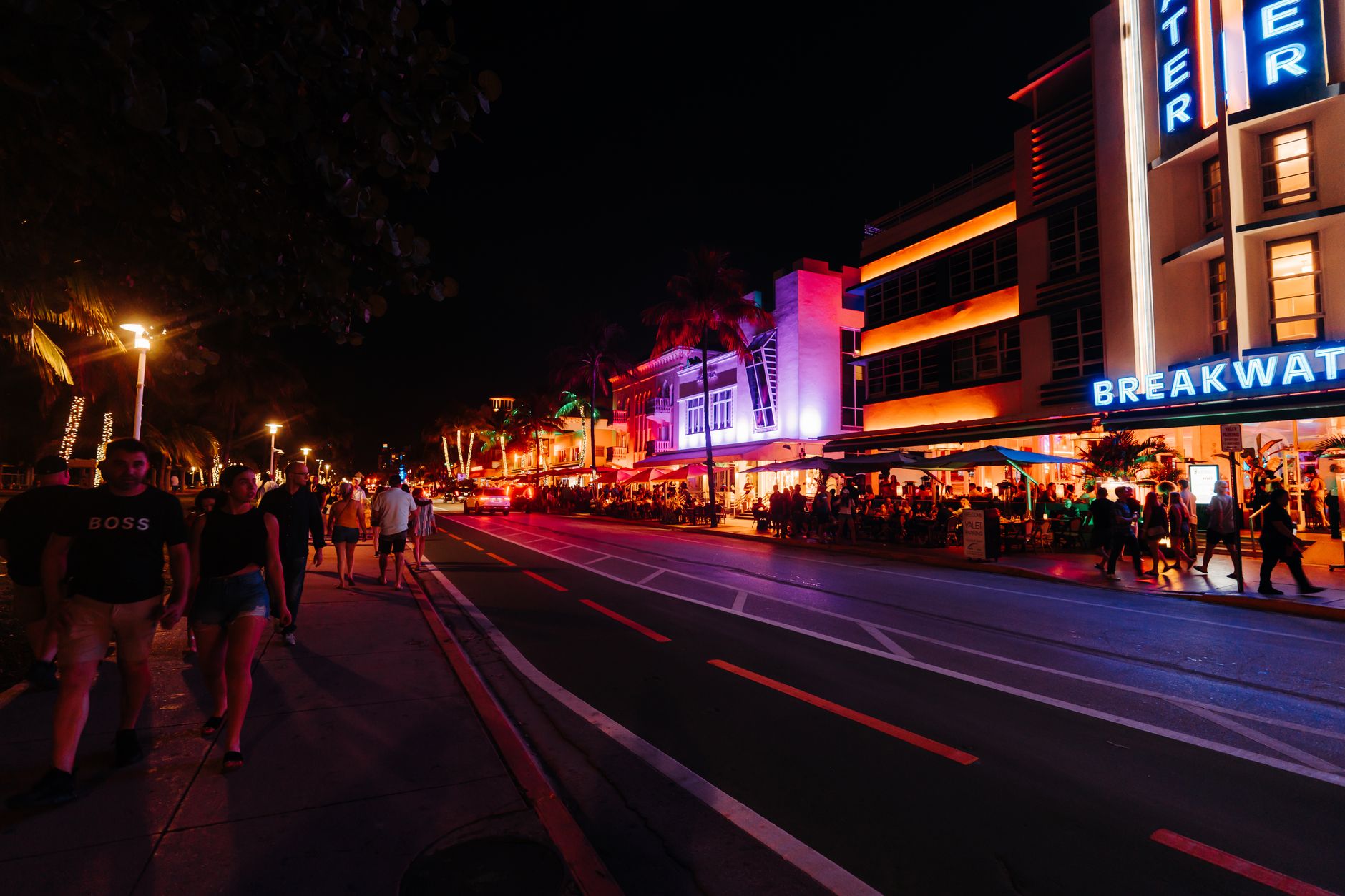
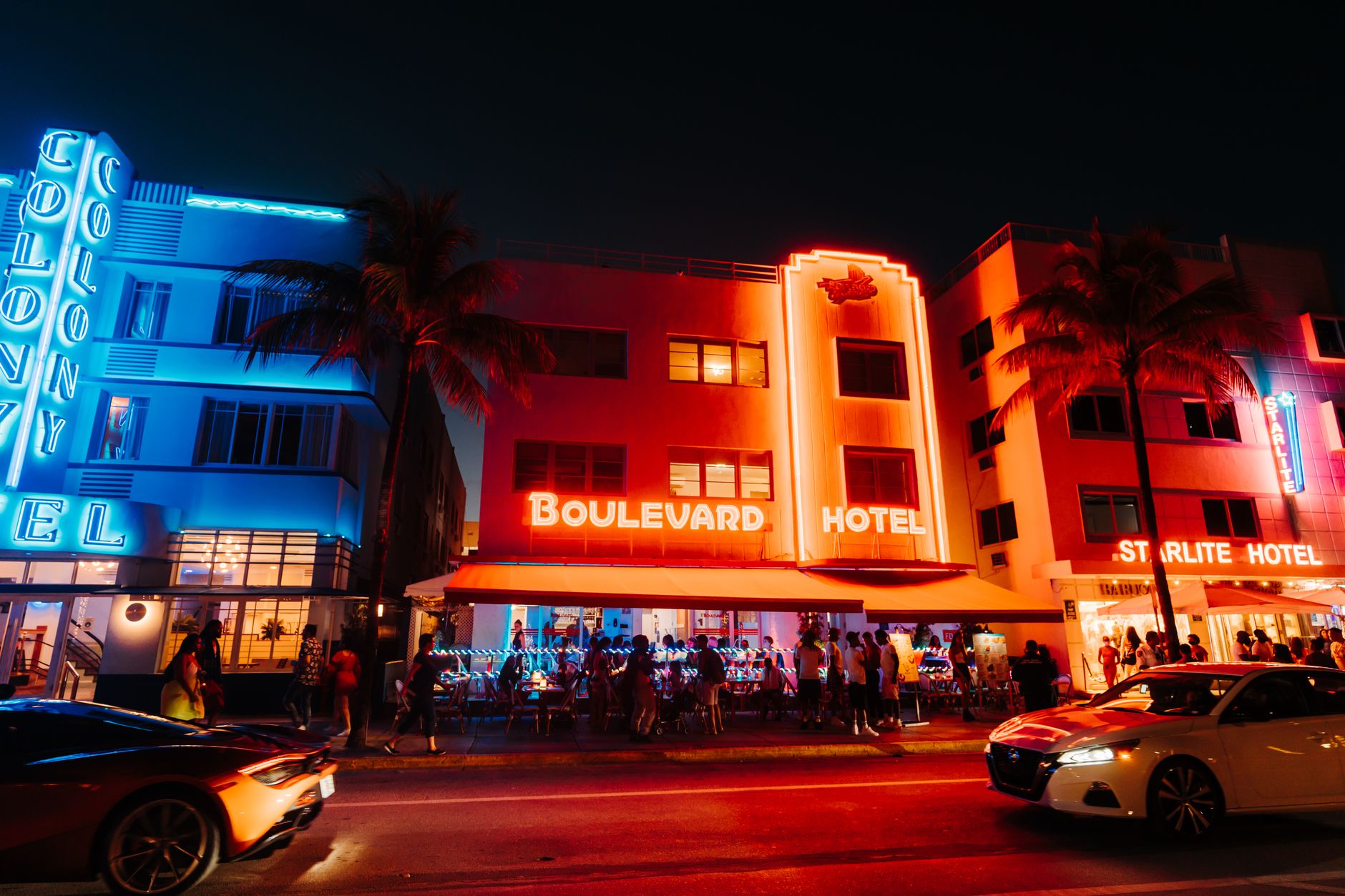
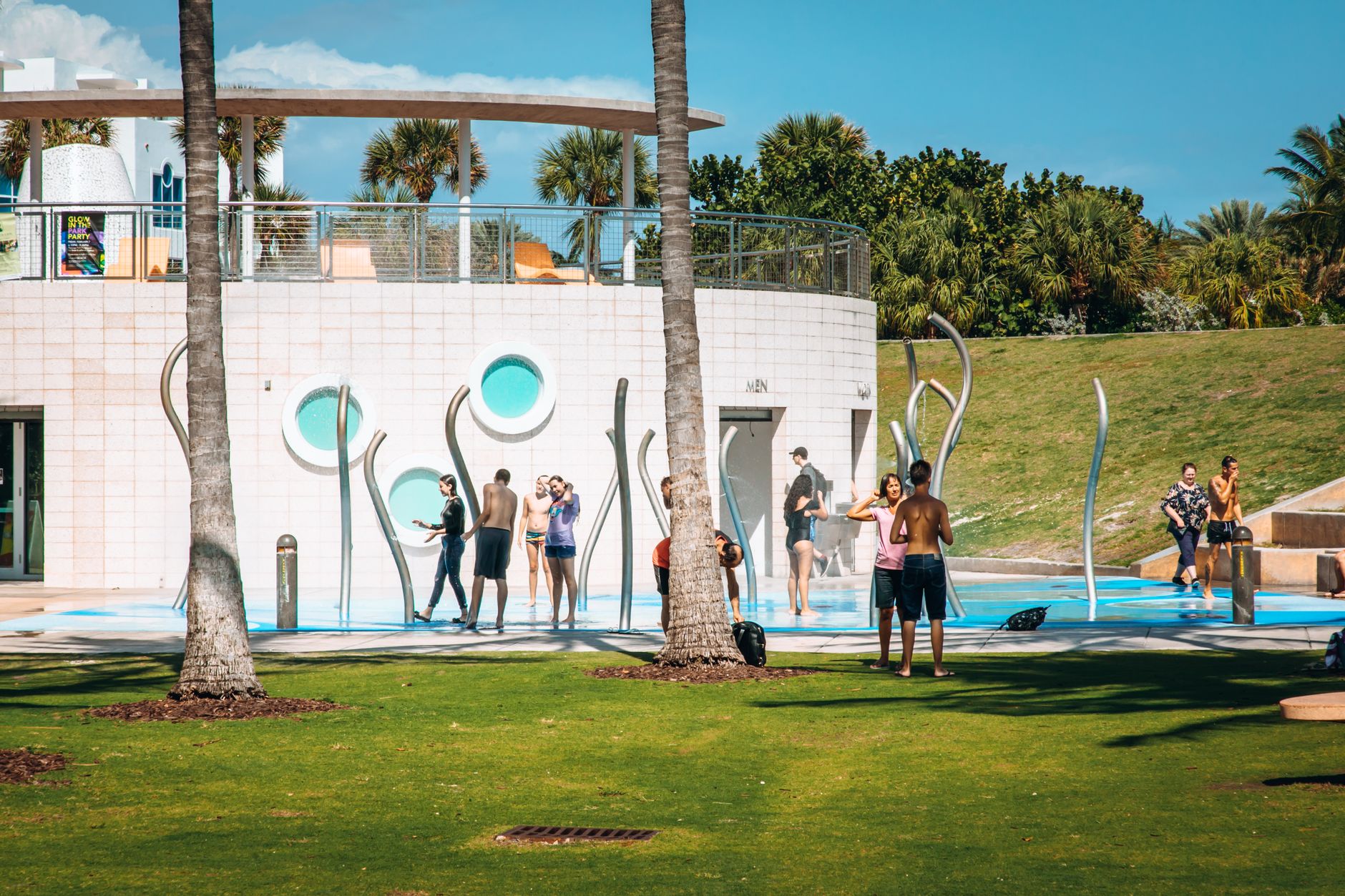
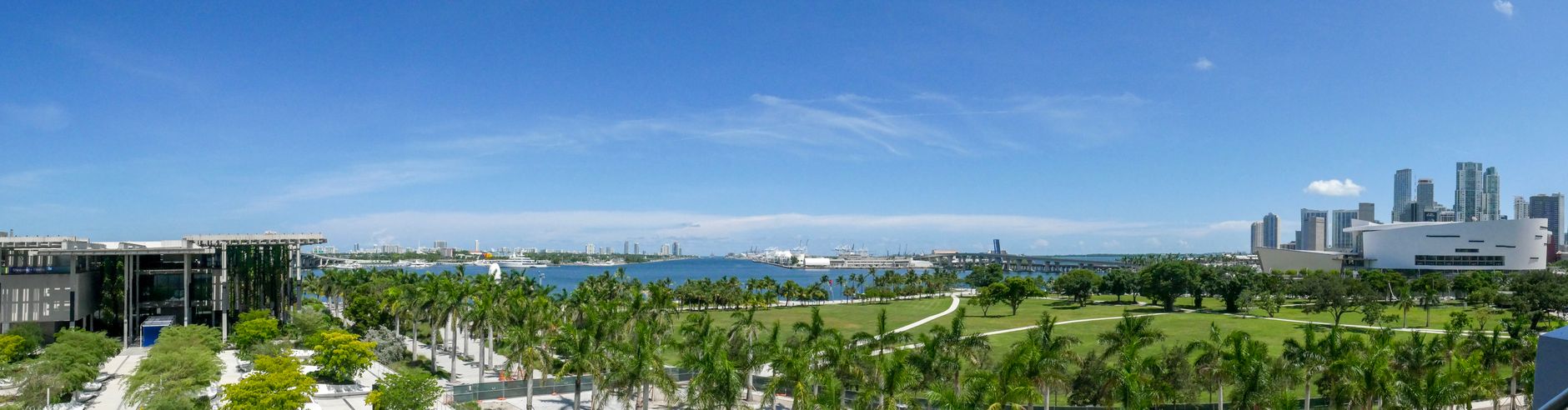
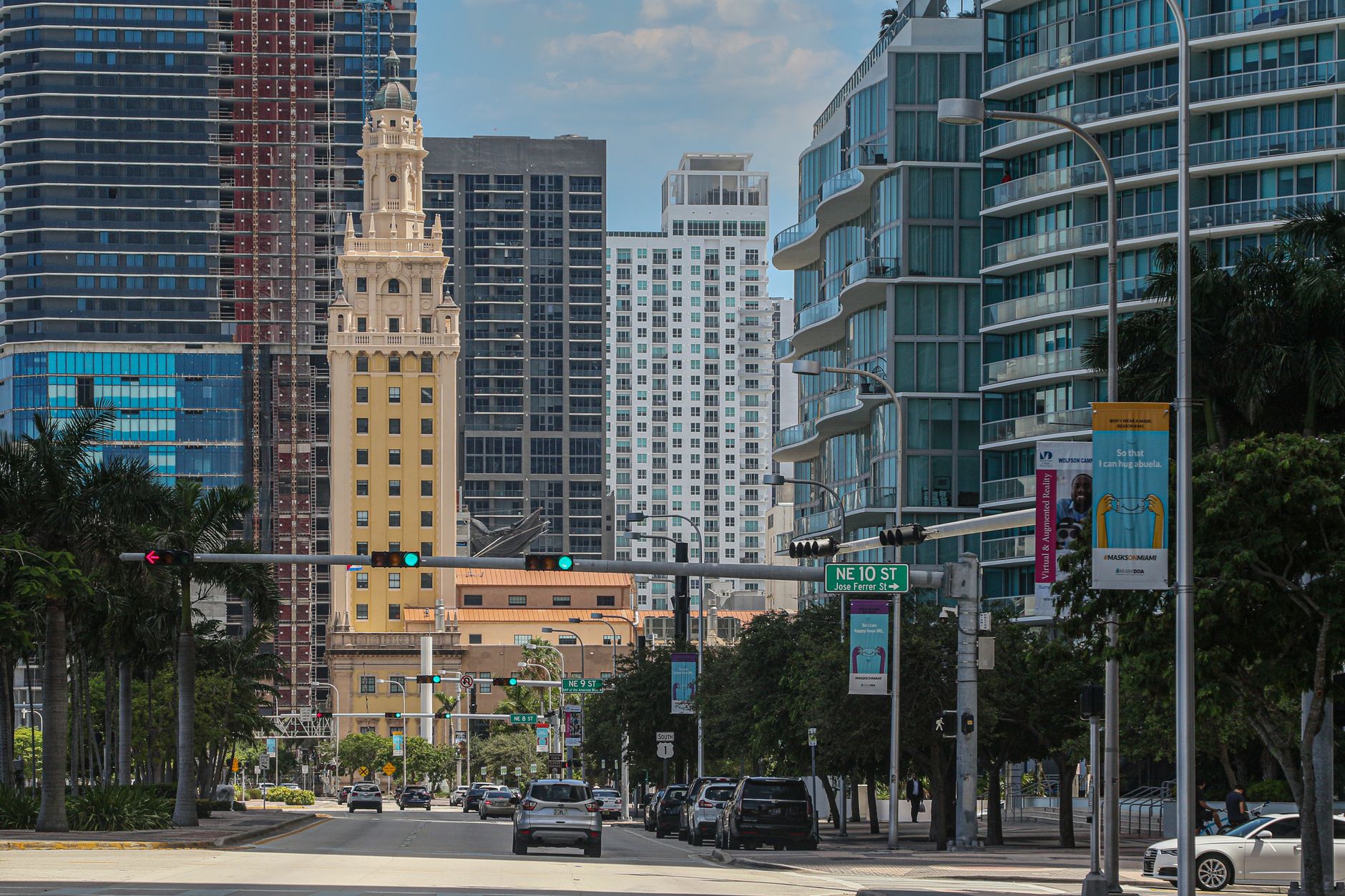
Midtown Miami sits on what was, not long ago, a Florida East Coast Railway yard — 56 acres of shipping containers and industrial quiet between Northeast 29th and 36th Streets. That industrial past is easy to forget now, standing on a concrete streetscape where palm trees push up beside high-rises and open-air restaurant patios spill onto the sidewalk.
The neighborhood is compact enough to cross on foot in an afternoon, which makes it unusual in a city that largely rewards the car. The Bacardi Buildings — one tiled blue and white, one sheathed in stained glass — anchor the area with a mid-century confidence the newer towers are still working toward.
💛 What travellers fall for
Regulars tend to land at Salvaje for ceviche before anything else, then walk it off down Buena Vista Boulevard. The unofficial dog park — a wide grassy gap between Buena Vista and NE 1st Street — is where you get a read on the neighborhood's actual residents, as opposed to the rotating cast of short-term visitors.
Deals in Midtown Miami
Book directly at the provider

How Midtown Miami came to be
Before the towers and the Trader Joe's, this was a working rail yard owned by Florida East Coast Railway, later repurposed for Port of Miami container storage. In 2002, Biscayne Development Partners — a joint venture between Midtown Equities, led by Jack Cayre, and Samuel & Company, led by Michael Samuel — paid $34.5 million for the 56 acres, with a vision loosely modeled on New York's SoHo.
Construction started in 2005. The 2007 real estate collapse cut the plan short: two residential towers and roughly two-thirds of the planned retail center went up instead of the full eight buildings originally envisioned. The Bacardi Buildings, built in 1963 and 1973 and added to the National Register of Historic Places in 2018, predate all of it — they were purchased by the National YoungArts Foundation in late 2012 and converted into the organization's national headquarters.
Who and what shaped it
People who shaped it
Landmark buildings
See Midtown Miami in motion
Plan your visit
On the map
When to go
Miami runs tropical: May through October brings heat, humidity, and the real possibility of afternoon downpours, with hurricane season stretching through November. From November to April the air dries out and temperatures settle into the low-to-mid 70s Fahrenheit — the stretch most visitors from colder climates time their trips around.
Right now
Background & history adapted from Wikipedia (CC BY-SA) · specs from Wikidata (CC0) · weather from Open-Meteo · map data © OpenStreetMap contributors · photos from Wikimedia Commons / Unsplash with per-image credit. No third-party reviews or social posts reproduced.