
Meudon
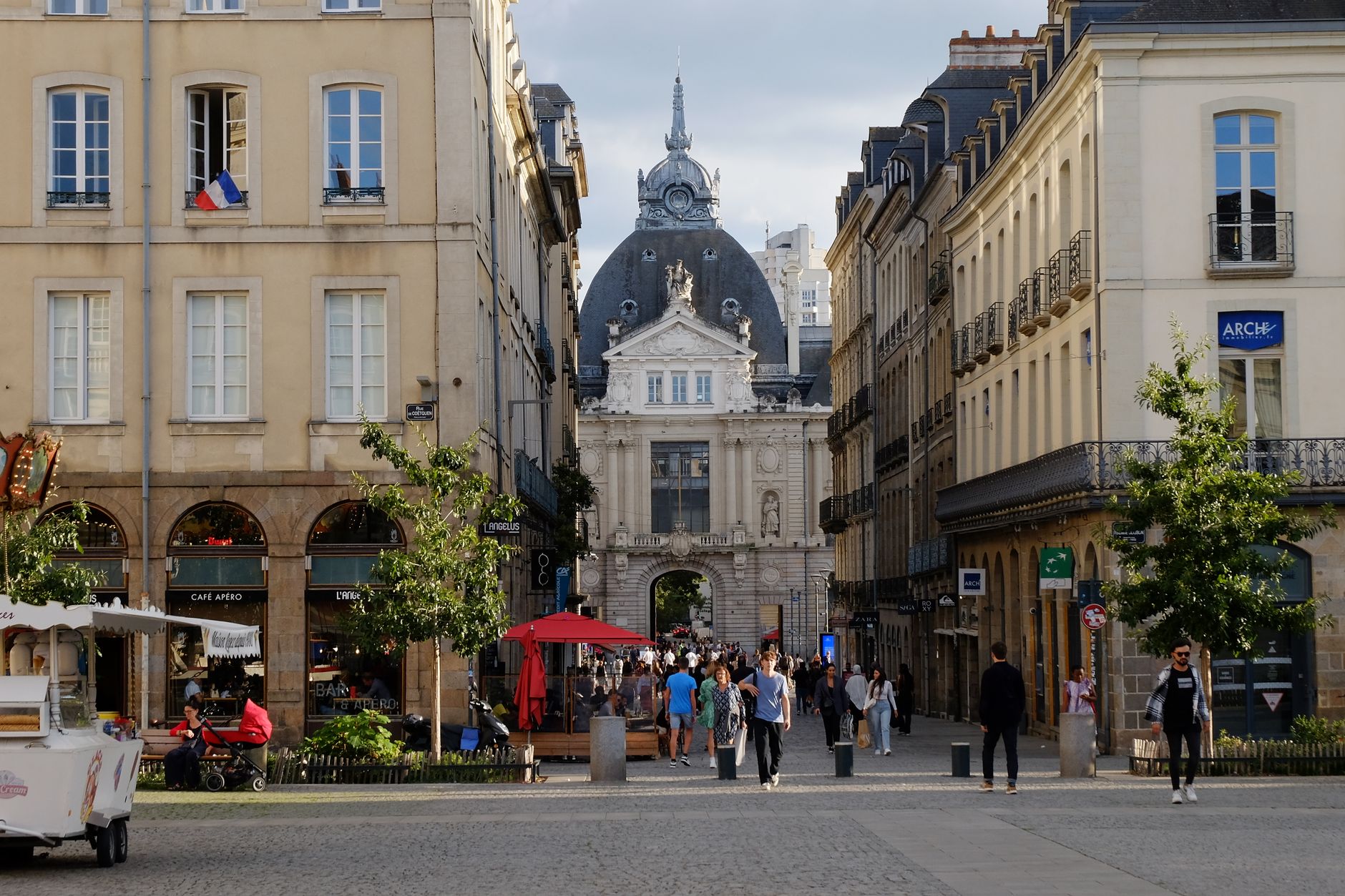
A few kilometres south-west of Paris, Meudon keeps a low profile that its biography doesn't quite justify. Richard Wagner wrote *The Flying Dutchman* in a house on the Avenue du Château. Rodin is buried in the garden of his villa here. The ruins of a royal castle became, in 1875, an observatory whose Grande Lunette remains the third-largest refractor in the world. And in a vast iron hangar built for the military in 1880, the first steerable airship in history — *La France* — was assembled and flown.
The town sits on a ridge above the Seine with a forest at its back, and its pleasures tend to be quiet and specific: a rose window made at the Sèvres manufactory, the last working orangery in the Île-de-France, a museum installed in the house where Molière's wife once lived.
💛 What travellers fall for
People who come back tend to time a visit to the Villa des Brillants for late afternoon, when the light in Rodin's garden goes soft. The Hangar Y is less visited than it deserves — the sheer scale of the thing, and the story of *La France* lifting off from this spot in 1884, lands differently in person than on a page.
Experiences you don't want to miss


Deals in Meudon
Book directly at the provider
How Meudon came to be
The site has been occupied since at least Neolithic times — its Gaulish name, Mole-Dum, means sand dune. By 1180 it had a named lord, the knight Erkenbold. The old castle was rebuilt in Renaissance style in the mid-16th century, then purchased by Louis XIV as a residence for the Dauphin, under whom Meudon briefly became a centre of aristocratic life. After the Dauphin's death in 1711, the château fell into neglect, was stripped in Revolutionary sales, and finally burned in 1871 when Prussian soldiers occupied it during the Franco-Prussian War.
Astronomer Jules Janssen saw opportunity in the ruins. His proposal led to a decree of 6 September 1875 creating the Meudon Observatory on the site; the Grande Coupole, housing the double refractor, was completed in 1895. Meanwhile, in 1880, military engineer Captain Charles Renard oversaw construction of Hangar Y, where he and Arthur Krebs built *La France* — the first airship capable of returning to its starting point — in 1884.
Who and what shaped it
People who shaped it
Landmark buildings
See Meudon in motion
Plan your visit
On the map
When to go
Meudon shares the mild, changeable climate of the Paris basin: springs are fresh and often bright, summers warm without being extreme, and autumn brings clear days that suit the forest particularly well. Winters are grey and damp, though rarely harsh.
Right now
Background & history adapted from Wikipedia (CC BY-SA) · specs from Wikidata (CC0) · weather from Open-Meteo · map data © OpenStreetMap contributors · photos from Wikimedia Commons / Unsplash with per-image credit. No third-party reviews or social posts reproduced.