
Metropol Parasol (Las Setas)
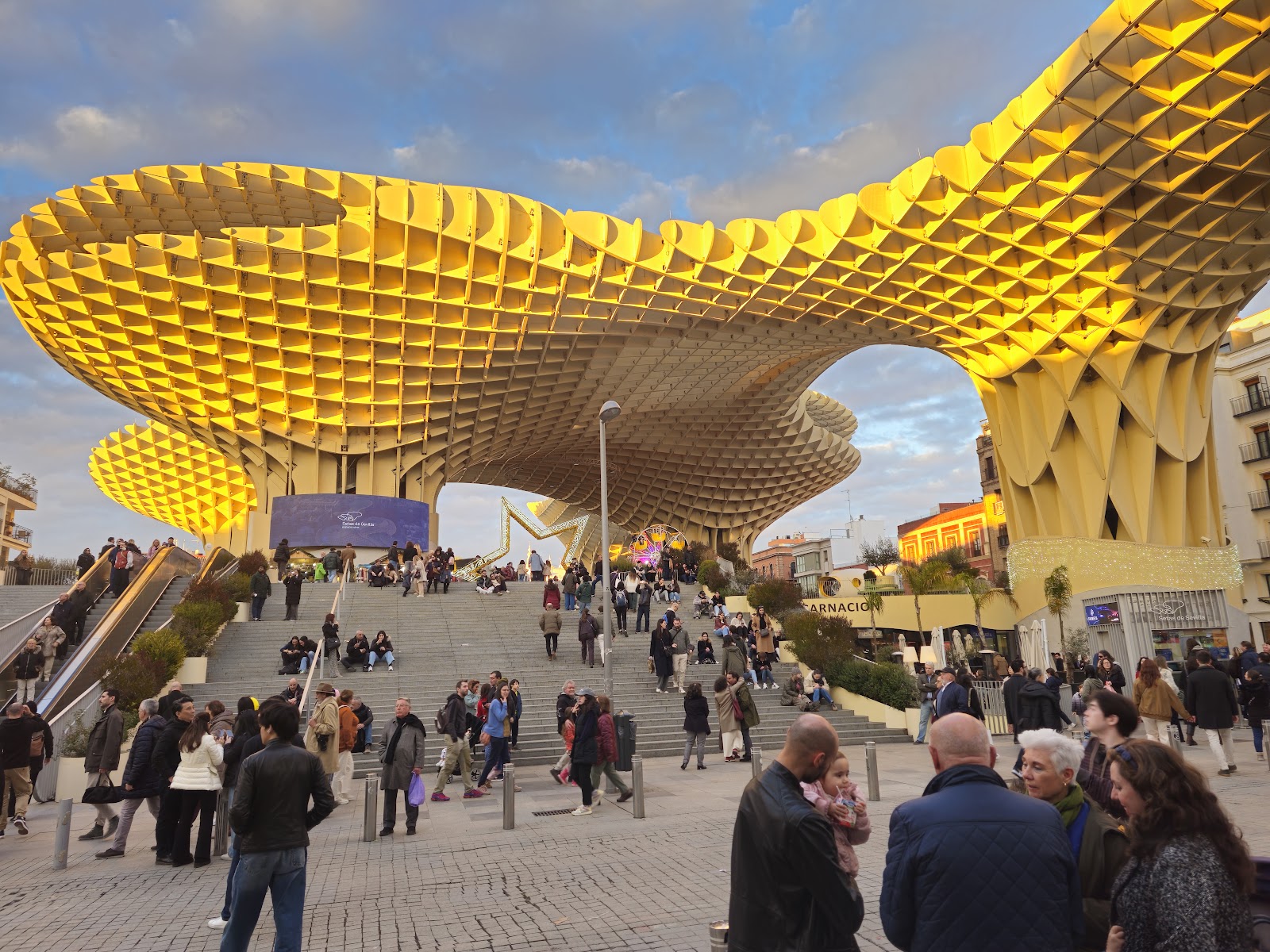
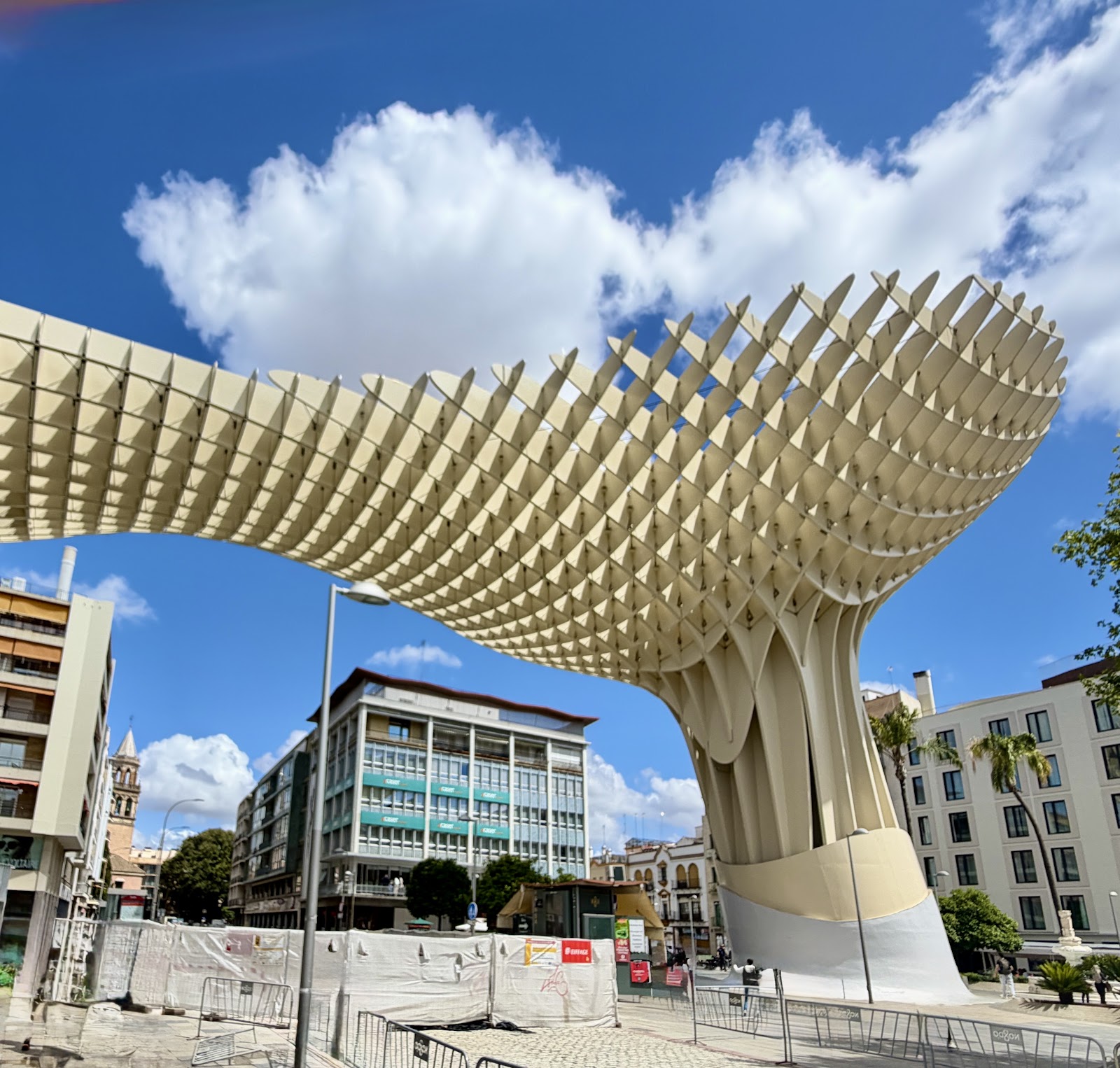
Six enormous wooden parasols rise above Plaza de la Encarnación like something between a forest canopy and a fever dream, casting latticed shade over the square below. Jürgen Mayer's structure — officially called Setas de Sevilla after the city declined to pay trademark fees for "Metropol Parasol" — is made from 3,500 cubic metres of micro-laminated Finnish pine, shaped into forms the architect drew from the cathedral's vaults and the ficus trees nearby.
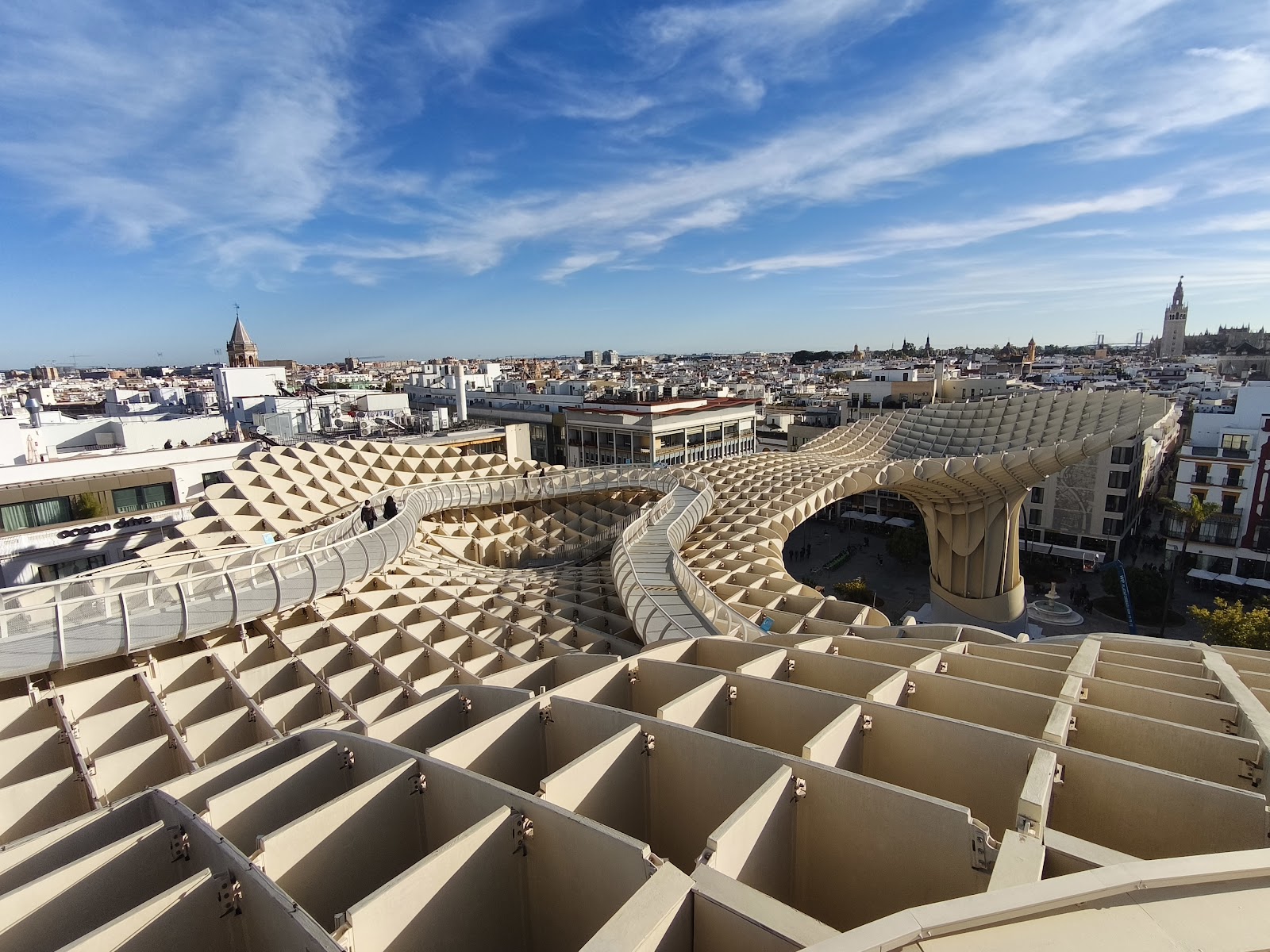
A 250-metre walkway threads across the tops of all six parasols, giving you a roofline-level view of the old city that no bell tower quite replicates. Below ground, the Antiquarium holds Roman and Moorish remains that the construction crews turned up unexpectedly in 2004 — ruins that delayed the project by years and nearly doubled its cost.
💛 What travellers fall for
People who come back tend to time it twice: once in the afternoon for the Antiquarium, when the crowds on top are thickest, then again just before sunset for the walkway. The ticket is valid for two visits within 48 hours, so the split-day approach costs nothing extra and the evening light across the rooftops is a different thing entirely.
The story behind Metropol Parasol (Las Setas)
The ground beneath Las Setas has been in use since at least the medieval period, when an Augustinian convent called the Convento de la Encarnación occupied the site. A food market — Seville's first known — eventually replaced it, but by 1973 structural problems, a major flood and the spread of supermarkets had made the market unworkable, and it was demolished.
The square sat underused for decades until 2004, when the city launched an international competition drawing 65 entries. Jürgen Mayer, a Berlin-based German architect born in Stuttgart in 1965, won. What followed was not a smooth build: excavations immediately uncovered significant Roman ruins, stalling construction and pushing costs from an estimated €50 million to €102 million. The structure finally opened in April 2011.
Good to know
Book a timed slot online — walk-up queues at peak times can mean a wait of several hours, especially around sunset. The Antiquarium costs €2.10 separately. If panoramic views are the only draw, the cathedral tower offers comparable sightlines for considerably less. TUSSAM buses 03, 27 and 32 stop directly at the plaza.
Summer temperatures in Seville regularly exceed 40°C, and the parasols do provide genuine shade at street level — though the exposed walkway on top is brutal in July and August without early-morning timing. Spring (March to June) and autumn (September to October) are the most comfortable seasons for the rooftop, and the square below stays lively well into the evening year-round.
Where is Metropol Parasol (Las Setas)?
More tickets & tours for Metropol Parasol (Las Setas)
Book directly at the provider
What travellers say about Metropol Parasol (Las Setas)
We visited the Setas de Sevilla in the evening and really enjoyed the experience. The view over the city is impressive, especially after sunset when the different light installations around the structure create a very special atmosphere. Architecturally it is quite an unusual landmark and definitely stands out compared to the historic surroundings of Seville. Walking along the elevated paths gives you great perspectives of the city. At the end of the tour there is also a small cinema with a 180-degree screen showing a short film about Seville, which is a nice way to round off the visit. Overall a worthwhile stop when exploring the city, particularly in the evening.
This really well organised on the accent, lots of people on the structure as they jostled for the best position to view the beautiful sunset. The decent was little lost in translation as I ended up on the stairs and not in the lift. A very stunning structure, that has an organic feel. A very enjoyable couple of hours taking in the views.
🍄✨ Setas de Sevilla is one of those landmarks that makes you stop and stare 😍. Nicknamed “The Mushrooms” for obvious reasons 😂🍄, it’s one of the largest wooden structures in the world and offers incredible 360° views of Seville 🇪🇸🌇. The rooftop walkway is the highlight 🚶🏻♀️🚶🏻♂️🚶🏻✨, especially at sunset 🌅💛 when the city looks absolutely magical. Down below, you’ll find a market 🥘 and archaeological remains 🏺, creating a fascinating mix of modern architecture and history. 🎟️ We bought our tickets through GetYourGuide, which made entry quick and hassle-free 👍🏻😊. 💡 Top tip: Visit early or around sunset for the best views and photos 📸✨, and bring water in summer 🥵💧! A unique spot that’s definitely worth adding to your Seville itinerary 🍄🇪🇸👏 ⭐⭐⭐⭐⭐
A must-visit landmark in Seville! The architecture is stunning and offers amazing panoramic views of the city. The walkway at the top is well designed, and the views are completely different during the day and at night. One of the best features is that with a single ticket, you can visit twice on the same day—once during the daytime and once again in the evening. This makes it a great value, as you get to experience the city in both daylight and with the beautiful nighttime illumination. I highly recommend visiting before sunset, staying for the views, and then returning after dark to enjoy a completely different atmosphere. Definitely one of the highlights of my trip to Seville.
Setas de Sevilla (Metropol Parasol) is a unique and modern landmark in the heart of the city, offering great views and a very different atmosphere compared to Seville’s historic sites. The structure itself is impressive to see from the ground, and the surrounding plaza is lively both day and night. If you want the best experience, I recommend visiting in the evening. The lighting at night makes the structure look even more striking, and the temperature is much more comfortable. You don’t necessarily need to pay for the rooftop walkway — simply enjoying the architecture from below and walking around the area already gives you a great sense of the place. It’s a fun and easy stop during a walk through the city, and a nice contrast to Seville’s traditional architecture.
More of Seville
Discover where to stay, what to do and the best deals for your trip.
Explore Seville →More attractions in Seville
All of Seville →
Background adapted from Wikipedia (CC BY-SA) · map data © OpenStreetMap contributors · ratings & place photos via Google · other photos with per-image credit. Ticket links may earn us a commission at no extra cost to you.