
Messaria
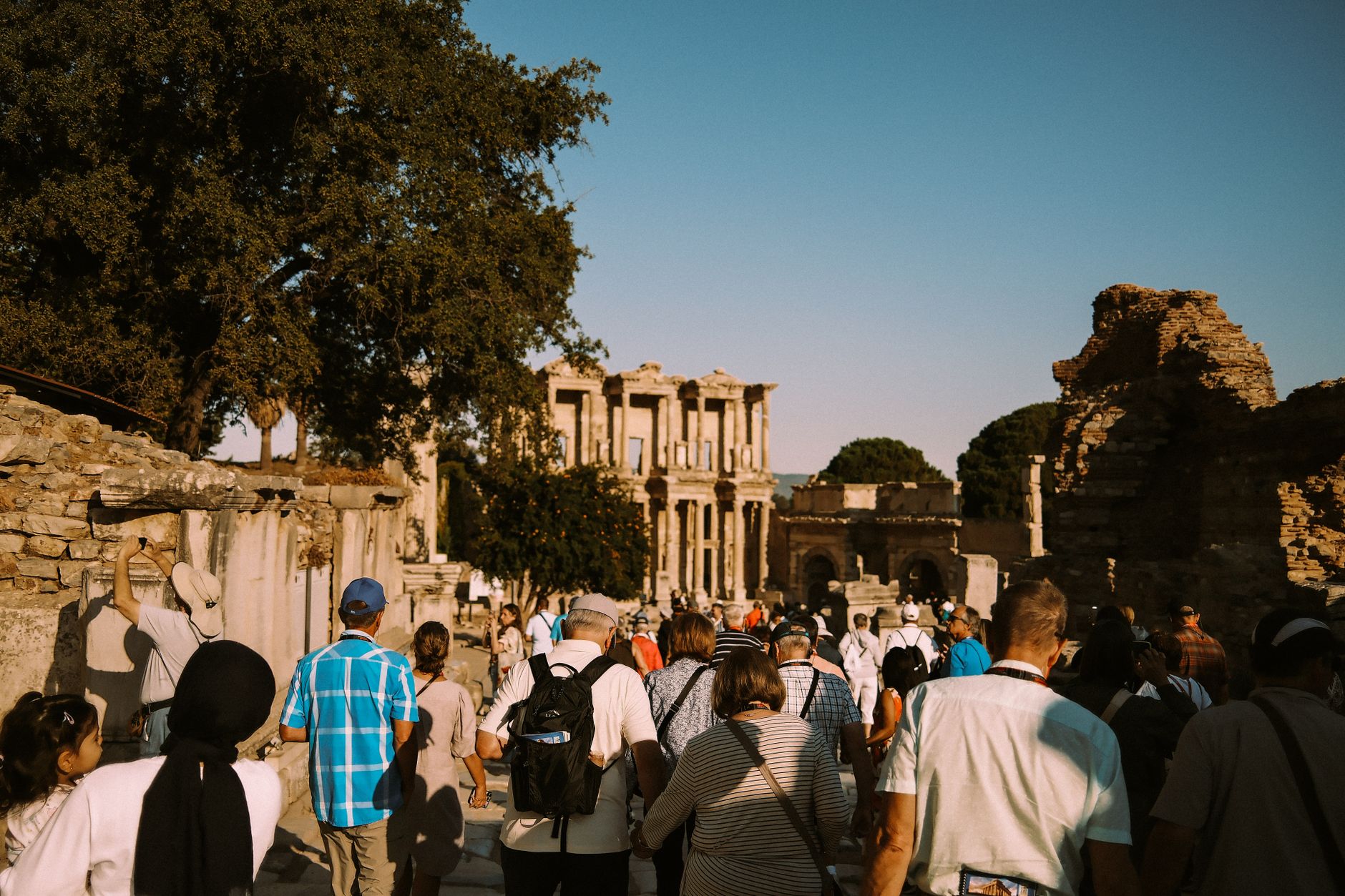
Messaria sits at a crossroads — literally. Nearly every bus route crossing Santorini passes through this village of 1,742 people, and on most mornings a truck or two will be parked at the junction, selling fish, vegetables, or bundles of plants to locals who stop on their way somewhere else. At 160 metres above sea level and 3 km southeast of Fira, it occupies the productive middle of the island rather than its photogenic edge.
The vineyards that press in on all sides are not incidental — Messaria produces more wine than anywhere else on Santorini. The mansions lining its lanes were built on that wealth, and one of them has been a museum since 1994, its 19th-century furniture and documents still in place.
💛 What travellers fall for
People who come back tend to time a visit around the Canava Santorini Distillery — a cave-cut space established in 1974 that produces ouzo, tsikoudia, and local liqueurs. It rewards a slow look. The two windmills on the western edge, listed as archaeological monuments since 1992, are easy to walk past without realising what they are.
Deals in Messaria
Book directly at the provider


How Messaria came to be
Records of Messaria reach back to the mid-17th century, but it was the 19th century that shaped the village you see today. Wine wealth funded the neoclassical mansions — the Argyros, Markezinis, and Saliveros — built by local craftsmen for families who exported Vinsanto across the Mediterranean. The Markezinis factory, operating from 1889, evolved by 1912 into a textile mill called PLEKTIRIA MARKEZINI, running 200 machines and 150 workers to supply socks and jerseys for the Greek army, before closing around 1940.
The 1956 earthquake emptied the village for 35 years. In 1985 it was declared a cultural landmark, and by 1994 the Argyros Mansion had been fully restored and opened as a museum — the clearest window the island has into domestic life from that earlier, prosperous century.
Who and what shaped it
People who shaped it
Landmark buildings
See Messaria in motion
Plan your visit
On the map
When to go
Summers are long, dry, and reliably sunny — June through August sees almost no rain and 12 to 13 hours of light a day, with temperatures between 26°C and 28°C. Winter is mild but genuinely rainy, with January averaging 11 wet days; spring arrives quickly, and by April the days already stretch to 8 hours of sun.
Right now
Background & history adapted from Wikipedia (CC BY-SA) · specs from Wikidata (CC0) · weather from Open-Meteo · map data © OpenStreetMap contributors · photos from Wikimedia Commons / Unsplash with per-image credit. No third-party reviews or social posts reproduced.