
Mercat de l'Olivar
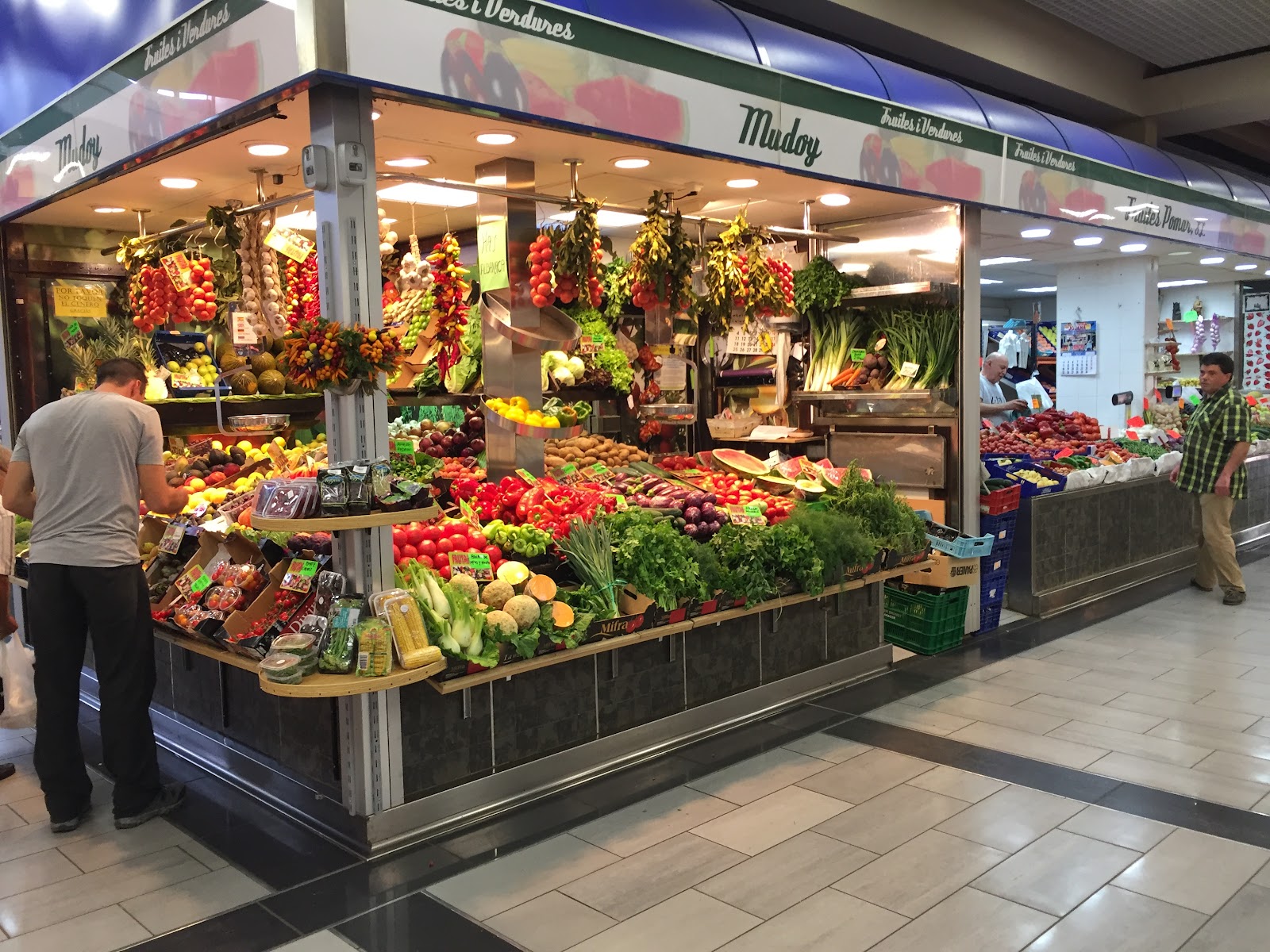
The name comes from the olive grove that once stood here, and something of that rootedness survives in the building itself — a mid-century structure of two perpendicular halls that open onto a square, drawing in light through wide windows and skylights. Architect Antonio García Ruiz Rosselló completed it in 1951, and on any weekday morning before ten, it still does what it was built to do: supply Palma with fish pulled from cold water, tomatoes that smell like tomatoes, and cheese in more varieties than you thought a single island could support.
The rhythm shifts across the morning. Early on, restaurateurs and locals work the produce and fish stalls with the focused efficiency of people who have done this a hundred times. By mid-morning, visitors filter in, and the bar areas around the fish hall fill with people eating oysters or tortilla de patatas at standing counters, glasses of vermouth already in hand.
💛 What travellers fall for
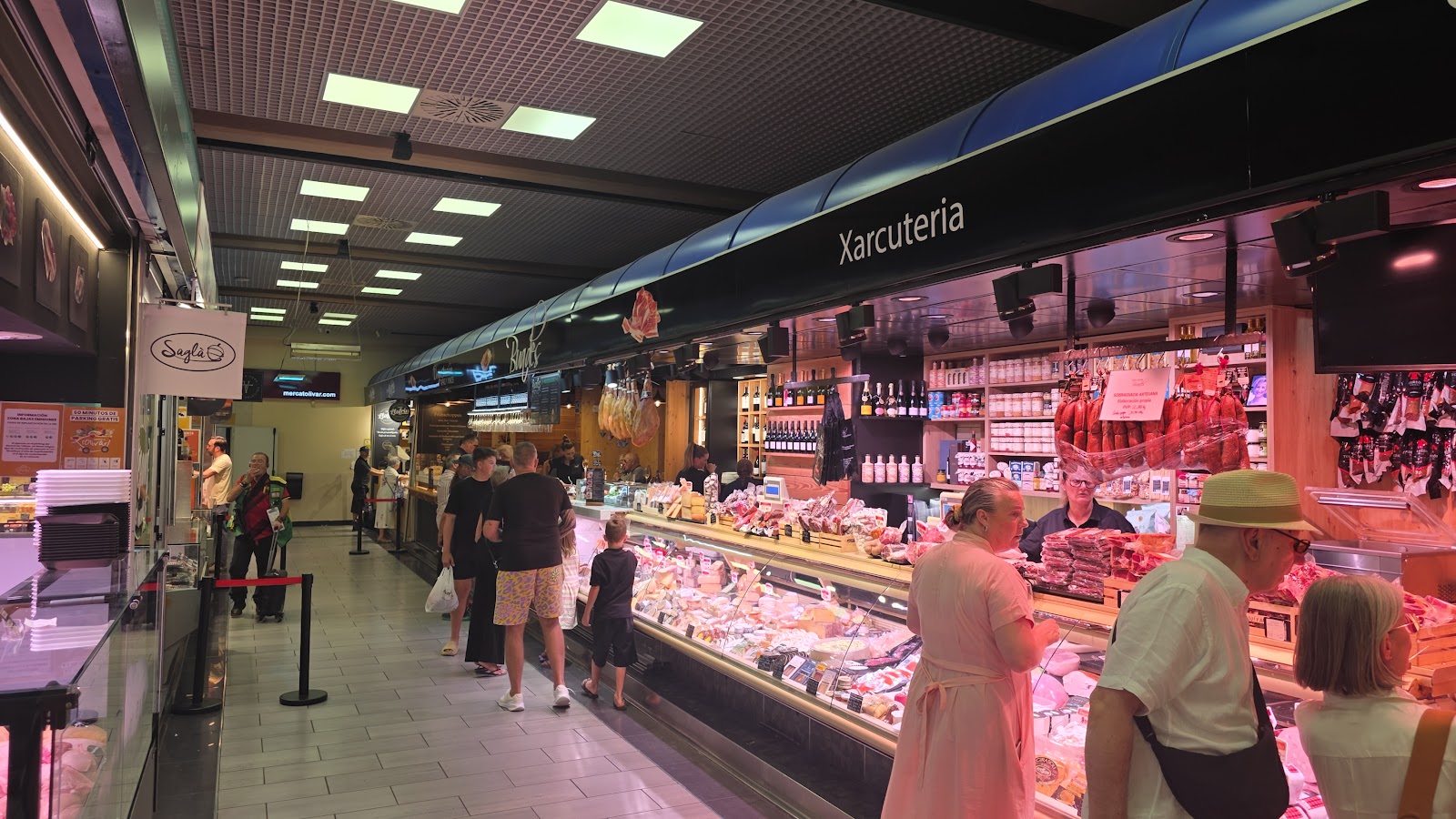
People who come back tend to go straight to the fish hall bistros for a glass of something cold and a plate of whatever looks right that day. The Artesan cheese counter — more than 400 varieties — rewards a slow look. Friday evenings are worth knowing about: the market stays open until 20:00, quieter than the morning rush and good for a longer sit.
The story behind Mercat de l'Olivar
Before the market, there was a convent; before the convent, an olive grove. The site has held different kinds of communal life for centuries. When food vendors were moved out of Plaça Major, the city commissioned Antonio García Ruiz Rosselló to design a purpose-built replacement, and the building that opened in 1951 was functional in the best sense — spacious, well-lit, organised around the practical needs of people buying and selling food.
For nearly five decades it operated largely as built. Then in 1998, the market's merchants formed a company and secured a public operating license, which allowed them to undertake a renovation that concluded in 2003. The structure kept its bones; the stalls were reorganised and expanded into the mix of produce, fish, meat, cheese, and sit-down food that you find today.
Good to know
Located at Plaça de l'Olivar 4, a two-minute walk from Plaça d'Espanya. Open Monday to Friday 7:00–14:30, Saturdays until 15:00; gastronomic stalls run until 16:00, and until 20:00 on Fridays. Closed Sundays. Entry is free. The market has its own car park; spend €20 and you get 60 minutes of parking credit.
Where is Mercat de l'Olivar?
Location
- In Palma de Mallorca
- 39.5722, 2.6489
- Open in Google Maps
Rating
4.5 ★ · 28,892 Google reviews
More tickets & tours for Mercat de l'Olivar
Book directly at the provider
What travellers say about Mercat de l'Olivar
Great local marketplace with separate sea food section is separated from other side of marketplace. Sometimes it is very croudy. Very yummy. Be aware that the place closes itself at 3 pm, so come quick to get some fresh items. Lots of people buy food here and eat it here. Specially sea food. Seems very local and homemade.
Very good local market, many locals shop here. There is a section for produce, one for meats and an entirely separate section for seafood. The restaurant there will cook the fresh seafood for you if you want to eat it there.
Mercado del Olivar is a great market to explore in Palma. It has a cool local feel with fresh fish, meats, shellfish, produce, and plenty of food stalls and casual restaurants throughout. It’s the kind of place where you can walk around, snack, people-watch, and get a real taste of the local food scene. Great spot to visit, especially if you enjoy fresh seafood and market-style dining.
Superb, fresh seafood, incredibly clean and more than reasonably priced. Definitely a must visit. You can have a delicious lunch there.
Amazing Market wirh fresh fish and other od eateries. Really worth a visit.
More of Palma de Mallorca
Discover where to stay, what to do and the best deals for your trip.
Explore Palma de Mallorca →More attractions in Palma de Mallorca
All of Palma de Mallorca →

Background adapted from Wikipedia (CC BY-SA) · map data © OpenStreetMap contributors · ratings & place photos via Google · other photos with per-image credit. Ticket links may earn us a commission at no extra cost to you.