
Mercado Central de Valencia
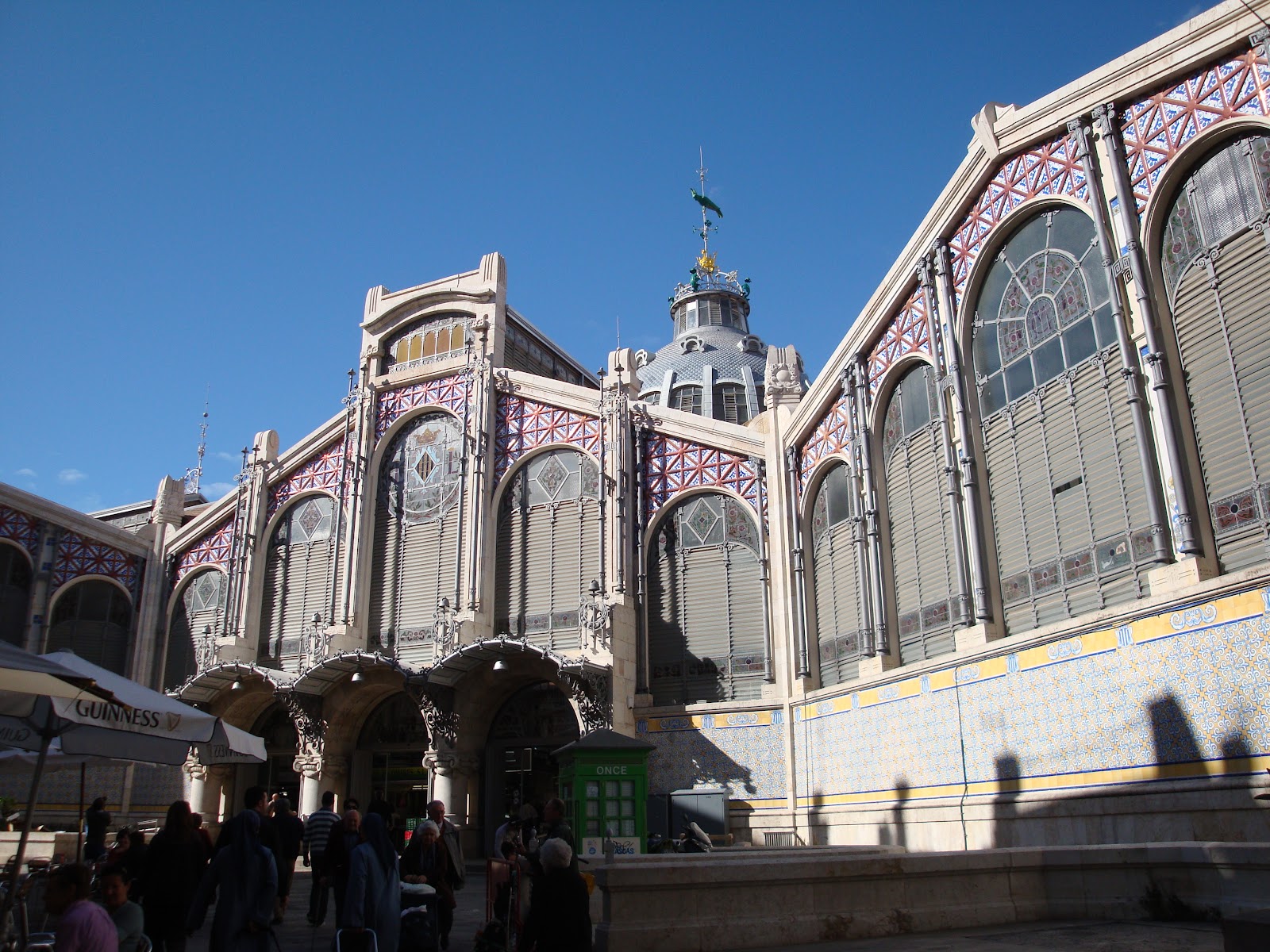
A parakeet weathervane spins above the central dome, thirty metres up, and it tells you something about the place below — this market has always had a theatrical streak. Opened in 1928 after nearly two decades of construction, the Mercado Central covers more than 8,000 square metres of iron, glass, polychromed tile and ceramic detail, and it still runs exactly as intended: a working food market where over 300 stalls sell jamón, mojama, oranges, and live eels before three in the afternoon.
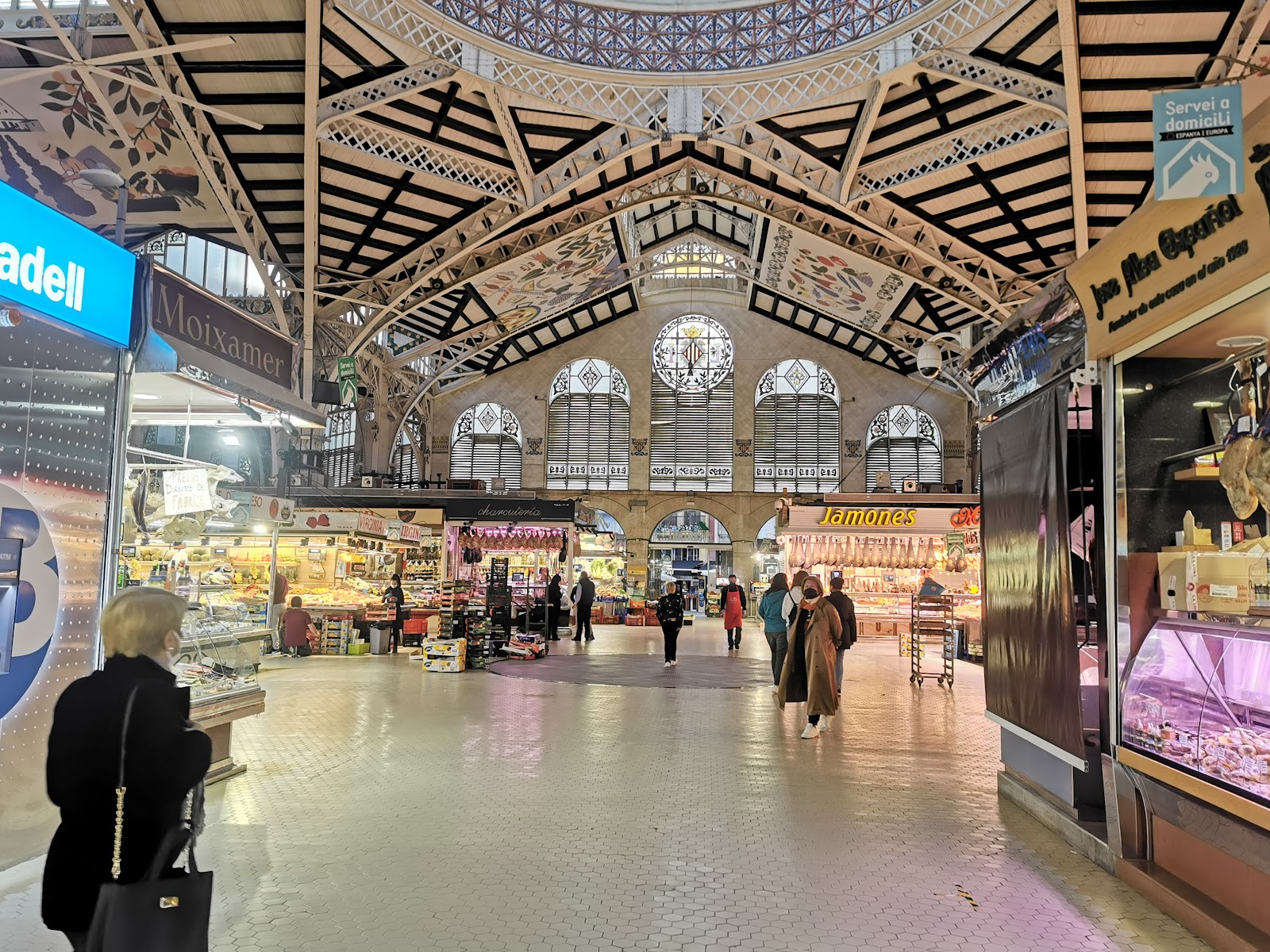
The aisles are named after local figures — Sorolla, Blasco Ibáñez, Benlliure — and the light falls through the domes in long, shifting columns. It sits directly across from La Lonja de la Seda, so two of Valencia's great civic buildings face each other across the square.
💛 What travellers fall for
Regulars tend to arrive before nine. Charcutería Manglano (stalls 63–65) has been selling acorn-fed jamón Ibérico de bellota since 1955 — worth finding before the crowds thicken. For mojama, the air-cured tuna at Salazones Vicente Peris is salty and dense, about €6 for 100g. Central Bar runs on no reservations; 9:30 AM gets you a stool without a long wait.
The story behind Mercado Central de Valencia
A roofless market called Mercat Nou had occupied this site since 1839, but by the end of the nineteenth century the city wanted something permanent and covered. Valencia held an architectural competition, and in 1910 the winning design went to two Barcelona-trained architects, Alexandre Soler March — who had worked alongside Lluís Domènech i Montaner — and Francesc Guàrdia Vidal. Construction began in 1914.
The project took fourteen years. Valencian architect Enrique Viedma Vidal oversaw the final stages and was present for the inauguration on 23 January 1928. The building became one of the defining works of Valencian Art Nouveau, and Spain's Ministry of Culture declared it a Historic-Artistic Monument in 2007. In 1996, it became the first market in the world to digitise its sales and offer home delivery.
Good to know
Open Monday to Saturday, 7:30 AM to 3:00 PM — closed Sundays. Arrive before 11:00 AM; vendors start hosing down floors after 1:30 PM. Entry is free. Nearest metro stops are Àngel Guimerà, Xàtiva, or Colón. Valencia Nord train station is an eleven-minute walk.
Where is Mercado Central de Valencia?
More tickets & tours for Mercado Central de Valencia
Book directly at the provider
What travellers say about Mercado Central de Valencia
The building itself is a stunning architectural masterpiece with a gorgeous dome and vibrant stained glass. Inside, it’s a paradise for food lovers. The variety and quality of the produce are unmatched—the selection of fresh fruits, vegetables, and nuts is absolutely massive and top-tier. Everything is beautifully displayed and incredibly fresh. Whether you are looking for premium ingredients or just want to grab a quick local snack, this place is unbeatable. Highly recommended!
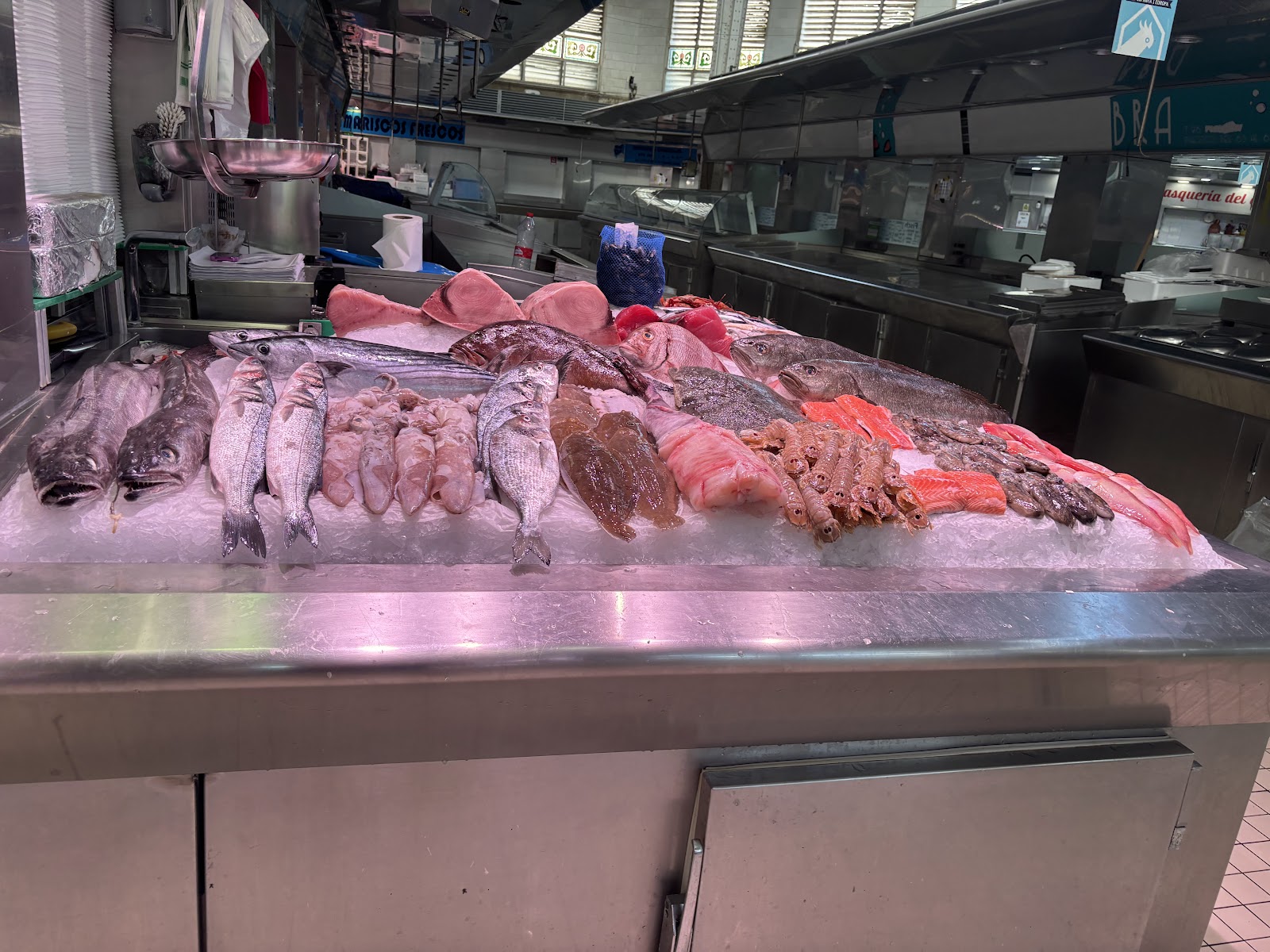
What a wonderful spectacle... Certainly one of THE finest markets in all of Europe....hours of fun wandering around admiring the beautiful displays of carefully sourced fresh meat, top quality jamon and cheeses.... fish mongers with their colorful catches packed onto ice, mountains of Valencian oranges and tomatoes ...what's not to like ? ....A MUST. when visiting this lovely city...
Paella Chef-Best paella 🥘 that I had in Spain!!! 🇪🇸 Sooo juicy and yummy! 😋 I orders the black rice one, it’s only €6 per portion, sooooo good! They heat up for you too! The raw seafood place is sooo good too! The oysters 🦪 were €3 each but soooo fat and juicy! I would say more than triple the size that I would’ve had from Canada 🇨🇦 when it’s $2/each! Totally worth getting lots of them! I had 4 oysters 🦪 myself and 2 red prawns 🦐, the red prawns are by weight, it was €5 and €7 each, but hand down soooooooo worth it and the best prawn 🦐 I’ve ever had! Maybe Japanese lobster 🦞 could beat them!
A bit touristy but always a fun thing to do in the old town. Also everything we tried was actually good ! I recommend the octopus sashimi in the fish section of the mercato, adorable service and the seafood was so fresh! Take your time in there and go early to avoid the crowds!
One of the best food markets we ever visited. The building itself a fantastic example of Art Nouveau architecture is a delight on the eye. The stalls are terrific - brilliant mixture of buy and eat their experience as well as buy to cook and prepare at home. Loved the vibrancy of seasonal fresh produce, including some exotics such as whole fresh cocoa pods not an item found everywhere and everyday. Look out for timings when the fish side is open. Some parts of the building is under construction - assuming with n old building it’s inevitable to be ongoing work in progress. Definitely did not spoil the experience. Loved the friendliness and helpful nature of all the stall holders.
More of Valencia
Discover where to stay, what to do and the best deals for your trip.
Explore Valencia →More attractions in Valencia
All of Valencia →
Background adapted from Wikipedia (CC BY-SA) · map data © OpenStreetMap contributors · ratings & place photos via Google · other photos with per-image credit. Ticket links may earn us a commission at no extra cost to you.