
Merano
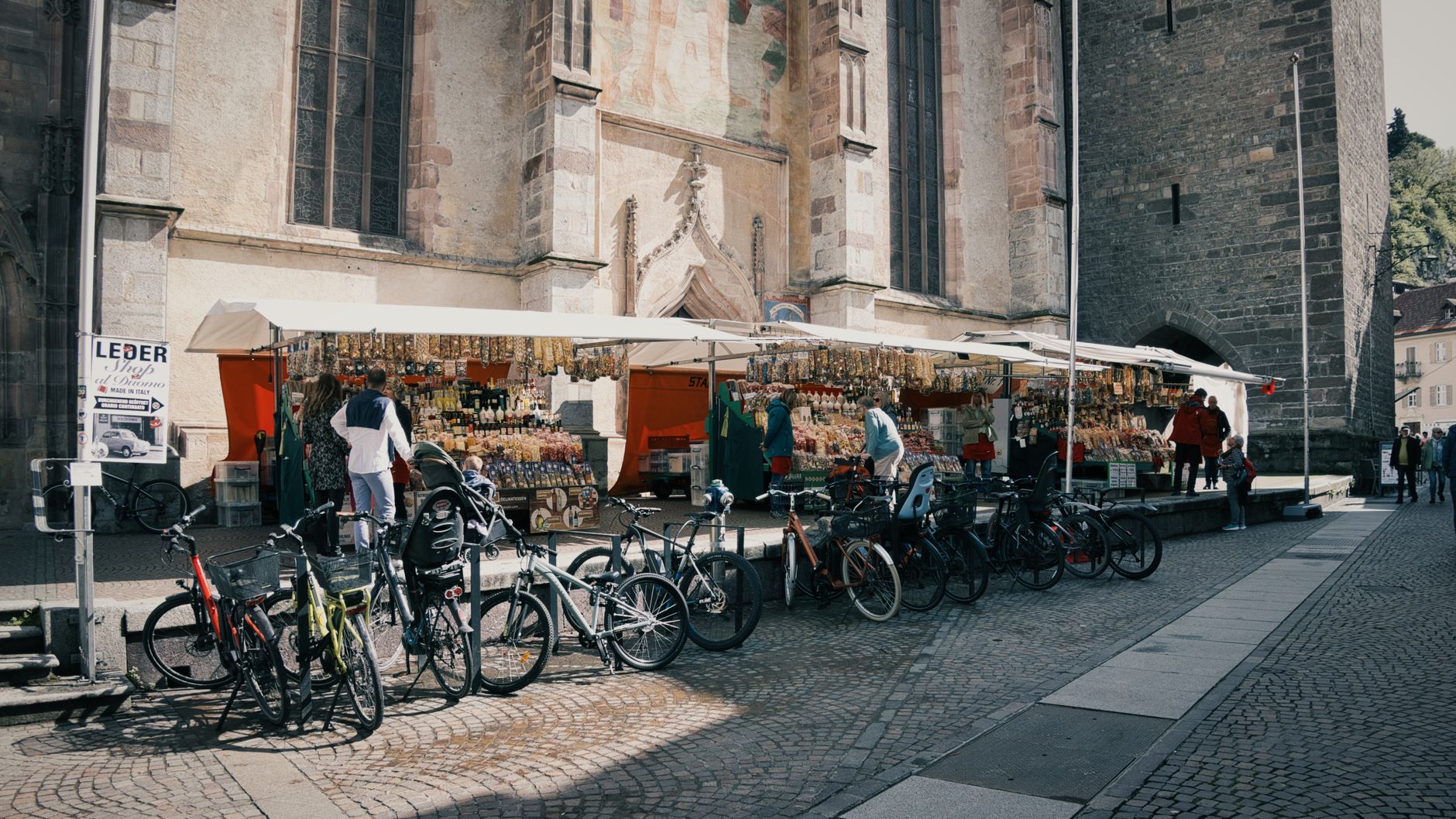
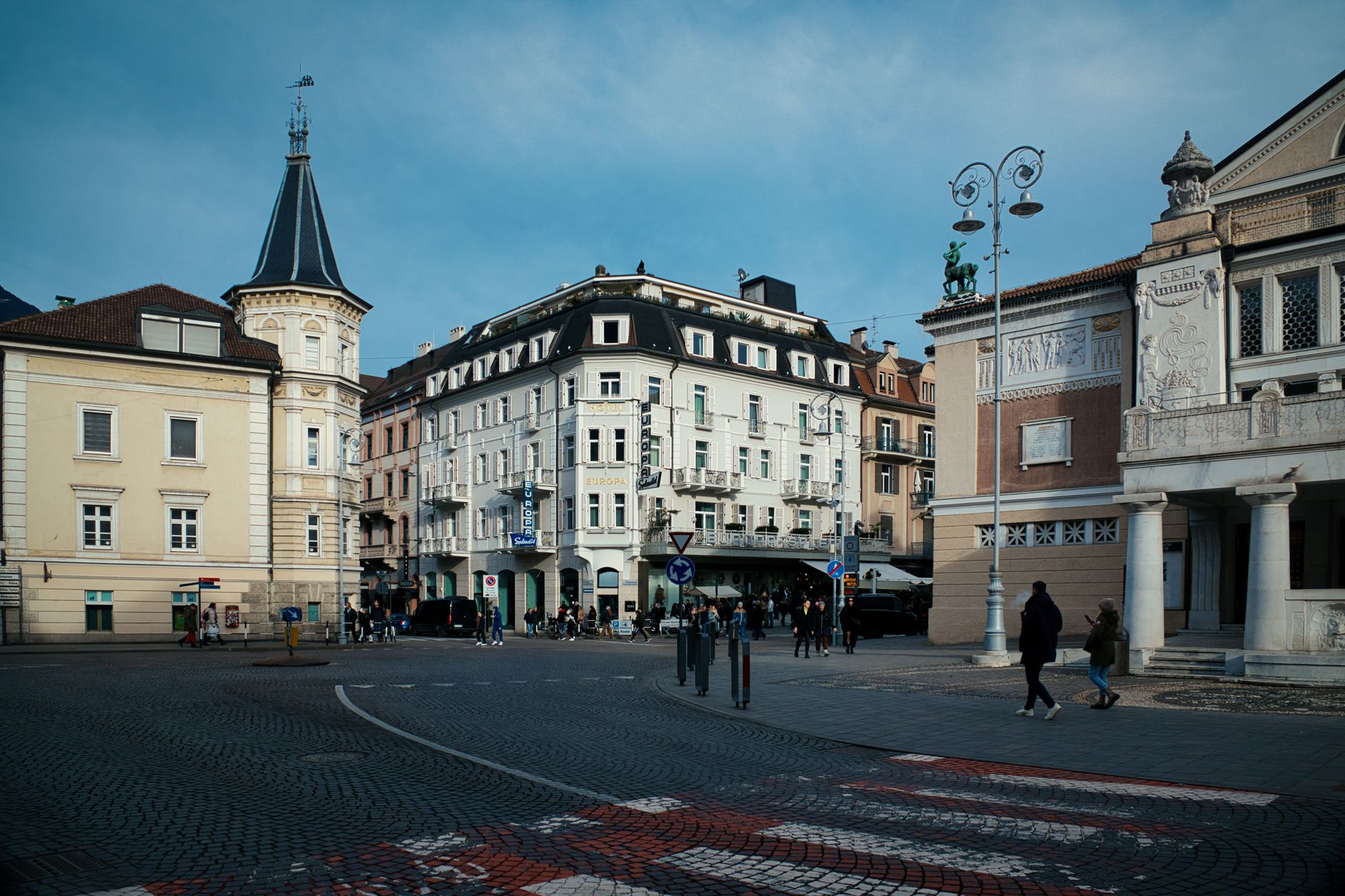
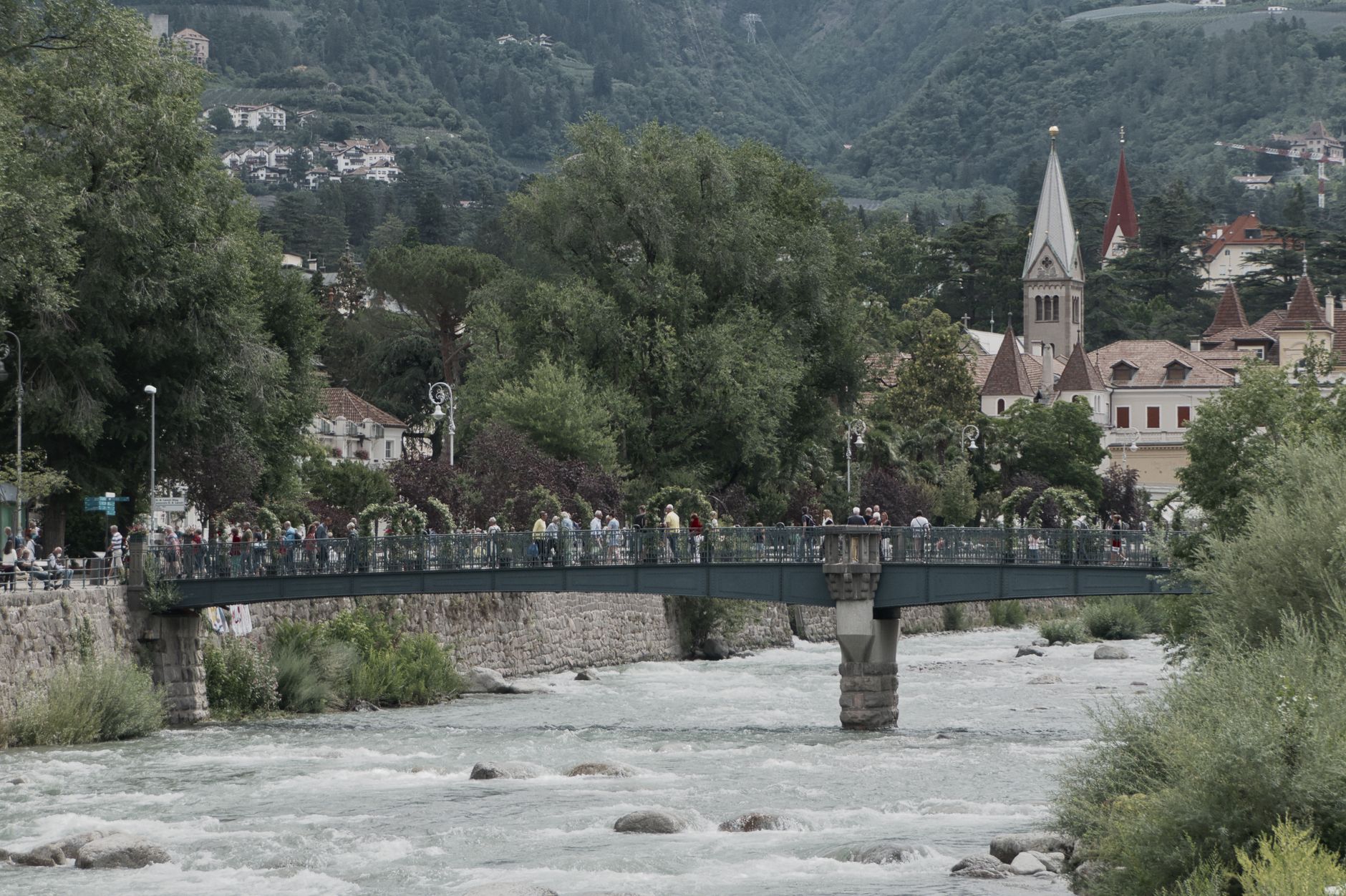
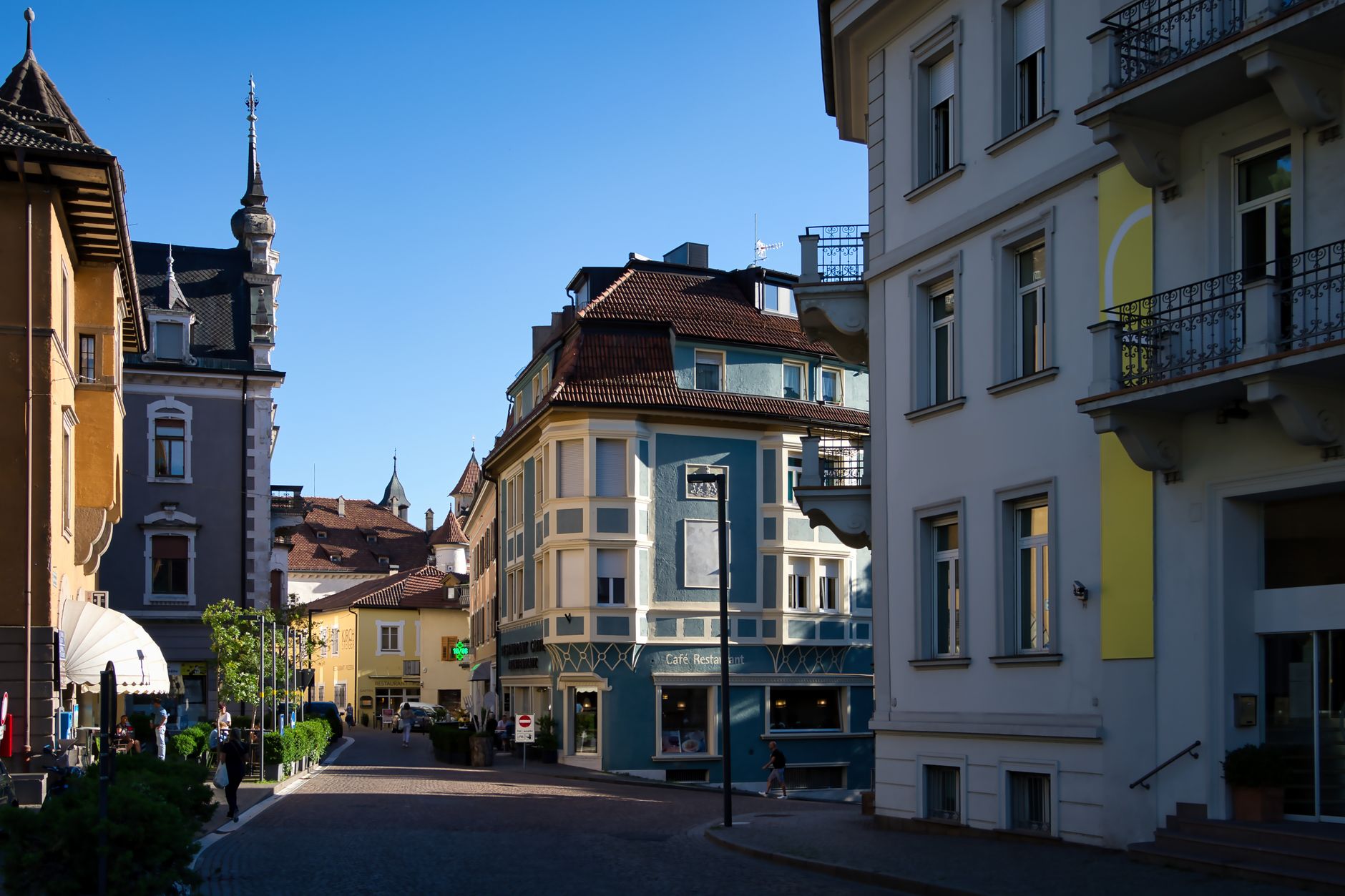
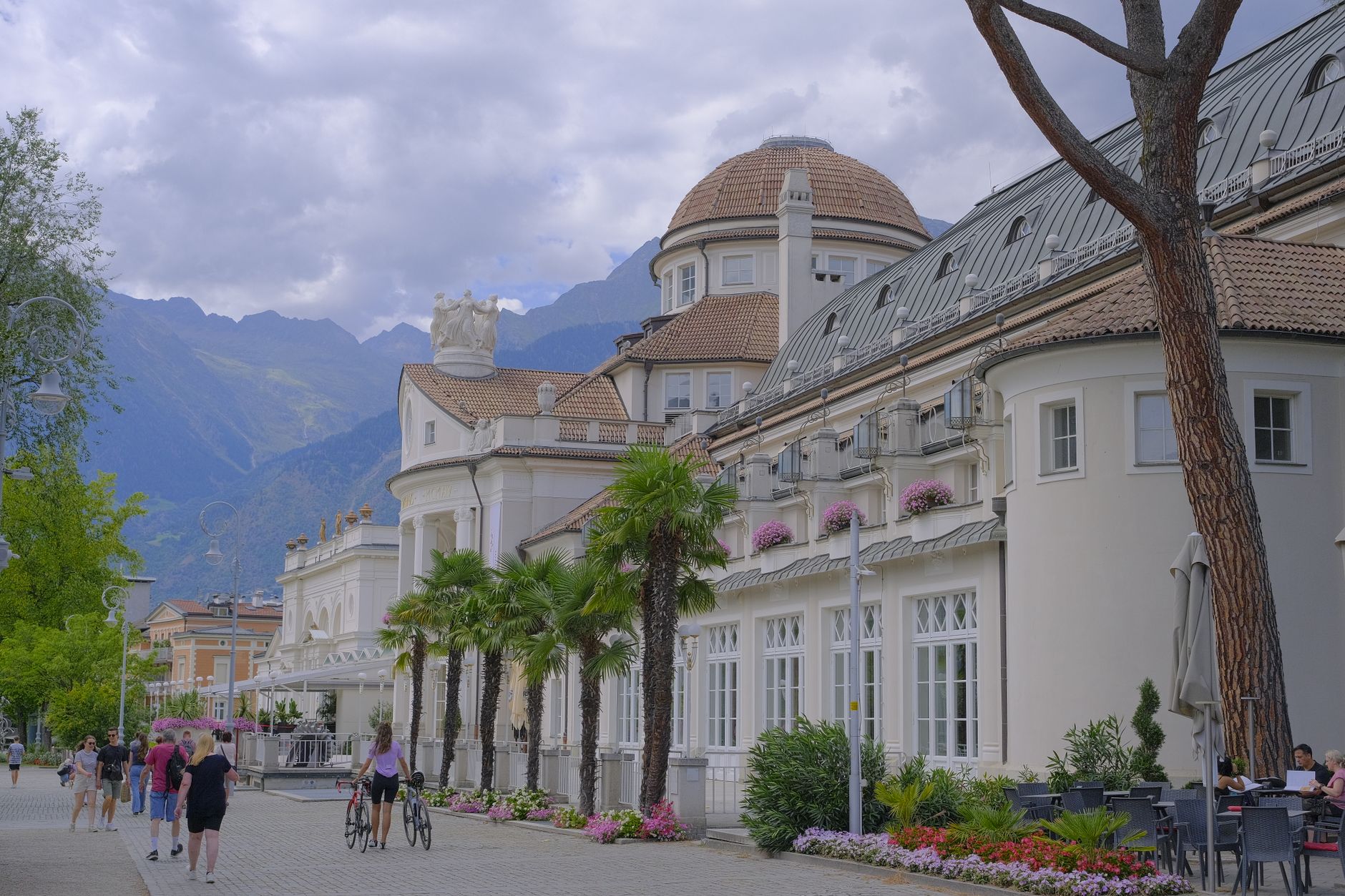
The thing you notice first in Merano is the palm trees — actual palms, growing in the open air of the Alps, a few kilometres from peaks still carrying snow. The Passer River cuts through the centre, and the Tappeiner Promenade, reputedly the oldest spa walkway in Europe, threads along the hillside above it, planted with Mediterranean and subtropical species that have no business thriving at this latitude.
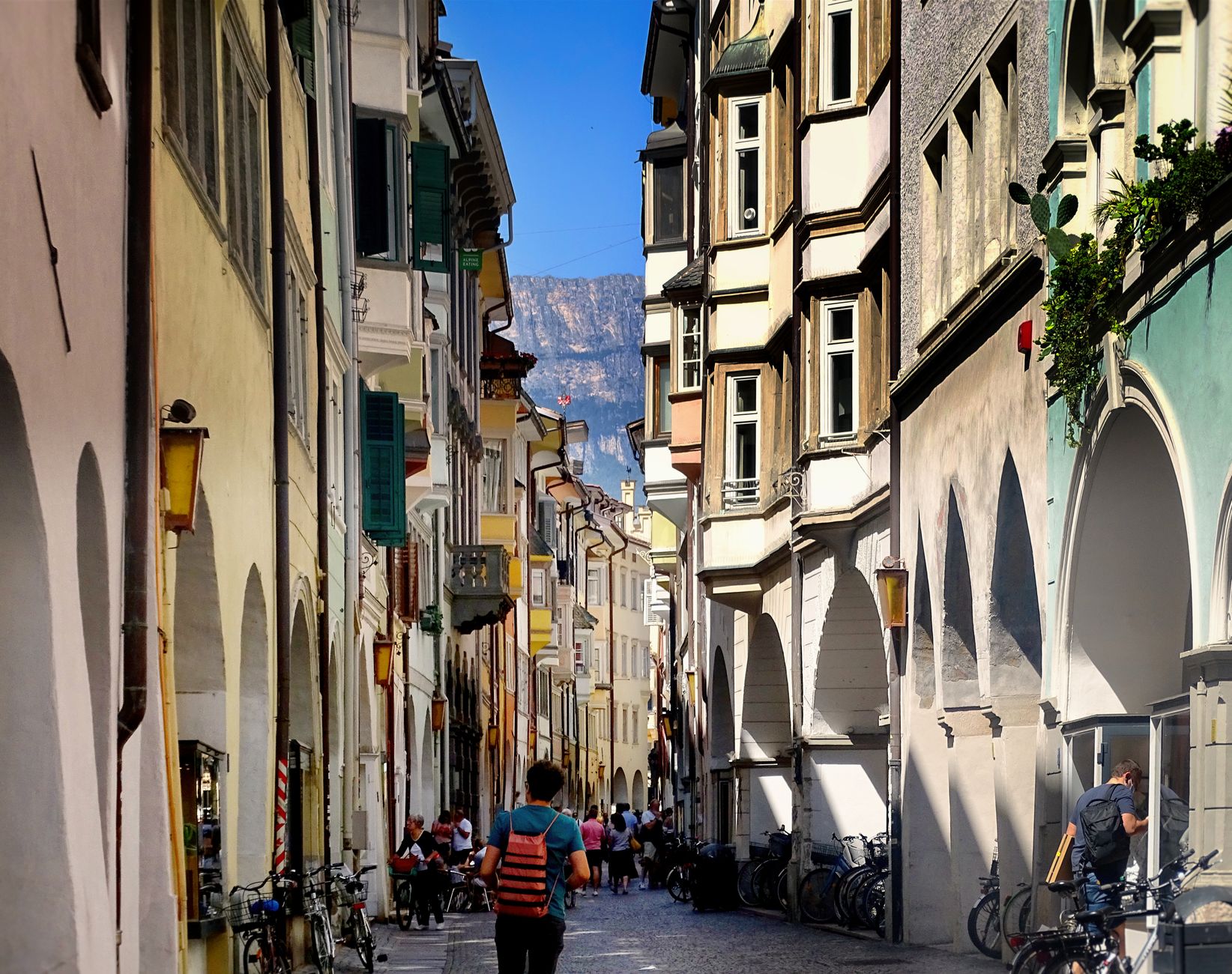
Merano sits in a sheltered basin where two mountain valleys converge, which gives it a climate mild enough to have drawn the European aristocracy and their doctors since the 1870s. The arcaded medieval street, the Laubengasse, still runs through the old town, and the Kurhaus — expanded in 1914 by a Viennese Secessionist architect — still anchors the spa quarter on the river's north bank.
💛 What travellers fall for
People who come back tend to mention the same things: arriving at the 1906 train station just to look at the iron canopies, then walking the Laubengasse slowly enough to notice that the two sides of the arcade were once divided by imperial ordinance between German and Italian traders. The Terme Merano's outdoor pools in October, steam rising, with the mountains behind.
Experiences you don't want to miss


Deals in Merano
Book directly at the provider

How Merano came to be
Merano began as a Roman road station — Statio Maiensis — founded around 15 BC, and was documented by name as Mairania in 857 AD. By the 13th century it had become the capital of the County of Tyrol under the Counts of Tyrol, a status it held until 1848, long after political gravity had shifted elsewhere. The Laubengasse dates from the same medieval period, its arcades built in the mid-1200s.
In 1809, during the Tyrolean Rebellion, a peasant army won a battle against French and Bavarian forces on the Küchelberg above the city before ultimately losing the broader campaign. Merano passed to Italy under the 1919 Treaty of Saint-Germain-en-Laye, and during the Nazi occupation of 1943–45, the city's Jewish community was almost entirely deported and murdered — a fact the city does not hide.
Who and what shaped it
People who shaped it
Landmark buildings
See Merano in motion
Plan your visit
On the map
When to go
The basin position keeps winters notably mild for this altitude and summers warm without being oppressive — Mediterranean plants grow here year-round for a reason. Spring and autumn are the traditional spa seasons: clear light, comfortable temperatures, and the mountains at their most photogenic.
Right now
Background & history adapted from Wikipedia (CC BY-SA) · specs from Wikidata (CC0) · weather from Open-Meteo · map data © OpenStreetMap contributors · photos from Wikimedia Commons / Unsplash with per-image credit. No third-party reviews or social posts reproduced.